Choosing teen bedroom furniture can feel surprisingly tricky. One day your teen wants a clean, minimal look, and the next day they want a cozy hangout space with better storage and a study setup that actually works.
Here’s the thing, the best teen rooms aren’t built around trends. They’re built around real life: sleep that’s comfortable, storage that’s easy, a spot to study without back pain, and a layout that still makes sense a couple of years from now.
I’ve helped families plan teen rooms for years, and the same goal always comes up. You want a room your teen likes, but you also want smart choices that won’t fall apart, feel cramped, or become outdated fast.
Snippet-Ready Definition:
Teen bedroom furniture includes beds, storage, desks, and seating designed to support sleep, study, and everyday life, while fitting changing tastes, growing bodies, and real room sizes.
Our Mission
At Dwellify Home, we help families create practical, comfortable teen bedrooms using smart furniture choices that balance style, safety, storage, and long-term value.
Quick Guide Table: What to Buy & Why
| Furniture Piece | Why It Matters | Pro Tip from Experience |
| Bed & Mattress | Comfort, growth support | Choose size based on room, not just age |
| Dresser / Wardrobe | Keeps clothes off the floor | Match storage style to teen habits |
| Desk & Chair | Study comfort & focus | Adjustable chairs reduce back strain |
| Shelves / Hooks | Easy daily organization | Wall storage saves floor space |
| Lounge Seating | Relaxing, social space | Keeps bed from becoming hangout zone |
Step-by-Step Buying Guide (Simple & Practical)
Step 1: Measure the room, doors, and drawer clearance
Step 2: Decide how the room will be used (sleep, study, relax)
Step 3: Choose the bed first, then plan storage around it
Step 4: Add a desk only if homework happens in the room
Step 5: Secure tall furniture and finalize lighting
Start With a Simple Plan (So You Don’t Waste Money)
Before you buy anything, pause for a simple plan. It’s not about being perfect. It’s about avoiding the classic mistake of buying a big bed or bulky dresser that blocks the closet and turns the room into an obstacle course.
I usually start by asking one question: How does your teen actually use this room on a normal weekday? Sleep is obvious, but do they study in their room, do they game, do friends come over, do they need space for sports gear or hobbies? That one answer shapes everything.
How your teen uses the room (sleep, study, hangout, hobbies)
A teen room usually needs to do more than an adult bedroom. It’s often their private space, homework station, and hangout spot all in one. If you design only for sleep, the room ends up cluttered because there’s nowhere else for the other parts of life to go.
A simple way to plan is to think in zones:
- Sleep zone: bed, nightstand, lighting
- Storage zone: dresser, wardrobe, shelving
- Study zone: desk, chair, task lighting
- Chill zone: a chair, small loveseat, or floor seating
You don’t need a huge room to do this. You just need to be intentional.
Quick measuring checklist (room, walls, doorways, outlets)
Guess what, a lot of furniture regrets happen because of one missing measurement. Families measure the wall but forget the doorway, or they forget where the outlets are, then the desk ends up on the wrong side of the room.
Do this quick checklist before ordering:
- Wall length where the bed will go
- Distance from bed to closet doors when open
- Doorway width and stair turns for delivery
- Window height if you want a desk under it
- Outlet locations for lamps, chargers, and a computer
- The space needed to pull drawers out fully
Even five minutes of measuring saves weeks of frustration.
What Teen Bedroom Furniture You Actually Need (The Core Checklist)
Most teens don’t need a long shopping list. They need a few pieces that work hard and don’t create clutter.
In a real consultation, I usually recommend starting with these essentials and adding extras only if the room still feels open and functional.
A solid core setup includes:
- A comfortable bed and supportive mattress
- A nightstand or bedside table
- A dresser or wardrobe plan that matches how they dress
- A desk and chair if schoolwork happens in the room
- Lighting that covers both mood and task needs
The best part is, once the core is right, the room becomes easy. Decor and style upgrades feel fun instead of stressful.
Teen Bedroom Furniture Sets vs. Buying Pieces Separately
A lot of parents ask whether they should buy teen bedroom furniture sets or mix pieces. Both can work. The right choice depends on the room size, your budget, and how quickly your teen’s taste changes.
Sets feel simple because everything matches. But matching everything isn’t always the most practical move, especially in smaller rooms or shared spaces.
What’s usually included in teen bedroom furniture sets
Most sets include a bed and at least one storage piece, often a dresser. Some include a nightstand, mirror, or chest. A few larger sets include two nightstands, which can be unnecessary unless the room is larger.
If you’re considering a set, make sure every item earns its place. A second bulky piece that doesn’t fit comfortably is money wasted and it’ll make the room feel smaller.
When a set is smarter (and when mixing pieces looks better)
A set is a good idea when:
- You want a cohesive look with minimal planning
- The room is a standard size and can fit the pieces easily
- Your teen likes classic styles that won’t feel dated quickly
Mixing pieces is usually better when:
- The room is small or has awkward wall space
- You need very specific storage, like tall drawers or a wardrobe
- Your teen wants a more personal style instead of a matched suite
A simple trick is to keep the larger items coordinated, then add personality through lighting, textiles, and wall shelves.
Choosing the Right Bed for a Teen (Size, Function, Storage)
The bed is the anchor of the room. If you get the bed right, the rest of the layout becomes much easier.
You’re balancing comfort, growth, floor space, and storage. And yes, teens grow, but the room doesn’t. So the smartest choice is the bed that fits their body and your space.
Twin vs. full vs. queen (who each one fits best)
In most homes, a twin is the most space-friendly. It leaves room for a desk and storage, which matters more for many teens than a larger mattress.
A full is a sweet spot when the room can handle it. Teens often love the extra space, and it can still leave room for a functional layout in many rooms.
A queen is only worth it if the room is truly large enough. I’ve seen too many queen beds jammed into medium rooms, leaving no study space and making the room feel tight and messy.
A practical guideline:
- Small room: twin or twin XL
- Medium room: full
- Large room: queen, if other zones still fit
Space-savers: loft beds, daybeds, trundles, and storage beds
If space is tight, this is where you can get creative.
A storage bed gives you drawers underneath, which can replace a separate dresser in some layouts. That’s a big win in a teen bedroom furniture for small room setup.
A daybed works well when your teen wants a lounge feel. It can function as a sofa by day and a bed at night, especially with a wall of pillows.
A trundle is great if friends sleep over. It keeps the room open most of the time and adds an extra bed only when needed.
Loft beds are powerful space tools, but only if your teen is comfortable climbing up and the frame is stable. The extra space underneath can become a desk zone or storage wall.
Storage That Keeps the Room Clean (Even for Messy Teens)
If you want the room to stay tidy, don’t rely on motivation. Rely on storage that’s easy to use.
The biggest secret I’ve learned is this: storage has to match habits. If your teen lives out of hoodies, backpacks, and sports gear, they need open-access storage. If they fold everything neatly, drawers work great.
Dresser vs. chest vs. wardrobe, what works best for real life
A wide dresser is ideal for daily clothes. It’s stable, holds a lot, and the top surface can become a spot for a lamp and small items.
A tall chest saves floor space, which is great for small rooms. The trade-off is stability, so it must be anchored and placed thoughtfully.
A wardrobe or armoire works well when closets are small, or when your teen needs hanging space for uniforms, jackets, or dresses.
If your teen’s closet is already packed, adding a wardrobe can change everything. It’s often the difference between a calm room and constant piles.
Go vertical: shelves, wall storage, and off-the-floor organization ideas
On top of that, teens tend to drop things on the floor. So getting storage off the floor helps a lot.
Use:
- Wall shelves for books, collectibles, and decor
- Hooks for bags, headphones, and jackets
- A slim bookcase for school supplies
- Bins for sports gear or cords
If the room is small, vertical storage is your best friend. It keeps the floor clear and makes the space feel bigger.
A Study Zone That Works (Desk, Chair, Lighting)
If your teen does homework in the bedroom, the desk setup matters more than most parents think. A poor setup leads to slouching, headaches, and procrastination because it feels uncomfortable.
The goal isn’t a fancy desk. It’s a setup that makes it easy to sit down and focus.
Desk sizing + chair comfort (simple rules, no jargon)
Here’s a quick rule I use. Your teen should be able to sit with feet flat, knees bent comfortably, and forearms resting on the desk without shrugging shoulders.
If the chair is too low, they hunch. If it’s too high, they tense. An adjustable chair makes life easier, even if the desk is simple.
Desk size depends on what they use:
- Laptop only: smaller desk can work
- Laptop plus books: go wider
- Art or crafting: deeper desk is better
Study setup extras teens actually use (charging, cable control, drawers)
The best part is, small additions can make a desk setup feel organized fast:
- A lamp with a warm but clear light
- A power strip mounted or tucked neatly
- A small drawer unit for stationery
- Cable clips or a simple basket for cords
If your teen games at the desk, cable control becomes even more important. A tidy desk feels calmer and helps them focus.
A Lounge / Hangout Corner Teens Love (Often More Useful Than Decor)
This is the section families skip, then later they tell me, “I wish we had planned for this.”
Teens want a spot that isn’t the bed. It could be a chair for reading, a place to sit with friends, or a corner for gaming. Even in a small room, one comfortable seat can change how the room feels.
If you have space, consider:
- A compact lounge chair
- A bean bag with good support
- A small loveseat or sleeper chair
This also helps keep the bed from becoming the only hangout spot, which is healthier for sleep habits.
Teen Bedroom Furniture for a Small Room (Layout Tricks That Change Everything)
Small rooms aren’t a problem when the layout is smart. They become a problem when furniture is chosen without a plan.
If you’re working with a tight space, focus on fewer pieces that do more, and keep clear walking space. A room that’s easy to move through always feels bigger.
Best layouts for tight spaces (one-wall, corner desk, under-bed storage)
A one-wall layout works when you line the bed and a narrow nightstand on one long wall, then place the desk on the opposite wall. It keeps the center open.
A corner desk setup is great when wall space is limited. It uses the corner efficiently and leaves room for storage.
Under-bed storage is the easiest space win. Storage beds, rolling bins, or a trundle keep extra items out of sight.
Best furniture picks for small rooms (tall dresser, slim nightstand, loft-with-desk)
These picks usually work well:
- Tall dresser instead of a wide one
- Slim nightstand or wall-mounted bedside shelf
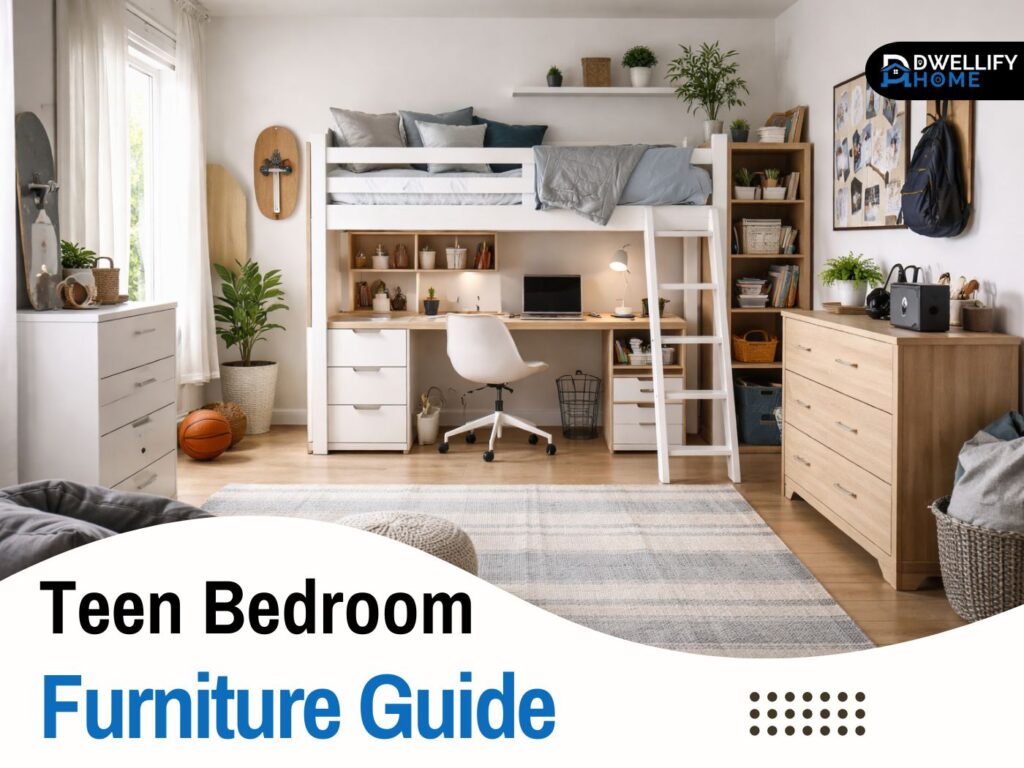
- Loft bed with a desk underneath, if your teen likes it
- Wall shelves instead of floor bookcases
If you’re shopping teen bedroom furniture sale sections, always check dimensions. Sale pieces can be tempting, but bulky furniture is rarely a bargain in a small room.
Teen Bedroom Furniture Ideas by Style (That Won’t Feel Cringe Next Year)
Teen style changes quickly, and that’s normal. The smart move is to keep the big furniture pieces fairly neutral, then let style come through in easy-to-change items.
Neutral doesn’t mean boring. It means flexible. A simple bed frame, clean dresser, and basic desk can work with almost any color scheme later.
Easy style updates include:
- Bedding and throw pillows
- Rugs
- Wall art and posters
- Lamps and LED strip lighting used thoughtfully
- Shelf decor and photo displays
That way, the room can evolve without replacing major furniture.
Teen Bedroom Furniture for Boys (Without Making It Look Theme-y)
When families ask for teen bedroom furniture boy ideas, I encourage them to think function first. A durable setup with a strong desk zone and storage for gear usually matters more than a themed look.
A clean, practical approach:
- Sturdy bed frame, metal or solid wood
- Dresser with smooth drawers and strong hardware
- Desk with space for a monitor or laptop setup
- Shelving or hooks for sports bags and headphones
Let personality show through colors and accessories, not through furniture that locks the room into one vibe.
IKEA-Style Teen Bedroom Furniture (Modular, Space-Smart Options)
Modular furniture can be a lifesaver in teen rooms, especially when space is limited or your teen’s needs are changing.
The idea behind teenage bedroom furniture ikea style is simple: flexible pieces, easy storage, and practical sizing. You can create a tidy room without needing custom work.
Look for:
- Beds with built-in drawers
- Simple desks with add-on drawer units
- Shelving systems that grow over time
- Wardrobes that can be organized inside with inserts
Just be realistic about assembly and durability. If your teen is tough on furniture, choose sturdier frames and avoid flimsy drawer systems.
Materials, Durability, and Easy-Clean Finishes
Let’s talk materials, because this is where long-term value lives.
Solid wood is durable and easy to repair. It’s often heavier and costs more, but it can last through teen years and beyond.
Engineered wood can be good when it’s well-made, but it varies a lot. Thicker panels, strong hardware, and smooth drawer glides are signs of better quality.
Metal frames can be great for beds, especially for teens who like a modern or industrial look. They’re usually sturdy and easy to clean.
If you have younger kids in the house or your teen spills drinks, easy-clean finishes matter. Matte finishes hide fingerprints better than high-gloss ones, and they tend to look calmer too.
Safety First (Non-Negotiables for Teen Rooms)
Even though your teen is older, safety still matters. Heavy furniture can tip, loft beds can wobble, and overloaded shelves can fall.
This isn’t about fear. It’s about smart prevention.
Tip-over prevention: anchor dressers/bookcases + safer drawer habits
Anchor tall furniture to the wall. Dressers, bookcases, and wardrobes should be secured, especially if drawers get pulled out quickly or climbed on by younger siblings.
Also teach simple habits:
- Don’t open multiple heavy drawers at once
- Keep heavier items in lower drawers
- Don’t use drawers as steps
It takes minutes to anchor furniture, and it prevents serious accidents.
Loft bed safety basics (stability, rails, weight limits)
If you choose a loft bed:
- Check weight limits for mattress and user
- Make sure guardrails are secure
- Tighten bolts periodically
- Use a stable ladder and keep the area clear
Lofts can be amazing space savers, but only when they’re solid and safe.
Budget Guide: Cheap Teen Bedroom Furniture That Still Holds Up
You can absolutely create a great room on a budget. The goal is to be strategic, not cheap in a way that causes problems later.
If you’re aiming for cheap teen bedroom furniture, decide what needs to last the longest. Usually that’s the bed frame and mattress. A wobbly bed becomes annoying fast, and sleep quality matters a lot in teen years.
Where to save vs. where to spend (bed/mattress vs. extras)
Spend more on:
- Mattress and supportive base
- Bed frame stability
- Desk chair comfort if they study a lot
Save on:
- Nightstands
- Decorative shelving
- Rugs and decor that may change soon
If money is tight, buy fewer pieces at first, then add later. A clean room with the right core pieces beats a crowded room full of bargains.
Smart shopping: teen bedroom furniture sale, outlet, clearance, open-box, secondhand
You can find excellent deals through:
- Teen bedroom furniture outlet sections
- Clearance and seasonal sale events
- Open-box returns from reputable stores
- Secondhand marketplaces, especially for solid wood pieces
When buying secondhand, check:
- Drawer glide smoothness
- Frame stability and missing hardware
- Odors and water damage
- Whether the piece can be safely anchored
That’s how you get true value, not just a low price.
Quick Buying Checklist (Use This Before Checkout)
Before you hit buy, run through this quick list:
- Do the dimensions fit with drawers fully open?
- Will your teen have a real study spot if needed?
- Is storage matched to habits, drawers, shelves, hooks?
- Are heavy pieces anchorable and stable?
- Is delivery and assembly realistic for your home?
- Does the return policy make you comfortable?
This checklist prevents almost every regret I hear in follow-up visits.
Conclusion
A teen room doesn’t need to be perfect to be great. It just needs to support real life and give your teen a space that feels comfortable, functional, and personal.
If you remember one thing, make it this: choose the core pieces for comfort, storage, and layout first, then let style evolve through easy updates. That approach saves money, reduces clutter, and keeps the room feeling right as your teen grows.
And when you plan with your teen instead of for your teen, the whole process gets easier. You’ll end up with choices they’ll actually use, and a room that still makes sense years from now.
Disclaimer
This article is for general guidance only. Room sizes, safety needs, and furniture suitability vary by home. Always follow manufacturer instructions and local safety recommendations.

I’m Bilal, the founder of Dwellify Home. With 6 years of practical experience in home remodeling, interior design, and décor consulting, I help people transform their spaces with simple, effective, and affordable ideas. I specialize in offering real-world tips, step-by-step guides, and product recommendations that make home improvement easier and more enjoyable. My mission is to empower homeowners and renters to create functional, beautiful spaces—one thoughtful update at a time.