Air conditioners rarely quit without warning. In most homes, the trouble starts small: airflow drops off, the system runs longer than usual, or one room stays warm while the rest of the house feels fine. Catching those signs early can save you a service call, and sometimes it can save you from a much bigger repair a week later.
The other side of that is just as important. Some problems look simple but aren’t safe to handle on your own. Electrical faults, refrigerant leaks, and compressor issues can get expensive fast, and guessing usually makes them worse. Good home AC repair starts with knowing what you can check yourself, what it might cost, and when it’s time to let a licensed HVAC tech take over.
Snippet-Ready Definition
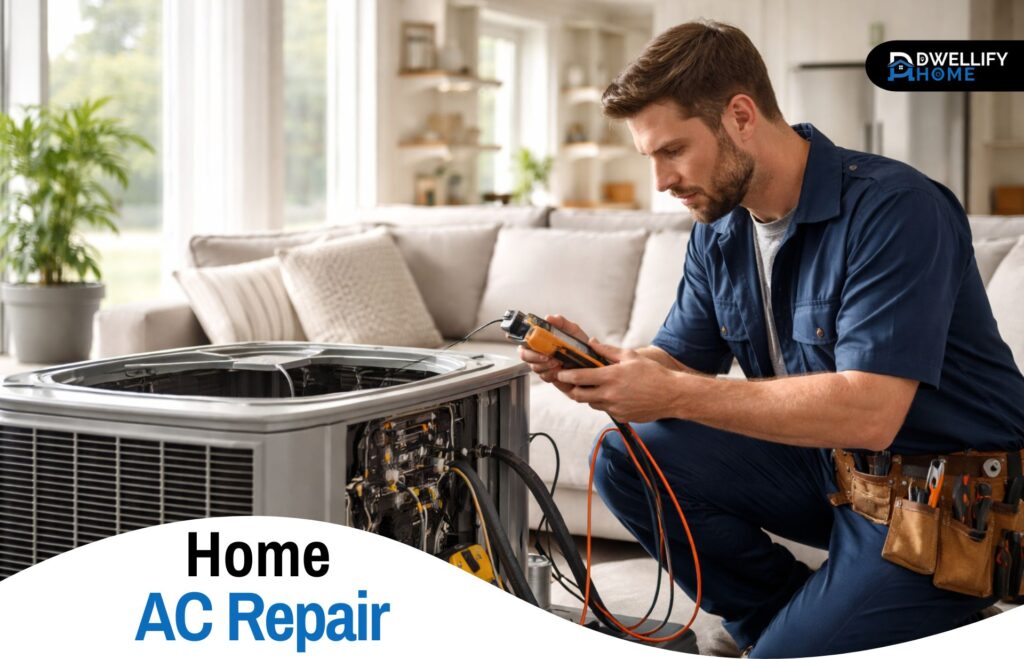
Home AC repair is the process of diagnosing and fixing cooling, airflow, drainage, or electrical problems in a residential air conditioner to restore comfort, efficiency, and safe operation.Mission Statement
Dwellify Home helps homeowners make practical, informed home decisions with clear guidance that’s easy to trust and use.
The Most Common Signs You Need AC Repair
A struggling system usually tells on itself. The most common signs are:
- The AC is running but the house isn’t cooling
- Airflow from the vents feels weak
- Warm air is coming through the registers
- The unit won’t start at all
- Water is pooling near the indoor unit
- You hear buzzing, rattling, or grinding
- The system keeps turning on and off
- Your electric bill jumps for no clear reason
A musty smell often points to moisture buildup or drainage trouble. A burning smell is different. That’s one you don’t wait on. Shut the system off and get it checked.
Key Benefits / Uses
- Helps homeowners spot AC problems early
- Clarifies which fixes are safe to try yourself
- Sets realistic repair cost expectations
- Makes it easier to decide between repair and replacement
- Reduces the risk of paying for the wrong service
Quick Repair Cost Mini Guide
| Repair Type | Typical Cost Range |
| Drain line cleaning | $100–$250 |
| Capacitor replacement | $150–$400 |
| General AC repair | $150–$650 average |
| Larger or complex repairs | $650–$2,500+ |
What to Check First Before Calling for AC Repair
Before booking service, check the simple things that cause a surprising number of calls.
Start with the thermostat. Make sure it’s set to cool, the temperature is actually below room temperature, and the batteries are fresh if the model uses them.
Then look at the air filter. A clogged filter can choke airflow, freeze the evaporator coil, and make the system run without cooling well. ENERGY STAR recommends checking filters regularly because dirty filters slow airflow, waste energy, and make the system work harder.
Next, check the breaker panel and any shutoff switch near the indoor or outdoor unit. It’s also worth walking through the house to make sure vents aren’t closed and return grilles aren’t blocked by furniture or rugs.
Outside, clear leaves, grass, and debris away from the condenser. Dirty coils can reduce cooling ability, raise energy use, and shorten equipment life.
Simple Fixes You Can Safely Try
Some problems really are minor.
Replacing a dirty filter is the first fix I’d try in almost any weak-cooling situation. It’s cheap, fast, and it solves more comfort issues than most homeowners expect.
You can also reset the thermostat, open closed vents, and gently clear debris from around the outdoor unit. A light drain line clog may respond to a careful flush, especially if you’ve had slow drainage before and caught it early.
What you should not do is start opening panels, testing capacitors, or adding refrigerant from a store-bought kit. That’s where small mistakes turn into burned components, frozen coils, and wasted money.
When Not to DIY
There’s a clear line between basic homeowner checks and real HVAC repair.
Don’t try to handle refrigerant leaks, capacitor replacement, wiring faults, fan motor issues, or compressor problems yourself. Refrigerant work has to be handled properly for safety and EPA compliance, and improper charging can damage the system.
Repeated breaker trips are another stop sign. That often points to an electrical problem, not a reset problem.
Why the AC Runs but Doesn’t Cool
This is one of the most common complaints, and it can come from several directions.
A dirty filter or blocked airflow is the easiest fix. After that, frozen evaporator coils are common, especially when airflow has been poor for a while. Low refrigerant can cause the same symptom, but so can dirty condenser coils, thermostat faults, or leaking ducts.
Duct leakage gets overlooked a lot. ENERGY STAR notes that sealing and insulating ducts can improve efficiency by as much as 20 percent in some homes.
That matters because not every “AC problem” is inside the equipment cabinet. Sometimes the unit is working, but the air isn’t getting where it needs to go.
What Repair Costs Usually Look Like
Costs vary by part, labor, urgency, and the age of the system. Recent pricing data from Angi places professional HVAC repair broadly in the range of about $130 to $2,000, depending on the failed part and system type.
For common issues, the numbers often fall into familiar bands:
- Diagnostic or service visit: varies by company and market
- Capacitor replacement: often a few hundred dollars, with labor making up most of the bill
- Refrigerant replacement or recharge work: often several hundred dollars, and higher on older refrigerants like R-22
- Major compressor work: usually among the most expensive repairs
Emergency calls, weekend service, and older units tend to push the price up. Warranty coverage can help, but always ask whether it covers parts only or labor too.
Repair or Replace?
This is where homeowners get stuck, especially with systems over 10 years old.
A repair usually makes sense when the unit has been reliable, the problem is isolated, and the repair cost is reasonable relative to the system’s age. A capacitor, contactor, or fan motor on an otherwise healthy system is one thing. A compressor on an aging unit with rising energy bills is another.
A common shortcut is the Rule of 5000: multiply the repair cost by the system’s age. When the result gets above 5,000, replacement is often the smarter long-term decision. It’s not perfect, but it’s a useful gut check when you’re on the fence.
Older systems also tend to come with harder-to-source parts, lower efficiency, and more frequent follow-up repairs. That’s usually the point where throwing more money at the unit stops feeling practical.
What Happens During a Professional Repair Visit
A good technician doesn’t just swap parts and hope for the best.
The visit should start with symptom review and a full inspection. From there, they’ll usually check thermostat operation, airflow, electrical components, refrigerant conditions, coil cleanliness, and drainage.
Once the issue is identified, you should get a clear explanation and a written estimate before work begins. That estimate should spell out the repair, the parts, and whether diagnostic fees are included or waived.
That last point matters because “free estimate” can mean different things. The Home Depot’s HVAC repair service, for example, says providers typically diagnose the issue, recommend a solution, and often waive the diagnostic fee if you approve the repair or move forward with replacement.
How to Choose the Right HVAC Company
Good repair work starts with the right company, not just the lowest price.
Look for licensing and insurance first. Then ask whether the technician has experience with your equipment brand and system type. Read reviews for specifics, not just star ratings. You want to see comments about punctuality, diagnosis quality, follow-through, and whether the final invoice matched the estimate.
Ask these questions before you book:
- Is the estimate written?
- Is the diagnostic fee separate?
- Are parts and labor under warranty?
- Do you offer same-day or emergency service?
- Have you worked on this brand before?
That’s also the right time to compare local companies with big-box service networks. Brand familiarity can help, but the quality of the local contractor matters more than the logo at the top of the page.
Emergency Repairs and Common Mistakes
Emergency service is worth it when the system fails during extreme heat, when you smell something burning, or when there’s active leaking that could damage walls, floors, or ceilings.
While you wait, shut the unit off if there’s ice buildup, electrical smell, or loud grinding noise. Running it harder almost never helps.
The most common homeowner mistakes are predictable: ignoring weak airflow, changing parts without diagnosing the cause, running the system with frozen coils, and choosing the cheapest quote without checking credentials. Those shortcuts usually cost more later.
How to Prevent Future Problems
Most avoidable repairs come back to maintenance.
Check the filter every month during heavy cooling season. Keep the outdoor unit clear. Schedule tune-ups before the hottest part of the year. ENERGY STAR recommends regular professional maintenance because it helps catch small issues before they become expensive problems and keeps the system running more efficiently.
Pay attention to the little changes too. A new rattle, a slight drop in airflow, or a damp smell near the indoor unit may not seem urgent that day, but those are often the clues that let you fix a problem before it turns into a mid-summer breakdown.
FAQs
What is the $5000 AC rule?
The $5000 rule is a quick way to judge repair vs. replacement: multiply the repair cost by the unit’s age. If the result is over 5000, replacement is often the better long-term choice.
Is AC harmful for bronchitis?
Air conditioning itself doesn’t cause bronchitis, but very cold, dry, or poorly filtered air can irritate airways and make symptoms feel worse. Clean filters and steady temperatures usually help more than blasting cold air.
What is the average cost to repair an air conditioner?
Typical AC repair costs often fall around $150 to $650, though large or complex repairs can run much higher depending on the failed part and labor rates.
Why is my AC running but not cooling?
Common causes include a dirty filter, frozen evaporator coil, low refrigerant, dirty condenser coil, thermostat issues, or leaking ducts.
How much is a service call for AC repair?
A service call or diagnostic fee varies by company and market, but it’s commonly charged separately unless the company applies it toward the repair. Some providers waive it if you approve the work.
Conclusion
The smartest approach to home AC repair is simple: check the safe basics first, don’t ignore early warning signs, and know where DIY should stop. A dirty filter or blocked airflow is one thing. Refrigerant, wiring, or a failing compressor is another.
Handled early, a lot of AC issues stay manageable. Wait too long, and even a small problem can turn into a bigger bill or a full replacement decision. That’s why calm, practical troubleshooting matters just as much as the repair itself.
Disclaimer
This content is for general informational purposes and does not replace advice or service from a licensed HVAC professional.

I’m Bilal, the founder of Dwellify Home. With 6 years of practical experience in home remodeling, interior design, and décor consulting, I help people transform their spaces with simple, effective, and affordable ideas. I specialize in offering real-world tips, step-by-step guides, and product recommendations that make home improvement easier and more enjoyable. My mission is to empower homeowners and renters to create functional, beautiful spaces—one thoughtful update at a time.