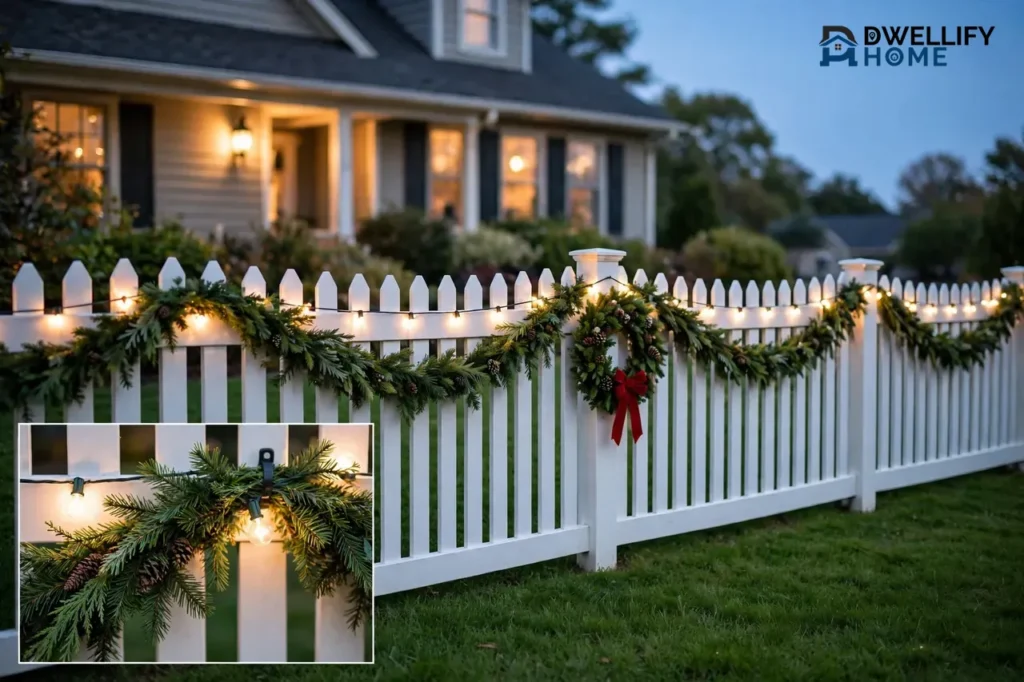
Christmas fence decorations work best when you treat the fence like a frame, not a wall to cover. Pick one light color, run it in a steady line along the top rail, add garland swags or wreaths at even intervals, and leave the gate clear to swing. You can hang the whole look with clips and zip ties, so you never drill a hole or drive a nail into the fence.
That is the whole plan, and it fits any fence: wood, vinyl, metal, or chain-link. Your fence already runs the full length of your yard, so it gives you the longest display in your home for the least money. The trick is to decorate the line, not every inch of it. A steady rhythm of light and greenery reads beautifully from the street, while a fence packed with random pieces reads as clutter. This guide walks you through the fence-first plan: no-damage hanging, windproof greenery, street visibility, gate clearance, and safe outdoor power.
Start With the Fence You Have
Every fence holds decorations differently, so look at yours before you buy anything. A wood picket fence gives you rails and slats to clip onto. A vinyl fence has smooth rails and a top cap that purpose-made clips can grip. A metal fence has bars and gaps you can thread ties through. A chain-link fence has diamonds that swallow hooks whole, so ties and clips beat hooks there every time.
Walk the full fence line once, in daylight, and check three things. First, find loose boards, wobbly posts, and cracked vinyl, because decorations add weight and wind will find every weak spot. Second, find your power source, because every light run must end at an outdoor outlet without a cord crossing a walkway. Third, notice which parts of the fence face the street, because that is where your best work belongs. The back fence can stay simple. The street side earns the lights.
Measure the fence line too, in feet, before you shop. Light strands and garland come in fixed lengths, and guessing leads to a gap right in the middle of the run. Write down the length of each straight section and the distance from the nearest outlet. That one tape-measure trip saves a cold return trip to the store, and it tells you exactly how many strands and swags you need.
Match the Look to the Fence Style
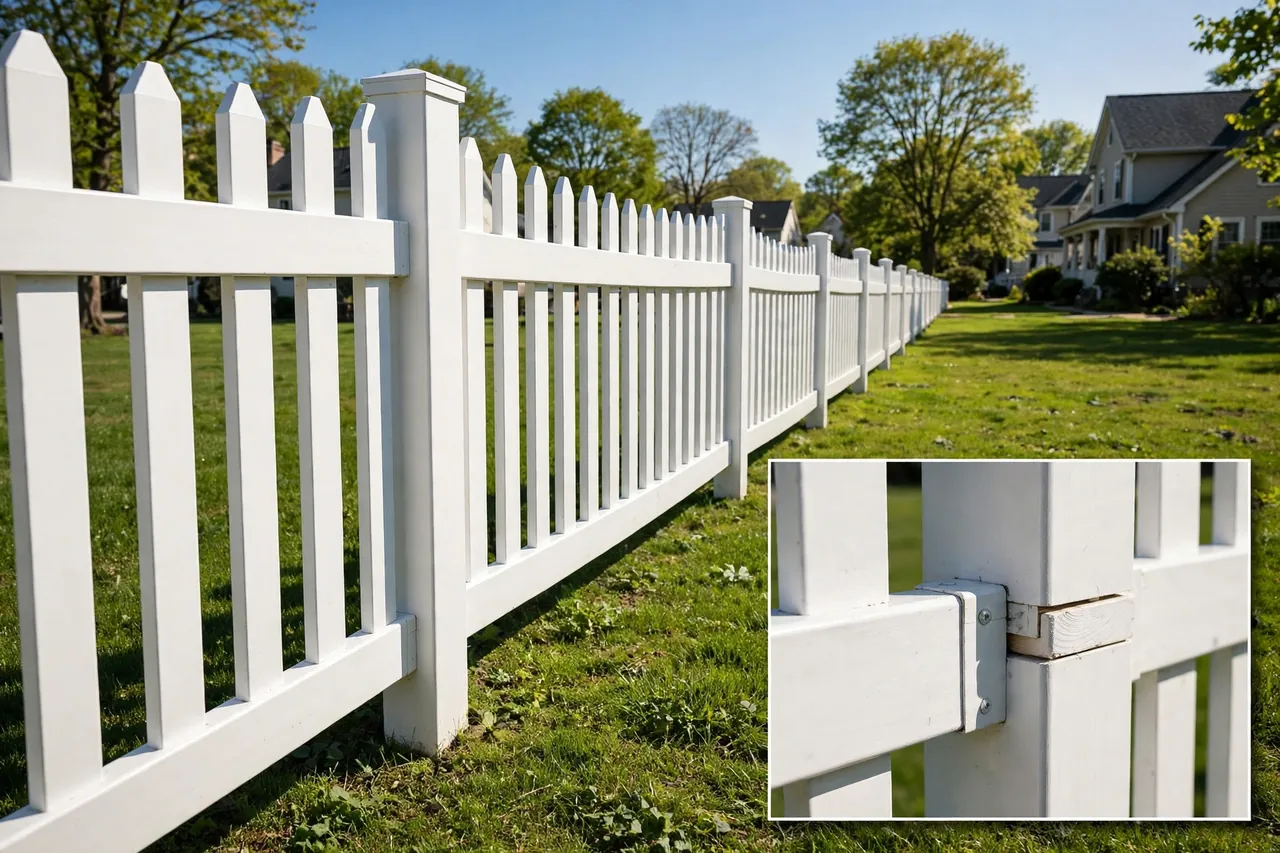
A white picket fence loves a classic look: warm white lights, fresh-looking green garland, and red bows at each post. A dark wood privacy fence loves contrast, so warm white or multicolor lights pop against the boards. A black metal fence nearly disappears at night, so lights and light-colored greenery do all the work. A ranch-style post-and-rail fence looks best with simple swags and one wreath per section, because the open gaps already give it rhythm. Let the fence set the style, and your decorations will look like they belong there.
Hang Lights Without Nails, Screws, or Holes
You do not need nails, screws, or staples to hang fence Christmas decorations, and you should skip them, especially on a fence you share with a neighbor. Every hole lets water in, and water in wood means rot. On vinyl, a screw can crack a rail. On a shared fence, a hole is also a neighbor problem. Clips and ties hold just as well, and they come off clean in January.
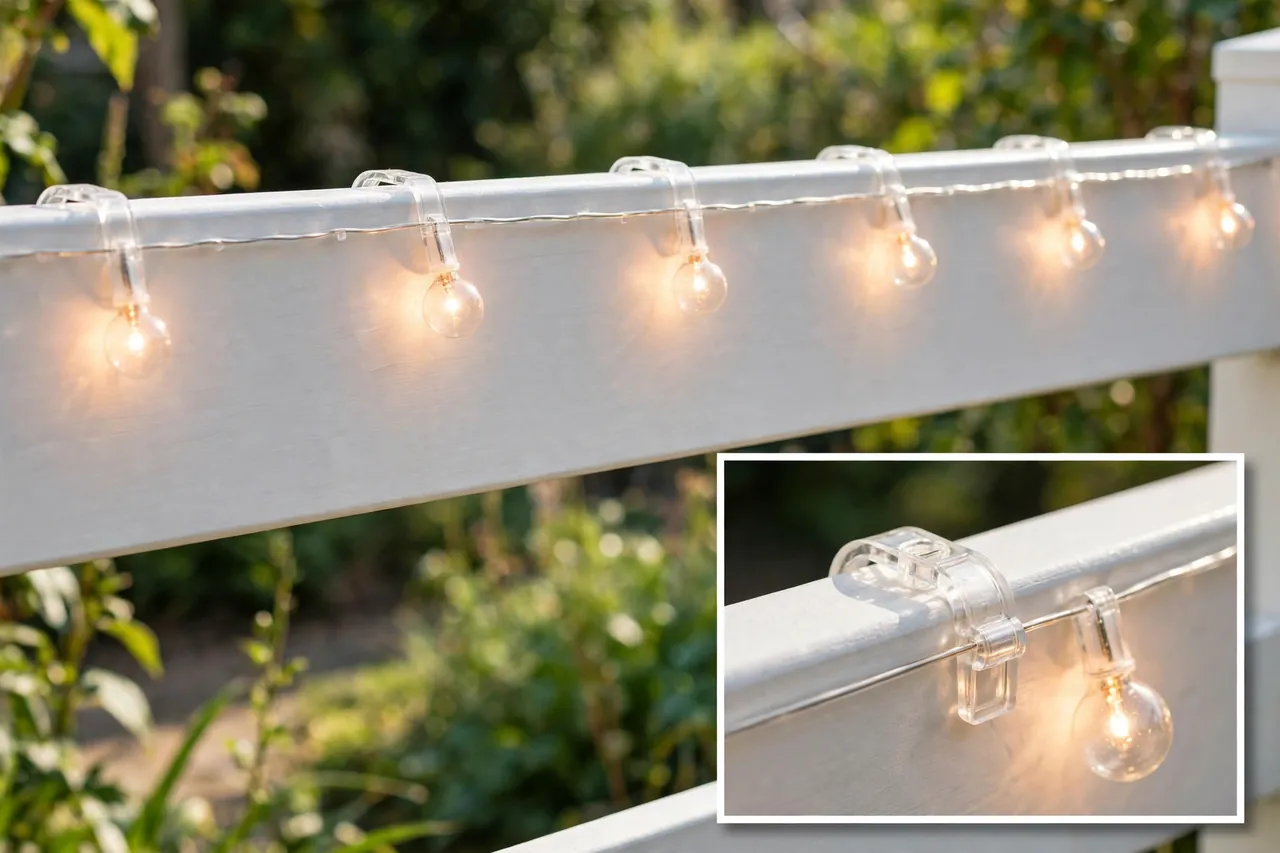
Use purpose-made light clips that grip the rail or hook over the top edge. On vinyl fences, clips made for vinyl rails snap over the rail and hold the strand without any fastener at all. For smaller wires, mini clips snap onto the wire and hook over the fence edge. Space clips every 12 to 18 inches so the strand stays taut and straight instead of sagging between posts. One clip per foot is a safe rule on long runs.
Zip ties are your second tool, and they work on nearly every fence type. Loop a small, clear or color-matched zip tie around the rail or through the chain-link and around the light wire, then snip the tail flush so it does not catch on sleeves or look messy. Cinch ties just snug enough to hold. A tie pulled too tight can pinch wire insulation or dent a vinyl rail, so stop as soon as the strand stops sliding.
Follow these steps for a clean, no-damage light run:
- Clean the rail with a quick wipe so clips and adhesive hooks grip well, and let it dry.
- Start at the end nearest your outlet, so the plug lands where power lives, not mid-fence.
- Clip the strand along the top rail first, keeping gentle slack between clips so cold weather cannot snap a taut wire.
- Test the lights before you add greenery, because a dead section is easy to swap now and a chore later.
- Step back to the street at dusk and check the line. Fix sags and dark gaps before you call it done.
For a softer look, weave a second strand through garland instead of running it bare on the rail. Wrap the lights around the garland before you hang it, weaving the wire between the branches so it stays hidden and secure. Then tie the lit garland to the posts. You get light and greenery in one pass, and the wire never shows.
Garland and Wreaths That Stay Put in the Wind
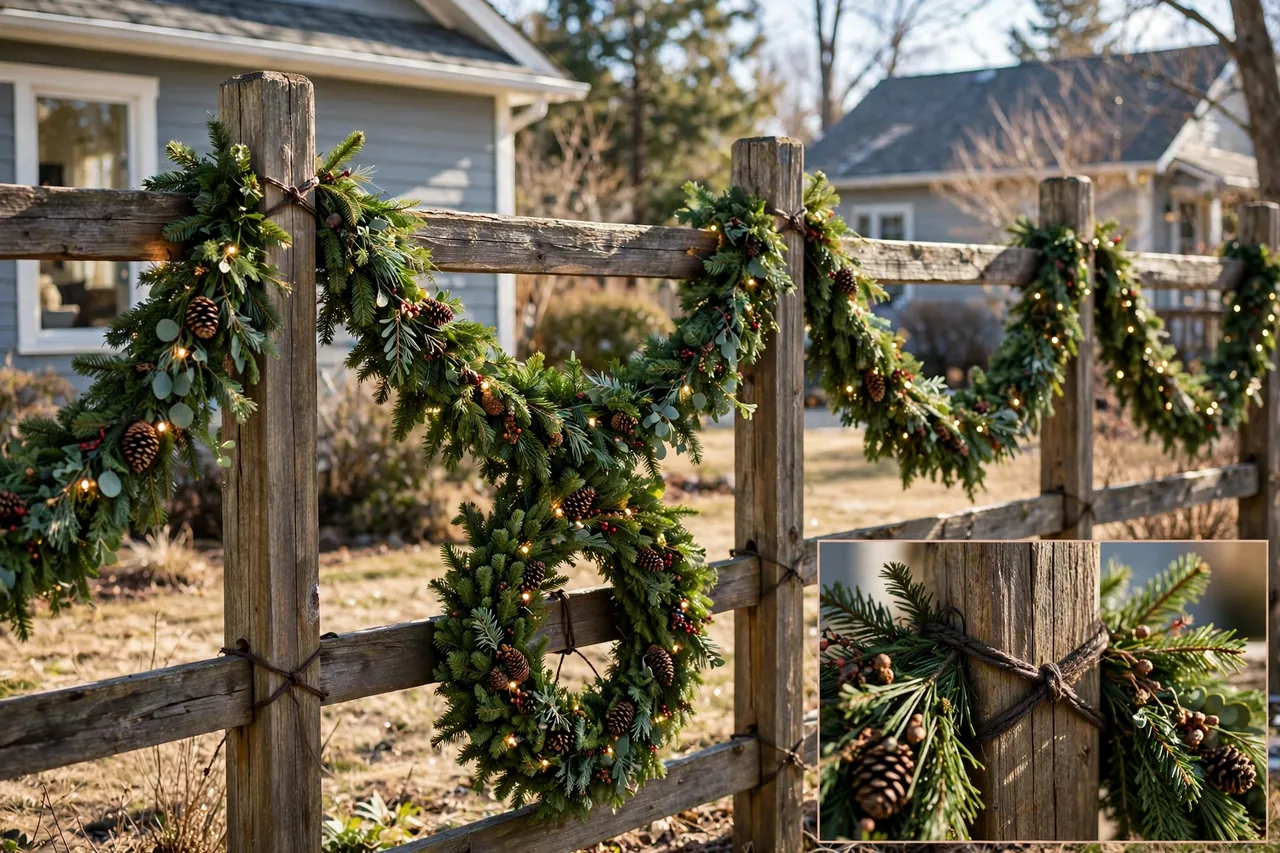
Garland is the fastest way to make christmas decor for fences look lush, but wind is its enemy. A garland tied only at the ends becomes a sail. Tie it at every post, and add one tie at the middle of any long span. If you hang swags, keep every swag dipping the same distance, because even swags read as sloppy from the street.
Build long runs the easy way: join shorter garland ropes with black zip ties first, so you hang one continuous length instead of fighting three short pieces on a ladder. If you add lights, wrap them around the garland before it goes up. Then tie the finished garland to each post with a zip tie or floral wire, and trim the tails. Check the ties after the first blustery night. Wind finds every loose tie, and a five-minute check beats chasing garland down the street.
Wreaths give your fence rhythm. Hang one wreath per fence section, or one on every second post on a long run, and keep the spacing even. Hang each wreath with an outdoor hook or a zip tie looped over the rail, never with a nail through the boards. On a metal fence, thread the tie through the bars. On a picket fence, hook it over the top rail or tie it to a slat. A wreath that spins in the wind needs a second tie at the bottom to steady it.
Choose greenery rated for outdoor use, because indoor garland fades and sheds in rain and cold. Fresh pine and cedar smell wonderful and look rich, but they dry out and drop needles, so check them weekly. Good faux garland holds its shape all season and stores well for next year. Either way, keep garland clear of heat sources and away from open flames, and bring fabric bows inside before a hard storm if you can.
Make the Fence Read From the Street
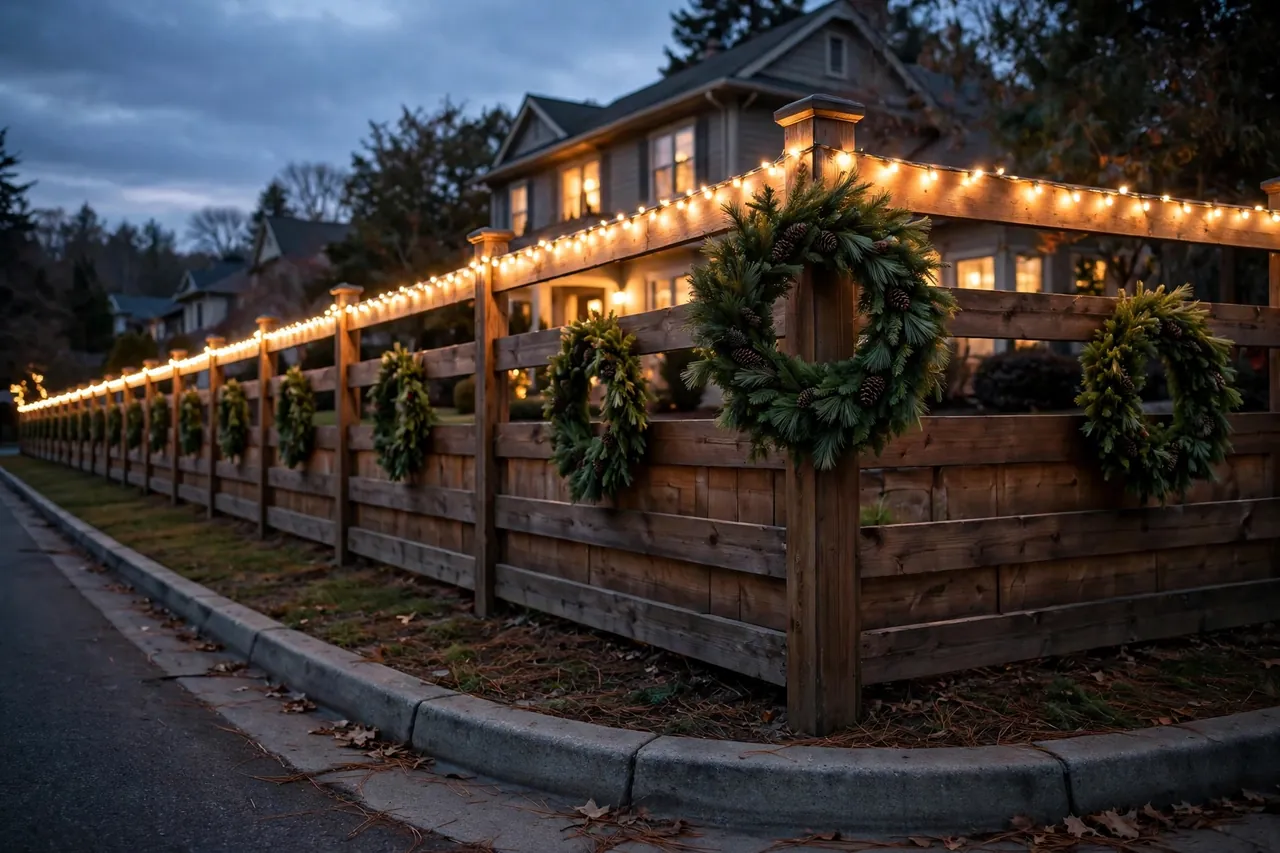
Fence decorations are made to be seen from the street, in the dark, by people walking or driving home. That changes every decision. Details that charm you from two feet away vanish at thirty feet, while rhythm and light carry all the way down the block. So design for distance first, and save fine detail for the gate, where guests actually stop and look.
Pick one light color and stick to it along the whole fence. Warm white flatters nearly every home and every fence. Multicolor suits a playful theme, but mixing warm white, icy blue, and multicolor at random makes the fence look undecided. Repeat one wreath style and one bow color at even intervals. Repetition looks planned. Variety along a fence line usually looks like leftovers.
Give the eye a place to rest. If your fence runs long, break it with one focal point: a larger wreath on the gate, a lighted star on a corner post, or a cluster of oversized ornaments where the fence turns. One strong moment beats ten small ones scattered down the line. Then let the steady run of lights carry the rest. Empty stretches between focal points are not a problem. They are the quiet space that lets your best piece shine.
Think about height, too. A single line along the top rail outlines the property and reads cleanly from the road. Add a second layer only if the fence allows it: garland swags below the lights, or wreaths at eye level on the posts. Two layers give depth. Four layers give noise. When you are unsure, step back to the curb at dusk and look. If the fence reads as one glowing border, you are done. If your eye jumps around, remove one thing.
Decorate the Gate Without Blocking It
The gate is the one part of the fence that must keep working all season, so decorate it like a doorway, not a wall. A gate dressed too heavily drags on its hinges, catches the latch, or blocks the path. Start by checking the swing. Open the gate fully and watch what clears and what catches, then keep every decoration inside the frame and off the swing path.
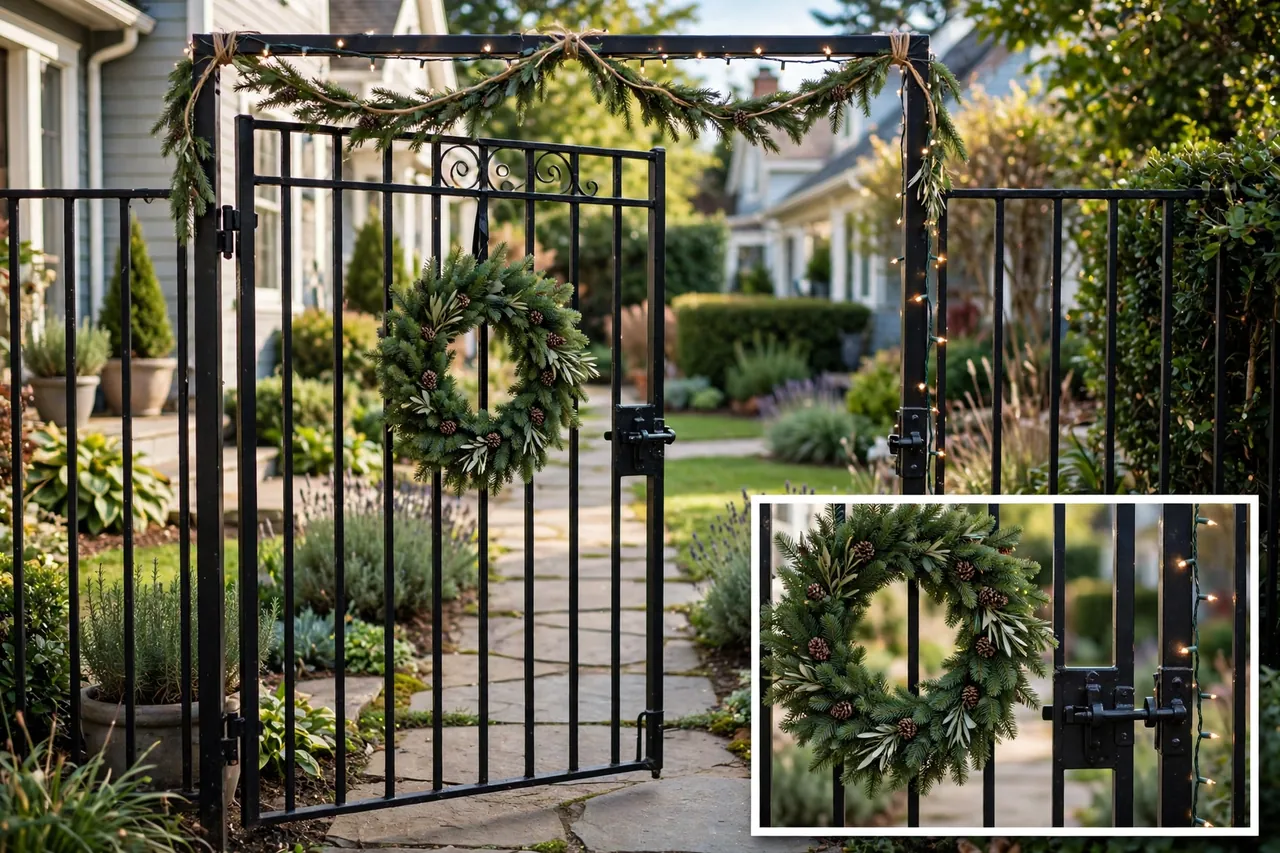
Hang one wreath on the street side of the gate, centered at eye level, and check that it clears the latch, the handle, and the hinges. If the wreath sits over the latch, guests will fight it every time they visit. A garland swag across the top of the gate works beautifully, but tie it to the gate frame itself, not to the posts on either side, or the gate will tug the swag every time it opens. Keep bows and hanging ornaments short so they cannot snag on coats, bags, or the latch.
Never hang anything heavy on a gate. A lighted wreath or a slim swag is plenty. Heavy planters, thick garland bundles, and loaded ornament clusters pull hinges out of square over a season, and a sagging gate is a January repair you did not need. If your gate already sags or sticks, fix the hinges first and decorate second. A gate that swings clean is the whole point.
Light the gate so guests can find it after dark. A short strand along the gate frame, or a solar stake light beside the gate post, marks the entrance without blinding anyone. Keep cords off the walking path and away from the hinge side, where opening and closing can pinch them. A gate that glows, opens freely, and latches cleanly is the best welcome your fence can give.
Power, Timers, and Safe Outdoor Electricity
Outdoor lights mix electricity with rain, snow, and foot traffic, so treat power as part of the design, not an afterthought. Use only lights and extension cords rated for outdoor use, and look for a recognized safety mark such as UL or ETL on the packaging. Indoor lights belong inside. They are not built for wet, cold weather, and they fail faster outside.
Plug outdoor displays into a ground-fault protected outlet, known as a GFCI outlet, which shuts off power fast if water reaches the circuit. Keep every plug connection off the ground and under a weatherproof cover, and never run cords across walkways, through gates that pinch them, or coiled tightly, because trapped heat builds up. Connect only as many strands end to end as the maker’s label allows, and read that label before you plug anything in.
Choose LED strands for the fence. According to the U.S. Department of Energy, LEDs use up to 90% less energy than incandescent bulbs and last up to 25 times longer, which matters a lot when a long fence line runs for six weeks. For the full comparison, see National Grid’s summary of the Department of Energy figures. LEDs also run cooler, which is kinder to garland and wreaths sitting right beside the bulbs.
Finish with a timer. Set your fence lights to switch on at dusk and off when the house goes quiet, and you never have to remember them in the cold. A timer also saves energy and keeps the display from burning all night for no one. Before the season starts, inspect every strand for cracked bulbs, frayed wires, or damaged plugs, and throw away any strand that looks worn. The National Park Service, citing the National Fire Protection Association, notes that holiday decorations cause about 790 home fires a year in the United States, and most are preventable with outdoor-rated gear, protected outlets, and a quick inspection. For the full safety checklist, see the National Park Service’s holiday fire safety guide.
Quick Reference: Fence Decorations at a Glance
Use this table when you plan your fence, so every choice stays consistent down the whole line.
Table: Fence decoration choices by fence type
| Fence type | Best attachment | Best look |
|---|---|---|
| Wood picket or privacy | Rail clips and zip ties | Warm white lights, garland swags, wreaths per section |
| Vinyl | Vinyl rail clips, clear zip ties | Top-rail light line, slim garland, no screws ever |
| Metal or wrought iron | Hooks and ties through the bars | Wreaths on bars, lights woven through panels |
| Chain-link | Zip ties and clips through the mesh | Net or woven lights, banners, light garland |
| Post and rail | Ties at every post | Simple swags, one wreath per section |
What Can Go Wrong (and the Easy Fix)
Every fence display runs into one of these problems sooner or later. None of them needs a new purchase, just a small fix.
Table: Common fence decoration problems and quick fixes
| Problem | Why it happens | Quick fix |
|---|---|---|
| Lights sag by morning | Clips too far apart, or wet garland grows heavy | Add clips every 12 inches and support long spans at the middle |
| Garland blows loose | Ties only at the ends | Tie at every post and recheck after the first storm |
| Wreath spins in wind | Single top tie lets it swing | Add a second tie at the bottom to steady it |
| Half the lights go out | Loose bulb, damaged strand, or overloaded circuit | Check bulbs first, replace worn strands, split the load across outlets |
| Gate sticks or drags | Decorations weigh the gate down | Remove heavy pieces, keep decor light, and check the hinges |
| Cords cross the walkway | Outlet sits far from the display | Reroute cords along the fence base under a cord cover, never loose across the path |
Take It Down Without a Trace
The best part of a no-damage fence display is the takedown. On a dry day in January, snip the zip ties, unhook the clips, and lift the garland off the posts. No holes to fill, no paint to touch up, and no apology to a neighbor about their side of the fence. Coil light strings loosely instead of winding them tight, shake the greenery out before you store it, and keep boxes dry so next December starts clean.
Walk the fence once more after everything comes down. Look for ties you missed, hooks left on rails, and any board that worked loose during the season. Fix small problems now, while you still remember them. A fence that comes out of the holidays in the same shape it went in is the quiet proof that you decorated it right.
Disclaimer: This guide covers light, seasonal decorations only. Turn off and unplug outdoor lights during storms and high winds, keep lights and cords away from power lines, and call a licensed electrician for any outlet, wiring, or circuit work. If a fence is shared with a neighbor, check your local rules and agree on decorations before you hang anything on it.
Related Guides
Christmas Decor Exterior Ideas for a Glowing Yard · Christmas Decor on Porch: 7 Layers for a Warm Welcome
Frequently Asked Questions
How do you decorate a fence for Christmas?
Run one color of outdoor lights along the top rail with clips or zip ties, hang garland swags or wreaths at even intervals, and add one focal piece at the gate or a corner post. Keep the pattern steady down the whole line, leave the gate free to swing, and step back to the street at dusk to check the rhythm.
How do you decorate a wrought iron fence for Christmas?
Thread zip ties or sturdy outdoor hooks through the bars to hold wreaths, garland, and light strands, and weave lights through the panels for a festive glow. Because metal bars show gaps, use full garland and evenly spaced wreaths so the fence reads as a finished border rather than a few pieces floating on black metal.
How do you hang Christmas lights on a fence without damaging it?
Use purpose-made rail clips that grip the fence edge, plus small zip ties looped around rails or through mesh, spaced every 12 to 18 inches. Skip nails, screws, and staples entirely, since they leave holes, crack vinyl, and can pinch wires. Snip tie tails flush, and the whole display comes off clean in January.
How do you keep fence decorations from blowing away in the wind?
Tie garland at every post, not just at the ends, add a middle tie on long spans, and steady each wreath with a second tie at the bottom. Keep decorations light, avoid wide fabric banners on exposed runs, and bring hollow or lightweight pieces inside before a storm. A quick check after the first blustery night catches loose ties early.
Can you decorate a fence gate for Christmas without blocking it?
Yes, if you keep decorations light and inside the frame. Hang one wreath that clears the latch and handle, tie any swag to the gate frame itself rather than the posts, and keep cords away from the hinge side. Open the gate fully after decorating to confirm it swings and latches cleanly before you call it done.
Your fence is the longest canvas your home owns, and now you know how to use it: one light color, steady rhythm, no-damage clips and ties, a gate that still swings, and safe outdoor power. Christmas decorations for a fence work best when they leave the fence exactly as you found it, glowing all December and clean in January. Start at the street-facing section this weekend, get that one run glowing, and the rest of the fence will follow fast.