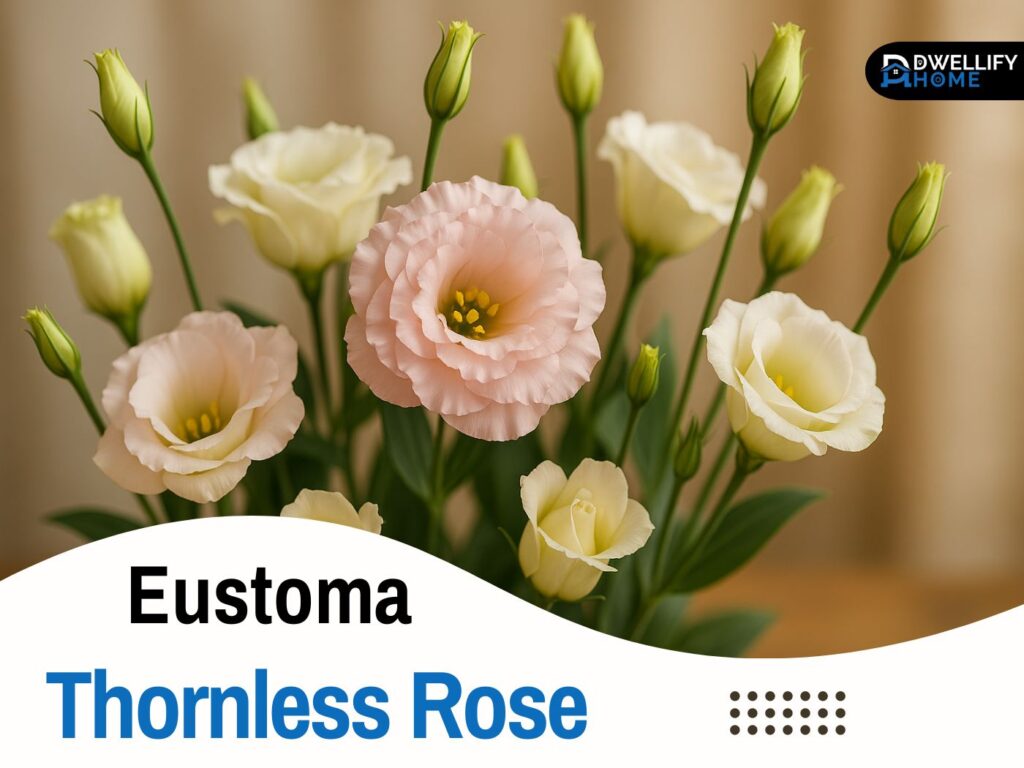
Every season, someone walks into my flower shop, picks up a stem of lisianthus, smiles, and says, “This looks like a rose… but it doesn’t bite.” That’s exactly why so many people know it as the eustoma thornless rose.
It has the soft, romantic look of a rose, but none of the thorns, scratches, or drama. On top of that, it lasts longer in a vase, feels lighter in the hand, and fits beautifully into both gardens and bouquets. In this guide, I’ll walk you through what it really is, how to grow and care for it, where to buy it, and how professionals actually use it in real life.
Short Intro about Eustoma Thornless Rose:
Eustoma thornless rose refers to lisianthus, a rose-like flower with soft, layered petals and no thorns, valued for its long vase life, elegant look, and easy handling in gardens and bouquets.
Mission Statement:
Our mission is to share practical, experience-based flower knowledge that helps gardeners and home stylists grow, care for, and enjoy beautiful plants with confidence and clarity.
What Is Eustoma “Thornless Rose” (Lisianthus Explained)
Eustoma, also known as lisianthus or Eustoma grandiflorum, is not a rose at all. It’s a completely different flower that just happens to look remarkably similar. The petals are layered, gently ruffled, and open slowly, giving that classic rose-like shape people love.
So why the nickname? Simple. It has long, elegant stems, soft petals, and zero thorns. For florists, that’s a gift. You can design a bouquet without gloves, move quickly, and still get that romantic rose effect.
I often explain it to customers like this: if roses are formal and demanding, eustoma is calm, cooperative, and just as beautiful.
Quick Comparison Table: Eustoma vs Rose
| Feature | Eustoma (Lisianthus) | Rose |
| Thorns | No thorns | Has thorns |
| Petal Look | Soft, ruffled, rose-like | Classic layered petals |
| Vase Life | 10–14 days | 5–7 days |
| Stem Weight | Light, flexible | Heavier, woody |
| Maintenance | Moderate, gentle care | Higher pruning and pest care |
| Best Use | Bouquets, weddings, containers | Gardens, fragrance focus |
Quick Care Guide (Easy Reference)
How to care for Eustoma flowers
- Full sun, with light afternoon shade in hot climates
- Well-drained, rich soil (raised beds work best)
- Water consistently but never soggy
- Avoid overhead watering
- Use balanced fertilizer during growth
- Deadhead spent blooms to encourage more flowers
Quick Facts at a Glance
Before we go deeper, here’s a quick overview to ground you.
- Bloom colors include white, blush, pink, lavender, purple, and soft blue
- Flowers can be single or double, with double blooms looking most like roses
- Stems are long and strong, making them ideal for cutting
- Vase life is excellent, often 10 to 14 days with proper care
- Grown as an annual in cooler zones and a tender perennial in warmer ones
The best part is how versatile it is. Gardeners love it. Florists rely on it. Brides request it again and again.
Lisianthus vs Rose: Which One Is Right for You
This is a question I hear constantly, especially from people planning events or home gardens.
Roses are classic, but they come with thorns, heavier stems, and shorter vase life. They also demand more pruning and pest control in the garden. Lisianthus, on the other hand, stays clean, lightweight, and easy to handle.
If you’re designing wedding bouquets, eustoma wins for comfort and consistency. For gardens, it’s ideal if you want a rose-like look without aggressive pruning or scratched arms.
That said, roses still have fragrance and tradition on their side. Many professionals actually mix both, using roses for scent and lisianthus for structure.
Types and Varieties: Choosing the Right One
Not all eustoma flowers are the same, and choosing the right type makes a big difference.
Single vs Double Blooms
Single blooms are lighter and more open. They look airy and natural in garden beds. Double blooms are fuller and closely resemble roses, which is why florists prefer them for bouquets.
If your goal is that thornless rose appearance, always choose double varieties.
Dwarf vs Tall Plants
Dwarf types are perfect for containers and patios. They stay compact and bloom lower to the ground. Tall varieties are what you see in florists’ buckets. They grow long stems and work beautifully in cutting gardens.
Where to Buy Eustoma Thornless Rose: Seeds or Plants
You’ll usually find this plant sold in two ways, as seeds or as young plants.
Seeds are widely available online, especially if you search for eustoma seeds or eustoma thornless rose seeds for sale. Plants and plugs appear seasonally at garden centers and specialty nurseries.
If you’re new, I recommend starting with young plants at least once. Growing from seed takes patience and timing, which I’ll explain next.
Eustoma Thornless Rose Seeds: What to Know Before You Buy
These seeds are tiny. I mean dust-small. Most are pelleted to make handling easier, and even then, they demand care.
Freshness matters more than anything. Old seeds lead to weak germination and frustration. When buying eustoma thornless rose seeds, look for clear labeling, recent harvest dates, and reputable sellers.
From experience, this is one flower where quality seed truly pays off.
How to Grow Lisianthus From Seed
This is where many gardeners get discouraged, so let’s keep it realistic.
Germination Setup
Eustoma seeds need light to germinate. Don’t bury them. Press them gently onto the surface of moist seed-starting mix and leave them exposed.
They prefer steady warmth and consistent moisture. Think damp sponge, not wet soil. Covering trays with a humidity dome helps early on.
Seedling Care
Here’s the honest truth. They grow slowly at first. Very slowly. This doesn’t mean they’re failing.
Good airflow, gentle light, and patience are key. Avoid overwatering. I’ve lost more seedlings to kindness than neglect.
Hardening Off and Transplanting
Once seedlings are strong and temperatures stabilize, gradually introduce them to outdoor conditions. This step prevents shock and keeps plants from stalling.
Transplant gently. Eustoma doesn’t like root disturbance.
Planting in Garden Beds and Containers
Location matters more than people think.
Choose a sunny spot with good airflow. In very hot climates, afternoon shade helps prevent stress. Soil should be rich but well-drained. Raised beds work beautifully.
Spacing is important. Crowded plants invite disease. Give them room to breathe and you’ll see stronger stems and better blooms.
Lisianthus Care for Long, Healthy Blooms
This flower rewards consistency.
Water deeply but let the soil drain. Wet roots cause problems fast. Avoid overhead watering if possible, especially in humid areas.
Feed lightly but regularly with a balanced fertilizer. Too much nitrogen leads to leaves, not flowers. Deadheading spent blooms encourages new ones and keeps plants tidy.
I always tell gardeners to observe more than react. Most issues start with overcorrecting.
Common Problems and How to Fix Them
Even experienced growers run into challenges.
Rosetting happens when plants experience temperature stress early on. They stay leafy and refuse to bloom. The fix is prevention, stable conditions and proper timing.
Fungal issues like root rot or leaf spots usually come from poor drainage or crowded plants. Good spacing and airflow prevent most of it.
Pests such as aphids and thrips can appear, but early detection keeps them manageable. Regular inspection beats heavy treatment every time.
Cut Flower Tips From a Florist’s Perspective
This is where lisianthus truly shines.
Harvest stems when a few buds are open and others are still closed. They’ll continue opening in the vase, giving you longer enjoyment.
Always recut stems before placing them in water. Clean vases and fresh water every two days extend vase life dramatically.
In my shop, lisianthus often outlasts roses by several days, which is why professionals trust it.
Garden and Bouquet Styling Ideas
In gardens, eustoma blends beautifully with lavender, cosmos, and ornamental grasses. The colors feel soft and balanced.
For bouquets, it works in everything from minimalist arrangements to lush wedding designs. Brides love the thorn-free handling and romantic look.
Designers often use it as a rose alternative or filler that doesn’t feel like filler at all.
Frequently Asked Questions
What is the difference between a rose and an Eustoma?
Roses are woody plants with thorns and fragrance, while eustoma is a soft-stemmed flower with no thorns, longer vase life, and a similar rose-like appearance.
Is Eustoma annual or perennial?
Eustoma is grown as an annual in cooler climates and can behave as a short-lived perennial in warmer zones with mild winters.
Is Eustoma invasive?
No, eustoma is not invasive. It grows slowly and does not spread aggressively or overtake garden spaces.
How do you care for Eustoma flowers?
Provide full sun, well-drained soil, steady moisture, good airflow, and light feeding. Avoid waterlogged soil and overcrowding.
How long does Eustoma take to bloom from seed?
It usually takes 5–6 months from seed to flower, which is why early indoor starting is recommended.
Final Thoughts: Why This Flower Is Worth the Effort
After years of growing, cutting, and arranging it, I can say this with confidence. The eustoma thornless rose is one of the most rewarding flowers you can work with.
It’s gentle to handle, generous in bloom, and flexible in use. Whether you’re planting a small garden bed, filling containers, or designing bouquets, it offers elegance without the usual rose problems.
If you start with good plants or quality seeds, give it patience, and respect its slow beginning, it will pay you back in beauty many times over.
Disclaimer:
This article is for informational purposes only. Growing conditions and results may vary by climate and care. Always follow local gardening guidelines and consult professionals for specific concerns.

I’m Bilal, the founder of Dwellify Home. With 6 years of practical experience in home remodeling, interior design, and décor consulting, I help people transform their spaces with simple, effective, and affordable ideas. I specialize in offering real-world tips, step-by-step guides, and product recommendations that make home improvement easier and more enjoyable. My mission is to empower homeowners and renters to create functional, beautiful spaces—one thoughtful update at a time.