If you love the look of a Blue Atlas cedar but don’t have room for a massive tree, Horstmann Blue Atlas Cedar might be exactly what you’re after. I’ve worked with this cedar for years in home gardens, small landscapes, and even containers, and it’s one of those trees that quietly steals the show without overwhelming the space.
This tree isn’t flashy because it grows fast or big. It’s special because it grows slowly, develops character over time, and keeps that beautiful icy-blue color year-round. When planted correctly, it becomes a long-term focal point that looks better every year with very little fuss.
Snippet-Ready Definition:
Horstmann Blue Atlas Cedar is a slow-growing, semi-dwarf evergreen conifer known for its icy-blue needles, upright sculptural form, and low-maintenance care, making it ideal for small gardens and focal planting.
Mission Statement:
At Dwellify Home, our mission is to help homeowners make confident, informed decisions about their living spaces by sharing practical, experience-based guidance on plants, design, and home improvement.
Quick facts
Key characteristics
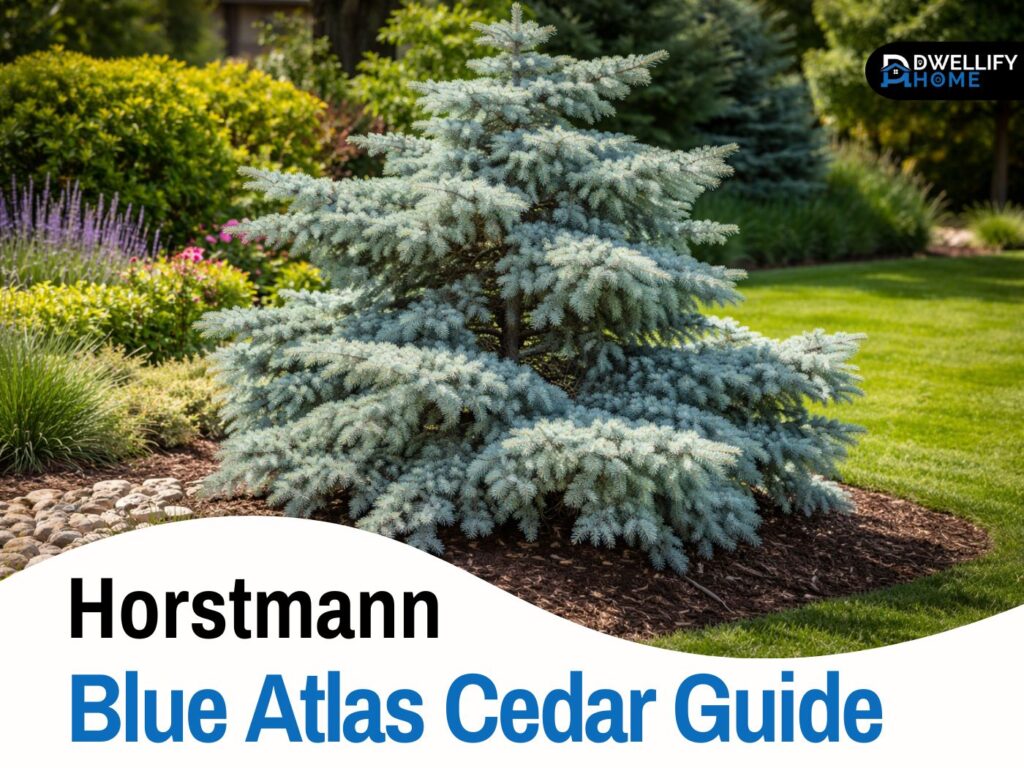
Horstmann is a semi-dwarf form of Blue Atlas cedar with dense blue needles and an upright but irregular structure. It looks architectural without being stiff, which is why designers love it.
It’s evergreen, low-maintenance once established, and naturally resistant to many common landscape issues.
Horstmann Blue Atlas Cedar size and mature form
Most mature specimens reach around 10 to 12 feet tall and 5 to 8 feet wide over many years. This isn’t a tree that rushes. It grows at its own pace and holds its shape well.
Horstmann Blue Atlas Cedar growth rate
The growth rate is slow to moderate. In real gardens, I usually see about 6 to 12 inches of growth per year when conditions are right.
Horstmann Blue Atlas Cedar zone
It performs best in USDA zones 6 through 9. It handles heat better than many people expect, as long as drainage is good.
Quick Guide Table (Comparison / At-a-Glance)
| Feature | Details |
| Botanical Name | Cedrus atlantica ‘Horstmann’ |
| Mature Size | 10–12 ft tall, 5–8 ft wide |
| Growth Rate | Slow (6–12 inches per year) |
| Hardiness Zone | USDA Zones 6–9 |
| Sun Requirement | Full sun |
| Soil Preference | Well-drained soil |
| Water Needs | Average when young, low once established |
| Maintenance | Very low |
| Best Uses | Specimen tree, small yards, rock gardens, containers |
Simple Care Checklist (Quick Bullet Guide)
- Plant in full sun for best blue color
- Ensure excellent drainage (most important rule)
- Water deeply during the first 1–2 years
- Avoid heavy fertilizing
- Prune lightly only when needed
- Choose the location carefully (doesn’t like transplanting later)
What makes ‘Horstmann’ different from other Blue Atlas cedars?
Standard Blue Atlas cedars can eventually become massive trees, often far larger than homeowners anticipate. Horstmann stays compact, controlled, and far easier to manage in residential settings.
Compared to weeping types, Horstmann has a stronger upright presence. It still develops character and movement, but it won’t sprawl unpredictably across your yard. That balance is what makes it so practical.
Appearance as it matures
Needle color and seasonal changes
The needles range from silvery-blue to icy blue. Full sun is the key here. I’ve seen the same tree look average in partial shade and absolutely stunning once moved into brighter light.
Cold weather often intensifies the blue tones, which gives winter landscapes a big visual boost.
Natural shape and branching
Horstmann develops an upright, pyramidal form with slightly irregular branching. That irregularity is a feature, not a flaw. It gives the tree personality and keeps it from looking too formal.
Horstmann Blue Atlas Cedar size: realistic expectations
One of the biggest mistakes I see is planting this cedar too close to structures. Even though it’s smaller than standard cedars, it still needs breathing room.
Give it space to reach its mature width. A good rule is at least 5 to 6 feet away from walls, paths, or other trees. When spaced properly, it never feels cramped or awkward.
Horstmann Blue Atlas Cedar growth rate and long-term behavior
This tree rewards patience. Early growth may feel slow, especially in the first few years. That’s normal. It’s busy establishing roots.
Once settled, growth becomes steady and predictable. Avoid pushing it with heavy fertilizer. Slow growth equals stronger structure and better color.
Best growing conditions
Sunlight requirements
Full sun is ideal. Aim for at least six hours of direct sunlight daily. More sun usually means better color and tighter growth.
Soil and drainage
Drainage matters more than soil type. I’ve seen this cedar thrive in sandy soils and heavier soils, as long as water doesn’t sit around the roots.
If your soil stays wet after rain, fix that before planting. Raised planting or soil amendment can save years of frustration.
Soil pH adaptability
Horstmann tolerates slightly acidic to moderately alkaline soil. Unless your soil is extreme, you probably won’t need to adjust pH.
Planting guide from real-world experience
Planting depth is critical. Never bury the root flare. I see this mistake constantly, and it’s one of the main reasons people later report problems.
Dig the hole wider than deep, set the tree slightly high, and let it settle naturally. Water deeply after planting and apply a mulch ring, but keep mulch away from the trunk.
Staking is rarely needed. Only stake if the site is windy or the tree is unusually top-heavy.
Watering and drought tolerance
During the first season, water deeply once or twice a week, depending on heat and soil type. Shallow, frequent watering does more harm than good.
After the first year or two, this cedar becomes drought tolerant. At that stage, I only water during extended dry spells. Overwatering is far more dangerous than underwatering.
Fertilizing: less is more
Most Horstmann Blue Atlas cedars don’t need fertilizer if planted in decent soil. If growth seems unusually weak, a light spring feeding with a balanced slow-release fertilizer is enough.
Avoid high-nitrogen products. They encourage soft growth that’s more prone to stress and damage.
Pruning and shaping
This tree prefers a hands-off approach. I prune only to remove dead or damaged branches, usually in late winter or early spring.
Avoid heavy shaping. Horstmann looks best when allowed to express its natural form. Over-pruning ruins the character that makes it special.
Horstmann Blue Atlas Cedar roots and transplanting
The root system prefers stability. Once established, this tree does not enjoy being moved. That’s why choosing the right location from the start is so important.
Roots are not aggressive, but they need oxygen. Compacted soil and poor drainage are common causes of decline. A mulch ring and avoiding heavy foot traffic around the base make a big difference.
Horstmann Blue Atlas Cedar problems and how to fix them
Browning needles or branches
This is usually caused by poor drainage, planting too deep, or prolonged drought during establishment. Check soil moisture first before assuming disease.
Root rot and wet soil stress
If the soil stays soggy, roots suffocate. Improve drainage immediately and reduce watering. In severe cases, relocation may be the only solution.
Pests to watch for
Pests are uncommon, but occasional spider mites or scale insects can appear, especially during hot, dry weather. Regular visual checks usually catch issues early.
Best landscape uses and design ideas
Horstmann works beautifully as a specimen tree. I often place it where the blue color contrasts with stone, gravel, or neutral house siding.
It’s excellent in rock gardens, modern landscapes, and small yards where space is limited. It also works near foundations if proper spacing is respected.
Growing Horstmann Blue Atlas Cedar in containers
Yes, it can grow in containers, and I’ve done it successfully. Use a large pot with excellent drainage and a gritty soil mix.
Container plants need more frequent watering and winter protection in colder areas. Over time, most people choose to plant it in the ground for long-term health.
Horstmann Blue Atlas Cedar for sale: buying tips
When shopping, look for a plant with strong blue color, a central leader, and healthy roots. Avoid trees that look stressed or pot-bound.
Smaller plants often establish better than larger ones. If buying online, inspect the tree immediately upon arrival and water it well.
Frequently asked questions
How big do Blue Atlas cedar Horstmann get?
Horstmann Blue Atlas Cedar typically grows about 10 to 12 feet tall and 5 to 8 feet wide over many years, making it much smaller than standard Blue Atlas cedars.
What are common problems with Blue Atlas Cedars?
The most common issues are poor drainage, root rot, browning needles from stress, and occasional pests like spider mites. Most problems come from overwatering or planting too deep.
How fast does a Blue Atlas cedar grow?
It grows slowly, usually about 6 to 12 inches per year. Slow growth helps it maintain strong structure and long-term health.
How to care for a Horstmann Blue Atlas Cedar?
Plant it in full sun, use well-drained soil, water deeply during establishment, avoid heavy fertilizer, and prune lightly only when necessary.
Can Horstmann Blue Atlas Cedar grow in a pot?
Yes, it can grow in containers when young, but it performs best long-term when planted in the ground with good drainage.
Conclusion: final thoughts from years of experience
Horstmann Blue Atlas Cedar is a tree for people who value patience and long-term beauty. Plant it in full sun, give it well-drained soil, and resist the urge to overcare.
If you get the location right from day one, this cedar will reward you with decades of structure, color, and quiet elegance. In my experience, it’s one of the most dependable blue conifers you can add to a home landscape.
Disclaimer:
The information on this page is based on real-world horticultural experience and general gardening practices. Growing conditions may vary, so always consider your local climate, soil, and site conditions before planting.

I’m faizan, a contributor at Dwellify Home with experience in decorating, renovation support, and creating functional spaces that suit everyday life. I enjoy breaking down design concepts into easy, step-by-step advice so anyone—from beginners to DIY lovers—can improve their home with confidence. My goal is to help you create a space that feels welcoming, stylish, and well-designed.