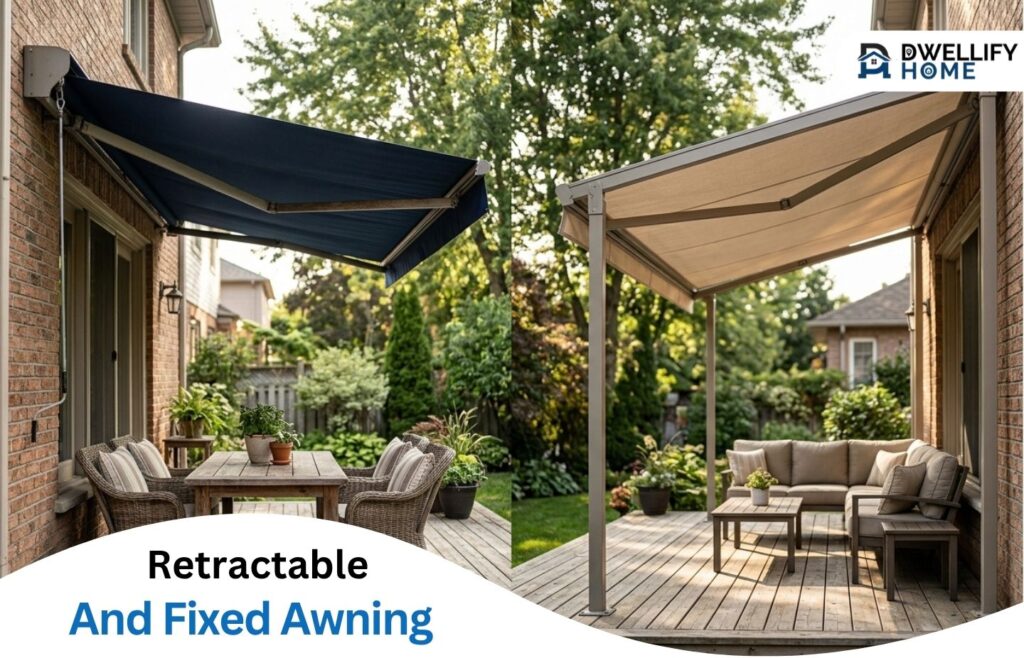
If you’re considering adding shade to your outdoor space, understanding the key differences between awning types will help you make the right investment for your home. What is the difference between a retractable and a fixed awning?
A retractable awning can be extended or rolled back as needed, while a fixed awning is permanently attached and stays in place year-round. Retractable awnings offer flexibility and protection from weather damage, whereas fixed awnings provide constant coverage and typically cost less upfront.
Keep reading to discover which awning type actually makes sense for your specific situation, because factors like your local climate, budget, and how you use your outdoor space can completely change which option gives you the best value.
Which Awning Type Works Best For Your Climate?
Your local weather patterns play a huge role in determining which awning type makes practical sense. If you live in an area with harsh winters, heavy snow, or frequent storms, a retractable awning lets you protect your investment by rolling it away during severe weather. Snow loads can damage or even collapse a fixed awning, leading to costly repairs or complete replacement.
Detroit is a good example of why climate matters so much in this decision. With heavy snow and ice in winter followed by hot, humid summers, homeowners looking for retractable awnings in Detroit are making a smart call — being able to roll the awning away before the first freeze and redeploy it in spring significantly reduces wear and makes the higher upfront cost easier to justify. Opting for automated systems like a Solera by Lippert retractable model simplifies this seasonal transition, allowing you to quickly secure the fabric when unexpected storms or winter conditions roll in.
In a mild climate with consistent sunshine and minimal extreme weather, a fixed awning might be the simpler choice — no need to worry about extending and retracting constantly, and it provides reliable shade day in and day out. Areas with intense year-round sun exposure benefit from the consistent UV protection that a fixed awning provides for windows, doors, and outdoor furniture.
Climate also affects maintenance requirements. Retractable awnings stored during off-seasons tend to last longer because they’re not constantly exposed to the elements. Fixed awnings require more durable, weather-resistant materials because they face sun, rain, wind, and temperature changes every day. Consider how much seasonal weather variation you experience when making your decision.
How Do The Costs Compare?
Fixed awnings generally have a lower upfront cost, typically ranging from $300 to $1,500 for standard residential installations. The simpler design and permanent installation mean fewer moving parts and less complex hardware — you’re essentially paying for the frame, fabric, and a one-time installation.
Retractable awnings come with a higher initial price tag, usually between $500 and $4,000 or more depending on size and whether you choose manual or motorized operation. The mechanical components add to the cost, and motorized versions with remote controls or smart home integration sit at the higher end of that range.
Long-term costs tell a different story. Retractable awnings often last 10–15 years with proper care, while fixed awnings typically need replacement every 5–10 years due to constant exposure. Factor in potential repair costs for fixed awnings damaged by storms or snow, and the total cost of ownership might actually favor the retractable option, especially in areas with challenging weather conditions.
Practical Differences In Daily Use
With a fixed awning, there’s nothing to think about — shade is always there when you need it. This makes it ideal for covering entryways, protecting windows from constant sun, or shading a patio you use regularly throughout the day. There’s no need to remember to extend it before guests arrive or retract it before bad weather hits.
Retractable awnings require a bit more hands-on management but offer flexibility that fixed awnings can’t match. Want full sun for morning coffee but shade for an afternoon barbecue? A retractable awning lets you adjust throughout the day. Manual versions require physical effort to crank open and closed, while motorized options let you adjust with the push of a button or program automatic schedules.
The flexibility of retractable awnings also means you can maximize natural light during cooler months when you want passive solar heating, then extend coverage during summer to reduce cooling costs. Fixed awnings block the same amount of light year-round, which might mean losing beneficial winter sun. If you value adaptability and don’t mind the extra step of operating your awning, retractable is the way to go. If you prefer set-it-and-forget-it simplicity, a fixed awning fits that lifestyle better.
What Maintenance Requirements Should You Expect?
Both awning types need regular cleaning to prevent dirt, debris, and mildew buildup, but the maintenance schedules differ significantly based on exposure. Fixed awnings require more frequent attention since they’re constantly facing the elements — cleaning the fabric every few months, inspecting the frame for rust or corrosion, and checking that water drains properly to prevent pooling. Leaves, bird droppings, and pollen accumulate faster on a permanent structure, meaning more hands-on upkeep throughout the year.
Retractable awnings benefit from being stored away during harsh weather, which naturally reduces wear and tear. However, the mechanical components introduce their own maintenance needs — lubricating moving parts, checking fabric tension as it extends and retracts, and ensuring the motor functions properly in motorized versions. The fabric may last longer since it’s protected when retracted, but hardware requires periodic inspection to prevent operational issues.
Winter preparation differs dramatically. Fixed awnings in snowy climates need reinforcement or risk collapse, and some homeowners choose to remove them each fall and reinstall in spring. Retractable awnings simply get rolled up — though you should clean and dry them thoroughly before the final retraction of the season to prevent mold growth. If you’re not particularly handy or don’t want to spend time on seasonal maintenance routines, factor this into your decision.
How Do Installation Requirements Differ?
Fixed awning installation is generally more straightforward, often completed in a few hours by a professional. The frame gets permanently mounted to your home’s exterior wall, requiring solid anchoring into studs or masonry. Because the structure doesn’t move, installation focuses on ensuring the awning is level, properly angled for water runoff, and securely fastened to withstand wind. Many homeowners with basic DIY skills feel comfortable installing smaller fixed awnings, though larger units still benefit from professional installation.
Retractable awning installation is more complex, particularly for motorized systems. The mounting brackets must support not just the weight of the awning but also the stress of repeated extending and retracting motions. Motorized versions require electrical wiring, which may mean hiring both an awning installer and an electrician. The pitch and positioning become especially critical because the awning needs to operate smoothly through its full range of motion without binding or sagging.
Your home’s structure also plays a role in determining which awning type is feasible. Some houses lack the appropriate wall space or structural support for a retractable awning’s mounting requirements, making a fixed awning the only viable option. Brick, stucco, vinyl siding, and wood all require different mounting techniques and hardware. Getting a professional assessment of your specific installation site can reveal limitations you hadn’t considered, potentially influencing which awning type makes sense for your situation.
Which Option Provides Better Long-Term Value?
When evaluating long-term value, consider the full picture beyond purchase price. In regions with four distinct seasons, a retractable awning’s ability to be stored during winter can more than offset the higher upfront cost through extended product lifespan alone. In mild climates where weather extremes are rare, a fixed awning’s lower cost and zero-maintenance mechanical simplicity may make it the smarter financial choice.
Energy savings also factor into the equation. Both awning types can reduce cooling costs by blocking direct sunlight from entering windows, but retractable awnings provide more nuanced control — maximizing solar gain in winter and blocking it in summer. Fixed awnings deliver consistent shading year-round, which is ideal in hot climates but less efficient in climates with cold winters where solar heat gain is actually desirable.
Aesthetic and resale considerations matter too. Well-chosen awnings enhance curb appeal and can increase home value. Retractable awnings with motorized operation often read as a premium upgrade to potential buyers, while fixed awnings signal practical, low-maintenance design thinking. Neither is universally superior — it depends on what prospective buyers in your market value.
Making Your Awning Decision
Take a close look at your local weather patterns and honestly assess how much hands-on management you’re willing to commit to. This combination of climate reality and lifestyle preference will guide you toward the right choice more than any other factor. Once you’ve made that determination, get quotes from at least three local installers who can evaluate your specific home and provide recommendations based on your actual installation site.
Some links in this article may be affiliate or sponsored links. If you choose to purchase through them, we may earn a small commission at no extra cost to you. These commissions help support Dwellifyhome.com and the creation of future content.