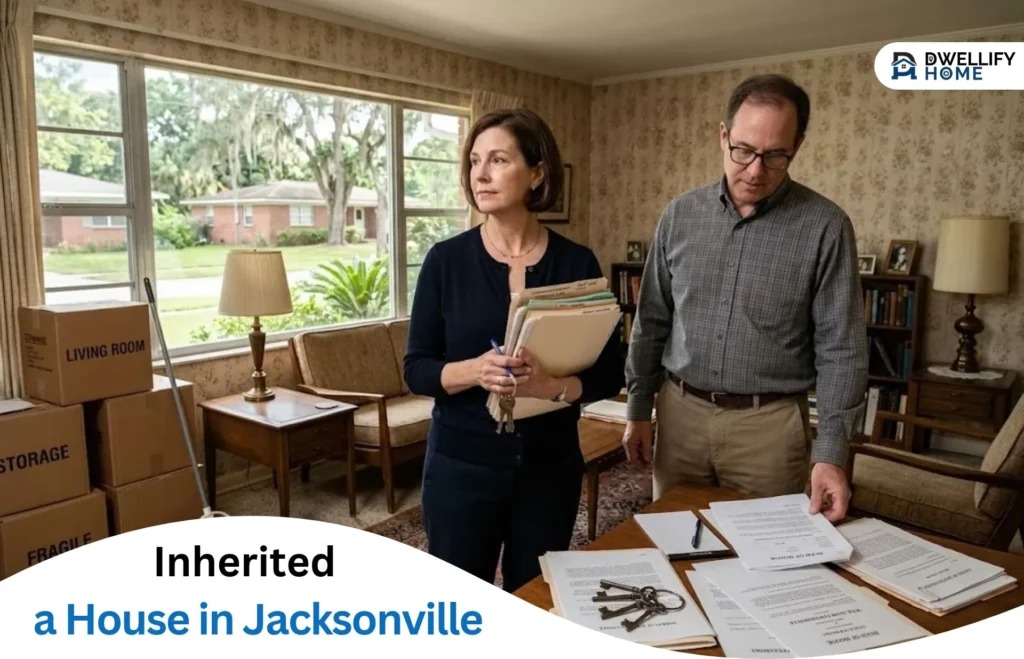
Inheriting a house is rarely just a property matter. It usually comes during a period of grief, often with siblings or other relatives involved, and sometimes with a home that hasn’t been updated in years. If the house is in Jacksonville and you live somewhere else, the logistics can feel overwhelming.
The good news is that the process becomes far more manageable when you take it one step at a time. Here’s a practical order of operations.
Step 1: Secure and protect the house
Before any paperwork, make sure the property is safe from avoidable damage.
- Change or re-key the locks, and collect spare keys from neighbors or caregivers.
- Keep the power on and the air conditioning running at a moderate setting. In Northeast Florida’s heat and humidity, a closed-up house without climate control can develop mold surprisingly fast.
- Confirm the homeowners insurance is still active and tell the insurer the owner has passed away. Many standard policies limit coverage for vacant homes, so ask whether you need a vacancy endorsement or a different policy.
- Arrange for someone to check on the property regularly, especially during hurricane season, which runs from June through November.
Step 2: Understand Florida probate basics
In most cases you can’t sell an inherited house until someone has legal authority over it, which usually happens through probate. In Jacksonville, probate cases are handled by the probate division of the Fourth Judicial Circuit in Duval County.
Florida has two main types of probate administration:
- Summary administration is a shorter, simpler process. It’s generally available when the value of the estate subject to probate, excluding property that’s exempt from creditors’ claims, is $75,000 or less, or when the person died more than two years ago. A Florida homestead is often treated as exempt for this purpose, which is why some estates whose main asset is the family home can still qualify.
- Formal administration applies to larger or more complex estates. The court appoints a personal representative to handle the estate’s affairs, including selling real estate when authorized.
Which process applies depends on the will (if there is one), the estate’s assets, and whether the house qualifies as homestead. Florida’s homestead rules are nuanced, so this is the point to talk to a local probate attorney rather than guess.
Step 3: Gather the right documents
You’ll save time by collecting these early:
- Certified copies of the death certificate
- The will, if one exists
- The current deed and any mortgage statements
- Recent property tax bills
- Homeowners insurance policy details
- HOA documents, if the home is in an association
Step 4: Decide what to do with the house
Once you understand the legal path, you and any co-heirs can weigh your options.
Keep it
Moving in, or keeping the house as a second home, can make sense if the location suits you and you can afford the ongoing costs. Those include property taxes, insurance (which has risen sharply in Florida in recent years), maintenance, and any mortgage still owed.
Rent it out
Renting can turn the house into income, but it also turns you into a landlord. Older homes often need updates before they’re rentable, and managing a property from a distance usually means paying a property manager. Run the numbers carefully, including vacant months and repairs.
Sell it
Selling is often the cleanest option, particularly when several heirs want their share or nobody lives nearby. You can repair and list with an agent, list as-is, or sell directly to a buyer who purchases houses in their current condition.
If the home needs significant work or is full of a lifetime of belongings, it’s worth getting a direct offer to compare. Many families who sell an inherited house in Jacksonville this way do so because it spares them months of cleanout, repairs and showings.
Whichever route you take, a sale of probate property generally can’t close until the personal representative has authority or the court has approved the transfer. Coordinate the timing with your attorney and title company.
Step 5: Think about taxes before you sell
Inherited property is often treated differently from property you bought yourself. In many cases, the cost basis of an inherited home is “stepped up” to its fair market value at the date of death. That can significantly reduce capital gains tax if you sell soon after inheriting. Florida has no state income tax, but federal rules still apply, so speak to a tax professional before closing.
Step 6: Keep communication open with co-heirs
Disagreements among heirs are one of the most common reasons inherited homes sit empty for years. Share documents, estimates and offers openly, and put agreements in writing. If you can’t reach a consensus, an attorney can explain your options.
A final word
Inheriting a home in Jacksonville comes with responsibilities, but you don’t need to solve everything at once. Protect the house, get clear on probate, gather your paperwork, and then decide calmly whether to keep, rent or sell. A methodical approach protects both the property’s value and your peace of mind.
For clarity, some links included in this article may be part of commercial affiliate or sponsored relationships. Dwellifyhome.com may receive compensation through these arrangements, which support the website’s ongoing operations.