Some homes look current the day they’re built and still feel comfortable years later. That’s usually the strength of contemporary home design. It isn’t only about having a clean exterior or a simple interior. It’s about creating a home that fits the way people live now, with better light, easier movement, practical comfort, and a look that feels current without becoming hard to live with.
In real homes, that often means fewer unnecessary details, more thoughtful layouts, and materials that do more than just look good in photos. A well-planned contemporary house feels open, calm, and useful. It gives each space a purpose, but it doesn’t feel stiff or overly styled.
Snippet-Ready Definition
Contemporary home design is a modern architectural and interior style defined by clean lines, open layouts, large windows, and simple materials. It focuses on functional living spaces, natural light, and a calm, uncluttered environment.Mission Statement
Dwellify Home exists to help homeowners make practical, stylish, and informed decisions about home design, décor, and everyday living spaces.
What Contemporary Home Design Means
The simplest way to understand contemporary home design meaning is this: it reflects the design language of the present time. Unlike older styles that are tied to a specific era, contemporary design keeps evolving. What feels contemporary today may shift over the next few years as materials, lifestyles, and preferences change.
That flexibility is part of what makes the style appealing. It can borrow from modern design, minimal design, and even natural or industrial influences, but it stays rooted in what feels current and livable. In practice, that usually means clean lines, open spaces, natural light, and a strong balance between style and function.
Key Benefits of Contemporary Home Design
- Creates brighter living spaces through larger windows and open layouts
- Supports modern lifestyles with flexible, functional floor plans
- Uses simple materials and neutral colors that age well over time
- Encourages indoor-outdoor living and better connection to natural light
- Works well for both new builds and updated existing homes
Contemporary Home Design vs Modern Design
This is one of the most common points of confusion. Modern design refers to a specific design history, largely connected to the early and mid-20th century. Contemporary design, on the other hand, refers to what feels current now. The two can overlap, but they are not the same thing.
A modern interior often sticks more closely to a recognizable design language. A contemporary interior is looser and more adaptable. It may use modern furniture shapes, but it can also include softer textures, warmer woods, smarter storage, or newer finishes. That’s why contemporary vs modern design matters so much when planning a home. One is a defined style history, and the other is a moving target shaped by current living.
Core Elements of the Style
Most contemporary homes share a few clear traits. Clean lines are one of them. You’ll usually see simple forms, less visual clutter, and a layout that feels easy to understand. Rooms are designed to flow into each other instead of feeling boxed in or overly divided.
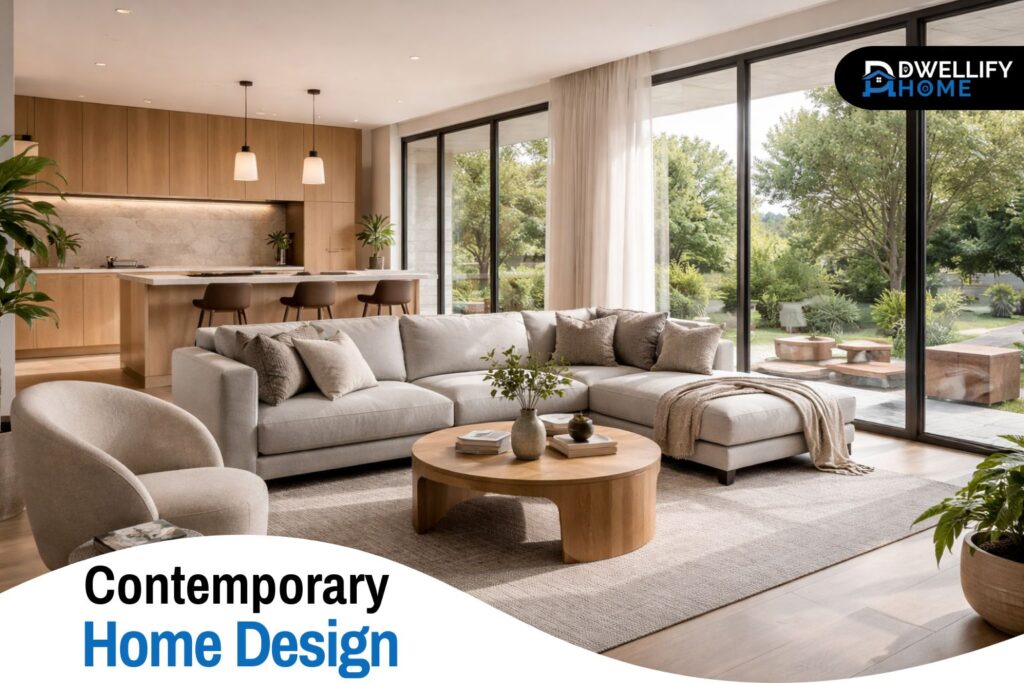
Open floor plans also play a big role. The goal isn’t just to remove walls for the sake of it. Good open planning improves movement, daylight, and the connection between spaces. In well-designed homes, the kitchen, dining, and living areas work together without losing definition. That takes more thought than people realize, especially when privacy, storage, and noise control are part of daily life.
Color Palette, Materials, and Texture
The color palette in a contemporary home design style usually starts with neutrals. White, beige, soft gray, taupe, and muted earth tones are common because they create a calm base and make the architecture stand out. Darker accents are often added to sharpen the space and keep it from looking washed out.
Materials matter just as much as color. Wood, glass, metal, concrete, and stone are all common in contemporary architecture. The difference is in how they’re combined. A home with too many hard surfaces can feel cold quickly. The better approach is to mix clean finishes with warmer textures, such as oak flooring, matte stone, soft upholstery, or woven elements. That balance is what keeps a room from feeling flat or overly polished.
Contemporary Home Design Interior
A strong contemporary home design interior feels open and edited, but not empty. In living rooms, that often means low-profile seating, thoughtful lighting, and furniture that leaves enough breathing room around it. The space should feel easy to move through, not packed from wall to wall.
In kitchens, the same logic applies. Clean cabinetry, practical storage, and a simple material palette usually work better than too many contrasting finishes. Bedrooms and bathrooms tend to follow the same pattern: fewer decorative distractions, more attention to comfort, proportion, and light. Even a home office or flexible work nook benefits from that approach. A clear layout and controlled visual noise make the space feel better to use every day.
Furniture and Decor
Furniture in a contemporary interior should look intentional. Pieces with clean silhouettes usually work best, but they still need to feel comfortable. That’s one of the mistakes people make when trying to copy show-home styling. They focus on shape and forget softness, scale, and real use.
Decor should support the room rather than compete with it. One large artwork often works better than several small items fighting for attention. Lighting also does a lot of heavy lifting in contemporary spaces. Good pendant lights, wall lights, and floor lamps add structure and warmth at the same time. Negative space matters too. Not every corner needs to be filled.
Contemporary Home Design Exterior
A contemporary home design exterior often relies on strong geometry and restraint. You’ll usually see simple volumes, flat or low-pitched rooflines, larger windows, and a clear relationship between solid walls and glass. It’s less about decoration and more about proportion, material contrast, and form.
The best exteriors also connect well with the landscape. A contemporary house shouldn’t feel dropped onto the site without context. Outdoor paving, planting, entry paths, and boundary walls all influence how the architecture reads. Even a simple home can feel more resolved when the exterior materials and landscaping speak the same language.
Plans and Layout Ideas
Contemporary home design plans usually prioritize flow, daylight, and flexibility. That sounds straightforward, but it takes careful planning. Open-concept layouts work best when each zone still has a clear function. A kitchen island, ceiling treatment, or change in lighting can define areas without closing them off.
Window placement is another detail beginners often overlook. Large windows are useful, but only when they respond to privacy, climate, and orientation. In hot regions, too much unprotected glass can create discomfort. In family homes, storage and circulation matter just as much as visual openness. A beautiful layout that ignores everyday living rarely holds up well.
Ideas for Real Homes
Contemporary home design ideas don’t always require a full rebuild. In existing homes, small changes can shift the feel of a space quickly. Updating lighting, simplifying wall colors, replacing bulky furniture, or improving the connection between indoor and outdoor areas can move a home in a more contemporary direction.
Budget matters here. It’s usually smarter to improve a few visible and high-use elements well rather than make too many scattered changes. Flooring, kitchen fronts, wall finishes, and lighting tend to have more impact than decorative add-ons. In small contemporary home design, that discipline matters even more. Simplicity, smart storage, and careful furniture scale can make a compact home feel lighter and more open.
Simple contemporary house design works especially well for people who want a calmer home. It strips away visual noise without making the space feel bare. The aim is not to make everything minimal. It’s to choose what earns its place.
Warmth, Sustainability, and Smart Function
One reason some contemporary homes feel inviting while others feel cold comes down to layering. Clean lines need softness around them. Curtains, rugs, textured fabrics, timber, and natural finishes all help. Personal items can fit in too, as long as they’re displayed with some restraint.
Sustainability also fits naturally into this style. Energy-efficient glazing, better insulation, durable finishes, and passive daylight strategies all support the goals of contemporary design. Smart technology can also improve daily use, especially in lighting, climate control, and security, but it should solve real needs instead of adding complexity for the sake of it.
Common Mistakes to Avoid
A common mistake is treating contemporary design as a blank room with expensive finishes. That usually leads to spaces that look sharp at first but feel uncomfortable later. Another is overusing gray, black, and glossy surfaces without adding enough warmth or texture.
Copying trends too literally is another trap. What works in a wide, sunlit new build may not work in a smaller home or a renovation. Regional context matters too. For example, contemporary home design Kerala or other warm-climate settings may need stronger attention to ventilation, shading, moisture-resistant materials, and covered outdoor transitions. Good design always responds to place, not just to style images.
Is This Style Right for You?
This style suits people who want a home that feels current, uncluttered, and easy to maintain. It also works well for homeowners who value natural light, open layouts, and a strong connection between indoor and outdoor living. That said, it’s not the best fit for everyone.
Homes that feel most successful in this style are the ones where design choices follow real routines. Households that need lots of visible storage, softer visual layering, or more traditional room separation may want to adapt the style rather than follow it too strictly. The right question isn’t whether the style looks good. It’s whether it supports the way you actually live.
FAQs
What is the contemporary home style?
Contemporary home style reflects current design trends. It usually includes open layouts, simple shapes, neutral color palettes, large windows, and a mix of natural materials such as wood, glass, and metal.
What is the difference between modern and contemporary house design?
Modern design refers to a specific design movement from the early to mid-20th century. Contemporary design refers to current and evolving design trends that adapt to modern lifestyles and new materials.
What town has the most mid-century modern homes?
Palm Springs, California is widely known for having one of the largest collections of mid-century modern homes, many designed during the 1940s to 1960s by well-known architects.
What is the prettiest house on Earth?
There is no single house considered the prettiest worldwide because design preferences vary by culture and personal taste. Homes admired for beauty often combine thoughtful architecture, natural surroundings, and balanced proportions.
Conclusion
Contemporary home design works best when it balances clean aesthetics with everyday comfort. The strongest homes in this style are bright, practical, and calm, but they also feel personal and easy to use. That balance is what gives the look staying power.
A well-designed contemporary home doesn’t rely on trends alone. It uses good light, smart layout decisions, honest materials, and a clear sense of function to create spaces that still feel right after the first impression fades. That’s what makes it worth getting right.
Disclaimer
Content on Dwellify Home is for informational and inspiration purposes only. Design decisions should consider individual needs, budgets, and professional advice when necessary.

I’m Bilal, the founder of Dwellify Home. With 6 years of practical experience in home remodeling, interior design, and décor consulting, I help people transform their spaces with simple, effective, and affordable ideas. I specialize in offering real-world tips, step-by-step guides, and product recommendations that make home improvement easier and more enjoyable. My mission is to empower homeowners and renters to create functional, beautiful spaces—one thoughtful update at a time.