Curtain hardware tends to get ignored until a room feels slightly off. The panels don’t close properly, light leaks in from the sides, or the rod looks bulkier and more decorative than the space needs. That’s usually when french return curtain rods start making more sense. They solve a few very practical problems at once, which is why they’ve stayed relevant for so long.
In real homes, this style is often chosen for one simple reason: it helps curtains do their job better. It also gives the window a neater, more finished look. Once you understand how the return works, it becomes much easier to decide whether this is the right rod style for your room or just an unnecessary extra.
Snippet-Ready Definition:
French return curtain rods are curtain rods that curve back to the wall at each end, helping curtains sit closer to the sides for better light control, privacy, and a cleaner finish.
Mission Statement:
Dwellify Home helps homeowners make practical, stylish, and informed décor decisions with clear guidance they can actually use.
What Are French Return Curtain Rods?
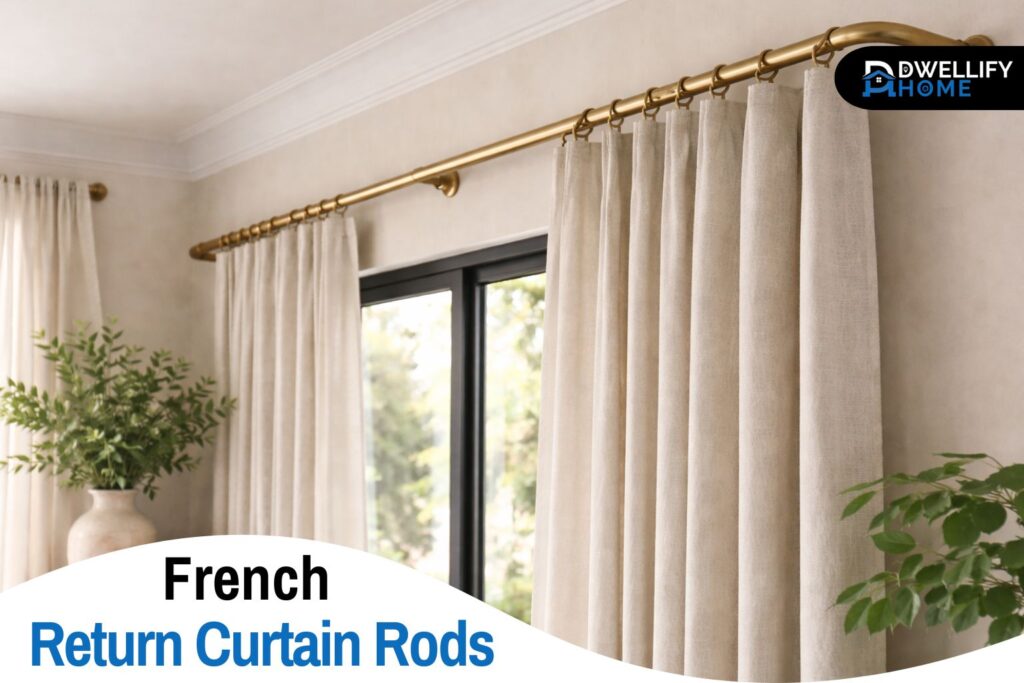
A french return curtain rod is a rod that curves or angles back toward the wall at both ends. Instead of stopping with an exposed tip or decorative finial, the rod “returns” into the wall. That changes both the look and the function of the window treatment.
On a standard rod, there’s usually a gap between the end of the curtain and the wall. On a return rod, that side gap is reduced because the curtain can wrap closer to the wall. That’s why this style often shows up in rooms where privacy, darkness, or a cleaner tailored look matters more than decorative rod ends.
What the “Return” Actually Means
The “return” is simply the section at each end of the rod that bends back toward the wall. It may be gently curved or made with a sharper angled corner, depending on the design. Either way, the purpose is the same: bring the drapery back to the wall instead of leaving the ends open.
That small design detail makes a bigger difference than most people expect. It affects how much side light comes through, how the curtain hangs, and how finished the whole window looks once everything is installed. It also means you need to think a little more carefully about brackets, supports, and curtain style before buying.
How French Return Curtain Rods Work
The rod projects out from the wall above the window, then wraps back at the ends. Curtains hang along the front span and continue toward the return, which lets the fabric sit closer to the wall. In practical terms, that reduces those thin slivers of light you often see at the outer edges of a standard drapery setup.
This design also changes how the eye reads the window. The rod feels less like a separate decorative piece and more like part of the architecture. In bedrooms and media rooms, that functional wraparound shape can make a noticeable difference, especially when paired with blackout or room-darkening panels.
Why People Choose French Return Curtain Rods
The biggest reason is better coverage. Side light is one of the most common complaints with curtains, and return rods help with that without needing a much more complicated treatment. They’re especially useful in bedrooms, nurseries, guest rooms, and anywhere privacy matters after dark.
The second reason is visual simplicity. Because there are no large finials sticking out at the ends, the rod looks quieter and more built in. That works well in rooms that lean traditional, transitional, or minimal. It’s also useful on windows near a corner where a finial would feel awkward or take up too much space.
French Return Curtain Rods vs Standard Curtain Rods
A standard curtain rod is simpler and usually more flexible from a decorative standpoint. You get more finial choices, easier panel movement, and often a lower price. For casual curtains in a living room where side light isn’t a problem, that may be all you need.
A return rod is more purpose-driven. It gives better edge coverage and a more enclosed look, but it asks a bit more from the setup. You need to pay attention to the type of curtain heading, how rings will move, and whether the rod needs a center support. In other words, a standard rod is easier, while a return rod is often smarter for specific needs.
Where French Return Curtain Rods Work Best
These rods work especially well in bedrooms. That’s where people usually notice side light the most, especially early in the morning. A return design won’t make a bright room completely black on its own, but it does help close the outer gaps that standard rods leave behind.
They also work well in living rooms that need a cleaner look, in smaller rooms where projecting finials feel bulky, and on windows near side walls. Bay windows and corner windows can also benefit from this style, though those usually require more planning and sometimes custom drapery hardware.
Are French Return Curtain Rods Good for Blackout Curtains?
Yes, and this is one of their best uses. Blackout curtains work best when they cover more than just the glass. They need overlap at the top, sides, and ideally below the sill or down to the floor. A return rod helps with the side portion of that job.
Still, the rod alone won’t fix a poor setup. Thin blackout panels, shallow returns, or curtains that are too narrow will still leave light gaps. The best results come from combining a proper return depth with wide enough panels and fabric that has enough body to sit well against the sides.
What Curtains Work Best With French Return Curtain Rods?
Pleated drapery usually works very well because it hangs in a controlled way and suits the cleaner line of the rod. Ringed panels can also work nicely, as long as the hardware is designed for that use. Rod pocket curtains may fit, but they’re not always the smoothest choice if you plan to open and close them often.
Grommet curtains can work too, but they don’t always handle the return as gracefully, especially on tighter curves. In real use, the easiest setups tend to be pleated panels with rings or well-made rod pocket curtains used more for a stationary look than daily movement.
Can French Return Curtain Rods Use Rings?
Yes, but not every ring setup works equally well. This is one of those details people often overlook. On some rods, the rings glide well across the front span but stop before the return or catch near support brackets. That doesn’t mean rings are wrong. It just means the hardware needs to be designed as a system.
Before ordering, it’s worth checking how the rings interact with the return and whether the curtain is meant to draw fully closed. Decorative rings may look fine in a product photo but be frustrating in daily use if they don’t move smoothly where the rod changes direction.
How to Choose the Right Size, Projection, and Support
Size matters more with return rods than with ordinary rods. The width needs to suit both the window and the amount of stack space required when the curtains are open. The projection, meaning how far the rod sits out from the wall, needs enough room for the fabric to hang without crowding the window or rubbing against trim.
Support is another common mistake. Heavier drapes or wider spans often need center brackets, and those brackets can affect how the curtain moves. A rod may look clean in theory, but if it sags in the middle or the panels keep catching on supports, the setup won’t feel good in daily use.
Curved vs Mitered French Return Curtain Rods
Curved returns have a softer look and tend to suit more traditional or classic interiors. Mitered returns, which use an angled joint instead of a smooth curve, can feel a bit sharper and more architectural. Neither is automatically better. It depends on the room and the rest of the hardware.
From a practical standpoint, the difference is usually more visual than functional. Still, some curtain styles behave a little better on gentler curves than tighter angles. That’s one reason it helps to think about the rod and the curtain together rather than treating them as separate decisions.
Popular Materials and Finishes
Brass remains a popular choice because it brings warmth without feeling too heavy. French return curtain rods brass finishes work especially well with linen drapes, off-white walls, and older homes that need hardware with a little depth. Antique brass has an even softer look and works nicely in traditional or lived-in spaces.
Black, iron, and brushed nickel are also common. Matte black feels clean and current, brushed nickel tends to blend quietly into cooler interiors, and darker iron finishes can add weight to a room with deeper trim or richer colors. The finish should support the room, not steal attention from it.
French Return Curtain Rods for Bay Windows and Corner Windows
Bay windows and corners are where this rod style can get a bit more specialized. The basic idea still works, but the measurements have to be exact, and the hardware often needs custom angles or connector pieces. This is not the place to guess.
Done well, a return setup can make a bay window feel far more intentional. Done poorly, it can create awkward curtain stacking and difficult movement. That’s why these installations usually benefit from a clearer plan before ordering, especially if the curtains need to open and close regularly.
Custom vs Ready-Made French Return Curtain Rods
Ready-made rods can work well for standard windows with straightforward measurements. They’re easier on the budget and often fine for decorative or lightly used drapery. For a simple bedroom or guest room, that may be enough.
Custom rods make more sense when the window is wide, the curtains are heavy, the finish needs to match other hardware, or the window shape is unusual. They also tend to solve more of the small fit issues that show up later, like awkward returns, poor bracket placement, or limited support options.
What to Check Before You Buy
Look at the wall first. Drywall, plaster, trim depth, nearby corners, and window casing all affect what will actually fit. Then think about the curtain weight and how often the panels will move. A rod for stationary drapes has different demands than one used every morning and night.
Also check whether the hardware is sold as a complete system. That includes brackets, rings if needed, supports, and return pieces that are meant to work together. Mixing parts can sometimes work, but it’s also how small installation problems start.
Are French Return Curtain Rods Easy to Install?
They’re not difficult in principle, but they’re less forgiving than standard rods. With a regular rod, a slightly off measurement may not be very noticeable. With a return rod, uneven spacing or poor bracket placement tends to show up right away, both visually and functionally.
Most installation problems come from three things: measuring the width incorrectly, underestimating curtain stack space, or not planning for supports. Taking more time before drilling usually matters more than the installation itself. For wider windows or custom setups, professional installation can save a lot of correction later.
Common Problems and Limitations to Know First
The main limitation is movement. Depending on the curtain style and support placement, panels may not glide as freely as they do on a simple straight rod. That’s not always a dealbreaker, but it matters if the curtains are opened and closed constantly.
Cost can also be higher, especially for custom sizes or better finishes. And while the clean no-finial look is a benefit for many rooms, it may feel too plain in a space where decorative hardware is meant to stand out. This is a practical rod style first, decorative statement second.
Are French Return Curtain Rods Worth It?
In the right room, yes. They solve real problems and do it quietly. Better side coverage, cleaner lines, and improved privacy are all meaningful advantages, not just design details.
They’re most worth it when curtains need to perform, not just frame a window. For purely decorative drapery in a casual room, a standard rod may be enough. But where comfort, darkness, and a more tailored finish matter, the difference is usually noticeable.
How to Decide if French Return Curtain Rods Are Right for Your Room
A good way to decide is to ask what bothers you most about your current setup. If it’s side light, visible gaps, or a rod that feels too decorative, this style is worth serious consideration. It also makes sense in rooms where a cleaner silhouette matters more than fancy finials.
On the other hand, if your curtains are mostly decorative and the window has plenty of wall space, you may not need the extra structure of a return rod. The right choice comes down to function first, then style.
FAQs
What is a French return curtain rod?
It’s a curtain rod with ends that curve or angle back to the wall instead of stopping with exposed finials. This helps the drapery wrap inward for better coverage and a more finished look.
Do French return rods need special brackets?
Usually, yes. The return design uses hardware made to support the bent or angled ends, and wider rods may also need center supports.
How do you hang a French return rod?
You install the main brackets at the proper height and width, then fasten the return ends so the rod wraps back toward the wall. Careful measuring matters more than with a standard straight rod.
Are French return rods good for blackout curtains?
Yes. They’re often used with blackout or room-darkening curtains because the return helps reduce light leakage at the sides of the window.
Can French return rods use rings?
Yes, many do. Some are designed as rod-and-ring systems, but the hardware needs to be compatible so the curtain can move properly around supports and returns.
Conclusion
French return curtain rods are one of those details that seem minor until you live with them. They help curtains sit better, block more side light, and give the window a calmer, more finished look. That combination is exactly why people keep choosing them, especially in bedrooms and other rooms where privacy and comfort matter.
The best results come from treating the rod as part of the full window setup, not as an afterthought. Get the measurements right, match the rod to the curtain style, and think through how the panels will actually move. Once those pieces line up, this rod style usually earns its place very quickly.
Disclaimer:
Information is provided for general home guidance and should be checked against your specific window measurements, wall conditions, and hardware requirements.

I’m Bilal, the founder of Dwellify Home. With 6 years of practical experience in home remodeling, interior design, and décor consulting, I help people transform their spaces with simple, effective, and affordable ideas. I specialize in offering real-world tips, step-by-step guides, and product recommendations that make home improvement easier and more enjoyable. My mission is to empower homeowners and renters to create functional, beautiful spaces—one thoughtful update at a time.