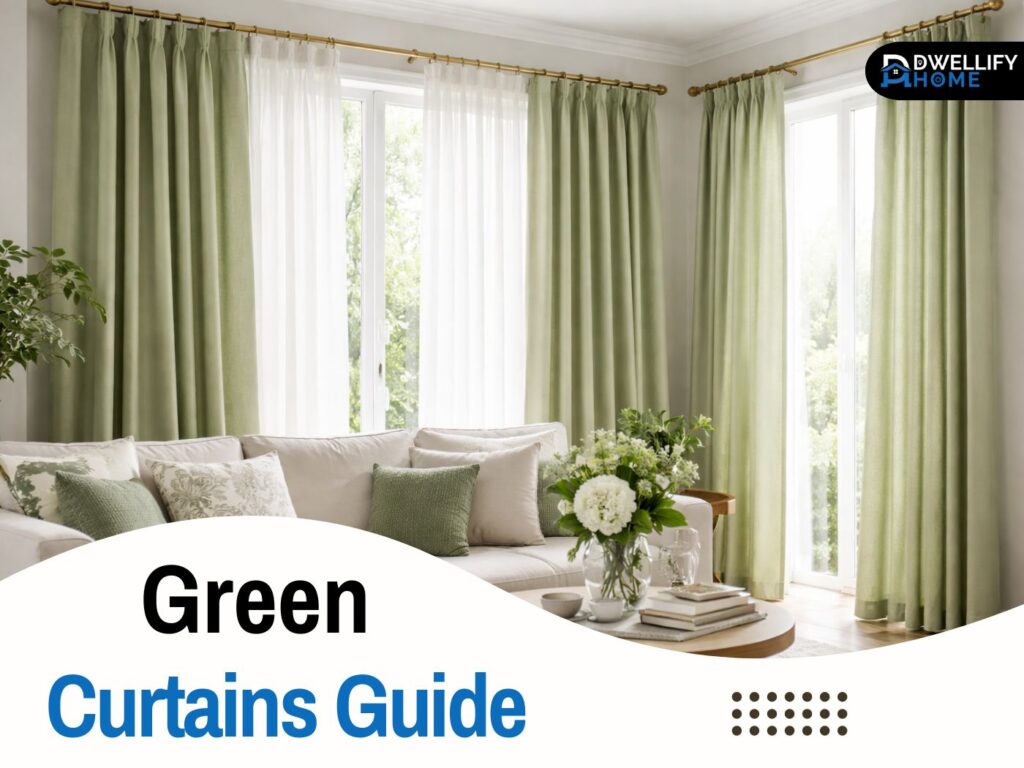
Green curtains can make a room feel calmer, warmer, and more “put together” without trying too hard. I’ve seen them work in small apartments, open-plan living rooms, and quiet bedrooms, as long as the shade and fabric match the space.
Think of this as choosing a supporting character, not the star. The right green will soften harsh light, add depth to plain walls, and tie your furniture together in a way that feels natural.
Snippet-ready definition:
Green curtains are window panels in green shades that add calm, warmth, and a nature-inspired feel. People use them to soften light, improve privacy, and pull a room’s colors together without making it feel too bold.
Mission Statement:
At Dwellify Home, our mission is to make home styling feel simple and doable, with practical décor guidance you can trust, so you can create a space that feels comfortable and truly yours.
Why Green Curtains Work in Real Homes
Green is one of the easiest colors to live with because it sits close to nature. It can read fresh and light in the daytime, then cozy and grounded at night. That flexibility is why it works across modern, classic, rustic, and boho styles.
One common mistake is picking green from a product photo without thinking about your room’s light. North-facing rooms can make greens look cooler or slightly gray. Warm afternoon light can push some greens toward yellow. If you match the undertone to your room, the curtains look intentional instead of “almost right.”
Quick Guide Table (comparison)
| Your goal | Best green shade | Best fabric | Light control tip |
| Bright, airy look | Sage, mint, pistachio | Linen, cotton | Light-filtering or sheer + panel layering |
| Cozy, dramatic vibe | Forest, emerald, olive | Velvet, heavier weaves | Room-darkening lining for softness |
| Better sleep | Mid to deep green | Any lined fabric | Choose green curtains blackout + wider rod coverage |
| Small room upgrade | Light sage or muted olive | Linen blends | Hang high and wide to “stretch” the window |
| Nursery naps + calm | Soft sage, gentle olive | Washable cotton/blends | Blackout lining and safe, simple hardware |
Quick step-by-step buying guide
- Pick function first: sheer, room-darkening, or blackout
- Choose shade by light: cooler rooms suit warmer greens; sunny rooms handle deeper greens
- Select fabric: linen for relaxed, velvet for rich, cotton for easy care
- Measure width + fullness: aim for 1.5–2x window width in total panel width
- Choose length: floor-length usually looks the most finished
- Hang smart: mount the rod higher and extend it wider to reduce side light gaps
Pick the Right Shade of Green (Based on Light + Room Size)
Dark green curtains (emerald, forest, olive)
Dark green curtains create depth and a cozy, finished look. In bright living rooms or larger spaces, deep greens can feel rich rather than heavy. Velvet and heavier weaves also make these shades look more luxurious and smooth.
If you’re worried about the room feeling smaller, balance them with lighter walls, pale rugs, or warm wood tones. Even something simple like creamy throw pillows can stop a dark green from feeling too intense.
Light green curtains (sage, mint, pistachio)
Light green curtains are great when you want the room to feel open and relaxed. Sage green curtains, in particular, work well in smaller rooms because they add color without stealing attention. Linen or cotton in a soft green usually looks airy and “everyday” in the best way.
The only time pale green can disappoint is when it blends too much with a similar wall color. If your walls are already light green, choose curtains a few shades deeper, or switch to texture like linen slub or subtle woven patterns to create contrast.
Green Curtains for Light Control (Privacy, Glare, Sleep)
This is the part people often skip, then regret later. Decide what you need most: privacy, softer daylight, or serious darkness.
- Sheer or light-filtering panels: Best for bright spaces where you still want daytime glow.
- Room-darkening: A solid middle ground for bedrooms and TV rooms.
- Green curtains blackout: Ideal for shift workers, streetlights, or naps, especially in a nursery.
A quick real-world tip: “Blackout” doesn’t always mean zero light. If you want a near-dark room, focus on two things, a true blackout lining and coverage that extends past the window frame. Light sneaks in from the sides more than people expect.
Fabric Choices That Change the Whole Look
Fabric is what makes the same shade of green feel casual, crisp, or expensive.
Linen gives you that relaxed drape with a bit of texture. Cotton is easy to live with and usually easier to wash. Velvet looks rich and holds color beautifully, so emerald and forest green curtains often shine here. Polyester blends can be a smart choice for durability and budgets, especially if the room gets strong sun.
If your room runs hot or cold, consider a lined option. Thermal or insulated curtains can help reduce drafts near windows. You don’t need to overthink it, but in older homes, lining can make a noticeable comfort difference in winter nights.
Green Curtains Pattern Ideas (Stylish, Not Overwhelming)
A green curtains pattern can add personality, but it has to work with the rest of the room’s “noise level.” If you already have a busy rug or statement sofa, go for a simpler pattern.
Patterns that usually age well:
- Botanical prints with a soft background
- Thin stripes that feel tailored, not loud
- Small geometrics in muted tones
- Traditional damask when the room is more classic
If you want pattern but fear clutter, choose a small-scale print and keep everything else calm. That one choice can make patterned curtains look polished instead of chaotic.
Green Curtains Living Room Ideas (Fast Upgrades That Look Designer)
In living rooms, green curtains can do two jobs at once, they add color and they frame the space. One of my favorite upgrades is layering: a sheer inner panel with green outer panels. It gives flexibility, soft light in the day, privacy at night, and it looks finished.
For windows that feel small, hang the rod higher than the frame and extend it wider on both sides. When you open the curtains, more glass is visible, so the window looks larger and the room feels brighter.
Green also pairs beautifully with:
- Warm woods like oak and walnut
- Brass or gold-toned hardware
- Creamy neutrals, off-white walls, and textured knits
- Black accents in modern spaces for contrast
Bedroom Styling With Green Curtains (Cozy + Sleep-Friendly)
Bedrooms are where green really earns its keep. Soft greens can feel calming, while deeper greens make the room feel tucked-in and restful. If sleep is the priority, room-darkening or blackout lining is worth considering, especially if you have streetlights or early sunrise.
Here’s a small detail that changes everything: fullness. Curtains should look generous, not stretched flat. If you want that soft, hotel-like fold, make sure the total curtain width is at least 1.5 to 2 times the width of the window.
Green Curtains Nursery (Soft, Calm, and Practical)
For a nursery, think gentle shades and easy-care fabrics. Light sage, muted olive, and soft mint tend to feel soothing without being too “theme-like,” which helps the room grow with your child.
Blackout lining can be helpful for naps, but keep things practical. Washable fabric matters, and simple hanging styles are easier to adjust. Also, stick with safe, child-friendly options, cordless where possible, and keep ties out of reach.
Color Pairing Guide (What Looks Best With Green Curtains)
Green is friendly with a lot of colors, but it looks best when you plan one simple direction.
Easy pairings that rarely fail:
- White, cream, beige, and greige for a soft, clean look
- Soft gray for calm and modern spaces
- Warm browns and tan for an earthy feel
If you like richer contrast, try navy, charcoal, or terracotta accents. Even a small touch, like cushions or a vase, can make the room feel layered.
If your walls are green, the trick is separation. Use a different green intensity, add texture, or bring in neutrals through rugs and furniture. That way the curtains don’t disappear into the wall.
Buying Guide (Sizes, Sets, and What to Check Before You Order)
A green curtains set of 2 usually means two curtain panels, not one wide curtain. Many windows need more than one set for a full look, especially wider living room windows.
A quick measuring checklist:
- Measure window width, then aim for 1.5 to 2 times that width in total curtain fabric.
- Decide length based on style: sill, apron, or floor-length.
- Floor-length looks the most finished in most rooms, and it hides small measuring errors.
Common ready-made lengths are 63, 84, and 96 inches. If you’re between sizes, going longer usually looks better than going short.
Hanging & Hardware (Small Details That Make Them Look Expensive)
Rods are simple and work for most homes. Tracks can look cleaner and more modern, and they’re great for wide windows or a wall of glass.
For the header style, keep it basic:
- Grommet panels feel modern and easy.
- Rod pocket looks softer but can be harder to slide.
- Rings or pinch-pleat styles give a more tailored look.
A practical rule: mount the rod a few inches above the window frame and extend it past the sides. It makes the curtains drape nicely and helps control light gaps.
Care Tips (Keep Green Curtains Looking New)
Green can fade in strong sun, especially darker shades. If the room gets intense daylight, a lining helps protect color and fabric.
For cleaning, follow the fabric’s care label, but these tips generally help:
- Linen and cotton can shrink, so avoid high heat drying.
- Velvet often needs gentle care, steaming is usually safer than washing.
- Rotate panels occasionally if one side gets more sun.
A handheld steamer can refresh curtains without constant washing, which extends their life.
FAQs
Where do green curtains look best?
They look great in living rooms, bedrooms, and nurseries, especially where you want a calm, cozy feel. Sage and muted greens suit smaller rooms, while deeper greens shine in larger or brighter spaces.
Are green curtains a good idea?
Yes, if you choose the right shade for your lighting. Green is easy to decorate around, pairs well with neutrals and wood tones, and can feel both fresh in daytime and cozy at night.
Should your curtains be lighter or darker than your walls?
Either works. Lighter curtains feel airy and open, darker curtains add contrast and depth. If your walls are already green, pick curtains a few shades lighter or darker, or add texture to create separation.
What is the current trend for curtains?
Trends lean toward natural textures (linen-look), soft neutrals with earthy colors, floor-length panels, and layering (sheer plus a heavier outer curtain). Hanging rods higher and wider is also very popular for a tailored look.
Do green blackout curtains really block light?
Mostly, yes, but results depend on fit. True blackout fabric helps, and hanging the rod wider than the window reduces side gaps, which is where most light sneaks in.
Conclusion
Green curtains are one of those choices that can quietly upgrade a room every single day. If you keep it simple, choose the right shade for your light, pick the fabric that fits your lifestyle, and size them with enough fullness, the whole space will feel more balanced.
Before you buy, do a quick final check: shade, light control, fabric, measurements, and hanging height. Get those right, and the rest falls into place.
Quick checklist for choosing green curtains
- Choose a shade that suits your room’s natural light
- Decide on light control: sheer, room-darkening, or blackout
- Pick a fabric that matches the look and cleaning needs
- Measure width for fullness and choose the right length
- Hang high and wide for a more polished finish
Disclaimer:
This article shares general décor guidance based on real-world styling principles. Results can vary by lighting, wall color, and fabric type. Always measure your windows carefully before buying, and choose child-safe options for nurseries and kids’ rooms.

I’m Bilal, the founder of Dwellify Home. With 6 years of practical experience in home remodeling, interior design, and décor consulting, I help people transform their spaces with simple, effective, and affordable ideas. I specialize in offering real-world tips, step-by-step guides, and product recommendations that make home improvement easier and more enjoyable. My mission is to empower homeowners and renters to create functional, beautiful spaces—one thoughtful update at a time.