
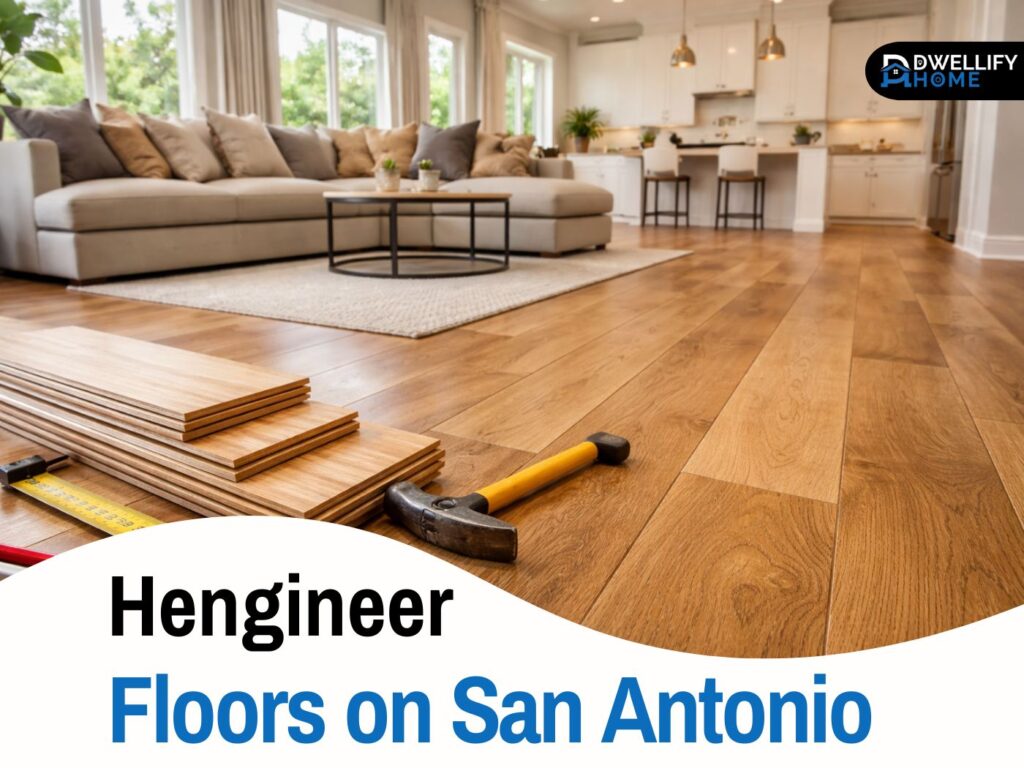
Engineered flooring is one of the most requested upgrades I handle around San Antonio. And honestly, I get why. You want a real wood look that feels warm, looks high-end, and still holds up in a home that runs AC hard most of the year.
I’ve installed engineered wood flooring in everything from new-build slab homes to older remodels, plus plenty of small commercial spaces. So I’ll walk you through what performs well here, what to avoid, how installation works on a slab, what costs really include, and how to make a decision you won’t regret.
You’ll also see the phrase hengineer floors on san Antonio used naturally in this guide, but I’ll mostly stick to the accurate terms homeowners and installers use every day, like engineered hardwood flooring and engineered wood floors in San Antonio.
Snippet-Ready Definition:
Hengineer floors on San Antonio commonly refers to engineered hardwood flooring designed for local slab homes, offering real wood beauty with better stability against heat, humidity, and daily wear.
Mission Statement:
Our mission at Dwellify Home is to provide honest, experience-based home guidance that helps homeowners make confident, practical decisions without sales pressure or confusion.
Quick Clarity: “Engineered Floors” vs “Engineered Hardwood Floors” in San Antonio
This mix-up happens constantly, and it matters.
Engineered hardwood is a type of wood flooring. It has a real wood top layer bonded to a stable core. That core is the reason it’s often chosen in areas where temperature and humidity changes can make solid wood act up.
Engineered Floors can also refer to a brand name you might see at certain retailers. The brand can show up in carpet and other product lines depending on the store. So the name sounds like a product type, but it may just be a manufacturer label.
Here’s the simple way to keep it clean:
When you talk to a showroom or contractor, say you want engineered hardwood with a real wood veneer, and mention whether your home is on a concrete slab. That one detail helps people guide you correctly from the start.
Quick Comparison Table (Helpful + Clean)
| Feature | Engineered Hardwood | Solid Hardwood | LVP |
| Real wood surface | Yes | Yes | No |
| Works on slab homes | Yes | Risky | Yes |
| Handles humidity | Better | Sensitive | Excellent |
| Refinishing option | Limited (depends on wear layer) | Multiple times | No |
| Best for San Antonio | ✅ Very common | ⚠ Depends | ✅ For busy homes |
Quick Buyer Guide (Simple & Practical)
Before choosing engineered floors in San Antonio, check these 5 things:
- Confirm your home is slab or pier-and-beam
- Ask for wear layer thickness (in mm)
- Choose glue-down or floating based on slab condition
- Confirm moisture testing is included
- Pick a finish that fits pets, kids, and traffic
Why Engineered Hardwood Makes Sense for Many San Antonio Homes
San Antonio isn’t “hard” on floors in an obvious way like a snowy city with salt and slush. The challenge here is the steady cycle of AC, indoor dryness, outdoor humidity, and seasonal shifts that still happen more than people realize.
Wood moves. It expands and contracts depending on moisture levels. Engineered hardwood is popular here because its layered construction is typically more stable than solid hardwood, especially when installed over concrete.
Let me give you a real example. I did a job in a slab home where the owner kept the thermostat low and the windows cracked open on nice evenings. Solid hardwood would’ve been a risky bet. Engineered hardwood gave them the wood look they wanted, while handling the swings better, as long as we followed the right prep steps.
It’s not magic flooring. It’s just a more forgiving wood option when you choose the right product and install it correctly.
Engineered Hardwood Basics (So You Don’t Overpay)
Engineered wood floors can look almost identical on top. The differences that matter are usually inside the plank and in the finish.
If you want a fast quality check that actually works, focus on two things: the wear layer and the core.
Wear layer and core types: a simple quality checklist
The wear layer is the real wood on top. The core is the structure underneath, commonly layered plywood or high-density fiberboard depending on the product.
When you’re comparing floors, ask these questions:
- What’s the wear layer thickness?
- What’s the core made of?
- What’s the overall thickness of the plank?
- What installation methods does the manufacturer approve?
Here’s the thing. If a salesperson can’t answer the wear layer thickness, they’re not necessarily being dishonest. They may just not know the details. But you still shouldn’t buy until you know what you’re paying for.
A thicker wear layer can also matter if refinishing is important to you. Not every engineered floor can be sanded the same way, and some products only allow limited refinishing.
Finish options for real life: kids, pets, and daily wear
Most engineered hardwood today comes prefinished, and that’s a good thing. Factory finishes are consistent and often tougher than site-finished work.
What matters is how it fits your lifestyle:
- Busy house with kids? Go with a finish that hides micro-scratches better, usually matte or satin.
- Big dogs? Plan for runners in the hallways and rugs in the living area, no matter what you buy.
- Lots of direct sunlight? Ask about UV stability and color change over time.
The best part is you don’t need to chase the “toughest” floor. You just need the right finish choice, plus a basic protection plan for the high-traffic zones.
Best Flooring Choice by Lifestyle and Budget (San Antonio-Friendly Comparison)
Homeowners often ask which is better: engineered hardwood, solid hardwood, LVP, or laminate. I don’t give a one-size answer, because your home setup matters.
A slab foundation, pets, water risk, and how much maintenance you’ll realistically do all change the best choice.
Engineered vs solid hardwood: who should choose what
Solid hardwood is classic. It can be refinished many times, and it feels amazing underfoot. But it demands more respect from the environment, especially around moisture and movement.
Engineered hardwood usually makes sense when:
- You want real wood and natural warmth
- You’re installing over concrete
- You want more stability with humidity swings
- You want more flexibility with installation methods
If you love the idea of solid wood, it can work here too. You just need an installer who takes moisture and acclimation seriously, and you’ll want tighter control of indoor humidity.
Engineered vs LVP vs laminate: when each one is the smarter move
This is where I try to keep homeowners out of regret.
- Engineered hardwood is great when you want real wood look and feel in main living spaces.
- LVP is often the low-stress pick for areas with water risk, rentals, and busy pet households.
- Laminate can look good and be budget-friendly, but it’s not my first choice for areas where spills are common unless the product is truly water resistant and installed correctly.
A quick room-by-room rule that works most of the time:
- Living room and dining room: engineered hardwood is a strong fit
- Bedrooms: engineered hardwood or carpet depending on comfort and noise
- Kitchen: engineered can work, but it needs spill discipline
- Bathrooms: I usually steer away from wood products
Choosing the Right Look (Without Regret Later)
Color and style choices can feel overwhelming, and a showroom doesn’t always tell the truth about what your home lighting will do.
San Antonio light is bright, and many homes have warm interior tones. That can make certain floors look more yellow, orange, or red than expected once they’re installed.
Here’s a practical way to choose the right look:
- Take home two or three large samples, not tiny chips
- Check them morning, afternoon, and night
- Look at them next to your cabinets, walls, counters, and furniture
If you want a safe, timeless direction, natural oak tones and lower sheen levels age well. If you love dramatic contrast, darker floors can be gorgeous, but they show dust and pet hair more.
A little planning now saves you from living with “almost right” for the next ten years.
Installation in San Antonio: What Pros Check First (This Prevents Most Problems)
I’ve fixed a lot of floors that were installed with good intentions and bad prep. The product wasn’t the main issue. The process was.
San Antonio has plenty of slab homes, and concrete brings special rules. Moisture and flatness have to be handled before wood goes down.
Concrete slab homes: moisture testing, vapor barrier, and prep
A professional installation should include moisture testing. You want numbers, not guesses.
If moisture levels are too high, you may need a moisture mitigation plan or a manufacturer-approved vapor control system. This is one of those steps that feels boring until it saves the entire project.
Flatness matters too. A slab can look flat to the eye and still be wavy enough to cause hollow spots, movement, and joint stress.
One story that sticks with me: a homeowner called about gaps forming in a hallway. The real issue was a low area in the slab that wasn’t leveled. Every step flexed the floor. Over time, the locking edges took a beating. A little leveling up front would’ve prevented a costly repair.
Glue-down vs floating vs nail-down: picking the right method
On a slab, engineered hardwood is commonly installed as glue-down or floating.
- Glue-down usually feels more solid, and it can reduce the hollow sound some people dislike. The adhesive choice and trowel pattern matter more than most homeowners realize.
- Floating installations can be faster and sometimes more budget-friendly, but underlayment quality and slab flatness are critical for a good feel.
Nail-down is typically used over a wood subfloor, not directly over concrete.
If your priority is a premium underfoot feel, glue-down often wins. If your priority is easier replacement later, floating can be appealing, as long as it’s done correctly.
Real Cost Breakdown: What Impacts Engineered Flooring Prices in San Antonio
The price range for engineered hardwood flooring can be wide. That’s normal. What’s not normal is comparing quotes that include different prep work and calling it the same job.
Here are the biggest cost drivers I see in San Antonio projects:
1) The flooring itself
Higher-quality construction, thicker wear layers, better finish systems, and stronger cores cost more. You’ll also see price changes based on species, plank width, and brand.
2) Demo and disposal
Pulling carpet is easy. Pulling tile can be time-consuming and messy, especially if it’s well bonded to the slab.
3) Subfloor prep
Leveling, patching, moisture control systems, and transitions can make a major difference in the final cost.
4) Trim and details
Baseboards, quarter round, door jamb cuts, and clean transitions between rooms take time. Stairs also raise labor fast.
A smart way to compare quotes is to ask each installer for a clear scope list: what’s included, what’s not, and what assumptions they’re making about slab condition.
Where to Buy Engineered Hardwood in San Antonio (Local Providers and What They Typically Offer)
Buying locally can be a big advantage. You can see samples, compare finishes in person, and often get access to installation teams who know local slab conditions.
In San Antonio, you’ll find options like:
- Local flooring showrooms that carry engineered hardwood plus full installation services
- Remodeling-focused flooring providers who can bundle flooring with other work
- Specialty suppliers that focus heavily on engineered hardwood and related materials
When you shop, don’t just ask, “What’s your best price?” Ask, “What’s the right product for my slab, and what installation method do you recommend?”
That question gets you better information, and it also tells you quickly whether the store understands your situation.
What to Ask Before You Buy (Showroom and Contractor Questions)
On top of picking a style you love, you want clarity on how the floor will actually be installed and supported.
Here’s a short list that prevents a lot of headaches:
- What’s the wear layer thickness?
- What core is used in this plank?
- Which installation methods are approved for my subfloor?
- Will the slab be moisture-tested and documented?
- What prep is included for flatness and moisture control?
- What voids the warranty?
- What’s the return policy on unopened cartons?
The best part is that these questions aren’t confrontational. They’re normal, and a good installer will respect them.
How to Choose the Right Installer in San Antonio (Avoid Expensive Mistakes)
You can buy a great product and still end up unhappy if the install is rushed. So choosing the installer is just as important as choosing the plank.
Green flags in a quote
A strong quote usually includes:
- Clear prep steps and materials
- The install method and the system components
- Transition and trim details
- Timeline and cleanup plan
- A workmanship warranty
When a contractor can explain why they’re choosing glue-down versus floating for your slab, that’s a very good sign.
Red flags to watch for
These are the phrases that make me nervous:
- “No need to moisture test.”
- “We don’t level unless it’s really bad.”
- “We’ll skip acclimation and just install.”
Engineered hardwood isn’t fragile, but it does have rules. Skipping those rules is how problems show up months later.
Maintenance and Care in San Antonio’s Climate (Keep It Looking New)
Engineered hardwood is easy to maintain when you keep the routine simple.
Daily and weekly habits that actually work:
- Sweep or vacuum regularly to remove grit
- Use felt pads under chairs and stools
- Place a good entry mat to catch sand and debris
For deeper cleaning, use a cleaner that’s made for hardwood floors, and keep moisture minimal. Avoid soaking the floor and avoid steam mops.
Humidity swings are part of life here. If your home gets very dry or very humid, try to keep the indoor environment more consistent. Your floor will thank you, and it’ll look better long-term.
Common Problems Homeowners Run Into (And What Usually Causes Them)
Most issues come down to moisture, movement, or wear patterns.
Cupping or warping
Often a moisture imbalance. Check for leaks, slab moisture issues, and wet cleaning habits.
Gaps between boards
Can be seasonal movement, but big gaps can also point to skipped acclimation or poor expansion planning.
Squeaks or hollow spots
Usually linked to uneven slab areas, underlayment issues, or adhesive coverage problems.
Dullness and scratches
Common in high-traffic routes. Rugs and runners solve more of this than people expect.
If something looks wrong early, address it quickly. Small issues are often fixable when caught early.
FAQs
Is engineered hardwood good for a concrete slab in San Antonio?
Yes, it can be a great choice when moisture testing, vapor control, and flatness prep are handled properly.
What thickness or wear layer should I buy?
Thicker wear layers are generally better for long-term flexibility. If refinishing matters, ask what the product can realistically support.
Can engineered hardwood be refinished?
Some can, some can’t, and some can only be refinished lightly. It depends on the wear layer and the manufacturer’s guidance.
Is engineered hardwood okay in kitchens?
It can work if spills are cleaned up quickly and mats are used near sinks. If you want a lower-stress option, LVP often fits better in kitchens.
What’s better for pets: engineered hardwood or LVP?
For heavy pet traffic, LVP usually reduces scratch anxiety. Engineered hardwood can still work with good finish choice and smart rug placement.
How long does installation usually take?
Many homes take a few days once prep is complete. Demo, leveling, and moisture steps can add time, but those steps protect the investment.
How do I compare quotes fairly?
Make sure each quote includes the same product, install method, prep plan, transitions, trim work, and warranty terms.
Conclusion: A Practical Plan for “Hengineer Floors on San Antonio”
If you want engineered wood flooring that looks great and stays that way in San Antonio, focus on the system, not just the sample.
Pick a floor you genuinely like, then confirm three things before committing: slab moisture plan, flatness prep, and the right installation method. Those choices matter as much as the plank itself.
Done right, hengineer floors on san Antonio can deliver the warm wood look you want without constant worry. You’ll get a floor that feels solid underfoot, fits your lifestyle, and holds up through real daily use.
If you want, share your square footage, whether it’s slab or pier-and-beam, pets, and which rooms you’re flooring. I’ll tell you which install method usually makes the most sense and what questions to ask so your quotes stay apples-to-apples.
Disclaimer:
This article is for informational purposes only. Flooring performance depends on product selection, installation quality, and site conditions. Always consult a licensed flooring professional before making final decisions.

I’m Bilal Hassan, the founder of Dwellify Home. With 6 years of practical experience in home remodeling, interior design, and décor consulting, I help people transform their spaces with simple, effective, and affordable ideas. I specialize in offering real-world tips, step-by-step guides, and product recommendations that make home improvement easier and more enjoyable. My mission is to empower homeowners and renters to create functional, beautiful spaces—one thoughtful update at a time.