If you’ve been thinking about upgrading a plain wall, wood paneling is one of those changes that feels instantly “finished.” It adds depth, hides small imperfections, and makes a room feel warmer without needing a full renovation.
Not all paneling is the same, and the wrong material in the wrong room can turn into peeling edges, swelling, or a look that feels dated. In this guide, I’ll walk you through what actually works in real homes, how to choose the right style and sheets, what impacts cost, and how to avoid the common mistakes I see on job sites.
Snippet-ready definition:
Wood paneling is a wall finish made from boards or sheets like wood, veneer, MDF, or WPC that adds texture, warmth, and protection. It can be painted or stained for modern or classic interiors.
Mission Statement:
At Dwellify Home, our mission is to make home upgrades feel simple and confident, with design advice that’s practical, honest, and based on what truly works in real spaces.
What Is Wood Paneling (and Why People Use It)?
Wood paneling is a wall finish made from boards, sheets, or decorative panels that create a layered surface on top of your existing wall. Sometimes it’s real wood, sometimes it’s veneer, MDF, or moisture-friendly alternatives like WPC. The goal is the same: texture, protection, and a more designed look than flat paint alone.
In real life, I’ve seen paneling solve three common problems. First, it makes a large wall feel intentional, especially in living rooms and offices. Second, it protects high-traffic areas like hallways where paint gets scuffed. Third, it can visually “fix” a space by adding proportion, like making a long wall feel balanced or giving low ceilings a lift.
Wood Paneling vs Wall Cladding vs Wainscoting (Quick Differences)
These terms get mixed up a lot, so let’s keep it simple. Wall cladding is the broad category: any material used to cover a wall surface. Wood paneling is one type of cladding. Wainscoting is a specific layout style, usually paneling applied to the lower portion of a wall, often 3 to 4 feet high.
If you want a quick rule: full-height panels feel modern and bold, while wainscoting feels classic and practical, especially for dining areas, stairways, and corridors.
Quick Guide Table (comparison)
| Goal | Best Style | Best Material Pick | Good to Know |
| Clean, classic, paint-ready walls | Wainscoting or simple grid panels | MDF wall paneling | Looks premium when joints are filled and edges are sealed well |
| Modern feature wall behind TV/sofa | Slat or fluted panels | Veneer panels or quality slat systems | Plan wiring and lighting first so the wall stays tidy |
| Humid areas and termite concerns | Smooth panels, simple trims | WPC panels or PVC wall panels | Focus on moisture resistance and proper edge sealing |
| Big wall on a tighter budget | Sheet coverage + minimal trim | Wood wall paneling sheets (ply base or MDF) | Straight walls matter, uneven walls may need battens/frame |
Step-by-step mini guide (simple and practical)
- Pick one wall first (TV wall, sofa wall, or headboard wall is easiest).
- Choose material by room conditions (WPC/PVC for humidity, MDF for paint-heavy designs).
- Do a dry layout and mark a perfectly level start line.
- Plan outlets and wires before cutting panels.
- Install with the right method: adhesive plus nails, or a batten frame for uneven walls.
- Finish properly: filler, light sanding, caulk at edges, then paint or clear coat.
Decorative Wood Panels for Walls: Popular Types and Looks
The style you choose matters as much as the material, because the pattern is what your eye notices first. I always tell homeowners to look at the room’s “busy level.” If the room already has bold curtains, patterned rugs, or open shelving, keep the panel design simpler.
On top of that, paneling has a way of changing the mood. Clean lines feel modern and calm. Traditional profiles feel formal and cozy. The best part is you can use it as a full wall treatment or just as a feature wall behind a TV or sofa.
Classic Profiles (Traditional and Timeless)
Wainscoting is the classic choice for a reason. It protects walls, hides bumps, and gives the space a finished border. Raised and flat panel profiles also work beautifully in dining rooms and entryways where you want a bit of elegance without clutter.
If you’re painting the panels, MDF wall paneling is often the practical choice here because it gives crisp lines and a smooth finish. Solid wood can look amazing too, but it needs a bit more attention around humidity and movement.
Modern and Trendy Designs
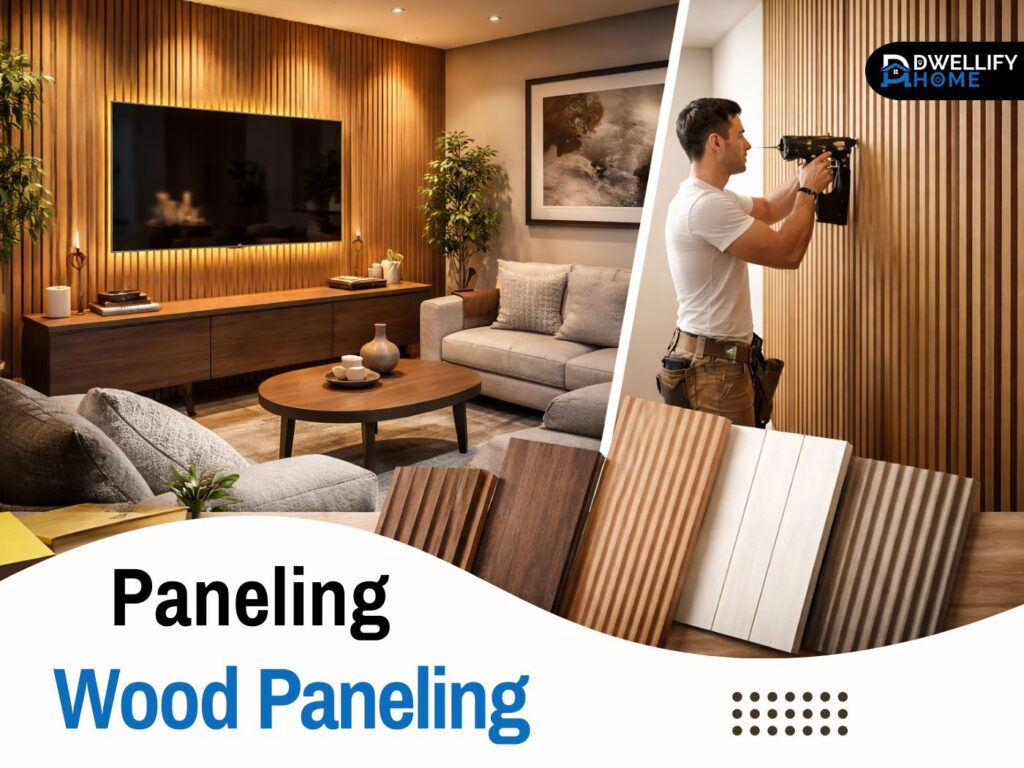
Slat and fluted wall panels are everywhere right now, and when they’re done well, they look expensive. I like them for TV walls, office backdrops, and modern lounges because they add texture without needing artwork everywhere.
A clean grid pattern is another modern favorite. It’s basically rectangles or squares built with trim battens. It’s subtle, especially in the same color as the wall, and it works in both small and large rooms.
Casual and Rustic Styles
Shiplap, board and batten, and beadboard bring a relaxed vibe. Shiplap is great when you want horizontal lines and a casual feel. Board and batten gives you structure and height. Beadboard feels light and friendly, and it’s practical in mudrooms, kitchens, and laundry spaces.
One small tip from experience: rustic styles look best when the rest of the room is not overly rustic. Mix it with modern lighting or clean furniture so it feels fresh, not like a theme.
Wood Paneling for Interior Walls: Materials (What to Choose and Why)
This is where good decisions save you headaches later. The same panel design can behave very differently based on what it’s made of. I’ve seen beautiful feature walls fail simply because a material wasn’t suited for the room’s moisture or heat.
Let’s break down the common options you’ll see when shopping for wood paneling for interior walls.
- Solid wood: Natural grain, strong, repairable, and premium. It can expand and contract with seasons, so it needs acclimation and proper sealing.
- Wood veneer panels: Real wood look on top of a stable base. Great for feature walls where you want natural grain without the full cost of solid wood.
- MDF wall paneling: Smooth, stable, and paint-friendly. Excellent for classic wall patterns. Not ideal in wet zones unless properly sealed and protected.
- Plywood and wood wall paneling sheets: Often used as a base for panel systems or full coverage. Good for large walls and budget projects.
- PVC and WPC panels: Moisture-resistant options that are popular in humid areas. WPC is often chosen where termite and damp concerns are higher.
Guess what most people forget? Finishes matter as much as the panel core. A well-sealed MDF panel can last in many homes, while a poorly sealed solid-wood panel can warp in a humid room.
Wood Wall Paneling Sheets: Sizes, Thickness, and Buying Checklist
If you’re buying wood wall paneling sheets, don’t just look at the face finish. Check the thickness, the core stability, and how the edges are finished. Thin sheets can look fine in the store and then bow slightly after installation, especially if the wall isn’t perfectly flat.
Sheet systems are usually quicker to install and cover large areas with fewer seams. Plank systems often look more authentic and allow for better adjustment on uneven walls. In homes where walls are not perfectly straight, plank systems can be more forgiving.
Here’s a practical checklist I use when I’m selecting panels for a client:
- Check that panels are straight when held on edge
- Inspect edge quality and corner chipping
- Compare color and grain across multiple panels from the same batch
- Ask about moisture resistance and surface coating
- Confirm how it should be installed: adhesive, nails, or on a batten frame
One more thing: if you’re doing a feature wall, buy a little extra. Offcuts, outlet cutouts, and pattern matching can eat into your quantity faster than you expect.
Where Paneling Works Best (Room-by-Room Ideas)
Paneling looks great in many rooms, but the best results come from matching the design to how the room is used. High-traffic spaces need durability. Relaxation spaces need calm texture. Workspaces need a clean background that doesn’t distract.
Wooden Wall Panels for Living Room (Most Popular Use)
Living rooms are where paneling can make the biggest visual difference. A TV wall paneling setup, for example, can hide wires, create a strong focal point, and make the space look designed even with simple furniture.
I also love paneling behind the sofa, especially when the wall feels empty. A clean grid pattern or a soft slat texture gives you depth without needing too many frames. If you have kids or pets, choose a finish that wipes clean and doesn’t show fingerprints too easily.
Bedroom and Headboard Walls (Calm, Cozy, High Impact)
A headboard wall is a perfect use case because you’re only treating one wall, and it adds a hotel-like finish. Veneer panels, soft wood tones, or painted panels in warm neutrals work really well here.
A tip I use often: keep the panel pattern simpler in bedrooms. Your eyes should rest there. Pair it with warm lighting, and the paneling will look richer at night, even if the design is minimal.
Kitchen, Bathroom, and Humid Areas (What’s Safe?)
For kitchens and bathrooms, the material choice matters. In humid areas, I lean toward WPC or PVC wall panels, or fully sealed, well-protected systems away from direct water splash.
If you love the wood look in a bathroom, do it smartly: keep it on a dry wall, seal edges carefully, and avoid untreated MDF. Moisture can get into joints, and once swelling starts, it’s hard to reverse.
Quick Style Pairing Guide (Design Choices That Make Paneling Look Expensive)
Here’s the thing: paneling can look premium or cheap depending on the finishing choices around it. The panel design is only one part of the whole picture.
Paint color is the easiest upgrade. A soft warm white makes panel details subtle and classy. Deeper tones like charcoal, forest green, or deep beige make the wall feel rich, especially with warm lighting. Matte finishes hide small flaws, while satin is easier to clean in high-touch areas.
Lighting changes everything. Even a simple LED strip along the top edge of a slat wall can create a high-end effect. Wall washer lights, warm spotlights, or a single picture light can highlight texture and make the wall look intentional.
And don’t forget direction:
- Vertical lines can make a room feel taller
- Horizontal lines can make a room feel wider
- Grid patterns make walls feel structured and balanced
How to Choose the Right Paneling (Simple Decision Guide)
If you feel overwhelmed, don’t worry. I use a simple decision process with clients, and it works every time.
Start with these questions:
- What’s your budget and where do you want to spend more: material or installation?
- Is the area humid or exposed to water?
- Do you want a painted look or natural wood grain?
- Is this a feature wall or full-room coverage?
- Are you installing yourself or hiring a carpenter?
If you’re going for a painted, classic look, MDF wall paneling is usually the practical choice. If you want a natural wood finish with real grain, veneer panels often give the best balance. If humidity and termites are a concern, WPC panels can be a sensible option.
How to Install Wood Paneling (DIY-Friendly Steps + Pro Tips)
Installation is where good planning matters more than fancy tools. Most paneling problems I see come from skipping layout and rushing the first row.
Tools and Materials You’ll Need
You don’t need a workshop to do this, but you do need accuracy. Typical essentials include a level, measuring tape, pencil, saw, adhesive or nails, and finishing supplies like filler and caulk.
If you’re using wood wall paneling sheets, a straight-edge guide for cutting helps a lot. Clean cuts make the final result look professional even in budget builds.
Wall Preparation (Leveling, Marking Studs, Layout Plan)
Start by checking the wall for dampness or loose paint. If the wall has moisture issues, fix that first. Paneling should never hide a damp wall, it will trap problems behind it.
Mark studs if you plan to nail. Then do a dry layout. I like to mark a reference line with a level, especially for slat walls and grid patterns. One small tilt at the start becomes very obvious across a wide wall.
Two Common Install Methods
Adhesive plus nails is common for many panel types. Adhesive helps prevent hollow spots, and nails give mechanical support. It’s a good approach for most dry interior walls.
A batten frame is useful when walls are uneven. It creates a flat surface, helps with alignment, and gives space for cables or acoustic backing. It takes more time, but the finish is cleaner and more consistent.
Finishing for a Clean Look
Finishing is where paneling goes from “installed” to “built-in.” Fill nail holes, sand lightly, and use caulk where trims meet the wall. Then paint or seal properly.
If you’re staining or clear-coating, do a test piece first. Wood tones can shift under different lighting, and it’s much easier to adjust before everything is on the wall.
Common Mistakes (And How to Avoid Them)
I’ve walked into many homes where the paneling looked great for a month and then started showing gaps or swelling. Most of the time, the cause is simple.
Common mistakes include:
- Skipping acclimation, especially with real wood
- Installing over damp walls
- Not using a level for the first row
- Using the wrong adhesive or too little support
- Rushing outlet and switch cutouts
- Ignoring edge sealing in humid environments
The fix is usually planning, patience, and proper sealing. Take your time with layout, and the rest goes smoother.
Paneling Wood Paneling Price: What Affects Cost the Most?
Costs vary a lot because paneling is not a single product. The material, pattern, and installation method all change the final budget.
Material is the biggest factor. Solid wood and high-quality veneer panels cost more. MDF and plywood-based systems are usually more budget-friendly. Slat and fluted wall panels can range widely depending on the core and finish quality.
Complexity matters too. A simple sheet install is faster than a detailed grid pattern with trim, which takes careful measuring and finishing. Wall condition also plays a role. Uneven walls, damp repairs, or electrical changes add cost.
A practical way to estimate your budget is to separate it into:
- Panels or sheets
- Trims and finishing materials
- Labor or tools if DIY
- Extras like wiring changes or lighting
Paneling Wood Paneling Pakistan: How to Estimate Your Budget Locally
In Pakistan, prices can vary by city, availability, and the type of product being offered as “wood.” In many cases, you’ll see MDF-based solutions, veneer panels, and WPC wall panels sold side by side. They can look similar in photos, so it’s important to confirm the core material.
When you compare quotes, ask for details in a clear format. For example, per square foot for both materials and installation. Also confirm whether trims, corner finishing, and adhesive are included. Those small items add up.
Here’s my honest recommendation by common local needs:
- Budget-friendly, painted look: MDF wall paneling or plywood base with proper paint finish
- Mid-range, natural wood look: wood veneer panels for feature walls
- Humid areas or termite concern: WPC panels or PVC wall panels with clean finishing
And one more practical tip: don’t ignore the installer. A skilled carpenter can make a budget material look premium, while a rushed install can ruin expensive panels.
Care, Cleaning, and Long-Term Maintenance
Maintenance is simple if you choose the right finish. Painted panels can be wiped with a soft damp cloth and mild soap. Stained or clear-coated wood should be cleaned gently and kept away from harsh chemicals.
For scratch and dent touch-ups, keep a small kit. Paint touch-up for painted panels, and matching stain markers for wood tones. The sooner you fix small damage, the less it spreads.
In humid climates, check edges and joints once in a while. If you notice swelling or darkened seams, it’s often a sign moisture is getting in. Re-sealing early is much easier than replacing panels later.
Safety and Performance Checks (Expert-backed, Often Ignored)
Most homeowners focus on looks first, but performance matters, especially for long-term satisfaction.
Fire safety is worth asking about, especially in commercial spaces or areas with heavy electrical setups. Some panel systems and finishes perform better than others, and local compliance can vary.
Acoustic comfort is another hidden benefit. Slat walls with backing can soften echo in living rooms, offices, and lounges. It won’t soundproof the room, but it can make the space feel calmer and less sharp.
Also, think about indoor air quality. Low-odor, low-VOC paints and finishes are a smart choice, especially for bedrooms and children’s rooms. It’s a small detail that makes daily life more comfortable.
FAQs
1) What is wood paneling called?
It’s commonly called wall paneling or wood wall paneling. In some designs, you’ll also hear terms like wainscoting, shiplap, beadboard, or board and batten, depending on the pattern.
2) What is a wood panelling?
Wood panelling is a wall covering made from wood-based panels or boards that adds texture and protects the wall surface. It can be painted, stained, or sealed depending on the look and durability you want.
3) Is wood paneling expensive?
It can be budget-friendly or premium. Cost depends on the material (MDF vs veneer vs solid wood), the pattern complexity (simple sheets vs detailed trims), and labor. In Pakistan, installation skill and finishing quality also change the final budget a lot.
4) Which wood is best for paneling?
For real wood looks, many people like oak, walnut, or teak-style finishes for rich grain, while lighter tones work well for modern rooms. Practically speaking, veneer panels often give the best balance of looks and stability. In humid zones, WPC can be the safer choice.
5) Can wood paneling be installed over drywall?
Yes, in most cases. The wall must be dry, sound, and clean. For heavier panels, it’s safer to anchor into studs or use a proper batten system, especially on uneven walls.
Conclusion
Wood paneling can be one of the most rewarding upgrades because it changes how a room feels, not just how it looks. The trick is choosing the right style for the space, the right material for the environment, and a finish that matches real daily life.
If you take one practical idea from this guide, let it be this: plan the layout carefully and choose materials based on the room’s conditions, not just the showroom look. Do that, and paneling wood paneling becomes a long-lasting design feature that feels intentional every time you walk into the room.
Disclaimer:
This guide is for general information and design education. Materials, prices, and installation methods vary by wall condition, climate, and local standards. For electrical changes, moisture issues, or large installations, consult a qualified professional.

I’m Bilal, the founder of Dwellify Home. With 6 years of practical experience in home remodeling, interior design, and décor consulting, I help people transform their spaces with simple, effective, and affordable ideas. I specialize in offering real-world tips, step-by-step guides, and product recommendations that make home improvement easier and more enjoyable. My mission is to empower homeowners and renters to create functional, beautiful spaces—one thoughtful update at a time.