Tulips are a little different from most cut flowers. They keep growing after you bring them home, they bend toward light, and they can soften faster than you expect. I’ve arranged tulips for kitchen counters, wedding tables, and editorial shoots, and the biggest difference between “nice” and “wow” usually comes down to one thing: the vase.
A good vase doesn’t just hold tulips. It supports their natural movement while keeping the arrangement looking intentional, not messy. Let’s walk through how to choose the right option for your space, your style, and your bouquet.
Snippet-ready definition:
A vase for tulips is shaped to support tulip stems as they keep growing and bending toward light. People use it to keep tulips upright longer, improve bouquet shape, and create a cleaner, more styled display.
Mission Statement:
At Dwellify Home, we share practical, style-forward home ideas that feel doable in real life, from everyday décor choices to small upgrades that make your space look and feel more intentional.
Why tulips need a different vase than most flowers
Tulips continue to grow once they’re cut. It’s normal for stems to lengthen and curve over a few days, especially if they’re reaching toward a window. That’s why a vase that works for roses or lilies can feel “off” for tulips.
They also drink quickly and respond to temperature. Warm rooms can make stems soften, and too much water can speed up drooping. When you match vase shape and water depth to how tulips behave, they stay upright longer and look more balanced.
Quick Guide Table (Comparison)
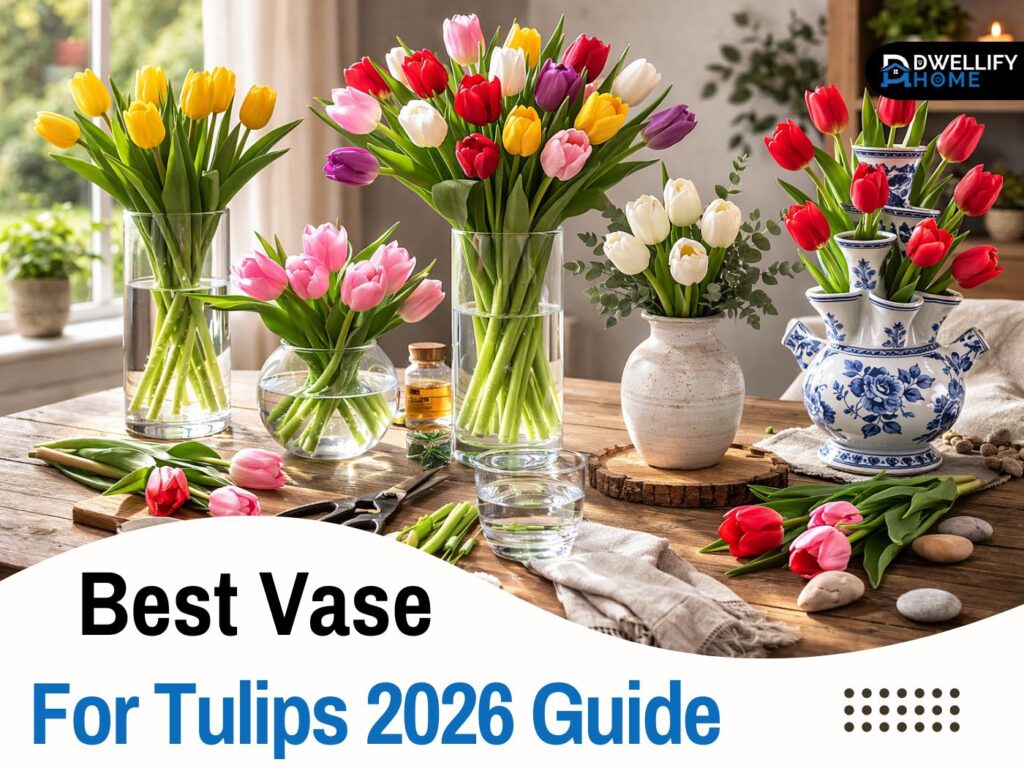
| What you want | Best vase shape | Why it works | Best spot at home |
| Upright, tidy tulips | Tall cylinder or narrow-neck | Supports stems, prevents splaying | Dining table, entryway |
| Loose, relaxed look | Slightly flared/trumpet | Lets blooms fan out naturally | Living room, sideboard |
| Small bunch (5–10 stems) | Slim vase / small opening | Keeps arrangement from looking sparse | Nightstand, desk |
| Big bouquet | Large vase with slightly narrow mouth | Holds volume without mess | Entryway, floor/console |
| Dutch statement style | Delft multi-spout tulip vase | Controls spacing, looks decorative | Mantel, shelf, console |
| Cozy, rustic feel | Ceramic vase | Soft look, hides stems | Kitchen counter, nook |
Quick step-by-step: How to vase tulips properly
- Clean the vase well (cloudy water = faster drooping).
- Use cool, fresh water and fill about one-third to halfway.
- Remove lower leaves so nothing sits in the water.
- Trim 1–2 cm off stems at a slight angle with a sharp tool.
- Choose support over width (narrow opening if you want upright tulips).
- Rotate the vase daily so tulips don’t lean toward one side of light.
Best vase for tulips (quick decision guide)
If you want tulips to look neat and stand tall, go with a vase that’s taller than you think you need, with a tighter opening. That narrow neck is your best friend because it keeps stems from splaying out.
If you prefer a relaxed, airy look, a slightly wider opening works, but you’ll need more stems to make it look full. In my work, most “sparse” tulip arrangements happen because the vase is too wide for the number of tulips.
The simple rule for choosing the right size
A practical guideline is this: the vase should support at least the lower half of the stems. If stems are long and the vase is short, tulips will tip and lean fast.
Also consider the opening. A small bunch of 7 to 10 tulips needs a narrower mouth. A wider mouth only looks right when you’ve got enough tulips to fill the space without gaps.
Vase shapes that work best for tulips (with when to use each)
A tall cylinder vase is the most dependable choice. It keeps the stems together, holds them upright, and suits almost any interior. If you’re building a simple centerpiece, this is the shape I reach for first.
A slightly tapered or narrow-neck vase is even better when tulips are tall and fresh. It creates structure without forcing the flowers into a stiff shape. This is the type I’d choose when you want clean lines on a dining table.
An hourglass vase can work nicely, especially if you’re mixing tulips with a bit of greenery. The narrower middle naturally gathers stems, while the wider top lets blooms open without crowding.
A flared or trumpet shape gives a looser, styled bouquet feel. It’s great when tulips are a little more open and you want them to fan out gently. Just remember that with a flared vase, you’ll need more stems to keep it from looking thin.
Low bowls or short vases are best when you intentionally cut stems shorter. This is a good approach for nightstands and coffee tables where tall stems can feel in the way. The trade-off is that you’ll be designing a compact arrangement, not a tall one.
Best materials for tulip vases (what looks good and stays hygienic)
Glass is popular for a reason. You can see the water level, spot cloudiness early, and keep things clean. For modern homes or minimal styling, a clear glass vase is a simple win.
A ceramic vase for tulips is perfect when you want a softer look or you don’t want stems on display. I often use matte ceramic for entryways and sideboards because it feels grounded and calm. The key is cleaning well, since ceramic can hide residue and bacteria that shorten vase life.
Vintage pieces can be beautiful too. A tulip vase vintage style adds personality, especially in older homes or eclectic spaces. When you buy vintage, check stability and make sure it sits flat. If it wobbles empty, it will wobble more with water and fresh stems.
Tulip vase IKEA: how to pick the right one from what you already own
IKEA usually carries shapes that work well for tulips, especially tall cylinders and slightly tapered styles. If you already have a few options at home, pick the one with the most support through the stem length and the smallest opening that still feels natural.
A tulip vase IKEA style that’s tall and narrow is great for tidy arrangements. Wider vases can still work, but they’re better for bigger bunches or when you’re aiming for that relaxed “just gathered” look.
If your IKEA vase is short and wide, use it for shorter-cut tulips or a mixed arrangement with greenery that helps hold stems in place.
Large vase for tulips: how to make big arrangements look polished
A large vase for tulips works best when you’re using a generous number of stems. If you only have a few tulips, a big vase tends to make the arrangement look unfinished.
For a dining table centerpiece or an entryway statement, I like a large vase with a slightly narrower opening. It allows the bouquet to look full without the tulips flopping outward too quickly.
Water matters more with bigger arrangements. Too much water can weaken stems over time, especially in warm rooms. In most home setups, filling the vase about one-third to halfway is plenty.
A simple support trick that doesn’t look obvious
If your vase opening is wide and tulips keep spreading, you can add gentle support without making it look like a craft project. One simple method is to use clear tape across the mouth of the vase in a loose grid, then place stems into the sections.
It keeps tulips spaced evenly and prevents the “all leaning to one side” problem, especially after day two.
Dutch tulip vase styles (Delft tulip vase, tulipière, and flower pyramids)
A Dutch tulip vase is designed to show off individual stems beautifully. Traditional versions often have multiple spouts, sometimes stacked in a tiered shape. The famous Delft tulip vase style is both functional and decorative, and it’s one of the most recognizable flower vases in design history.
In practical terms, multi-spout tulip vases help you control spacing. Each stem has its own place, so the arrangement stays tidy even as tulips grow and bend.
These vases shine on shelves, mantels, and entry consoles because they read like decor even when empty. When filled, they feel intentional and collected, especially in a home with classic, European, or vintage details.
How to arrange tulips in a Delft tulip vase (easy method)
Start with fewer stems than you think you need. Place one tulip per spout first, then step back and check balance. If one side looks heavier, adjust the distribution rather than forcing tall stems into short spouts.
I also like to vary height slightly. Use a few shorter stems higher up and slightly longer ones lower down. This keeps the shape looking natural and avoids a stiff “perfect dome” effect.
Tulip vase vintage: how to shop and style it without mistakes
Vintage tulip vases range from classic ceramic pieces to quirky glass finds. The best ones feel sturdy, have a stable base, and don’t have hairline cracks around seams or spouts.
When styling, keep the vase as the anchor. If the piece is bold, choose one tulip color or two closely related tones. That’s how you keep it from feeling busy.
If your vintage vase is softer and neutral, you can play more with tulip varieties, like mixing classic tulips with parrot or double tulips for texture.
How to arrange tulips in a vase (simple steps that look professional)
Start by cleaning the vase well. Even a small amount of residue can cloud water and shorten the life of your tulips. Then add fresh, cool water.
Prep your tulips next. Remove any leaves that would sit below the waterline. Leaves in water break down quickly and cause bacteria, which is one of the main reasons tulips collapse early.
Trim stems with a sharp knife or clean scissors, cutting at a slight angle. I usually cut 1 to 2 cm off the bottom. If the tulips have been out of water for a while, give them a fresh cut and let them drink for a few minutes before styling.
Now arrange. If you want a clean look, keep stems gathered and let blooms sit close. If you want something looser, rotate the vase as you place stems so the bouquet builds evenly instead of leaning forward.
How to make tulips last longer in a vase (expert-backed care)
If you do only three things, do these: keep the vase clean, refresh the water, and recut stems. In homes, the biggest difference I see between tulips lasting three days and lasting a week is water clarity.
Change the water every day or every other day, especially if the room is warm. Tulips are sensitive to bacteria and will soften faster in cloudy water.
Flower food can help, but it’s not magic. It supports water cleanliness and feeding, but it can’t fix a dirty vase or old cuts. If you use it, follow the packet amount, and don’t add extra.
Keep tulips away from fruit bowls. Ripening fruit releases ethylene gas, which speeds up aging in flowers. Also avoid mixing tulips with daffodils in the same water. Daffodils release sap that can shorten the life of tulips, especially early on.
How to keep tulips upright (fix drooping fast)
Drooping happens for a few reasons: stems soften in warmth, tulips stretch toward light, or they’re not supported well by the vase. The fix depends on the cause, but you can usually improve things quickly.
First, recut stems and give them fresh cool water. Then move the vase away from direct sunlight and heat sources. Tulips do better in a slightly cooler spot, especially overnight.
Rotate the vase daily. I do this almost automatically in my own home because tulips will lean toward the brightest side of the room. A small turn keeps the bouquet balanced.
If you want to reduce leaning, choose a narrower opening next time or shorten the stems slightly. Shorter stems often hold themselves better, especially on day three and four.
What flowers go with tulips in a vase (easy pairings that look expensive)
If you want to mix flowers, choose companions that don’t compete with the tulips’ shape. Tulips have a clean, simple silhouette, so softer supporting elements usually work best.
Good pairings include:
- Eucalyptus or ruscus for structure and a fresh green base
- Waxflower for small, airy texture
- Ranunculus for a soft spring look that feels cohesive with tulips
- Sweet peas for a relaxed, garden feel
If you keep the mix small, it looks more intentional. A simple approach is tulips plus one greenery. If you add too many types, the tulips can get lost.
And one clear rule: avoid putting daffodils in the same water with tulips, especially right after cutting. If you love daffodils, display them in a separate vase.
Styling ideas (modern, classic, and Dutch-inspired)
For dining tables, I like a tall clear cylinder with one color of tulips. It reads clean and doesn’t block conversation. If the table is long, two smaller vases often look better than one oversized one.
For nightstands, choose a short vase and cut stems down. A small handful of tulips feels calm and personal, and the shorter height keeps it practical.
For kitchen counters, a ceramic vase for tulips can hide stems and look less “wet” next to food prep areas. I often choose whites, warm neutrals, or muted greens here because they blend into everyday life.
For entryways, go a bit bolder. A Dutch tulip vase or Delft tulip vase makes a great first impression, even with a modest number of stems. It also works well for mixed heights because the vase design creates structure for you.
Common questions people ask about tulip vases (short FAQ)
1) What kind of vase is best for tulips?
A tall cylinder or narrow-neck vase is usually best. It supports the stems and keeps tulips from spreading out and leaning too quickly.
2) What helps tulips last longer in a vase?
A clean vase, cool fresh water, and re-cutting stems every 1–2 days helps most. Keep tulips away from heat, direct sun, and fruit bowls.
3) How to vase tulips properly?
Clean the vase, remove lower leaves, trim stems, fill with cool water (about one-third to halfway), then arrange in a supportive shape. Rotate the vase daily for even posture.
4) How long do tulips survive in a vase?
In most homes, tulips last about 5–7 days with good care. If the room is warm or water gets cloudy, they may fade sooner.
5) Why are my tulips drooping in the vase?
They naturally grow and bend toward light, and stems soften faster in warm rooms or dirty water. Recut stems, refresh water, and move them to a cooler spot.
Conclusion
Choosing a vase for tulips is really about support, proportion, and the look you want in your space. A tall, narrower shape keeps tulips upright and tidy, while a wider opening gives you a looser, more relaxed arrangement. Glass makes care easier, ceramic adds warmth, and a Delft-style piece brings a classic Dutch feel that doubles as decor.
If you remember one practical habit, let it be this: refresh the water and recut stems regularly. Tulips respond fast to good care, and even a simple bouquet can look intentional for days when the basics are right.
Disclaimer
This article is for general décor and flower-care guidance. Results can vary based on tulip variety, freshness, room temperature, and water quality. Always follow any care instructions provided by your florist or supplier.

I’m Bilal Hassan, the founder of Dwellify Home. With 6 years of practical experience in home remodeling, interior design, and décor consulting, I help people transform their spaces with simple, effective, and affordable ideas. I specialize in offering real-world tips, step-by-step guides, and product recommendations that make home improvement easier and more enjoyable. My mission is to empower homeowners and renters to create functional, beautiful spaces—one thoughtful update at a time.