
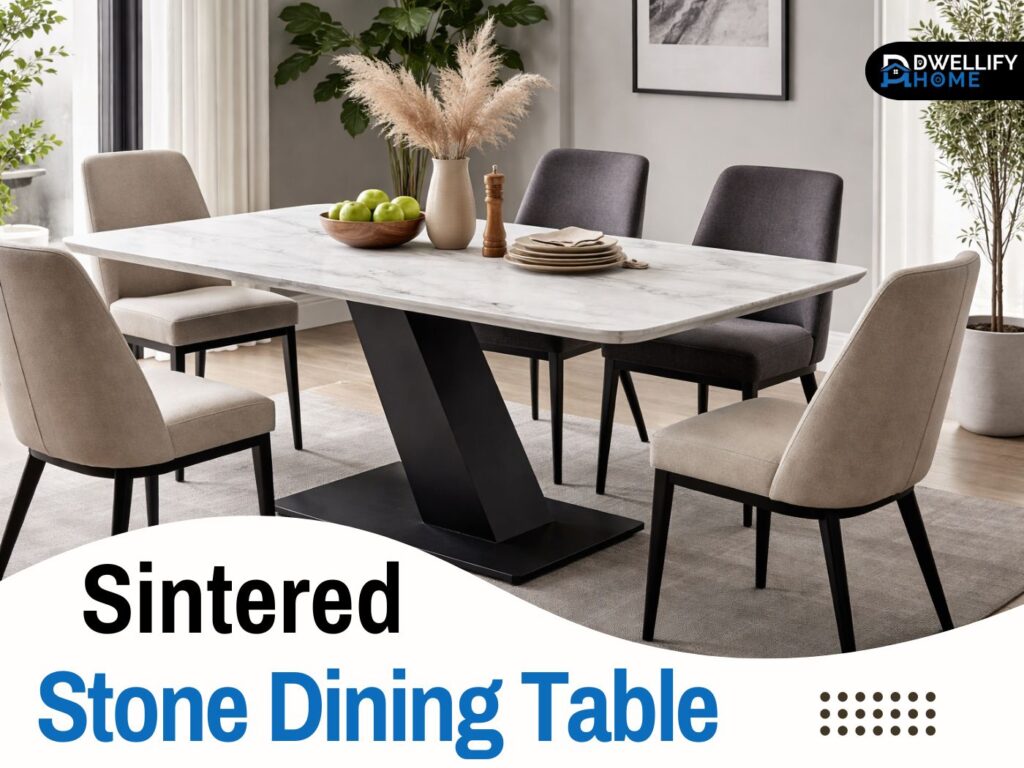
A dining table has to handle real life. Hot serving dishes, spilled tea, kids dragging plates, and the daily habit of dropping keys and bags on the surface. Over the last decade, I’ve tested a lot of table materials in real homes, and sintered stone has become one of the most practical options when you want a premium look without constant babysitting.
In simple terms, it gives you a stone-like surface that behaves more like a hard-wearing countertop. The trick is choosing the right size, base, and finish so it works for your room and your lifestyle, not just your Pinterest board.
Snippet-ready definition:
A sintered stone dining table has a tabletop made from compressed natural minerals fired at high heat, creating a dense, non-porous surface that resists stains, heat, and daily wear with minimal maintenance.
Mission Statement:
At Dwellify Home, our mission is to help you choose furniture that looks great and works in real life, with clear advice you can trust, based on everyday use, honest pros and cons, and practical buying guidance.
What Is a Sintered Stone Dining Table?
Sintered stone is made from natural minerals that are compressed and fired at very high temperatures. That process creates a dense slab that’s far less porous than marble and more heat-tolerant than many engineered surfaces. In day-to-day use, that usually means fewer worries about stains, heat, and moisture.
It also explains why these tables feel “solid” the moment you touch them. The surface is tight and compact, so liquids tend to sit on top instead of soaking in. I’ve had clients move from marble to sintered stone specifically because they were tired of treating their table like a museum piece.
How it’s made (and why this matters)
Because it’s pressed and heated into a very dense surface, sintered stone behaves differently than natural stone. You get strong scratch resistance and a surface that doesn’t need sealing. It’s one of the reasons it works well for homes that eat at the table every day, not just on holidays.
That said, the slab is still a hard material. The performance is excellent, but it rewards smart choices like a stable base and an edge profile that reduces chipping risk.
Quick Guide Table (Comparison + Buyer checklist)
| What to check | What “good” looks like | Why it matters in real life |
| Finish | Matte or lightly textured for most homes | Hides fingerprints better than glossy, easier day-to-day |
| Edge profile | Rounded or chamfered edges | Reduces the chance of visible chips on corners |
| Base stability | Heavy, wide stance or solid pedestal | Prevents wobble, supports the weight safely |
| Seating comfort | Leg placement doesn’t block knees | “Seats 8” is useless if corners are cramped |
| Extendable mechanism | Locks firmly, leaf sits flush | Avoids sag, bounce, and annoying seams |
| Delivery plan | Doorways, stairs, turning radius checked | These tops are heavy and awkward to move |
| Care routine | Mild soap + soft cloth is enough | You want low maintenance, not special products |
Quick size guide (simple rule-of-thumb)
- For 4: small rectangle or round works best in tight spaces
- For 6: easiest everyday family size
- For 8: great for hosting, check leg placement
- For 10: only if the room is large and walkways stay clear
Step-by-step cleaning guide (simple and safe)
- Wipe with a soft cloth and warm water.
- For everyday mess, add a few drops of mild dish soap.
- Rinse with a clean damp cloth so no soapy film stays behind.
- Dry with a towel to prevent water spots, especially on darker tops.
- Avoid abrasive pads and harsh acidic or strong alkaline cleaners over time.
Why People Love Sintered Stone (Real-World Benefits)
The biggest win is how calm it feels to live with. In my own testing, everyday messes are usually a quick wipe, and you do not have that lingering stress that comes with softer stones. For families, this can be the difference between loving your dining space and constantly worrying about it.
Heat resistance is another real advantage. I’ve seen plenty of quartz-topped tables get a dull patch from a hot dish that sat too long. Sintered stone handles heat far better in normal dining situations. I still recommend using trivets for cast iron or scorching hot cookware, but typical serving heat is rarely an issue.
A few benefits that matter most in real homes:
- Non-porous surface that resists common food stains
- Easy cleaning with mild soap and water
- Durable finish options that mimic marble, concrete, or modern solid colors
- UV and weather resistance that can work for covered outdoor areas
The Honest Downsides (What Most Blogs Don’t Say)
Let’s be fair. No table material is perfect. The most common issue I see with sintered stone tops is edge chipping. It’s not that the surface is weak, it’s that edges and corners take concentrated impact. A heavy ceramic plate clipped at the wrong angle can chip an exposed sharp edge.
This is why I like rounded or softly beveled edges, especially in family homes. It’s also why base design matters. If a large slab is not well-supported, the table can feel “stressed” over time, especially if it gets moved frequently.
Weight is the other practical downside. These tops can be heavy. Delivery is not the place to improvise. If you live in an apartment or have narrow stairs, measure your path and plan for proper handling. I’ve seen tables returned simply because the owners did not realize how tricky a tight turn in a hallway can be.
Finish matters too. Polished surfaces can show fingerprints and glare, especially under strong overhead lighting. Matte finishes hide marks better, but some textured finishes can catch crumbs and need a slightly more thorough wipe.
Sintered Stone vs Quartz vs Marble (Quick Comparison That Helps You Decide)
If you’re choosing between these materials, it helps to focus on daily behavior, not just the sales pitch.
Quartz is consistent and popular, but it can be more sensitive to heat. I’ve seen heat-related discoloration and dull patches when hot items are placed directly on it. For a busy dining setup with frequent hot serving dishes, sintered stone tends to be the calmer choice.
Marble is beautiful, but it’s softer and more reactive. In real life, that means etching from acidic foods, staining from oils, and a constant need for careful cleaning. It’s a good option if you love patina and do not mind maintenance. If you want a stone look with fewer rules, sintered stone is typically more forgiving.
A simple way to decide:
- Choose sintered stone if you want low maintenance, strong heat and stain resistance, and a modern stone look.
- Choose quartz if you want a consistent engineered finish and you are careful with heat.
- Choose marble if you accept ongoing care and love natural variation, even with marks over time.
Choosing the Right Size (4, 6, 8, 10 Seats) Without Guessing
Most sizing mistakes happen because people buy based on “seats” instead of room flow. A table that technically seats eight can still feel cramped if the legs block chairs or if there isn’t enough space to walk around it.
As a practical baseline, I like to see comfortable clearance around the table so chairs can slide out without hitting a wall. If your dining area is also a walkway, give yourself extra breathing room. You’ll feel it every day.
Best size picks by household
A sintered stone dining table for 4 works best when you want daily comfort in a smaller space. Round and small rectangles are common here, and they keep the room open.
A sintered stone dining table for 6 is the sweet spot for most families. It gives you hosting flexibility without dominating the room. If you eat together daily, this size tends to feel balanced.
A sintered stone dining table for 8 is great for people who host often or have a larger open-plan area. Pay attention to leg placement, because some designs steal knee room at the corners.
A sintered stone dining table for 10 only makes sense when the room supports it. I recommend checking both walkway space and base design. Pedestal bases can help with legroom, but they need to be stable and heavy enough to support the top safely.
Choosing the Right Shape (Round vs Rectangle vs Oval)
Shape changes how a table feels, even when the surface material is the same.
A sintered stone dining table round is one of my favorite picks for tighter rooms because it improves circulation and keeps corners from bumping hips. It also makes conversation easier since everyone feels more connected.
Rectangular tables fit long rooms and are often the most space-efficient for seating. They’re also easier to pair with benches on one side if you like that look.
Oval shapes give you some of the best of both worlds. They soften the visual lines and make it easier to move around, while still seating more people than many round options.
Extendable Sintered Stone Dining Tables: When They’re Worth It
An extendable design is a smart solution if you want a smaller everyday footprint but still host. I’ve recommended a sintered stone dining table, extendable to many homeowners who live in medium-sized spaces and entertain a few times a month.
The key is to check how the extension works. Some mechanisms feel smooth and sturdy, while others feel wobbly when fully extended. Also check how the seams look. A well-made table will keep the join lines clean and aligned.
Before you buy, look for:
- A stable base that does not shift when extended
- A locking mechanism that feels firm
- Enough clearance for chairs when the table is open
- A leaf that stores safely and does not chip at the edges
Style Guide: Make It Look Expensive (Not Cold)
Sintered stone can look crisp and modern, but it can also feel a bit cool if everything around it is hard and shiny. My easiest fix is to mix in warm, textured elements.
If your table has metal legs, add warmth with wood chairs, woven seats, or a textured rug. If your table has a wood base, you can lean into softer tones and let the stone top be the modern contrast.
Centerpieces work best when they’re simple. A low bowl, a few candles, or a small plant arrangement looks intentional without hiding the surface you paid for.
Black tables done right
A sintered stone dining table black can look sharp and grounded, especially in modern interiors. The two things to watch are lighting and smudges. Matte black tends to be more forgiving than polished black.
Pair it with:
- Warm wood chairs for contrast
- Soft neutral upholstery if you want it to feel lighter
- A rug with texture to break up the dark surface visually
Care and Cleaning (Low Maintenance, Done Correctly)
Most days, you’ll just wipe the surface with a soft cloth and mild soap. That’s honestly the appeal. Unlike marble, you are not thinking about sealing schedules or panic-cleaning every spill.
For sticky messes, warm water and a gentle cleaner usually do the job. If you have a textured finish, take an extra few seconds to wipe along the grain or texture so crumbs do not collect in the pattern.
A few habits I recommend:
- Use a cutting board for knives, not because the surface can’t handle it, but to protect your blades and keep the look clean
- Avoid abrasive pads, especially on polished finishes
- Clean spills sooner rather than later, mainly to avoid dull film from dried sugars or oils
If you ever get a small chip, it’s typically an edge issue, not a surface failure. Some chips can be filled or softened by a professional depending on the table design and finish. Prevention is still the best strategy, so choose a friendly edge profile and avoid hard impacts at the corners.
Buying Checklist (Before You Click “Buy”)
This is the short list I run through with clients before they purchase. It prevents most regrets.
- Measure your room and confirm chair pull-back space
- Check the base design for stability and knee room
- Choose a finish that fits your lifestyle, matte is usually the easiest
- Look at edge shape, slightly rounded edges are safer for busy homes
- Plan delivery, doorways, stairs, and tight turns matter with heavy tops
- Read warranty and return terms, especially for stone-like surfaces
Cost, Value and Where People Shop (Including Costco)
Pricing depends on size, thickness, base design, and whether the table extends. A large slab with a complex extension mechanism and a heavy base will cost more, and it should. Those features affect daily stability and long-term satisfaction.
If you’re considering a sintered stone dining table Costco option, treat it like any other serious furniture purchase. Look closely at the base, the edge profile, and the delivery terms. Big-box value can be great, but it’s still worth checking how sturdy the table feels, how the leaf mechanism works if it extends, and what the return window really looks like for large freight deliveries.
Value is not just the sticker price. It’s how the table behaves after two years of meals, homework, and hosting. Low maintenance and durability often pay you back in time and peace of mind.
FAQs
Is sintered stone dining table good?
Yes, for most busy homes it’s a strong choice. The surface is dense and non-porous, so it handles spills and daily use with less stress than marble and less heat sensitivity than many quartz tops.
What is the disadvantage of sintered stone?
The main downside is edge chipping risk if a hard object hits a corner. It’s also heavy, so delivery and moving need planning. Glossy finishes can show fingerprints more than matte finishes.
How to clean a sintered stone tabletop?
Use warm water and a soft cloth. For food residue, use mild dish soap, then wipe again with clean water and dry. Avoid abrasive scrubbers and harsh chemical cleaners for routine cleaning.
What is the most durable dining table finish?
For most households, a matte or satin finish on a dense surface (like sintered stone or other ultra-compact surfaces) is the most forgiving because it hides smudges and handles daily wear well.
Is a sintered stone dining table good for kids and messy meals?
Usually yes. Spills sit on the surface rather than soaking in, so cleanup is straightforward. Pick a rounded edge and a stable base to reduce day-to-day risks.
Conclusion
If you want a dining table that looks like stone but behaves more like a tough, low-stress surface, this material is hard to beat. In the homes I’ve worked with, the happiest owners are the ones who matched the table to their real routines, not just the showroom look.
Focus on the basics: choose the right size for your room, pick a finish you can live with, and do not ignore the base and edge details. If you do that, a sintered stone dining table can be the kind of purchase you stop thinking about, in the best way, because it just handles daily life and still looks good doing it.
Disclaimer:
This guide is based on hands-on material experience and general best practices. Specific care and durability can vary by brand, finish, thickness, and base design, so always follow your manufacturer’s care instructions and warranty terms.

I’m Bilal Hassan, the founder of Dwellify Home. With 6 years of practical experience in home remodeling, interior design, and décor consulting, I help people transform their spaces with simple, effective, and affordable ideas. I specialize in offering real-world tips, step-by-step guides, and product recommendations that make home improvement easier and more enjoyable. My mission is to empower homeowners and renters to create functional, beautiful spaces—one thoughtful update at a time.