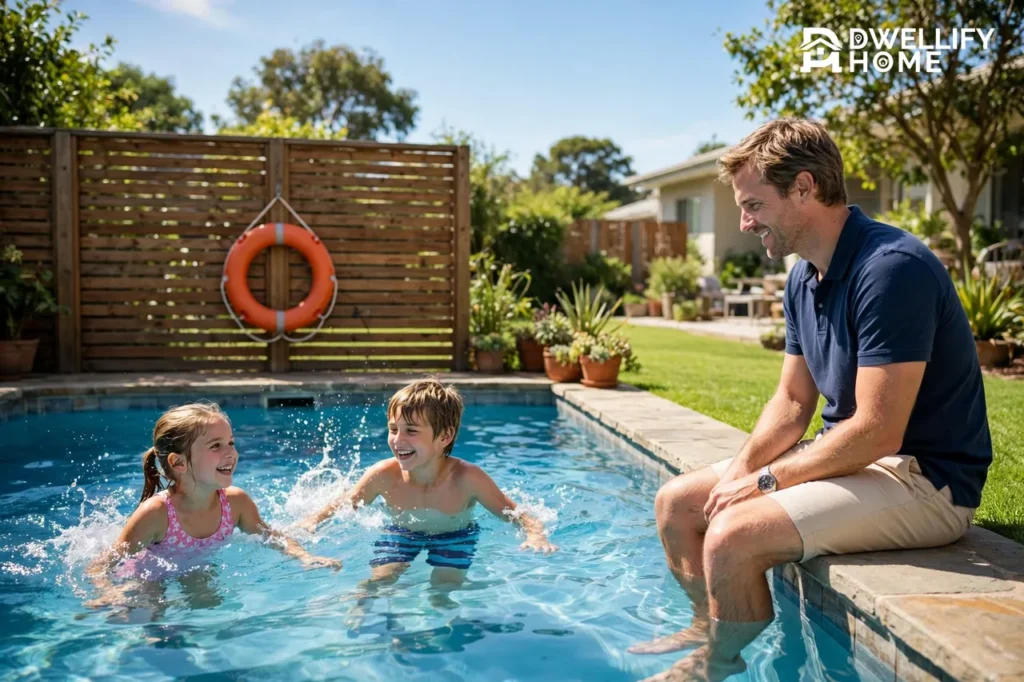
The core pool safety rules are simple: never swim alone, watch children at all times, walk on the deck, never dive into shallow water, and get out at the first sign of thunder. Pool safety rules keep swimmers safe because most pool accidents happen fast, quietly, and to people who thought they were fine.
This guide gives you the full set of rules for a home pool, the reasons behind each one, and a printable list you can post by the gate. It covers kids, adults, guests, and the adults who watch them.
The One Rule Above All: Active Supervision
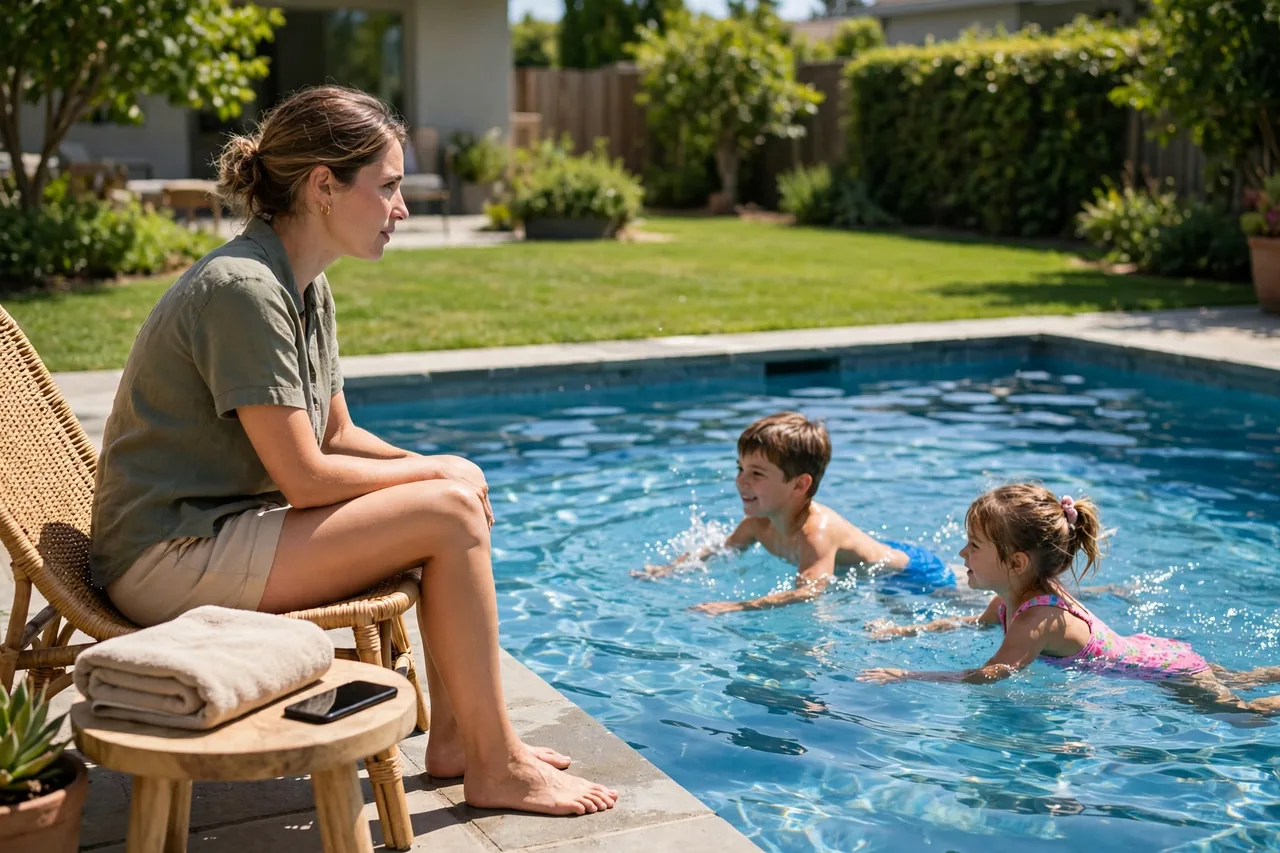
Every other pool rule depends on this one. Drowning is fast and quiet, and a child can slip under in under a minute while adults stand nearby. Assign one adult as the water watcher, and that adult watches the water and nothing else.
The water watcher stays within arm’s reach of young children and beginner swimmers. The watcher does not use a phone, read a book, drink alcohol, or hold a long conversation. When the watcher needs a break, another adult takes over out loud, so there is never a gap when no one is watching.
Lifeguards help, but they do not replace you. Even at a pool with a lifeguard, watch your own children yourself. A lifeguard watches the whole pool, while you watch your child, and that double watch is what keeps kids safe.
Teach every caregiver the same rule. Grandparents, babysitters, and older siblings who watch younger kids must know that supervision means eyes on the water, not just being in the yard.
Never Swim Alone
Swim with a buddy, every time, at every age. A lone swimmer who cramps, hits their head, or feels faint has no one to call for help. Never swim alone, and never let a child swim alone, even in a shallow pool.
Teach children to ask an adult before they get in the water. A child who asks first gives you a chance to check the water, the weather, and who is watching. Make it a house rule, not a suggestion, and enforce it the same way every time.
Adults should follow the same rule. If you swim laps alone in a home pool, tell someone you are swimming, keep a phone within reach of the deck, and stop the moment you feel tired or unwell.
Walk on the Deck, No Running or Rough Play
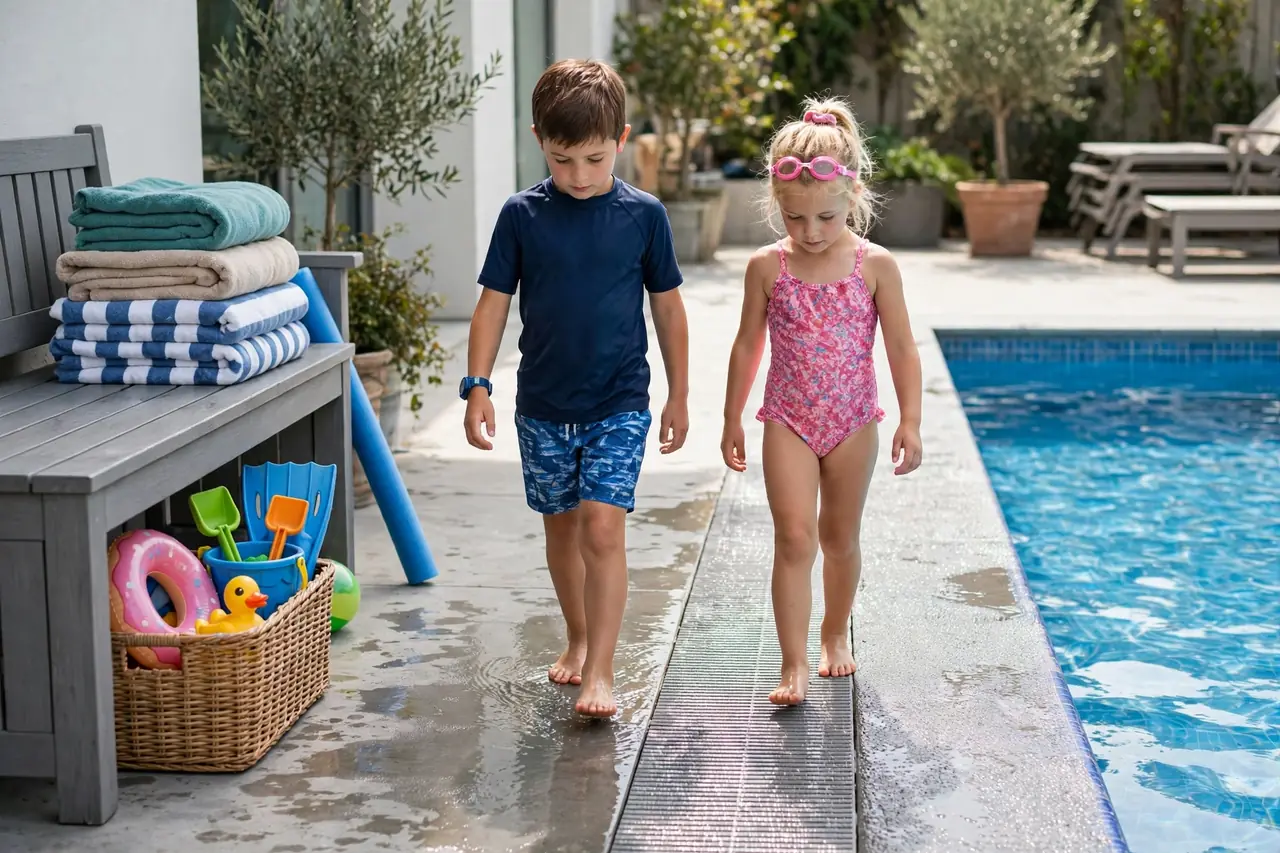
Wet pool decks are slippery, and a fall on concrete or tile can break bones or knock a swimmer into the water unconscious. Walk at all times on the deck, and stop running the moment you see it.
Ban pushing, dunking, and jumping on other swimmers. Rough play near the edge pushes people into the water when they are not ready, and dunking can hold a child under longer than they can manage. These rules feel strict to kids, but they stop the most common poolside injuries.
Keep the deck clear. Toys, towels, and shoes left on the deck become trip hazards, so store them off the walking path. Clean up spills and splashes that make the deck slick, and fix loose tiles or cracked concrete before the season starts.
Diving Rules: Depth First, Always
Diving causes some of the worst pool injuries, because a head-first dive into shallow water can injure the neck and spine. Never dive unless you know the water is deep enough, and never dive into an above-ground pool.
KidsHealth, the family health guide from Nemours Children’s Health, advises families never to dive from the side of a pool or a diving board unless the pool is at least 9 feet deep, and to skip the dive entirely if the depth is not posted. Its pool safety guide for parents also warns against mermaid tails and fins, which can make swimming hard and raise the drowning risk.
Dive only from the end of a diving board, never from the sides of the board or the pool. Wait until the landing area is clear, then swim away promptly so the next diver does not land on you. Feet first is the safe way to test unknown water: enter feet first, check the depth, and only then think about diving.
Teach children that slides go feet first too, and that jumping in is safe only when no one is in the way. A child who jumps onto another swimmer can injure them both.
Swim Skills, Lessons, and Floaties
Swim lessons save lives. Formal lessons cut the drowning risk sharply for young children, and KidsHealth advises parents to schedule lessons once a child is at least 1 year old. Lessons do not make a child drown-proof, so supervision stays in place even after lessons.
Learn to swim yourself if you cannot. An adult who cannot swim cannot rescue a child, and a non-swimmer who jumps in after a struggling child often becomes a second victim. Take lessons, learn basic water rescue, and learn CPR.
Know what floaties can and cannot do. Arm floaties, rings, and noodles are toys, not safety devices. A child wearing floaties needs the same watch as a child without them, because floaties can slip off, deflate, or tip a child face-down. Use a properly fitted life jacket approved by the U.S. Coast Guard for weak swimmers and non-swimmers, and never trust a toy to hold a child up.
Barriers, Alarms, Covers, and Drains
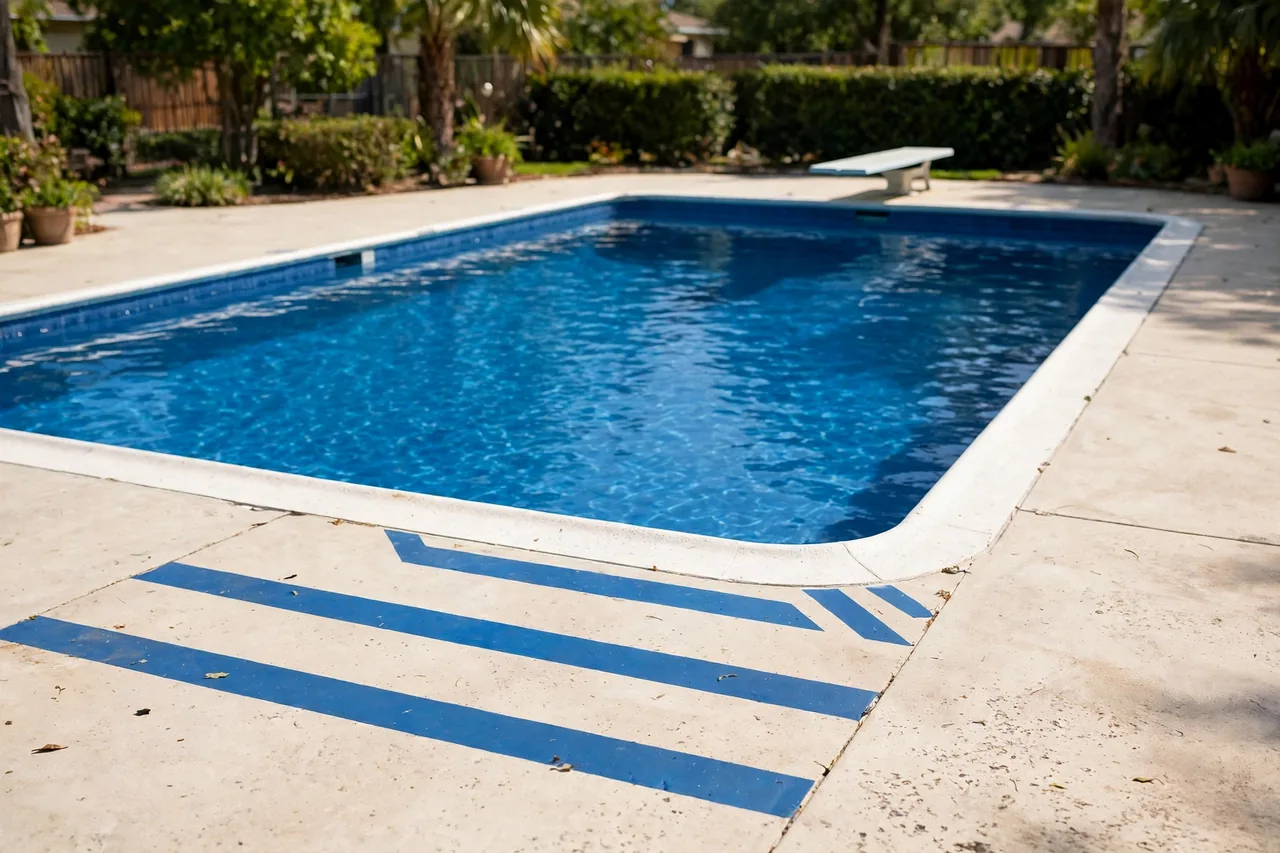
Rules only work while someone is watching, so the pool needs protection that works when no one is there. A four-sided fence with a self-closing, self-latching gate is the most important barrier for a home pool. The Pool and Lawn’s guide to water safety around pools lays out the same layers the CDC and the Consumer Product Safety Commission recommend: a four-sided fence at least 4 feet high with gaps no larger than 4 inches, plus alarms and covers.
Keep the gate latched every time you leave the pool, and test the latch often. Add alarms on gates and doors that lead to the pool, so an opening sounds a warning inside the house. A safety cover that is anchored and rated to hold weight adds another layer when the pool is closed, but a loose or floating cover is a trap, not a barrier.
Check the drain covers. A missing or broken drain cover can trap hair or a limb, so use covers that meet the ANSI/APSP safety standard and replace a cracked cover at once. Teach children to stay away from drains and suction outlets, and never let them play with the skimmer or pump openings.
Keep rescue gear within reach of the pool at all times: a life ring or buoy, a shepherd’s hook or long pole, and a phone with emergency numbers posted nearby. In an emergency, reach or throw, do not go: throw a floating object or extend a pole to the person, and call for help, rather than jumping in after them unless you are trained.
Weather, Water, and Health Rules
Get out of the water at the first sign of thunder or lightning, and stay out until the storm has fully passed. Water and metal pool parts conduct electricity, and lightning can strike water directly. Do not wait to see if the storm gets closer.
Never swim under the influence of alcohol or drugs. Alcohol dulls judgment, balance, and coordination, and it plays a role in a large share of adult drowning deaths. The adult who watches the swimmers must stay sober too.
Shower before you get in. Showering washes off sweat, sunscreen, and dirt, which keeps the water cleaner and the chemicals working. Do not swim with an open wound, diarrhea, or a contagious illness, and keep sick children out of the pool until they are well.
Stay hydrated and take breaks in the shade. Swimmers, especially children, can get dehydrated and sunburned without noticing, since the water keeps them cool. Set a timer for breaks, offer water, and reapply sunscreen.
Keep glass out of the pool area. A broken glass on a wet deck is hard to see and can cut feet badly, so use plastic cups and bottles only. Keep food and gum out of the water, since eating while swimming raises the choking risk.
Rules for Kids by Age
Different ages need different rules, because a toddler and a teenager face different risks. Set the rules by age and repeat them until your children can recite them.
Pool safety rules by age
| Age group | Key rules | Supervision |
|---|---|---|
| Ages 1 to 4 | Stay in shallow water, no pool without an adult in the water | Adult within arm’s reach at all times |
| Ages 5 to 9 | Swim lessons, no diving, ask before entering, buddy always | Adult watching from the poolside |
| Ages 10 to 14 | Buddy system, no rough play, no diving without depth check | Adult present and watching |
| Teens | No alcohol, no diving into unknown water, no swimming alone | Adult aware and checking in |
For toddlers, a shallow depth of 18 inches to 2.5 feet suits supervised play, while school-age children swim comfortably in 3.5 to 4 feet. The Centers for Disease Control and Prevention reports that drowning is the leading cause of accidental death for children ages 1 to 4, which is why the youngest swimmers need the closest watch and the shallowest water.
Move a child to deeper water only when their swimming skill, not their age, proves they are ready. A tall child who cannot swim well is still a weak swimmer, and depth must match skill.
What to Do in a Pool Emergency
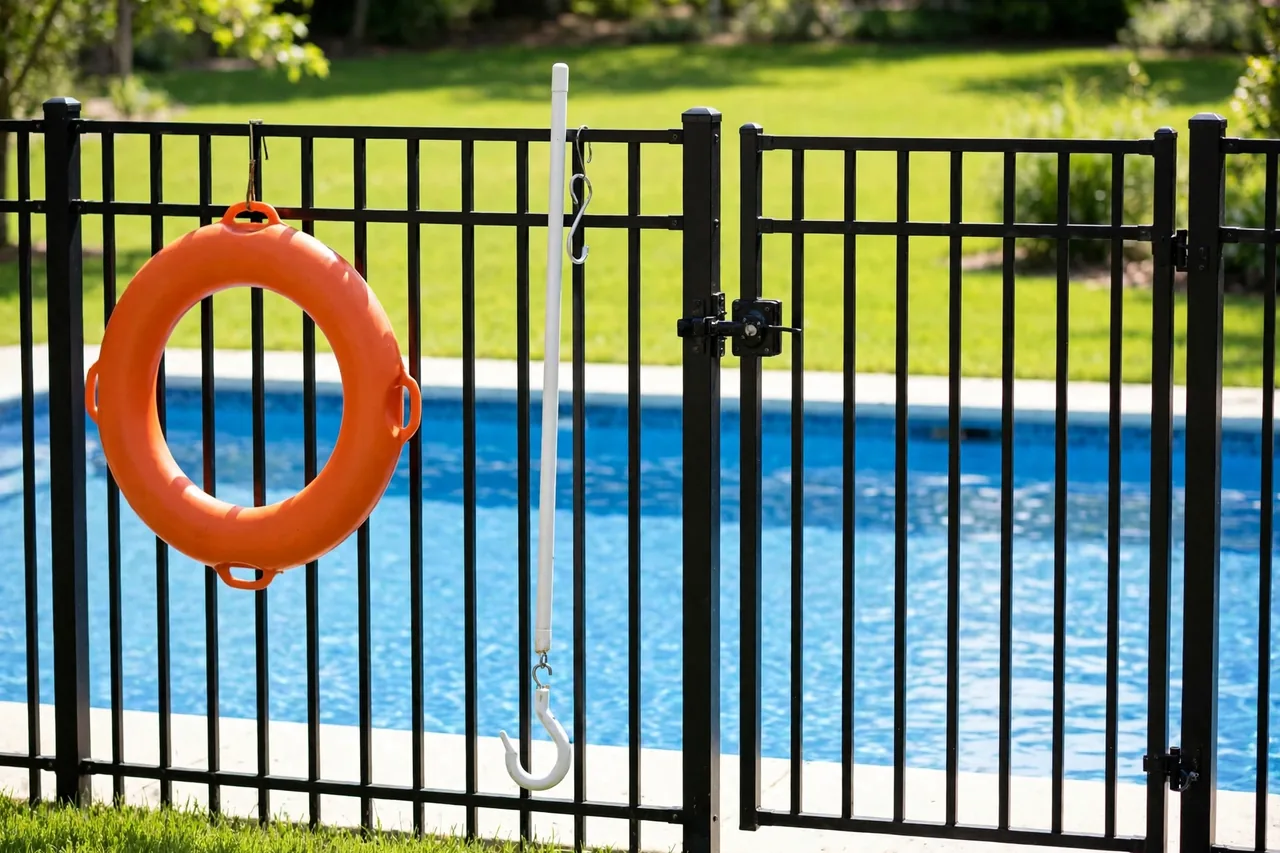
Emergencies reward people who already know the steps. Learn them now, while the pool is calm.
- Call for help and alert a lifeguard at once. If no lifeguard is present, call 911.
- Reach or throw, do not go. Extend a pole or throw a life ring to the person in trouble.
- If the person is out of the water and not breathing normally, start CPR if you are trained, and keep going until help arrives.
- If the person is breathing but swallowed water, keep them still, watch their breathing, and get medical advice fast.
- After any rescue, get the person checked by a doctor, even if they seem fine. Breathing problems can appear hours after water enters the lungs.
Post the emergency steps and the address of the pool where everyone can see them. In a panic, people forget their own address, and the dispatcher needs it fast.
Your Printable Pool Rules List
Post this list by the gate and the back door, and go over it with every guest before they swim.
- Never swim alone. Always swim with a buddy.
- An adult water watcher watches the water at all times.
- Ask an adult before getting in the pool.
- Walk on the deck. No running, pushing, or dunking.
- Never dive into shallow water. Dive only where depth is known and at least 9 feet.
- No glass, no food, and no gum in the pool.
- Get out at the first sign of thunder or lightning.
- No alcohol or drugs while swimming or watching swimmers.
- Shower before swimming. Stay out if you are sick.
- Latch the gate every time you leave the pool.
Pool Rules for Guests and Pool Parties
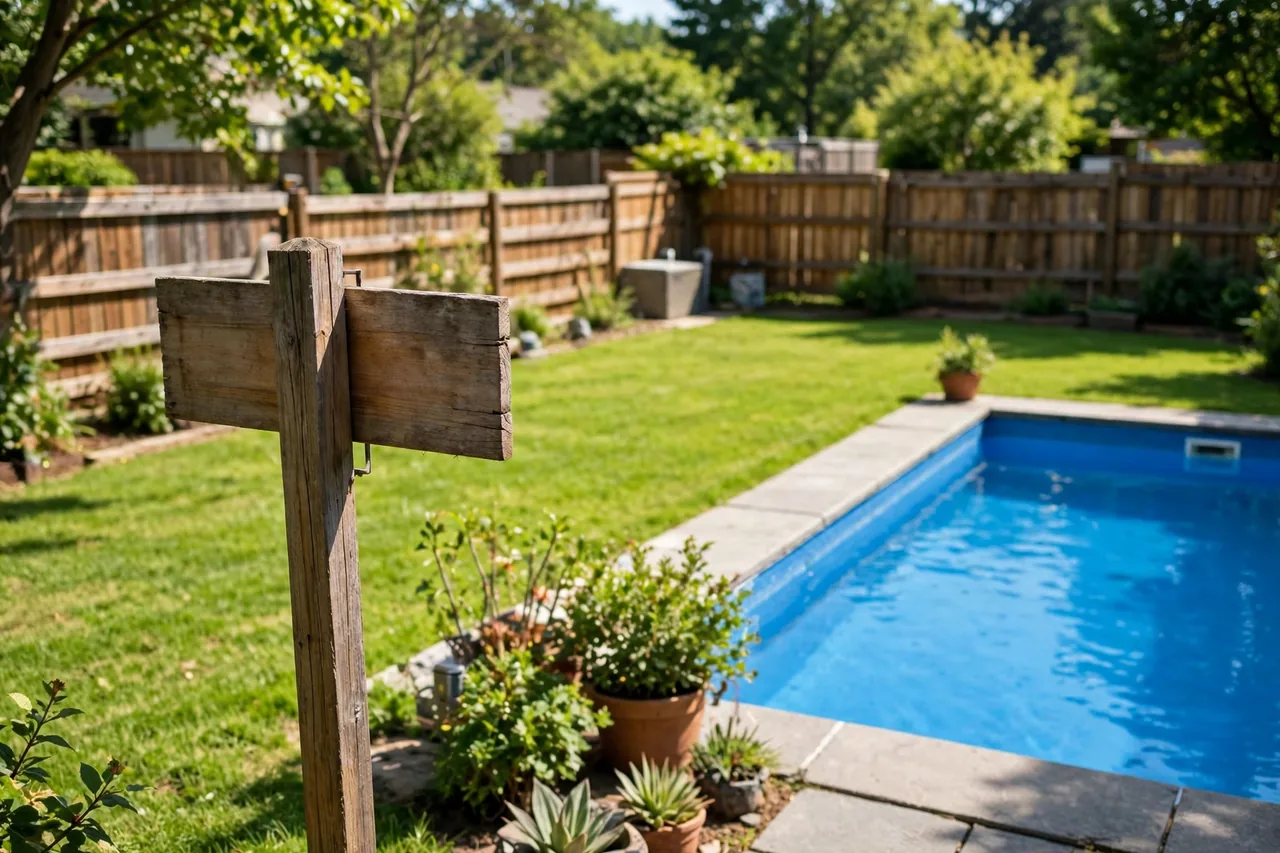
Guests do not know your rules, so tell them before they swim. A short welcome talk takes two minutes and stops most party accidents, because guests who know the rules follow them.
Before the party, walk the pool area yourself. Check the gate latch, the drain covers, the rescue gear, and the depth markings. Put out plastic cups only, clear the deck of trip hazards, and set up shade and fresh water for everyone. Tell every guest where the bathroom is, so no one is tempted to use the pool instead.
Name one water watcher for the party, and rotate the job every 30 minutes so the watcher stays fresh. The watcher wears a bright hat or a lanyard so everyone knows who is on duty. If alcohol is served, keep it away from the pool and make sure the watcher stays sober. Count the children in the water at regular intervals, and do a head count every time a child leaves the pool.
Keep the guest list realistic for your pool size. A crowded pool hides swimmers in trouble, so cap the number of swimmers to what one watcher can see at once. If the party grows, add a second watcher or split swim time into turns.
Related Guides
Plan a safer yard with swimming pool landscaping ideas that keep sight lines clear. For a small yard, read backyard pool ideas for a small yard before you lay out the deck. Set up the deck with outdoor furniture for poolside placed outside the walking path.
Frequently Asked Questions
What are the most important pool safety rules?
Never swim alone, assign an adult water watcher, walk on the deck, never dive into shallow water, and get out at the first sign of thunder. Add a four-sided fence with a self-latching gate, swim lessons, and rescue gear within reach, and you cover the biggest risks.
How deep does a pool need to be for diving?
At least 9 feet deep, and only from the end of a diving board with a clear landing area. Never dive into an above-ground pool, never dive from the side of the pool or board, and never dive if the depth is not posted or known.
Can children swim with floaties instead of a life jacket?
No. Arm floaties, rings, and noodles are toys, not safety devices, and they can slip off or tip a child face-down. Use a properly fitted life jacket approved by the U.S. Coast Guard for weak swimmers, and supervise just as closely either way.
What should I do if someone is struggling in the pool?
Call for help at once, then reach or throw, do not go. Extend a pole or throw a life ring to the person. Only enter the water if you are trained to rescue, and start CPR if the person is out of the water and not breathing normally.
When should everyone get out of the pool?
At the first sign of thunder or lightning, and stay out until the storm has fully passed. Also get out if the water turns cloudy, the drain cover is loose or missing, someone feels ill, or the watcher needs to leave with no replacement.
A Short Safety Note
This guide shares general pool safety information, not medical or legal advice. Pool rules vary by town, and health advice varies by person, so check your local code and talk to your doctor about your family’s needs. If someone has a water accident, call emergency services at once and get medical care even if the person seems fine, since breathing trouble can show up hours later.
Post the rules, name the watcher, and latch the gate, and every swim gets safer.