Swimming pool landscaping ideas work best when you design the surround first and plant second. Keep trees and large shrubs at least 3 to 4 feet from the pool edge, and build the whole plan around low-mess plants, safe footing, and real privacy.
A pool changes how you use your backyard. It becomes the place where you swim, host friends, and spend long summer evenings. The landscaping around it decides whether that space feels like a resort or a chore. Good pool landscaping frames the water, gives you shade and privacy, and keeps leaves and dirt out of the skimmer.
This guide walks you through the whole surround step by step. You will learn how to zone the space, pick a deck surface that stays safe under wet feet, choose plants that can handle sun and splash, add privacy and shade, light the garden after dark, and keep the water clean with less work. If the patio beside the pool still needs a plan, our complete patio ideas guide will help you pick the layout and surface first.
Start With a Plan: Zone the Pool Surround
Start by dividing the area around your pool into three rings. The first ring is the coping and deck right beside the water. The second ring holds planting beds, paths, and seating. The third ring is the perimeter, where tall screening, fences, and trees belong.
This simple split stops the most common mistake in pool landscaping. When every plant and feature competes for the same strip of ground beside the water, the result looks crowded and the pool fills with leaves. When each ring has one job, the design reads as calm and finished.
Walk the yard at different times of day before you buy anything. Note where the sun hits hardest in the afternoon, where the wind blows leaves, and where neighbors can see in. Those three facts shape every choice that follows, from shade to screening to plant placement.
Sketch the rings on paper, even a rough one. Mark the deck width, the main path from the house to the pool, the seating spot, and the equipment pad for the pump and filter. Keep the path clear and wide enough for two people to pass with towels and drinks. A pool area that is hard to walk through never feels relaxing, no matter how pretty the plants look.
Choose Deck and Surfaces That Stay Safe Under Wet Feet
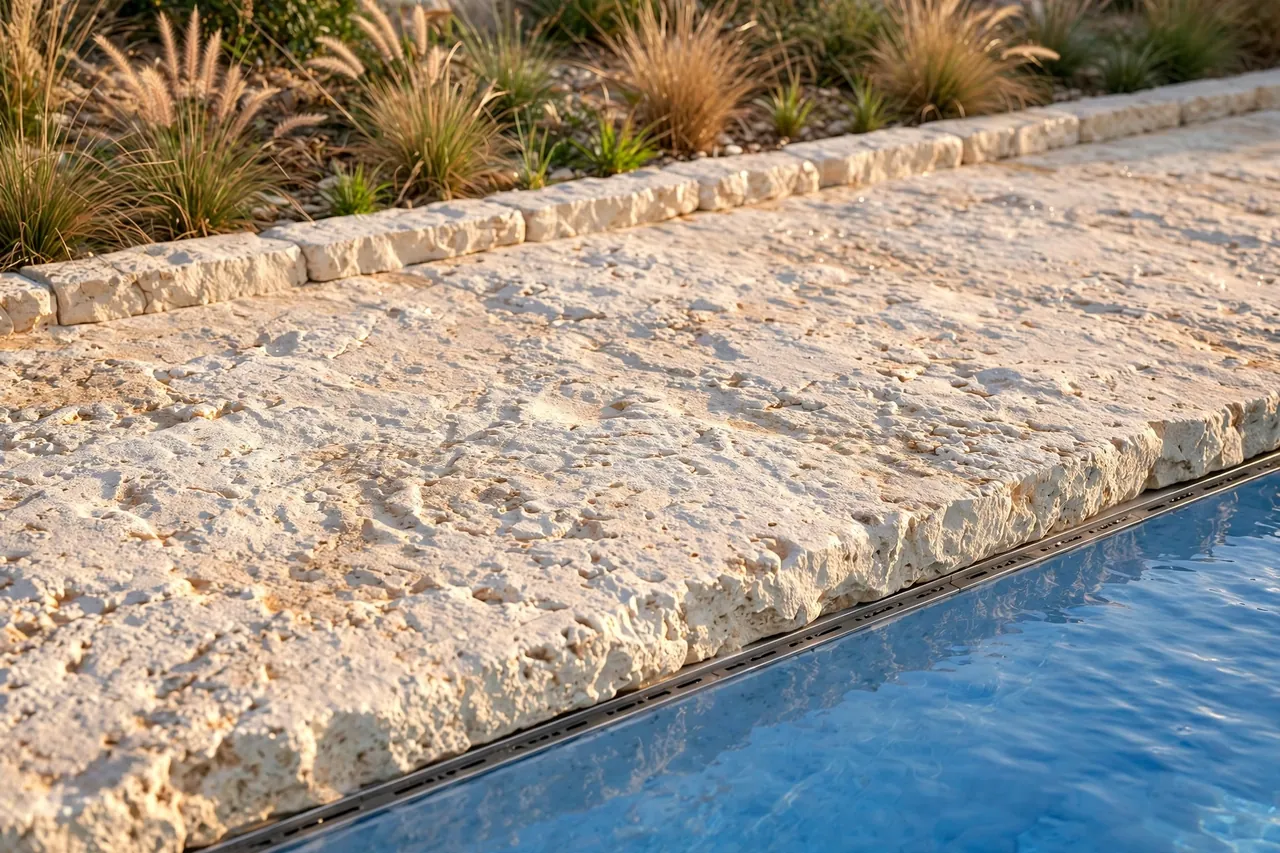
The deck is the surface you touch most, so pick it for safety first and looks second. Wet feet slip fast on smooth stone and sealed concrete. Choose a surface with grip: textured pavers, brushed concrete, natural stone with a rough finish, or composite decking made for pool areas.
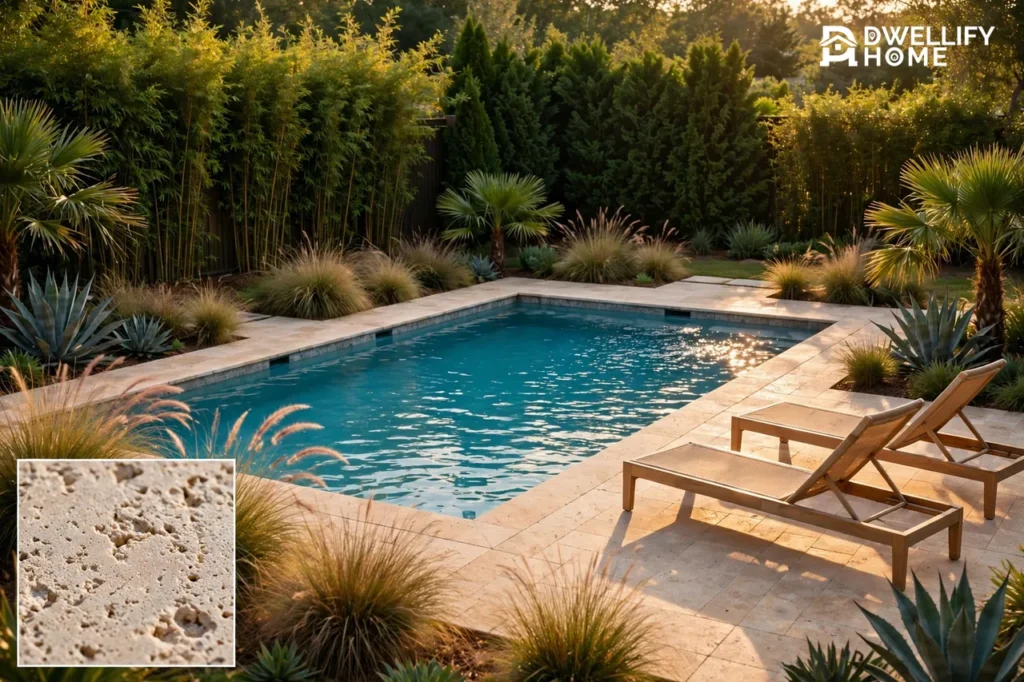
Heat matters just as much as grip. Dark stone and dark concrete soak up sun and can burn bare feet by mid-afternoon. Light colors stay cooler, and so do materials like travertine and light-toned pavers. If you love a dark look, save it for accents away from the main walking path.
Leave a small gap between the deck and the planting beds. A low stone edge or a clean metal strip stops soil and mulch from washing onto the deck in the rain. It also gives you a clear line to sweep and clean. Small edges like this save more cleaning time than any fancy plant choice.
Think about drainage from the start. Water should run away from the pool shell and away from the house, never toward either one. A deck that slopes gently away from the water, with a drain or a gravel strip at its edge, keeps puddles off the walking surface and keeps dirty runoff out of the pool.
Pick Low-Mess Plants That Love Sun and Splash
Plants around a pool live a harder life than plants anywhere else in the yard. They face sun glare off the water, reflected heat off the deck, and regular splashes of chlorinated water. The best poolside plants handle all three and drop almost nothing into the water.
Choose low-litter plants first. Ornamental grasses bring soft movement and drop very little. Agave, yucca, and succulents give strong shape with almost no cleanup. Dwarf and clumping palms add a tropical feel without the mess of big fruiting palms. Boxwood and podocarpus give tidy evergreen structure you can clip into shape.
For color, bird of paradise and canna lily read as resort planting in warm zones. In cooler zones, feather reed grass, hosta, and hydrangea work well, but keep flowering shrubs back from the coping so spent blooms do not land in the water. Match every plant to your USDA hardiness zone before you buy it, and ask a local nursery when you are unsure.
Keep these plants away from the water’s edge, and never plant them right against the coping:
- Fruiting trees and anything that drops berries, pods, or heavy flowers
- Trees with aggressive surface roots, such as willows, poplars, and silver maples
- Plants with thorns or sharp spines beside walkways and lounge chairs
- Running bamboo, which spreads fast and is hard to remove once it takes hold
- Messy bloomers like jacaranda, bottlebrush, and flowering fruit trees
If you love a blooming tree, plant it downwind and well back from the pool, where its drop lands on lawn or mulch instead of in the skimmer. You still get the flowers, and the pool stays clean.
Poolside landscaping ideas also work well in pots. Large planters let you move plants with the seasons, keep roots away from the shell, and fill a paved surround with green without digging beds. Choose heavy pots that will not tip in wind, and use a light potting mix that drains well.
Pool plants by style and zone
| Style | Plants to try | Best zones | Upkeep |
|---|---|---|---|
| Tropical resort | Queen palm, pygmy date palm, bird of paradise, canna lily | 9 to 11 | Low to moderate |
| Modern minimalist | Ornamental grasses, agave, olive, dwarf mondo grass | 8 to 11 | Very low |
| Desert xeriscape | Agave, red yucca, barrel cactus, ocotillo, aloe | 8 to 11 | Very low |
| Mediterranean | Olive, lavender, rosemary, dwarf citrus, Italian cypress | 8 to 10 | Low |
| Cool climate | Boxwood, arborvitae, hosta, feather reed grass | 4 to 8 | Low to moderate |
Repeat two or three plant types in generous drifts instead of buying one of everything. Repetition reads as intentional design, and it makes care simpler because you learn how a few plants behave instead of juggling a dozen different needs. Buy fewer, larger specimens for instant scale, and let cheaper filler plants grow in around them. The plant shortlist above follows the same low-litter, splash-tolerant approach in PoolPad’s pool landscaping guide, which also sets the 3 to 4 foot setback used in this article.
Add Privacy Without Crowding the Deck
Privacy is usually the first thing pool owners ask for, and plants alone are rarely the fastest answer. Living screens take a season or two to fill in. A built element gives you privacy on day one while the plants catch up.
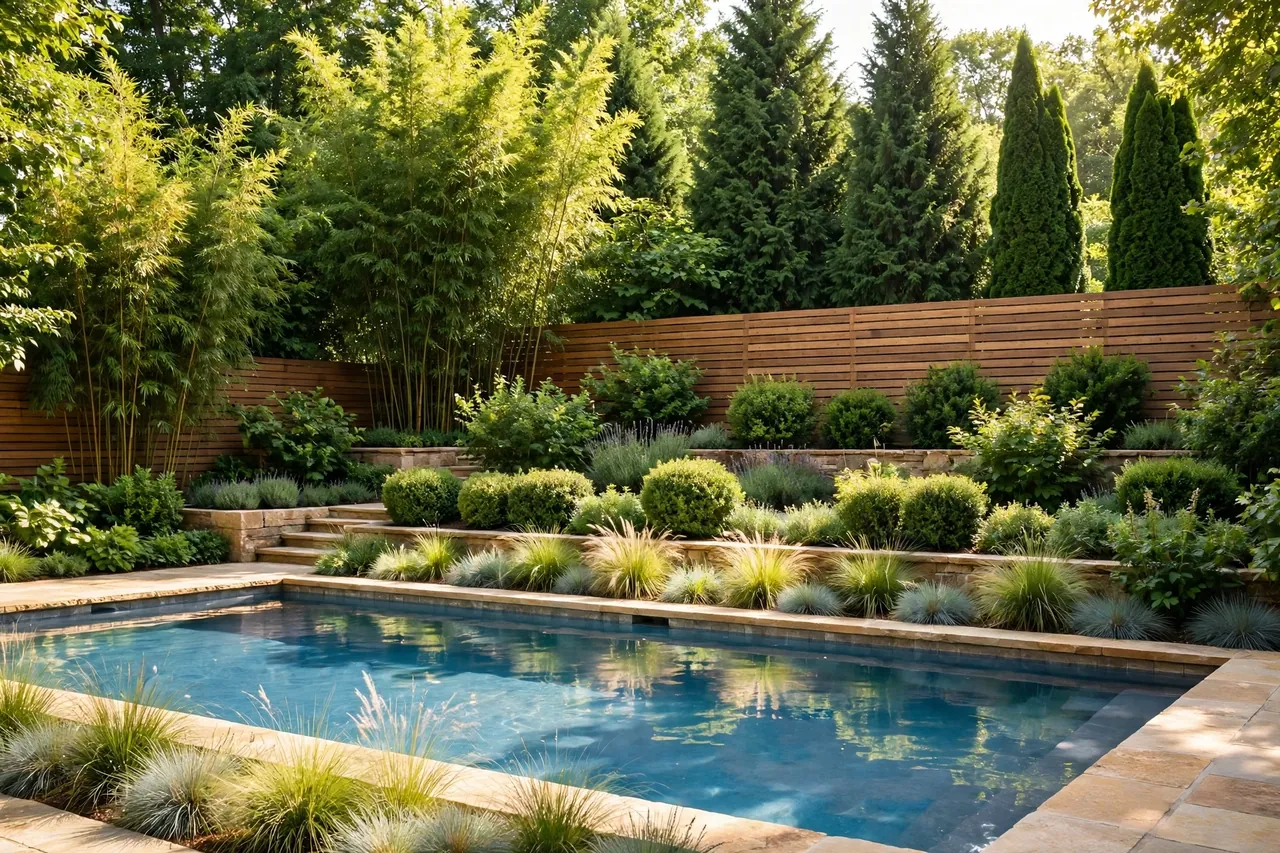
Pair tall screening plants with a structure. Clumping bamboo, arborvitae, podocarpus, and Italian cypress grow up instead of out, so they screen at eye level without eating the walkway. A horizontal slat fence with a planter at its base reads modern and screens instantly. A pergola or cabana blocks sightlines from second-story windows and adds shade at the same time.
Check that any bamboo you buy is a clumping species, not a running one. Running bamboo spreads underground and can become a decades-long regret. Clumping bamboo stays where you plant it and gives you fast, dense height.
Layer the screening in heights. Low grasses or groundcover sit at the coping, mid-height shrubs stand behind them, and tall trees or hedges guard the perimeter. This staircase of heights hides fences, softens hard edges, and makes even a small yard feel lush and enclosed.
Do not let screening swallow the deck. Keep hedges clipped so they never narrow the walkway, and leave gaps where you want a view or a breeze. Privacy should feel like a garden room, not a wall closing in on the water.
Shade That Works by the Water
Afternoon sun turns a pool deck into a hot plate. Shade lets you use the pool longer, and it protects both people and plants from the harshest heat. Plan shade before you plant, because shade shapes where everything else goes.
A pergola over part of the deck gives filtered shade and a place to hang lights or climbing plants. A large cantilever umbrella shades the lounge chairs and moves with the sun. A shade sail stretches between the house and a post or tree and covers a wide area for little cost. Each one works, so pick the one that fits your budget and your yard’s shape.
Trees give the best shade over time, but they need distance. Plant shade trees at least 15 to 20 feet from the pool, and pick species with small leaves and deep roots. A tree that drops big leaves over the water trades shade for a daily skimming job, so low-litter species earn their spot.
Place seating in the shade, not in the glare. A shaded lounge corner with a small side table gets used every day, while chairs baking in full sun sit empty. If your deck has no shade yet, start with one umbrella over the main seating spot and add permanent structure later.
Light the Landscape for Evening Swims
A pool garden you can only enjoy in daylight is a garden you use half as much. Landscape lighting for pool area design turns evening swims into the best part of the day, and pool lighting ideas do not need to be complicated or bright to work well.
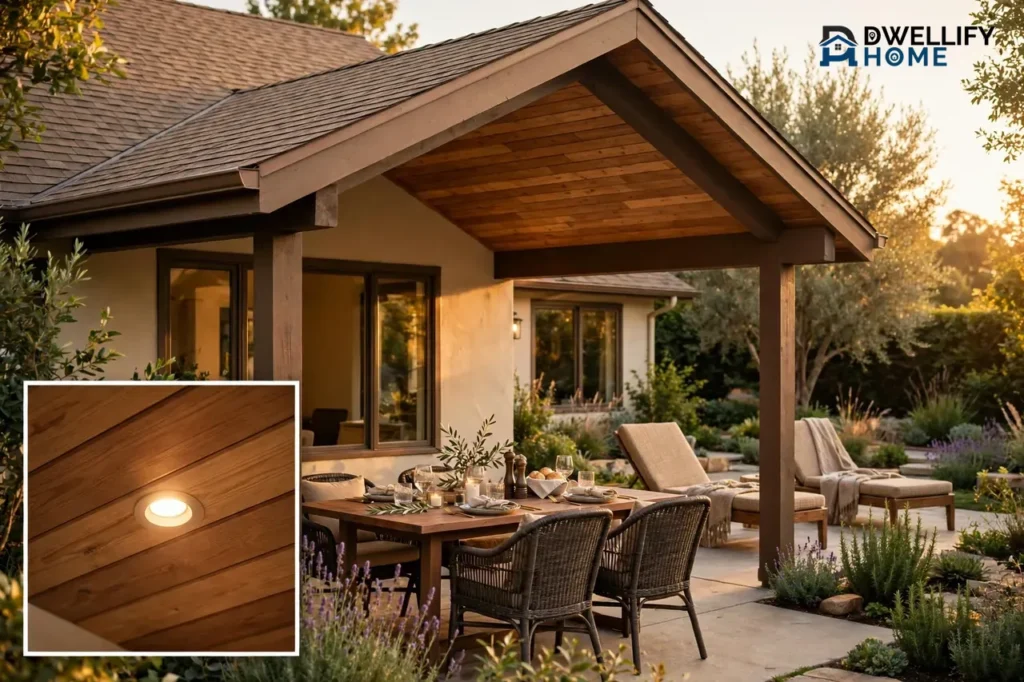
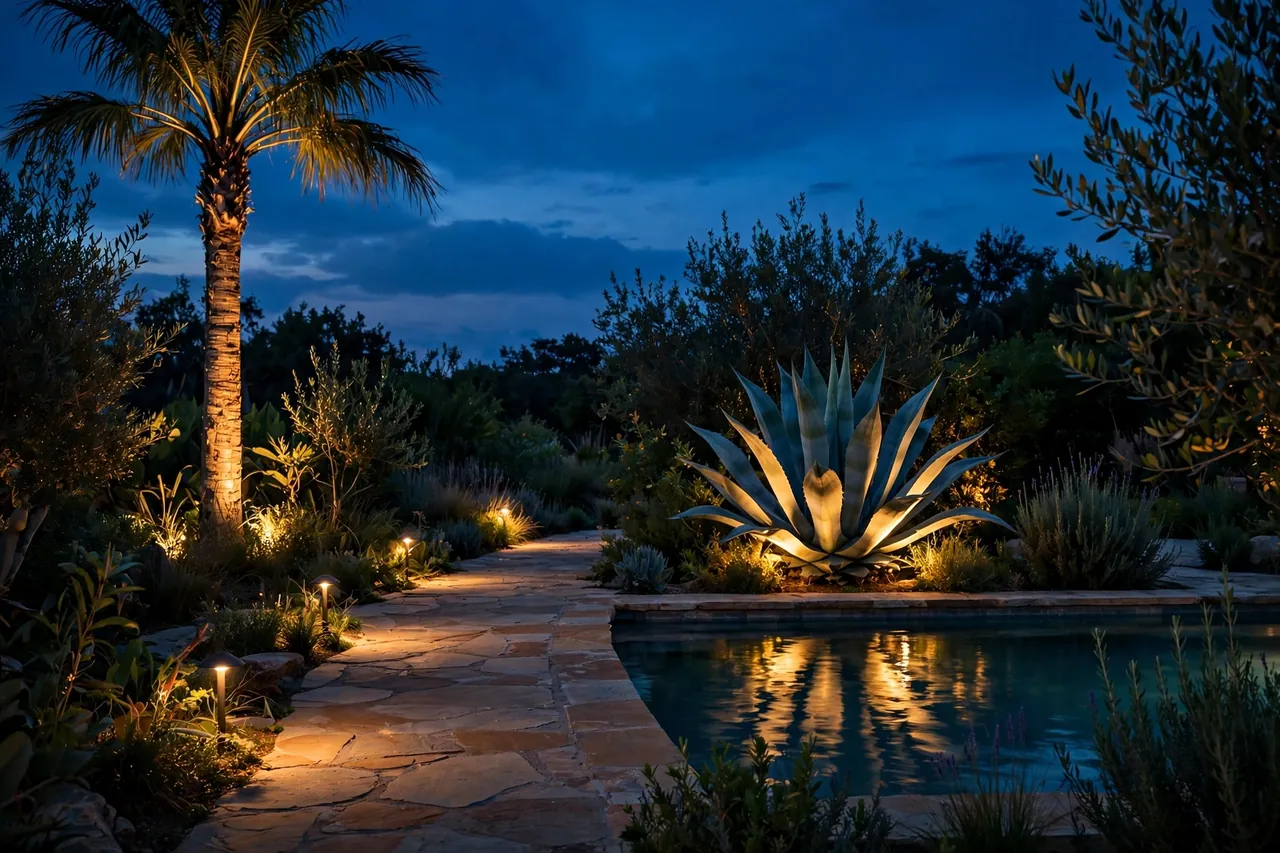
Low-voltage landscape lighting is the highest-impact upgrade in the whole plan, and you do not need many fixtures. A handful of well-placed lights does more than a runway of them. Warm light around 2700K feels soft and resort-like, and it flatters plants and stone without glare bouncing off the water.
Use three simple moves. Uplight two or three specimen plants, such as a palm, an agave, or a sculptural tree, to create silhouettes and depth. Wash a privacy hedge or fence with light to push the boundary back and make the yard feel larger. Path-light the walkways low and warm so guests move safely without glare.
Hide the fixtures behind foliage so you see the effect, not the source. Keep lights out of the direct splash zone, and use fixtures rated for outdoor and wet locations. For any wiring near water, hire a licensed electrician. Water and electricity are a dangerous mix, and this is not a job to learn by trial and error.
String lights over a pergola or seating area add a warm glow for gatherings, and they cost little. Underwater pool lights come with the pool itself, so check with your pool builder before you add anything to the water. Keep the landscape lighting separate from the pool’s own lights, and let each layer do its own job.
Water Features That Fit the Design
Moving water changes how a pool feels. A waterfall, a spillway, or a bubbler adds sound, movement, and a focal point that draws the eye. It also masks street noise, which matters in a busy neighborhood.
Match the feature to the style of the pool. A natural rock waterfall suits a tropical or lagoon-style pool, with ferns and broad-leaf plants softening the stone. A clean sheet waterfall or a spillway fits a modern rectangle pool, with grasses and agave keeping the lines sharp. A small bubbler in a raised planter adds charm to a compact yard without taking over the space.
Keep water features simple to maintain. A feature with easy access to its pump and filter gets cleaned; a feature buried behind rockwork gets ignored until it clogs. Ask your installer where the pump sits and how you reach it before the stone goes in.
For full design ideas, costs, and expert tips on waterfall pools, see our guide to pools with waterfalls. It covers the styles and the practical details, so this article stays focused on the landscaping around them.
Design Ideas for Rectangle Pools and Small Yards
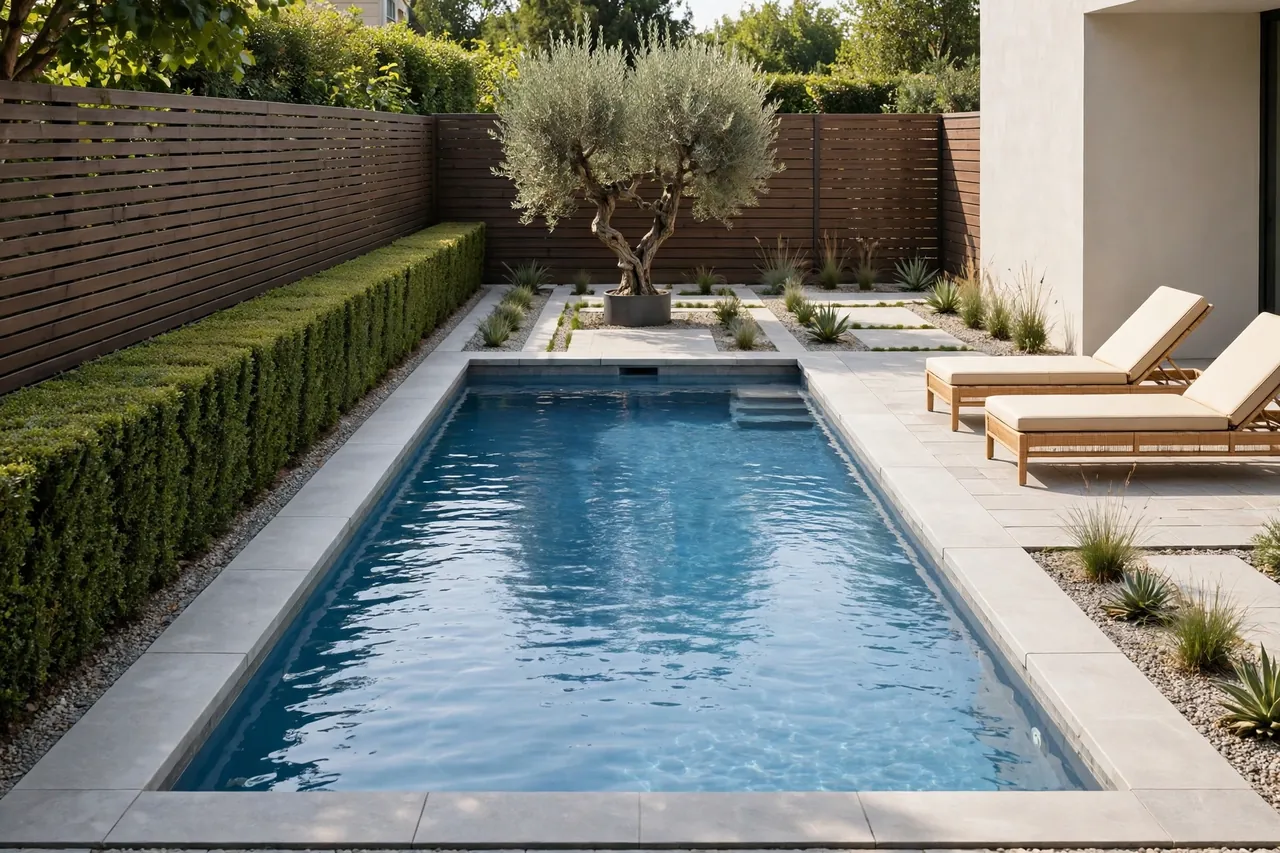
Rectangle pools suit clean, straight planting lines. Run a low hedge or a row of grasses along one long side, keep the other side open for loungers, and place one strong feature, such as a specimen olive or a sculptural agave, at the far end. The geometry of the pool does the design work, and the planting just frames it.
Our guide to rectangle pool landscaping ideas shows how to build a stylish outdoor oasis around this shape, with planting and hardscape ideas that match its straight edges.
Small yards need the same thinking in tighter form. Use vertical screening instead of wide hedges, pots instead of deep beds, and one strong focal plant instead of a dozen small ones. A compact pool can still feel like a retreat when the planting layers upward instead of outward.
See backyard pool ideas for a small yard for space-saving layouts that make a modest pool feel generous. The same rules apply: low-litter plants, clear walkways, and privacy that grows up, not out.
For a sharper, modern look, contemporary pool designs show how clean lines, restrained planting, and simple materials work together. A modern pool needs fewer species and more discipline, and the result feels calm and expensive.
Keep the Water Clean: Drainage, Mulch, and Root Safety
The best pool landscaping protects the pool instead of quietly damaging it. Three habits do most of the work: keep beds back from the coping, mulch with stone near the water, and give roots room.
Keep planting beds and drip irrigation a few feet off the coping. Sprinkler mist that drifts into the pool carries minerals and fertilizer, and that throws off the water chemistry and clouds the water. Drip lines aimed at the roots, not sprayed over the beds, keep the water where the plants need it and out of the pool.
Mulch with stone rather than bark near the water. Bark floats, blows in, and clogs skimmers. Small river rock or decomposed granite stays put, drains well, and looks tidy against paving. Save bark mulch for beds far from the pool, where it cannot reach the water.
Give roots room. Keep trees and large shrubs at least 3 to 4 feet from the pool edge, and further for vigorous species, so roots do not lift decking, crack coping, or invade plumbing. Use hardscape or low groundcover right at the coping, where roots cannot cause trouble.
Route drainage away from the shell and the deck. Beds that hold standing water after a storm breed mosquitoes and rot roots, and runoff that flows toward the pool carries soil and debris with it. A shallow swale or a gravel strip at the edge of the deck moves water where you want it to go.
Safety First: Fencing, Barriers, and Slip Protection
Pool safety shapes the landscaping plan, not the other way around. A beautiful garden that lets a small child reach the water unseen is a failed design. Build the safety layer first, then design the planting around it.
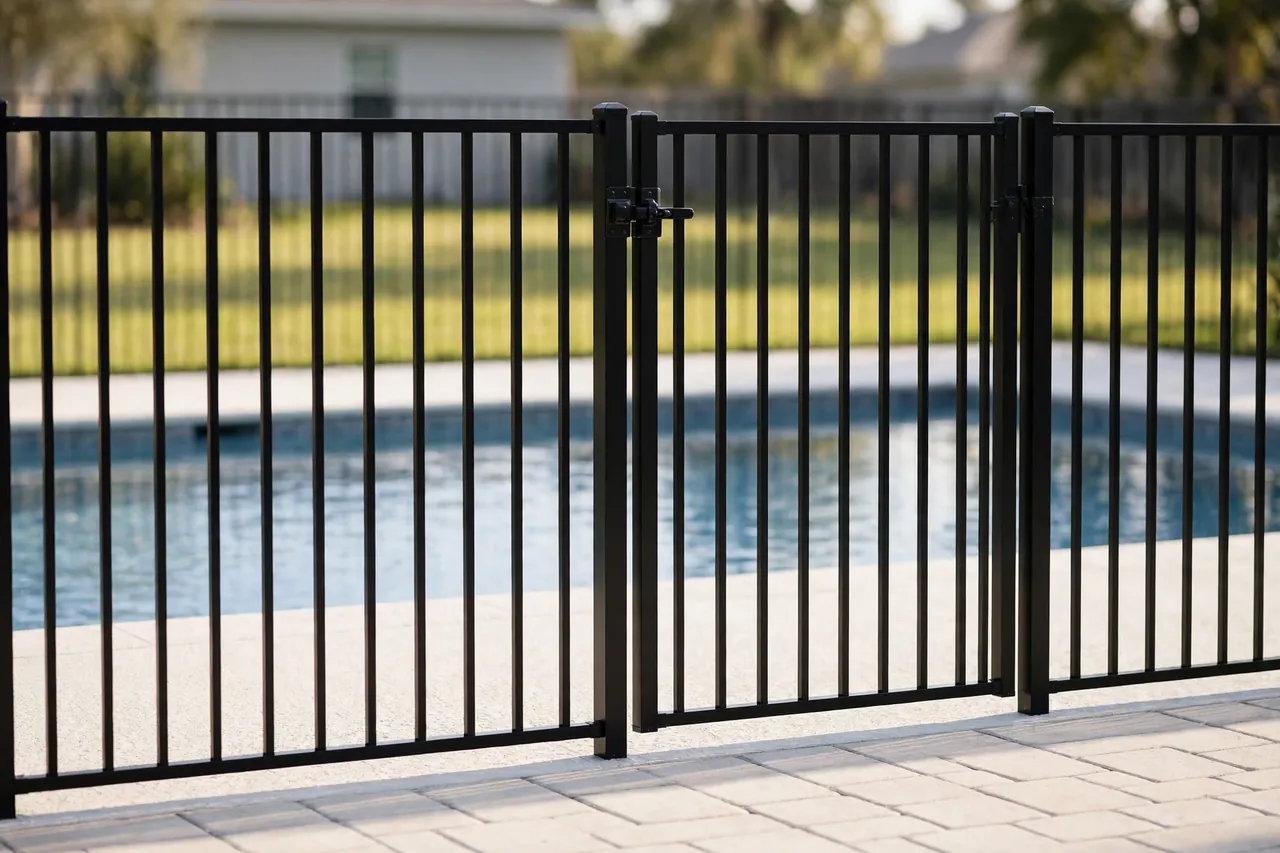
Most local codes require a fence or barrier around a residential pool, with a self-closing, self-latching gate. Check your city and county rules before you build, because fence height, gate rules, and setbacks vary by place. Your pool builder or local building department can confirm what applies to your yard.
Keep the barrier zone clear. Do not plant shrubs, place pots, or stack furniture where a child could climb them to get over the fence. Keep overhanging branches trimmed back from the barrier, and never put a climbable feature inside the fence line.
The U.S. Consumer Product Safety Commission runs the Pool Safely campaign, which explains barriers, supervision, and layers of protection for home pools. Read their guidance at Pool Safely from the U.S. Consumer Product Safety Commission before you finalize your plan, and see PoolSafely.gov for the full campaign.
Slip protection matters every day, not just in an emergency. Choose textured deck surfaces, keep walkways clear of toys and hoses, and fix any cracked or lifted paving as soon as you spot it. A pool deck that stays dry and even is a pool deck people can enjoy without worry.
For any electrical work near water, including landscape lighting, pumps, and outlets, hire a licensed electrician. Electricity and water together can kill, and local codes set strict rules for wiring near pools. Never run extension cords across a wet deck or install pool-area wiring yourself.
Build It in Phases and Avoid Common Mistakes
You do not need to build the whole landscape at once. Phasing spreads the cost and lets you learn what works in your yard before you commit to more.
Phase one is the deck, the drainage, and the safety barrier. These protect the pool and the people who use it, and they are the hardest to change later. Phase two is the planting: the low-litter anchors, the privacy screen, and the beds. Phase three is the finishing layer: lighting, shade structure, and water features.
Where you can save without it showing: skip mature trees in favor of fast growers, phase the far beds for later, and lean on hardscape you are already building to do some of the framing. Where you should not cut corners: irrigation and drainage, which protect everything else, and the lighting layer, which delivers more evening enjoyment than any single plant.
Common mistakes to avoid:
- Planting a messy tree right at the coping, then skimming leaves every day
- Choosing smooth, dark decking that turns slippery and hot
- Skipping the fence or barrier to save money
- Running sprinklers that spray into the pool
- Mulching with bark beside the water
- Buying one of every plant instead of repeating a few good ones
- Forgetting shade, then never using the deck in the afternoon
- Planting running bamboo anywhere near the pool
Walk the finished plan once more before you dig. Stand at the house door, at the gate, and at the far corner of the yard. Each view should feel intentional, with the pool as the center and the planting as its frame. If one view feels crowded or bare, adjust the planting there before you buy.
Disclaimer: pool landscaping involves water, electricity, and local safety rules. Check your local codes for fencing and barrier requirements before you build, and hire a licensed electrician for any wiring near water. If a tree, wall, or drainage job is beyond your skill, hire a qualified professional. Your yard, soil, and climate vary, so treat this guide as a starting plan and confirm plant choices with a local nursery.
Related Guides
Pools With Waterfalls: Designs, Costs, Ideas and Expert Tips · Rectangle Pool Landscaping Ideas for a Stylish Outdoor Oasis · Backyard Pool Small Yard Ideas: Smart, Stylish and Space-Saving Designs · Contemporary Pool Designs: Modern Styles, Ideas, and Inspirations · Pool House Remodeling Ideas for 2025: Design, Cost and Inspiration · 12 Best Places to Buy Plants Online: Shipping and Guarantees · Modern Landscape Design Trends Homeowners Love · Driveway Landscaping Ideas · Side Yard Ideas · Small Backyard Garden
Frequently Asked Questions
What are the best plants to put around a pool?
The best poolside plants are low-litter, non-invasive, and tolerant of sun and splash. Ornamental grasses, agave and succulents, dwarf palms, boxwood, bird of paradise, and canna lily all work well. Avoid messy, high-litter trees and anything with aggressive roots near the shell.
How do I create privacy around my pool?
Layer tall screening plants, such as clumping bamboo, arborvitae, and podocarpus, with structures like slat fences, pergolas, and planters. The built element gives instant privacy on day one, while the plants fill in over a season or two.
How far should plants be from a pool?
Keep trees and large shrubs at least 3 to 4 feet from the pool edge, and further for anything with invasive roots. That distance stops roots from lifting decking and keeps debris from blowing into the water. Use hardscape or low groundcover right at the coping.
What plants give the best tropical pool look?
Combine palms such as queen, pygmy date, or areca with bird of paradise, philodendron, ferns, canna lily, and crotons for color. Pair them with a rock waterfall and warm lighting for a true resort feel in warm, humid zones.
Is artificial turf a good idea around a pool?
Artificial turf works well poolside. It stays green, drops no litter, drains fast, and needs no mowing or watering. Choose a pool-rated, UV-stable product with good drainage, and keep it a few feet back from splash-out to avoid staining and heat buildup.
Do I need to worry about roots damaging my pool?
For most low-litter poolside plants kept a few feet back, no. The risk comes from large trees with aggressive roots planted too close. They can lift decking, crack coping, and even invade plumbing, so keep big shrubs and trees at least 3 to 4 feet from the shell.
Start with the rings, the deck, and the fence, then plant in layers and light it for the evening. A pool surround built this way stays clean, feels private, and invites you outside every day of the season. Pick your three anchor plants this week, and let the rest of the plan grow around them.