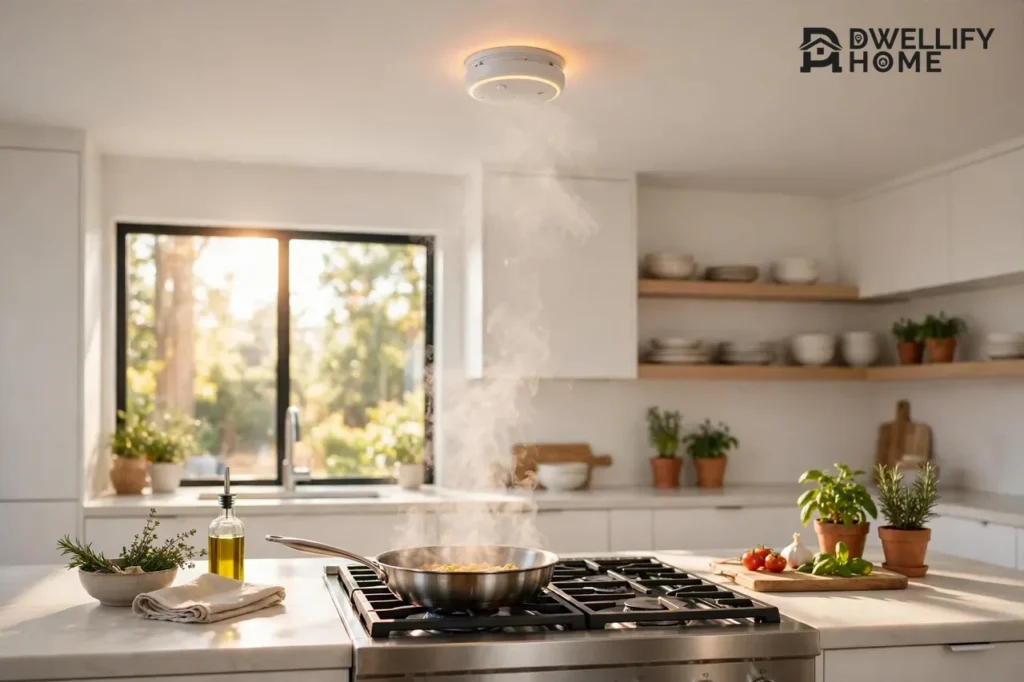
A smoke alarm false alarm happens when the sensor reacts to something that is not a fire: cooking smoke, steam, dust, insects, paint fumes, or a dying battery. A smoke alarm does not smell smoke. It detects tiny particles in the air, and anything that looks like those particles to the sensor can set it off. Check for real danger first, then find which particles reached the sensor and stop them at the source.
False alarms are more than annoying. Every false alarm teaches a household to ignore the next one, and that is how people end up pulling the battery out and leaving the alarm dead. Fixing the cause keeps the alarm trusted, and a trusted alarm saves lives.
How a Smoke Alarm Tells Smoke From Everything Else — and Why It Fails
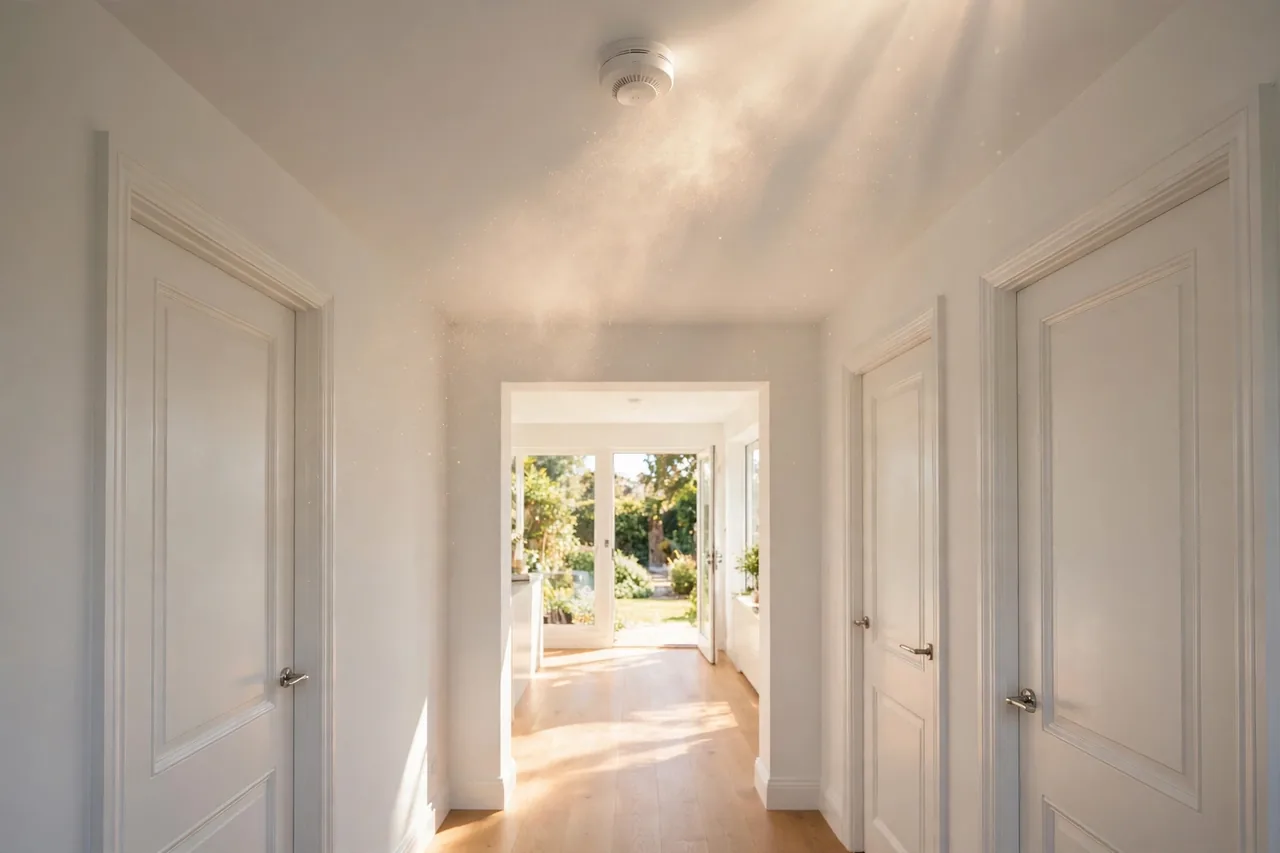
Home alarms use two kinds of sensors, and each one can be fooled in its own way. An ionization alarm holds a small, steady electrical current between two plates. When tiny combustion particles enter the chamber, they break the current, and the alarm sounds. A photoelectric alarm shines a light beam away from a sensor. When larger particles enter, they scatter the light onto the sensor, and the alarm sounds.
Both types react to particles, not to fire itself. That is why steam, dust, cooking oil mist, and paint fumes can all trigger them. Ionization alarms are quickest on small, invisible particles from fast flaming fires, but they are also the most easily fooled by cooking fumes and steam. Photoelectric alarms are best on the larger particles from slow smoldering fires, and they are steadier near kitchens, though dust and insects still fool them. Your alarm detects particles, not fire — and that is why false alarms happen.
Many homes now use dual-sensor alarms that combine both types, or a mix of both across the house. The right type in the right room cuts false alarms sharply, and that is worth more than any single fix in this guide.
The 7 Most Common False Alarm Causes
Work through this list against your own home. One of these seven is behind almost every false alarm.
1. Cooking smoke and burnt food
The kitchen is the top source of false alarms. Frying, broiling, and grilling throw oil mist into the air. Burnt toast or popcorn left too long sends up a dense cloud of carbonized particles. Even opening a hot oven can puff enough particles to trip a nearby alarm. Keep the extractor fan on while you cook, and keep alarms at least 10 feet from the stove.
2. Steam and high humidity
Steam from a hot shower, boiling water, or a dishwasher can set off a photoelectric alarm, because water droplets are large enough to scatter the sensor light. High humidity has the same effect over a whole day. Shut bathroom doors during showers, run exhaust fans, and keep alarms out of steamy rooms.
3. Dust, dirt, and remodeling
Dust settles inside the sensing chamber and scatters light or breaks the ion current just like smoke. Remodeling, sanding, and workshop dust make it worse. Vacuum the vents with a soft brush attachment once a month, and cover alarms with a plastic bag only while dusty work is happening nearby, removing it the moment the work stops.
4. Insects and cobwebs
Small bugs crawl into the dark, warm alarm and cross the sensor, and cobwebs around the vents are a sign the inside needs cleaning. Vacuum the vents monthly and never spray insecticide into the unit.
5. Chemical fumes and aerosols
Paint, varnish, strong cleaners, hair spray, and air freshener can all trip a sensitive alarm. The volatile organic compounds in paint are a known trigger. Ventilate well when you paint or clean, keep aerosols away from alarms, and never paint an alarm itself.
6. Airflow from vents and fans
A heating vent, a ceiling fan, or an open window can blow dust and particles straight into the sensor, or push cooking steam across the room to an alarm that would otherwise stay quiet. Move the alarm away from vents and fans, or redirect the airflow.
7. A weak battery or an old sensor
A dying battery drops the sensor current, which the alarm reads as smoke. A sensor near the end of its 10-year life drifts and becomes oversensitive. Fit a fresh battery, check the manufacture date on the back, and replace any alarm that is 10 years old or older.
Use this table to pin down your cause fast.
| Cause | How to confirm it | Fix |
|---|---|---|
| Cooking particles | It happens while frying or grilling, stops when the air clears | Run the extractor fan, move the alarm farther from the stove |
| Steam and humidity | It happens during or after showers | Shut bathroom doors, run exhaust fans |
| Dust and pet hair | Dust is visible on the housing | Vacuum the vents monthly with a soft brush |
| Insects or cobwebs | Specks or webbing around the vents | Clean the vents gently, never spray insecticide at the alarm |
| Paint and aerosols | It fires while decorating or deep cleaning | Ventilate, keep aerosols away, never paint an alarm |
| Airflow from a vent or fan | It fires when heating, cooling, or a fan starts | Relocate the alarm or redirect the airflow |
| Weak battery or old sensor | A chirp joins the false alarms, or the unit is near 10 years old | Fit a fresh battery, replace an old unit |
Chirp or Full Alarm? Why the Difference Matters
A false alarm and a low-battery chirp are two different problems, and treating one like the other wastes a weekend. A chirp is a short, single peep every 30 to 60 seconds. It means the battery is low or the unit is at the end of its life. A full false alarm is a loud, repeating three-beep siren that sounds like a real fire alarm, because the sensor believes it sees smoke.
If the sound is a chirp, change the battery. If the sound is a full siren with no smoke in sight, find the particles that reached the sensor. The NFPA says a single chirp every 30 or 60 seconds means the battery is low and must be changed, while a continued set of three loud beeps means smoke or fire. A chirp is a battery problem; a full siren is a particles problem.
Combination smoke and carbon monoxide alarms add a third sound: four loud beeps for carbon monoxide. Four beeps are never a false alarm to ignore. Get everyone outside and call 911.
How to Tell Which Sensor Type You Have
Knowing your sensor type helps you fix false alarms, because each type is fooled by different things. The label on the back of the alarm usually names the type: ionization, photoelectric, or dual-sensor. If the label is worn off, the shape of the alarm can hint at it. Ionization alarms are often a little slimmer, while photoelectric alarms tend to be deeper, because the light chamber needs room. The surest way is to search the model number printed on the back and read the maker’s description.
Ionization alarms react fastest to small, invisible particles from flaming fires, which makes them good for bedrooms and hallways, where a fast fire is the bigger risk. They are also the most easily fooled by cooking fumes, steam, and dust. Photoelectric alarms react best to larger, visible particles from smoldering fires, and they stay calmer near kitchens and bathrooms, though dust and insects still fool them.
If you cannot tell the type and the alarm false-alarms often near the kitchen, swap it for a photoelectric or dual-sensor unit and see if the problem fades. Write the type on a small sticker on the front of the alarm when you install it, so the next person to fix it knows what they are working with. The right sensor in the right room is the cheapest false-alarm fix there is.
How to Stop False Alarms for Good
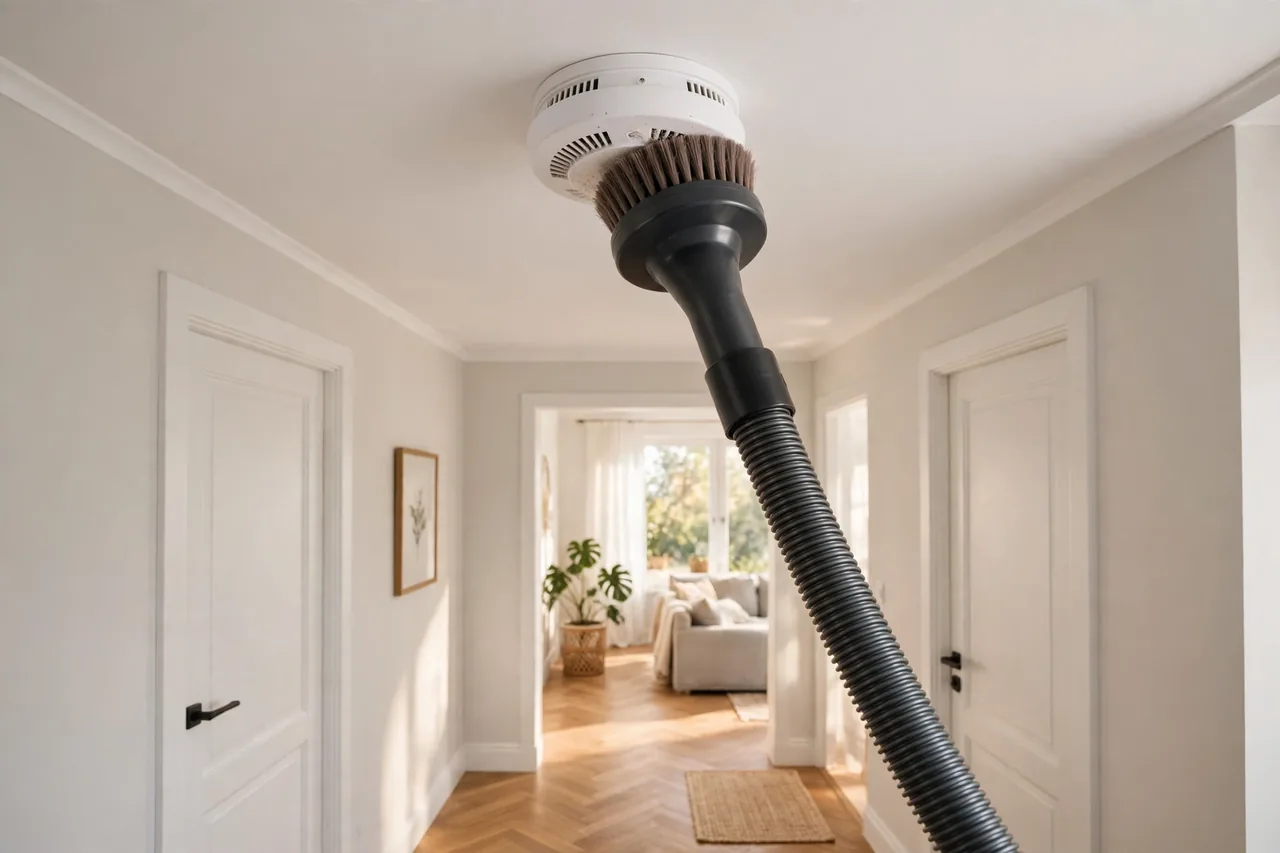
Stopping one false alarm is easy. Stopping them for good takes three changes: placement, cleaning, and the right sensor type.
- Move alarms to the right spots. Keep them at least 10 feet from the stove, out of bathrooms, and away from heating and cooling vents. Put them on the ceiling or high on a wall, inside each bedroom, outside each sleeping area, and on every level of the home.
- Clean them monthly. Vacuum the vents with a soft brush attachment and blow out the chamber with compressed air. The American Red Cross advises vacuuming cobwebs and dust from smoke alarms monthly to prevent nuisance alarms.
- Match the sensor to the room. Use a photoelectric alarm near the kitchen and bathroom, where it is steadier against steam and cooking fumes. Use an ionization alarm, or a dual-sensor alarm, in bedrooms and hallways, where fast flaming fires are the bigger risk.
- Use the hush button the right way. Press it to quiet a known nuisance alarm for a few minutes while you clear the air. Never use it as a substitute for fixing the cause.
- Replace old units. Any alarm 10 years old or older is due for replacement, and a new alarm with modern nuisance resistance will false-alarm far less than a worn-out one.
When you buy a replacement, choose one listed by a nationally recognized testing laboratory, and look for models rated for fewer nuisance alarms near kitchens. Write the install date on the back so the next 10-year date is easy to find.
False Alarms in Special Situations
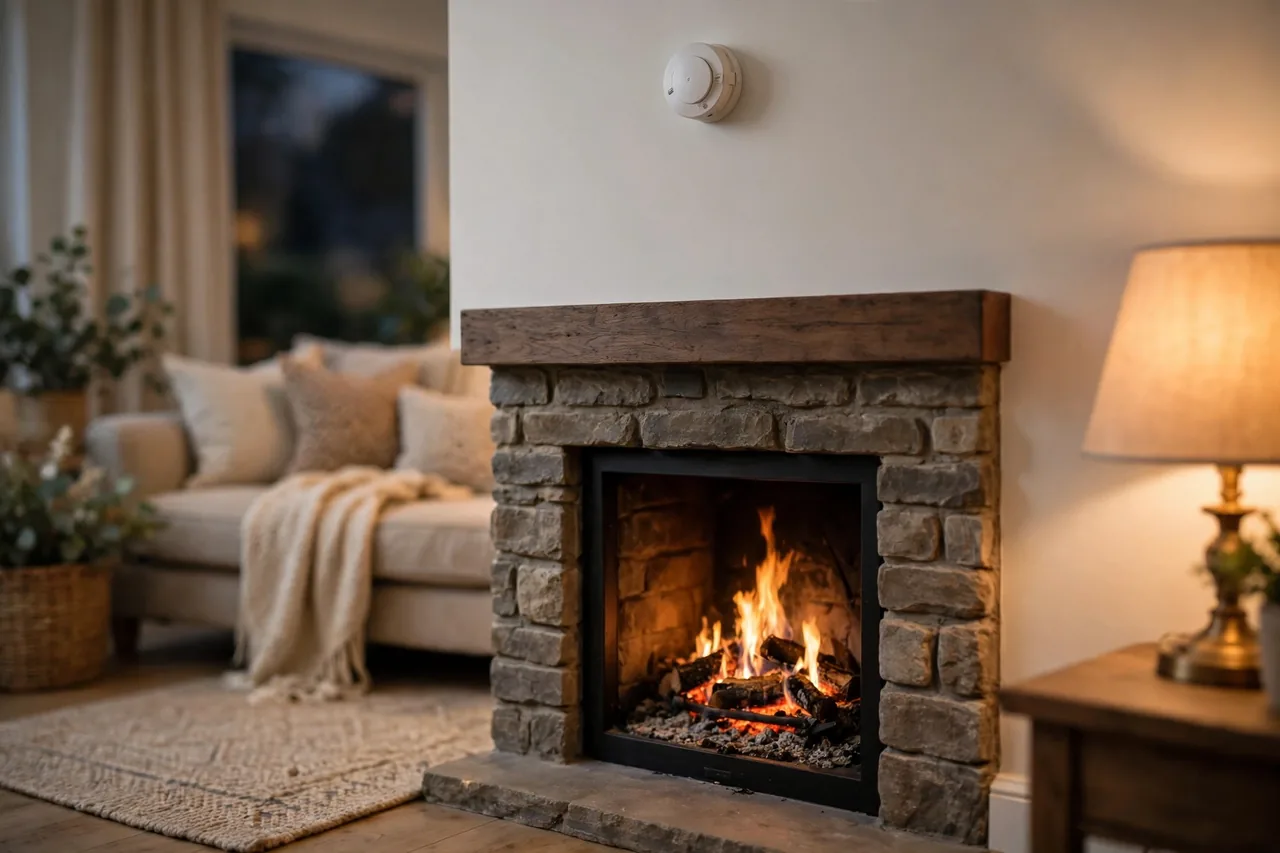
Some homes false-alarm more than others, and the cause is usually the setting, not the alarm. In a small apartment, the kitchen, bathroom, and bedroom may all sit within a few steps of one alarm, so steam and cooking fumes reach it fast. Open a window, run the fans, and use a photoelectric unit in the main living space.
In a home with a fireplace, smoke can drift back into the room when the fire starts or the wind shifts, and that will sound the alarm. That is the alarm doing its job, not a false alarm. Improve the chimney draft, open the damper fully before lighting, and keep the nearest alarm out of the direct drift path while staying within the room.
In a workshop or garage, dust and fumes are constant. A smoke alarm in a dusty workshop will false-alarm often, so a heat alarm, which reacts to temperature rather than particles, is often the better choice there. Check your local fire code before swapping types, because some rooms must have a smoke alarm by law.
After a renovation, dust gets everywhere, including inside alarms. Vacuum every alarm when the work ends, and replace any unit that keeps sounding after a thorough cleaning. Match the alarm to the room, and the false alarms fade away.
Carbon Monoxide False Alarms: A Short Note
Carbon monoxide detectors can false-alarm too, but the stakes are different. A CO alarm sounds four beeps in a repeating pattern. Low batteries, a dying sensor, and chemical fumes can cause a false CO alarm, just like a smoke alarm. But carbon monoxide has no smell and no color, so you cannot check for it the way you check for smoke.
If a CO alarm sounds, get everyone outside and call 911, even if you suspect a false alarm. Let the fire department test the air. Only after they clear the home should you fit a fresh battery or replace the unit. Never silence a CO alarm and go back to sleep.
Stay Safe While You Fix False Alarms
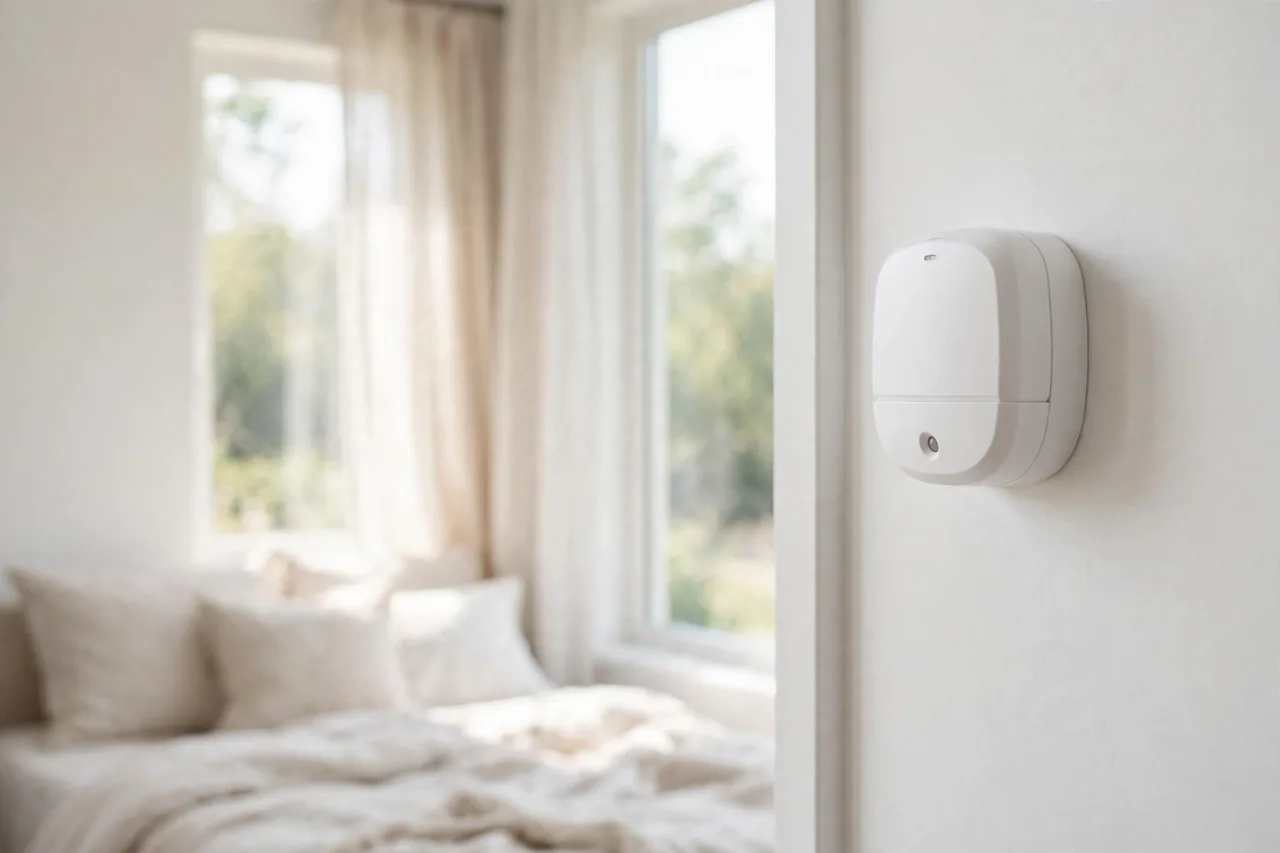
Never remove a battery or pull an alarm down to stop false alarms. A disabled alarm cannot warn you about a real fire, and the night you need it is the night you will not have it. Fix the placement, clean the sensor, or replace the unit instead.
If a full alarm sounds and you cannot find the cause, treat it as real. Get everyone out and call 911. Firefighters would rather check a false alarm than arrive after a fire has spread.
Disclaimer: This article gives general home maintenance guidance, not professional fire-safety advice. If you smell smoke or gas, feel ill, or cannot find why an alarm sounds, get everyone outside and call 911 or your local fire department. Call a licensed electrician for any wiring work you are unsure about.
Related Guides
Keep the rest of your home safe with these guides: the best smoke alarm and carbon monoxide detector picks for a replacement, Christmas tree safety for seasonal fire risks, and how to stay warm without power for safe heating in an outage.
Frequently Asked Questions
What causes a smoke alarm false alarm?
Cooking smoke, steam, high humidity, dust, insects, paint fumes, and airflow from vents are the most common causes. A weak battery or a sensor near the end of its 10-year life causes the rest. The alarm detects particles, not fire, so anything that looks like smoke particles to the sensor can set it off.
Why does my smoke alarm go off when there is no smoke?
Because the sensor reacts to particles other than smoke. Steam droplets, cooking oil mist, dust, and chemical fumes all look like smoke to the sensor. Check what was happening when the alarm sounded, such as a shower or frying, and move the alarm or improve ventilation to match.
How do I stop my smoke alarm from false alarming?
Move the alarm at least 10 feet from the stove and out of steamy rooms, vacuum the vents monthly, use a photoelectric alarm near the kitchen, and replace any unit that is 10 years old. Use the hush button only to quiet a known nuisance alarm while you clear the air, never as a permanent fix.
Can a carbon monoxide detector have a false alarm?
Yes. A low battery, a dying sensor, and chemical fumes can cause a false CO alarm. But carbon monoxide has no smell, so always treat a CO alarm as real first: get everyone outside and call 911. Only fit a new battery or replace the unit after the fire department clears the home.
Should I replace a smoke alarm that keeps false alarming?
Yes, if it keeps sounding after a fresh battery, a cleaning, and a move to a better spot. A sensor near 10 years old drifts and becomes oversensitive, and no cleaning can fix wear. Replace it with a listed alarm matched to the room, and write the install date on the back.
False alarms have a cause, and the cause has a fix. Find the particles, move the alarm, clean the sensor, and your alarm will stay quiet until the day it truly needs to shout.