Most heat pump regret in southern Arizona shows up in month seven, not month one. The unit runs fine through the spring, then August arrives, the electric bill jumps, and the homeowner decides the system was oversold. Usually it wasn’t. What got skipped was a season of small upkeep nobody mentioned at handover.
A heat pump moves heat instead of making it, which is why one box handles both your summer cooling and your winter warmth. That dual job is also why it needs more attention than the gas furnace it replaced. Owners in Corona de Tucson, Vail, and Sahuarita sit in a specific spot: brutal dry heat for weeks, then a monsoon stretch of dust and humidity, then a handful of freezing nights in January. Your equipment has to work in all three.
If you’re new to the neighborhood and haven’t lined up service yet, start with heat pump maintenance corona de tucson so you know who’s actually covering your side of town, then build the habits below around that relationship.
Why the first summer feels worse than the showroom promised
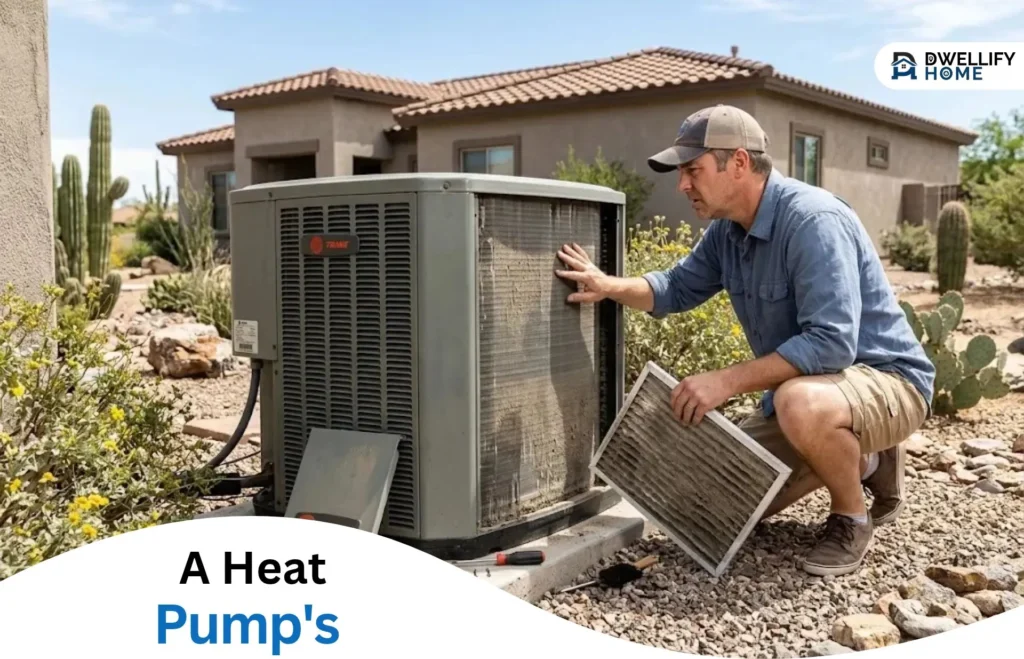
Here’s the thing nobody puts on the sales sheet: a heat pump in the desert spends most of its life fighting dust, not temperature. Fine grit coats the outdoor coil faster than it would in a wetter climate, and a dirty coil makes the compressor work harder for the same cooling. You feel it as “the house never quite gets cold,” not as a dramatic breakdown.
I’d argue that a monthly rinse of the outdoor unit matters more here than any app, smart thermostat, or upgraded filter. Ten minutes with a garden hose on low pressure, done on a cool morning, buys you more comfort than a $300 gadget. Most owners never do it because the coil is behind a grille and out of sight.
What should a first-year maintenance calendar actually look like?
Think in seasons, not reminders. The desert gives you four distinct service windows, and each one has a different job.
| When | What to do | Why it matters here
|
| Early March | Book a full tune-up, swap the filter, hose off the outdoor coil | Gets you ahead of the first real heat and the pre-summer backlog |
| Late May | Clear debris from around the unit, check the condensate drain | Monsoon dust and rain arrive before you expect them |
| September | Rinse the coil again, inspect for bent fins after storm season | Storms throw gravel and grit that lodge in the fins |
| November | Test heating mode before the first cold snap, replace the filter | You don’t want to discover a problem on a 30-degree night |
That’s the whole year. Two of those visits are things you can do yourself in your work clothes. The other two are worth paying for, because they involve checking refrigerant charge, electrical connections, and the defrost cycle, none of which you should poke at with a screwdriver.
The setting mistake almost every new owner makes
People treat a heat pump thermostat like a light switch. Off when you leave, full blast when you get home. That habit is expensive and it’s hard on the compressor, because the system is designed to hold a temperature, not to claw its way back from a fifteen degree swing in twenty minutes.
Pick one comfortable setpoint for cooling and leave it there for the season. Nudge it a couple of degrees when you’re away for a full day, and that’s plenty. During heating season, resist the urge to crank it to 78 because the house feels chilly. Heat pumps warm slowly and steadily, and overshooting the setpoint just runs the auxiliary heat, which is the least efficient part of the system.
Two habits worth building in your first month
- Change the filter on the first of every month and write the date on the edge with a marker. Desert dust loads filters faster than the packaging suggests.
- Keep the outdoor unit’s clearance. Two feet of open space on the sides and above, and no storage bins, dog houses, or vines creeping in.
Both are boring. Both prevent the calls that cost the most.
When a strange noise is actually normal
New owners panic at sounds that are just the machine doing its job. A whoosh at startup, a low hum during a defrost cycle in winter, water dripping from the outdoor unit on a cold morning. All normal. The defrost cycle exists because frost can form on the coil even in the desert, and the system briefly reverses to melt it.
What’s not normal: a metallic rattle, a grinding noise at shutdown, ice that stays on the coil for hours, or a burning smell. Those get a call the same day. The Department of Energy notes that heat pumps move heat rather than generate it, which is the reason they can deliver several units of warmth per unit of electricity, and it’s also why a mechanical fault shows up as a performance drop before it shows up as a total failure. Pay attention to the drop.
Rebates, ratings, and the paperwork you should keep
Federal incentives and utility rebates have made heat pump installs more attractive in recent years, and the rules shift. Before you buy anything, check the AHRI Directory to confirm the exact model pairing is certified, because rebate programs usually require it and the paperwork gets ugly if it isn’t.
Keep every document in one folder: the manual, the commissioning sheet with the refrigerant charge recorded, the warranty registration, and the filter dates. When you sell the house, that folder is worth real money to a buyer who’s nervous about an unfamiliar system.
What a good service visit should include
Not all tune-ups are equal, and you should know what you’re paying for. A real visit checks the refrigerant charge with gauges, measures the temperature split between supply and return air, inspects the capacitor and contactor, cleans the condensate drain, and rinses the coil. If a technician shows up, changes a filter, and is gone in fifteen minutes, that wasn’t maintenance.
Ask for the readings in writing. A tech who’s confident will hand them over without blinking, and those numbers become your baseline for every visit after. The U.S. Department of Energy and its regional offices publish general guidance on efficiency standards if you want to understand what the numbers mean before anyone arrives.
The short version
Your first year with a heat pump in this climate comes down to four things: keep the outdoor coil clean, hold a steady setpoint, change the filter like it’s a chore you actually like, and get two professional visits on the calendar before you need them. Do that and the system quietly does its job for a long stretch. Skip it and you’ll spend August convinced you bought the wrong equipment.
One question worth asking yourself right now: do you know where your outdoor unit’s coil is, and when you last looked at it? Walk outside and check. If the answer is “I’m not sure,” that’s your first task, and it costs nothing.
We appreciate your interest in our content. Some links in this article may be affiliate or sponsored links, and qualifying purchases through affiliate links may provide Dwellifyhome.com with a small commission.