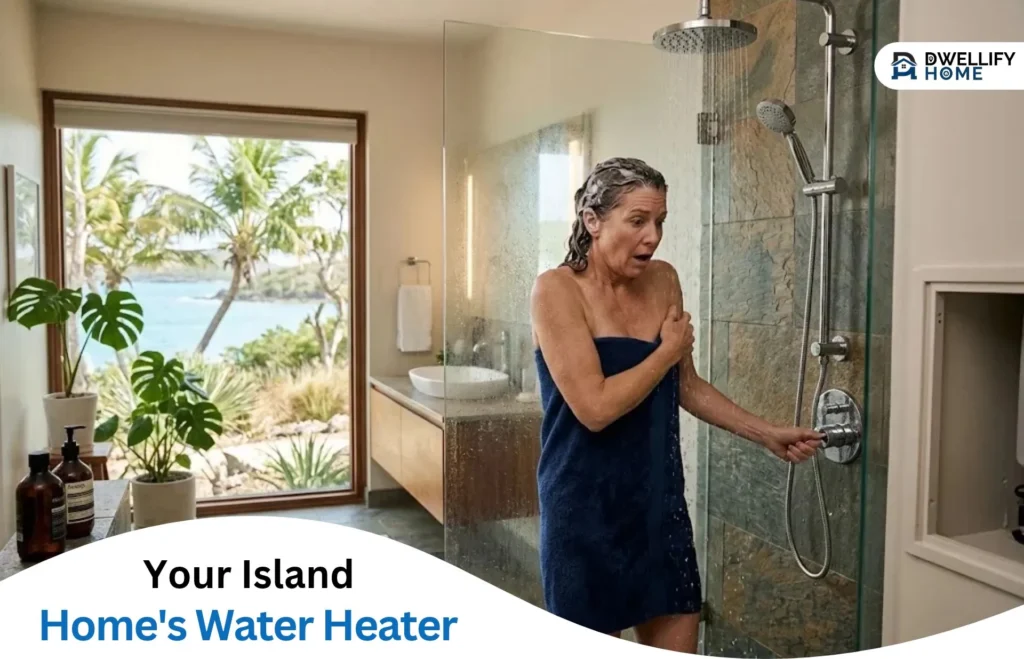
You’re mid-shampoo when the water goes from perfect to mountain-stream cold in about four seconds. It happened to me on a Tuesday. My first thought was the county. My second thought, once I stopped shivering, was that a tank on island time probably deserves a better goodbye than a panicked call to the utility.
Here’s the short version: don’t rip out the heater yet. Check the breaker and the pilot light, confirm the pilot assembly’s thermal cutout hasn’t tripped, and only then start calling. Roughly nine out of ten cold-shower mornings on older island homes trace back to power, gas flow, or a safety switch, not a dead tank. That order of operations saves you a diagnostic fee and, more importantly, saves you from buying a heater you didn’t need. If your diagnostics point to a real failure and you’re on the east side, the crews who handle hilo plumbers work will walk the same sequence with you, so you’re not guessing at 6 a.m. with wet hair.
This guide covers the triage, the replacement math specific to island homes, and the questions to ask before anyone touches a wrench. It’s built for the person standing in a towel, not for a contractor reading a spec sheet.
Why island water heaters fail on a different schedule
Mainland heaters live in steady conditions. Island heaters live in a fight. Volcanic ash and fine dust settle on outdoor equipment. Trade winds throw salt-laden moisture against anything on the windward side. Rainwater in catchment systems runs slightly acidic, and that acidity eats at tank linings and heating elements in a way municipal water rarely does.
I’ve replaced two heaters in six years on the same property. The first died because I ignored the anode rod. The second died because the tank sat in a shed with zero ventilation and the label had rusted into a gray smear. Neither failure was mysterious in hindsight. Both were preventable with a twenty-minute inspection twice a year.
The lesson isn’t “buy a better heater.” It’s “know your water.” If you’re on catchment or a private well, your water chemistry is the single biggest variable in heater lifespan, and nobody’s going to test it for you unless you ask.
Your first thirty minutes: a triage sequence
Work through these in order. Stop as soon as you find the answer.
- Kill the power or gas at the source. Flip the breaker for an electric unit. Turn the gas valve to off for a gas unit. Do this before anything else, even if you’re sure the tank is fine.
- Check the breaker panel. A tripped breaker is the most common culprit and the cheapest fix. Reset it once. If it trips again immediately, stop and call someone. That’s a short, and shorts don’t fix themselves.
- For gas units, look at the pilot. If the flame is out, relight per the label on the tank. If it won’t stay lit after two tries, the thermocouple or the thermal cutoff is likely done. That’s a part swap, not a heater swap.
- Look for water around the base. A little condensation is normal. A puddle that keeps growing after you’ve wiped it dry means the tank itself has failed. No repair exists for that.
- Feel the pipes. Hot out of the tank but cold at the faucet points to a mixing valve or a crossover problem, not a dead heater.
I’d bet on the breaker or the pilot in most cases. Start there. It costs nothing and takes ten minutes.
Replacement math for island homes
When the tank is truly gone, you’re choosing between a tank and tankless. On the mainland the decision usually comes down to rebates and closet space. On island, three other factors matter more, and they’re the ones nobody mentions on the showroom floor.
| Factor | Tank | Tankless
|
| Power draw | High but brief | Very high while running |
| Gas supply | Modest | Needs a larger line and venting |
| Parts availability | Widely stocked locally | Often shipped in |
| Salt-air vulnerability | Exterior shell and fittings | Circuit boards are the weak point |
Here’s my stance: if your home has one bathroom and you’re not planning a remodel, a tank is the smarter island buy. Parts are on a shelf in town, and any plumber can service it. If you’ve got three showers running every morning and you’re already running a gas line, tankless earns its keep, but budget for the venting and the line upgrade or you’ll be disappointed.
One number worth knowing: heating water is the second-largest energy expense in most American homes, according to the Department of Energy. That’s a big enough slice that the wrong pick costs you monthly, not just once.
Questions to ask before you sign anything
Ask these out loud and write down the answers. Any hesitation is a red flag.
- Will you pull the permit, and is it included in the quote?
- Is the price flat, or does it change if the old unit fights coming out?
- Do you carry the replacement part for my model, or will it be ordered?
- Who handles haul-away and disposal of the old tank?
- What’s your after-hours policy, and is there an overtime surcharge?
On an island, haul-away isn’t a small question. Old tanks don’t ride the same disposal route as mainland appliances, and a crew that hasn’t planned for it will leave you staring at a rusted cylinder in your carport for a month.
Protect the new heater before it fails
Twice a year, drain about a gallon from the tank’s valve to flush sediment. Check the anode rod after the second year and replace it when more than half is gone. For gas units, keep the vent clear and the surrounding space ventilated. If you’re on catchment, test the water and treat it.
That’s the part that separates a ten-year heater from a five-year one, and it takes less time than scrolling your phone in the driveway. Gas appliances also need proper venting to burn cleanly, which is why the Bonneville Power Administration and similar authorities push combustion safety checks. Skip it and you’re gambling with carbon monoxide, not just cold water.
For anyone on municipal water, a quick look at your annual quality report from the Environmental Protection Agency tells you whether you’re in hard or soft water territory. Hard water shortens tank life without any obvious warning signs.
What to do when it’s 4 a.m. and the tank is truly gone
Shut off the water supply to the tank. Shut off the power or gas. Put a bucket under the drain valve and towels around the base. Then call. A failed tank won’t hold anything but cold water, and every hour it sits leaking can damage the floor, the drywall, and whatever’s stored nearby.
Don’t try to force the drain valve open if it’s stuck. That’s how a slow drip becomes a flood.
The bottom line
Cold showers on the islands are, occasionally, just the cost of living here. But most dead heaters announce themselves early if you’re listening: a rumble, a rusty drip, a pilot that needs a second try. Catch those signals and you’ll pick the replacement on your schedule instead of at 4 a.m. with a towel around your shoulders.
So when’s the last time you actually looked at the label on your tank? If you can’t answer that, put a reminder in your phone right now. Your future self, standing in a hot shower, will thank you.
Disclosure: This page may contain monetized links, including affiliate referrals and sponsored placements. Dwellifyhome.com may receive financial benefits through these relationships, supporting our continued online presence.