Residential outdoor illumination has long suffered from a cycle of planned obsolescence. Homeowners investing thousands of dollars into exterior remodeling frequently compromise on lighting, installing hardware that fails within a few seasons.
Standard consumer luminaires prioritize shelf appeal and low initial manufacturing costs over durability. When subjected to continuous weather exposure, thermal cycling, and high operational demands, these units degrade rapidly.
Upgrading to commercial-grade solid-state infrastructure bridges the gap between fragile decorative fixtures and industrial-grade resilience. By applying commercial engineering principles to residential properties, homeowners secure permanent, low-maintenance exterior illumination.
Why Standard Residential Exterior Lights Fail Early
The fundamental flaw in typical big-box store exterior fixtures lies in their material composition. Consumer units rely heavily on thin stamped sheet metal, stamped zinc alloys, or molded thermoplastics.
While plastics reduce initial retail pricing, polymers act as thermal insulators rather than heat conductors. Solid-state light-emitting diodes convert roughly 70% to 80% of incoming electrical energy into thermal energy rather than visible light.
When this heat cannot escape, internal temperatures escalate rapidly. Trapped heat stresses the electrical driver, accelerates solder fatigue, and causes premature diode burnout long before the promised operational lifespan is met.
Furthermore, thin exterior coatings crack under seasonal freeze-thaw cycles. Moisture penetrates micro-fissures in cheap housings, corroding delicate circuit boards and causing intermittent circuit breaker trips.
The Critical Role of Thermal Management
When upgrading exterior fixtures, homeowners must prioritize thermal dissipation—the primary factor in LED longevity. Standard consumer-grade fixtures often trap heat, leading to rapid diode degradation. According to technical standards from a leading industrial LED lighting manufacturer WOSEN, utilizing die-cast ADC12 aluminum housings and advanced thermal substrates ensures critical heat dissipation. This commercial-grade engineering allows fixtures to survive extreme outdoor temperatures and continuous operation without losing lumen output or color accuracy.
Excessive diode junction temperature remains the single largest driver of lumen depreciation. When junction temperatures consistently exceed 85°C, the protective silicone encapsulant hardens, and the yellow phosphor coating degrades.
This thermal breakdown causes unsightly color shifts—turning once-crisp neutral light into a sickly blue or purple hue—while halving the fixture’s functional brightness.
Commercial fixtures prevent this decay through advanced mechanical and metallurgical design:
- High-Purity ADC12 Die-Cast Aluminum: Delivers a thermal conductivity rating of roughly 96 W/m·K, actively siphoning heat away from the core LED array.
- Integrated Convective Fins: Engineered cooling fins maximize contact surface area with ambient outdoor air, driving passive thermodynamic heat exchange.
- Metal Core Printed Circuit Boards (MCPCB): Heavy-copper traces bonded to an aluminum substrate provide a low-resistance thermal path directly into the primary heat sink.
- Decoupled Driver Cavities: Separating the electronic driver from the primary emitter array prevents ambient diode heat from cooking heat-sensitive electrolytic capacitors.
Key Engineering Specs to Look For in Outdoor Upgrades
Selecting commercial-grade exterior lighting requires evaluating technical data sheets rather than marketing claims. Commercial facility managers rely on standardized testing protocols to determine whether a luminaire can withstand hostile environments.
Homeowners seeking long-term reliability should look for two critical engineering benchmarks: certified ingress protection and optical-grade material stabilization.
Demystifying IP Ratings for Homeowners
Ingress Protection (IP) ratings, defined under international standard IEC 60529, classify the sealing effectiveness of electrical enclosures against solids and liquids.
Most standard residential lights carry ambiguous “weather-resistant” labels or basic IP44 ratings, which only protect against light water splashing. Commercial-grade exterior infrastructure adheres to significantly higher mechanical thresholds:
- IP65 (Dust-Tight, Water Jet Protected): Complete protection against microscopic dust ingress and sustained low-pressure water jets from any direction. Fixtures easily withstand intense downpours and routine garden hose cleaning.
- IP66 (Dust-Tight, High-Pressure Water Jet Proof): Engineered with continuous, poured-in-place silicone gaskets and compression latches. Fixtures withstand heavy wave action, violent coastal storms, and direct industrial pressure washing.
- Mechanical Gasket Retention: Precision-machined gasket channels prevent rubber seals from flattening, drying out, or shifting out of alignment over years of environmental exposure.
Optical Clarity and UV Resistance
Exterior luminaires endure relentless exposure to solar ultraviolet (UV) radiation. Cheap residential fixtures employ untreated styrene or low-grade acrylic lenses that degrade quickly in direct sunlight.
Under solar UV-A and UV-B bombardment, non-stabilized polymers undergo photo-oxidation. This chemical reaction breaks molecular bonds, turning clear lenses into brittle, yellowed plastic within 18 to 24 months.
This yellowing drastically reduces light transmittance, cutting usable lumen output by up to 40% while ruining exterior architectural curb appeal.
Professional-grade fixtures preserve optical clarity by using engineered materials:
- UV-Stabilized Optical Polycarbonate: Formulated with specialized benzotriazole UV stabilizers that prevent polymer yellowing and preserve high light transmittance over decades.
- Tempered Borosilicate Glass: Impervious to UV radiation, thermal shock, and chemical etching, offering maximum structural clarity for high-output architectural floodlights.
- Engineered Refractive TIR Optics: Total Internal Reflection (TIR) lenses shape and collimate light beams precisely, minimizing stray light pollution while maximizing ground illumination.
Practical Applications for High-Output LEDs on Residential Properties
Deploying high-output commercial luminaires on residential properties requires careful photometric planning. Commercial fixtures provide powerful illumination that must be directed deliberately to avoid glare and light trespass.
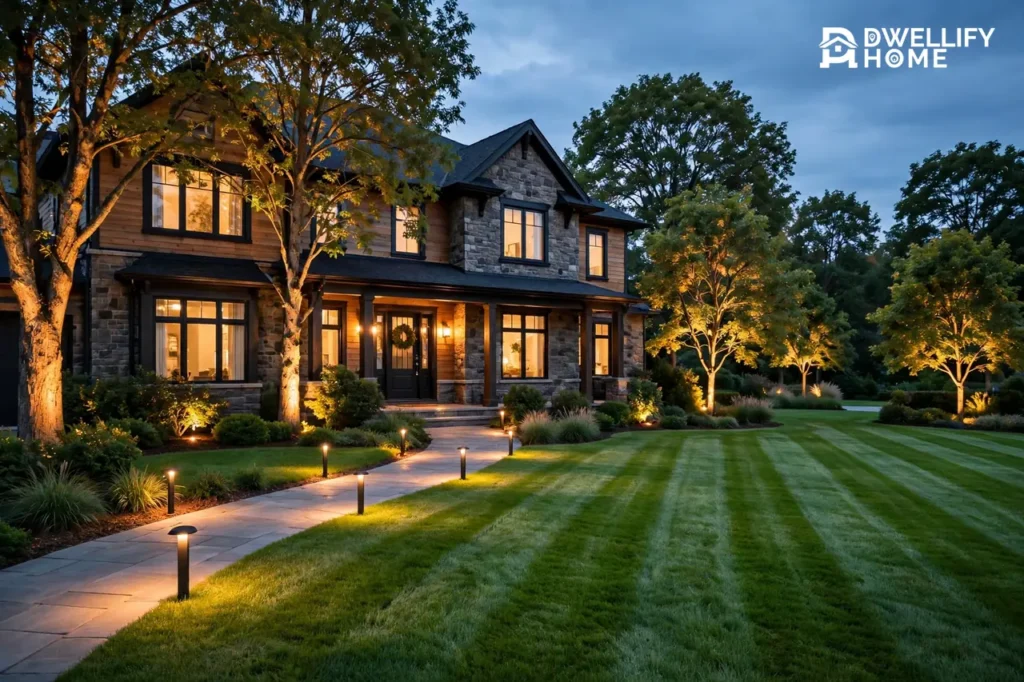
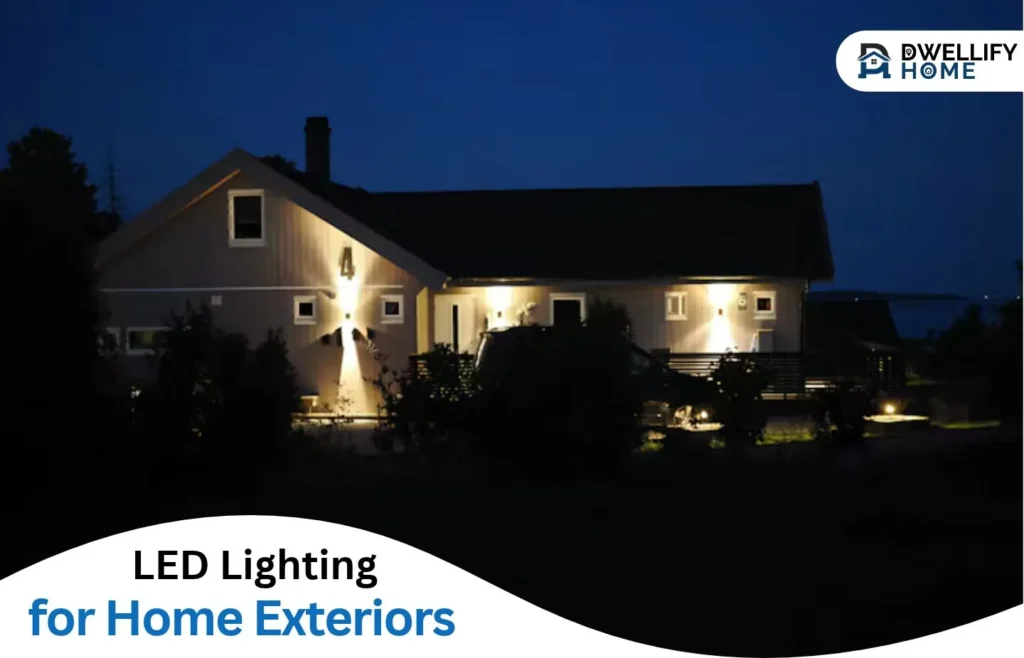
Homeowners can strategically place commercial fixtures across high-priority exterior zones to establish safety, architectural depth, and perimeter security.
Securing Driveways and Perimeter Walls
Long driveways, detached workshops, and blind perimeter walls demand broad, uniform illumination. Traditional low-voltage path lights leave severe shadow pockets that compromise perimeter surveillance cameras.
Commercial wall packs and compact floodlights solve this challenge by blanketing wide areas with continuous, shadow-free light:
- Zero-Glare Full-Cutoff Wall Packs: These fixtures channel all luminous flux downward and outward, illuminating driveways and walkways without spilling light into neighbor windows or the night sky.
- Wide-Angle Floodlighting: Mounting 50W to 100W commercial floodlights under roof eaves provides broad coverage across parking aprons and perimeter access gates.
- Automated Building Controls: Commercial luminaires readily interface with centralized smart home light automation platforms via standard 0-10V dimming protocols, enabling automated security sequencing and dusk-to-dawn scheduling.
Illuminating Large Gardens with Solar Alternatives
Expansive residential properties frequently feature perimeter gardens and acreage where trenching high-voltage AC electrical conduit is cost-prohibitive.
While cheap solar landscape stakes fail after a few cloudy days, commercial-grade standalone solar luminaires provide year-round performance.
These systems adapt industrial off-grid infrastructure for high-end residential estates:
- Monocrystalline Silicon Solar Panels: High-efficiency photovoltaic cells deliver conversion efficiencies exceeding 21%, harvesting substantial energy even during overcast winter days.
- Lithium Iron Phosphate Battery Chemistries: Unlike cheap lithium-ion or NiMH cells, batteries offer over 3,000 charge cycles and operate reliably in sub-zero winter temperatures.
- Microprocessor-Driven Power Management: Smart internal charge controllers automatically adjust lumen output based on remaining battery reserves, ensuring consistent illumination throughout the night.
- Estate Landscape Integration: Incorporating commercial-grade solar posts into broader garden and outdoor home solutions ensures continuous perimeter illumination across tree lines and access roads without costly trenching.
The Environmental and Financial ROI of Pro-Grade LEDs
While commercial-grade LED fixtures require a higher initial Capital Expenditure (CapEx) than mass-market residential alternatives, their lifecycle economics are overwhelmingly superior.
Standard consumer lights turn into recurring expenses. Homeowners find themselves repeatedly replacing burnt-out fixtures, purchasing replacement bulbs, and paying electricians for troubleshooting.
Industrial-grade luminaires convert lighting from a consumable maintenance headache into a permanent capital asset.
The financial and operational return manifests across multiple key areas:
- Elimination of Replacement Cycles: Commercial luminaires carry rated L70 lifespans of 50,000 to 100,000 operational hours—equivalent to over 15 to 25 years of standard dusk-to-dawn performance.
- Drastic Power Reductions: High-efficacy commercial diodes achieve 140 to 170 lumens per watt (lm/W), consuming 70% to 85% less electricity than legacy quartz halogen or high-pressure sodium lamps.
- Mitigation of Ladder Fall Hazards: Eliminating routine lamp and fixture replacements dramatically reduces dangerous high-ladder maintenance across multi-story rooflines.
Upgrading to advanced lighting infrastructure isn’t just about property aesthetics and security; it’s a measurable step toward household sustainability. By replacing outdated halogen or incandescent floodlights with high-efficiency LED systems, homeowners can drastically reduce their monthly utility bills. According to the U.S. Department of Energy, the widespread transition to energy-efficient LED lighting can significantly reduce carbon emissions and save consumers billions in energy costs annually while massively reducing landfill waste from discarded bulbs.
Key Takeaways
| Area | Key Takeaway | Impact/Data |
| Thermal | Mandate ADC12 aluminum housings | Prevents >85°C diode failure |
| Durability | Require IP65/IP66 & UV optics | Stops 40% light transmittance loss |
| ROI | Upgrade to solid-state infrastructure | Cuts power 70%-85%, lasts >50k hours |
Conclusion: Investing in Permanent Property Upgrades
Residential exterior lighting should never be treated as a temporary consumable. Mass-market big-box store fixtures rely on cheap materials, poor thermal dissipation, and inadequate sealing, locking homeowners into frustrating cycles of failure and replacement.
Investing in commercial-grade LED infrastructure resolves these vulnerabilities permanently. High-purity ADC12 die-cast aluminum heat sinks, verified IP65/IP66 ingress protection, and UV-stabilized optics ensure uncompromised illumination in any weather.
By applying industrial engineering standards to residential properties, homeowners eliminate recurring maintenance costs, elevate outdoor aesthetics, and secure their properties with permanent, durable illumination.
Please be aware that this article may feature affiliate or sponsored links. Dwellifyhome.com may receive a commission from qualifying purchases made through these links, supporting our continued online publishing.