
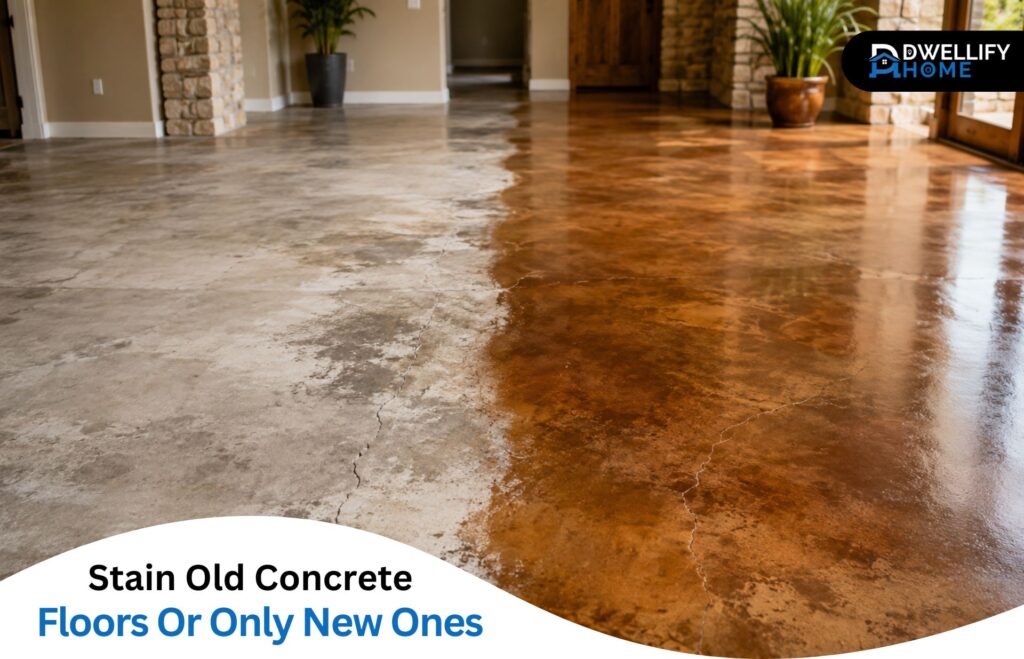
If you want to refresh your home’s aesthetic without breaking the bank, you might be eyeing those old concrete floors as a potential canvas for transformation. But before you dive into your DIY project, you’re probably wondering: Can you stain old concrete floors or only new ones?
Yes, you can stain both old and new concrete floors. The age of the concrete doesn’t necessarily limit your ability to stain it, as long as the surface is in good condition and properly prepared.
However, there’s more to consider than just whether it’s possible. The process, potential challenges, and results can vary significantly between staining new and old concrete. Keep reading to learn about the important factors you must consider before embarking on your concrete staining project, regardless of your floor’s age.
What Are The Differences Between Staining New And Old Concrete?
When it comes to staining concrete, the age of the surface can significantly impact the process and outcome. New concrete tends to be more predictable and easier to work with. It has a uniform surface and typically hasn’t been exposed to contaminants that could interfere with the staining process.
On the other hand, old concrete can present some challenges. Years of use may have left stains, cracks, or patches that can affect how the stain takes to the surface. These imperfections might show through the stain, creating an uneven or mottled appearance. However, this isn’t always a drawback – some homeowners appreciate the character and depth these variations can add to the floor.
Another key difference is the preparation required. Old concrete often needs more extensive cleaning and may require repairs before staining. New concrete, in contrast, usually only needs a light cleaning and etching to open up the pores for better stain absorption.
How Do You Prepare Old Concrete For Staining?
Proper preparation is crucial when staining old concrete, and it can make the difference between a stunning and disappointing result. The first step is a thorough cleaning, which involves removing any existing sealers, paints, or coatings that might prevent the stain from penetrating the concrete.
Next, you must address any cracks, holes, or damaged areas. These should be repaired using a concrete patching compound. Remember that patched areas may absorb stains differently, potentially leading to color variations in the final result.
After repairs, the concrete needs to be etched. Before purchasing any materials, make sure you’re working with a trusted concrete supply partner who can point you toward the right products for your specific floor condition — the wrong etching solution or patching compound can cause more harm than good. This process opens up the pores of the concrete, allowing better stain penetration.
Finally, just before staining, give the floor a final clean with a shop vac and damp mop to remove any remaining dust or debris. This ensures the stain has a clean surface to bond with, promoting even coverage and color development.
What Are Some Common Challenges When Staining Old Concrete?
While staining old concrete can yield beautiful results, it has potential pitfalls. One of the most common challenges is achieving consistent color. Old concrete may have more porous areas or have been exposed to different conditions over time, leading to uneven stain absorption and color variations.
Another frequent issue is the presence of efflorescence – a white, powdery substance that can appear on concrete surfaces. This occurs when water-soluble salts within the concrete rise to the surface and can interfere with stain penetration. Dealing with efflorescence often requires additional cleaning and potentially sealing before staining can begin.
Existing contaminants can also pose problems. Oil stains, pet urine, or other substances that have soaked into the concrete over time may resist cleaning efforts and affect how the stain takes to those areas. Sometimes, these spots may need to be cut out and patched, or you might need to embrace them as part of the floor’s character.
Lastly, moisture issues can significantly challenge old concrete floors, especially in basements or ground-level slabs. Too much moisture coming up through the concrete can cause the stain to fail or the sealer to peel. Testing for moisture content before starting your project can help you avoid this frustrating outcome.
What Are The Best Types Of Stains For Old Concrete Floors?
Not all stains are created equal when it comes to staining old concrete floors. Acid-based stains are popular for their ability to create rich, variegated colors that react chemically with the concrete. This reaction can help mask some of the imperfections common in older floors, resulting in a natural, mottled appearance.
On the other hand, water-based stains offer a wider range of colors and are generally easier to apply. They don’t react chemically with the concrete but act more like a dye, penetrating the surface. These can be a good option if you’re looking for more uniform coverage or vibrant colors that are only sometimes achievable with acid stains.
For particularly challenging old concrete floors, consider using a solid-colored concrete stain or paint. These products provide opaque coverage that can help hide severe discoloration or patchwork. While they don’t allow the natural texture of the concrete to show through as much, they can be an effective solution for floors that are too damaged or uneven for traditional staining methods.
How Long Does Stained Concrete Last On Old Floors?
The longevity of stained concrete on old floors depends on several factors, including the quality of the stain, the condition of the concrete, and how well the floor is maintained. Generally, a well-applied stain on properly prepared old concrete can last many years, often a decade or more.
However, high-traffic areas may show wear more quickly. You might notice fading or dulling in these spots after a few years. The good news is that, unlike paint, concrete stain penetrates the surface, so it won’t chip or peel. This means that even as it wears, it tends to do so gradually and evenly.
Regular maintenance can significantly extend the life of your stained concrete floor. This includes routine cleaning with pH-neutral cleaners and avoiding harsh chemicals that could damage the sealer. Reapplying a sealer every few years can also help protect the stains and keep your floor looking fresh.
If you do eventually want to change the look of your floor, you have options. You can often apply a new stain over the old one (after proper preparation), or if you want a completely different look, you can have the floor ground down and refinished. This versatility is one of the reasons why stained concrete remains a popular flooring choice, even for older homes.
Adapting To Change
Now that you know it’s possible to stain your old concrete floors and understand the process and potential challenges, it’s time to take action. Your next step is to thoroughly inspect your concrete floor, looking for any cracks, stains, or moisture issues that affect the staining process. Once you’ve assessed your floor’s condition, you can decide whether to tackle this as a DIY project or consult with a professional concrete staining contractor for the best results.
We’re so happy you found our article today! Just so you’re informed, this post may contain affiliate or sponsored links that could earn us a small commission on purchases. This income helps us sustain and improve our content. Please know that all opinions and views expressed here are solely those of the author and do not necessarily represent Dwellifyhome.com.