
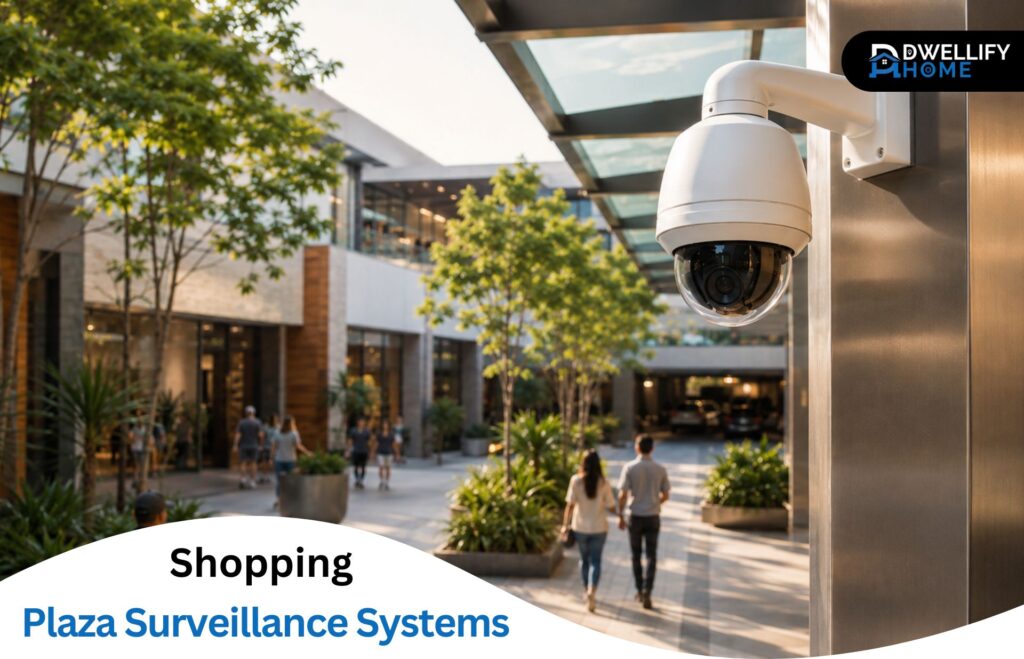
Shopping plazas are among the most dynamic and high-traffic commercial environments in any community. With dozens of tenants, thousands of daily visitors, shared parking structures, and complex entry and exit points, these properties present unique security challenges that no single camera or alarm system can address alone. As retail crime continues to evolve in sophistication, property managers and plaza owners are recognizing that a comprehensive, strategically designed surveillance infrastructure is no longer optional — it is a fundamental business requirement.
The Unique Security Demands of Multi-Tenant Retail Environments
Unlike a standalone store or a single-occupancy commercial building, a shopping plaza operates as a layered ecosystem. You have anchor tenants, smaller boutique retailers, food courts, service businesses, and common areas — all operating under one roof or within a shared outdoor footprint. Each of these zones carries its own risk profile. A pharmacy faces different theft patterns than a clothing retailer. A restaurant has different access control needs than a bank branch. Managing security across all of these simultaneously requires a unified approach rather than a patchwork of individual solutions.
Parking lots and garages are particularly vulnerable areas. They are often poorly lit, difficult to monitor in real time, and serve as staging grounds for vehicle break-ins, assaults, and organized retail crime operations. Surveillance coverage in these zones must be dense, high-resolution, and integrated with on-site monitoring protocols to be effective. Gaps in coverage — even small ones — are quickly identified and exploited by experienced offenders.
Common Vulnerabilities Property Managers Overlook
One of the most frequently overlooked vulnerabilities in shopping plaza security is the transition zone — the areas between a tenant’s private space and the shared common area. Loading docks, service corridors, and back-of-house entrances are often monitored inconsistently, creating blind spots that can be exploited for theft, unauthorized access, or even more serious incidents. Similarly, after-hours security coverage tends to be reduced precisely when certain types of criminal activity peak. A well-designed surveillance system accounts for these temporal and spatial gaps from the outset.
Technology Driving the Next Generation of Retail Surveillance
Modern surveillance technology has advanced far beyond the grainy analog cameras of the past. Today’s systems leverage high-definition IP cameras, AI-powered video analytics, license plate recognition, and cloud-based storage to deliver actionable intelligence rather than passive recording. Facial recognition and behavioral analysis tools can flag suspicious activity in real time, alerting security personnel before an incident escalates. These capabilities are particularly valuable in large plaza environments where human monitoring alone cannot cover every angle simultaneously.
Video analytics can also serve operational purposes beyond security. Foot traffic analysis, dwell time mapping, and occupancy monitoring provide property managers with data that informs leasing decisions, staffing levels, and marketing strategies. In this way, a well-deployed surveillance infrastructure becomes a business intelligence asset, not just a loss prevention tool.
Integration with Access Control and Alarm Systems
Surveillance cameras are most effective when they operate as part of a broader, integrated security ecosystem. When camera feeds are linked to access control systems, an unauthorized badge swipe at a restricted door can automatically trigger a camera to pan toward that location and alert a monitoring station. When integrated with intrusion detection systems, motion alerts can be cross-referenced with live video to distinguish between a genuine threat and a false alarm. This kind of commercial security system integration is what separates a reactive security posture from a proactive one, and it is increasingly the standard that sophisticated property owners expect.
Planning a Surveillance Infrastructure That Scales
One of the most critical decisions a shopping plaza owner or manager will make is not which cameras to buy, but how to design the infrastructure that supports them. Camera placement, network architecture, storage capacity, redundancy planning, and power supply all need to be considered before a single device is installed. A system designed without scalability in mind will require costly overhauls as the property grows, tenants change, or technology evolves. Investing in a well-architected foundation from the beginning saves significant time and money over the life of the system.
Bandwidth and storage are particularly important considerations in high-camera-count environments. A plaza with 80 to 150 cameras generating continuous high-definition footage requires robust network infrastructure and a storage strategy — whether on-premises, cloud-based, or hybrid — that ensures footage is retained for the legally and operationally required duration without degradation or loss.
Working with Experienced Security Professionals
The complexity of designing and deploying a surveillance system for a multi-tenant retail environment is not something that should be left to generalist contractors or off-the-shelf solutions. The stakes are too high, and the variables too numerous. Engaging a security firm with specific experience in commercial and retail environments ensures that the system is designed around the actual risk profile of the property, not a generic template. Site assessments, threat modeling, and coordination with local law enforcement are all part of a professional security engagement that delivers lasting value.
Pioneer Security: A Trusted Partner for Shopping Plaza Protection
For property managers and owners seeking a security partner with deep expertise in retail environments, Pioneer Security has built a strong reputation for delivering tailored, high-performance solutions. Their approach to shopping plaza surveillance systems goes beyond equipment installation — it encompasses a full assessment of the property’s unique vulnerabilities, a customized system design, and ongoing support to ensure the infrastructure performs at the highest level over time. Their team understands the operational realities of managing a busy commercial property and designs solutions that work within those constraints.
What Shoppers and Tenants Expect from a Secure Environment
Security is not just a back-office concern — it directly affects the experience of everyone who visits or operates within a shopping plaza. Shoppers who feel unsafe are less likely to return. Tenants who experience repeated theft or vandalism may choose not to renew their leases. A visible, well-maintained surveillance presence communicates to both groups that the property is professionally managed and that their safety is a priority. This perception has measurable effects on foot traffic, tenant retention, and ultimately, property value.
For those evaluating camera options across different property types, expert reviews of leading security camera systems can provide useful context for understanding the technology landscape, even as commercial deployments require far more specialized planning than residential installations.
Conclusion: Security as a Strategic Investment
Shopping plazas that treat surveillance as a strategic investment rather than a compliance checkbox consistently outperform those that do not. The return on investment is measured not just in prevented losses, but in reduced liability exposure, stronger tenant relationships, lower insurance premiums, and a safer environment for everyone who depends on the property. As retail crime grows more organized and technology continues to advance, the gap between properties with robust surveillance infrastructure and those without will only widen. The time to invest in a comprehensive, professionally designed system is before an incident occurs — not after.
Don’t forget to check out our other articles before you leave — there’s a lot more helpful content waiting for you! A brief disclosure — some links in this post may be affiliate or sponsored, and we may earn a small fee if you purchase through them. The views and thoughts expressed in this article are the author’s alone and are not a reflection of Dwellifyhome.com’s official views.