
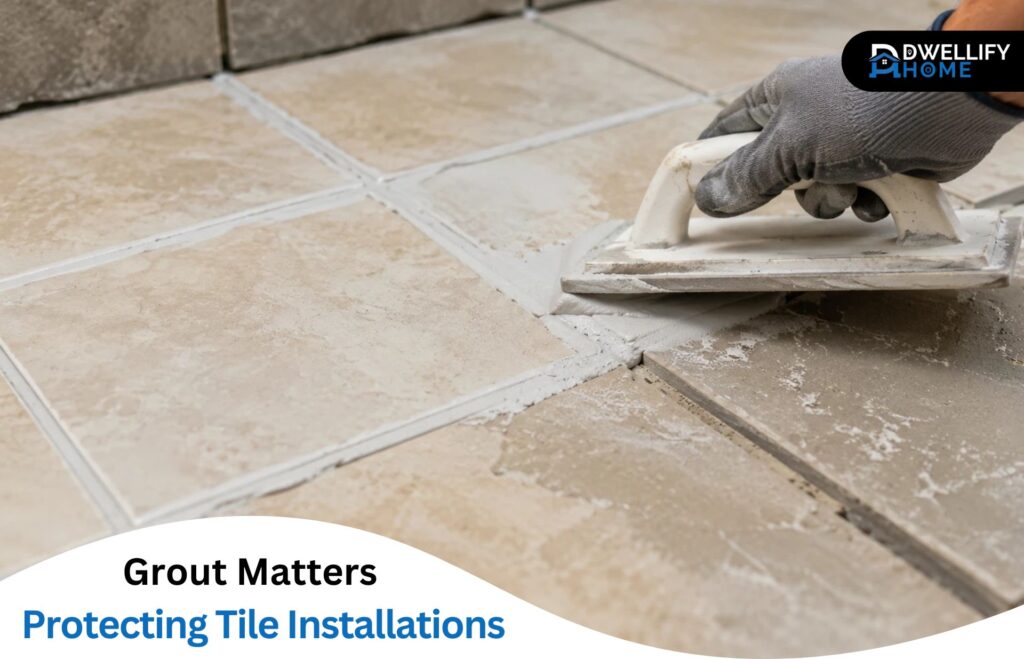
When homeowners start planning a tile renovation, grout is rarely something they think about. In reality, most people spend weeks debating whether porcelain or ceramic tile is the better choice. They compare colors, run their hands over different textures, discuss tile sizes, and try to decide whether large-format tiles will make a room feel more spacious. By the time every other decision has been made, grout is usually treated as little more than an afterthought.
And that’s where one of the biggest mistakes begins.
Grout does far more than simply fill the spaces between tiles. It helps hold the entire installation together, distributes loads across the surface, protects the substrate from moisture, and prevents the tile edges from deteriorating. When the right grout is selected and installed properly, the entire system performs as intended, and most homeowners won’t think about it again for years. But choose the wrong product, and problems often appear much sooner than expected.
It usually starts with tiny hairline cracks that are easy to ignore. Then the grout joints begin to darken, even with regular cleaning. Moisture gradually finds its way through damaged joints, weakening the substrate beneath the tile. Before long, some tiles begin to loosen, hollow sounds appear when walking across the floor, and mold starts developing in areas that stay damp. At that point, replacing the grout alone is rarely enough—the repair is often much more extensive.
In Chicago, these situations are especially common.
Homes throughout the city are exposed to constant changes in temperature and humidity. Winters bring repeated freeze-thaw cycles, while summers add heat and moisture. Older homes are even more vulnerable because their structures naturally expand and contract over time. All of this movement puts stress on a tile installation. The tile itself is usually strong enough to withstand it, but the grout is almost always the first part of the system to show signs of failure.
That’s why experienced tile installers never choose grout based on color alone. They first consider where the tile will be installed—a bathroom, kitchen backsplash, entryway, basement, or another area—because every space has different requirements. They evaluate moisture exposure, expected foot traffic, and how much movement the substrate is likely to experience over time.
For example, the grout used for a bathroom floor should not necessarily be the same product used for a kitchen backsplash. A basement laundry room also creates very different conditions than an entryway, where snow, water, and road salt are tracked inside every winter. Using the same grout throughout the entire house may seem convenient, but it often shortens the lifespan of the tile installation.
Another common misconception is that cracked or damaged grout automatically means the installer did poor-quality work. In many cases, that’s simply not true. Even a perfectly installed tile surface can begin to fail if the grout isn’t suitable for the environment. Traditional cement grout used inside a shower without proper sealing, for example, will usually deteriorate much faster than epoxy grout installed under the same conditions.
Tile professionals see this scenario all the time. Homeowners notice cracked grout or loose tiles and assume the tile itself is the problem. But once the damaged area is opened up, the real cause is often hidden underneath. Water has slowly penetrated the grout joints for years, weakening the adhesive and, in some cases, even damaging the subfloor. What first appeared to be a minor cosmetic issue turns into an expensive repair.
Choosing grout isn’t a minor detail—it’s one of the most important decisions in any tile project. The right material won’t eliminate maintenance altogether, but it can significantly reduce the risk of cracked joints, stains, moisture intrusion beneath the tile, and costly repairs in the future.
Grout Is More Than Just Color
One of the most common mistakes homeowners make is assuming that grout only differs in color. Spend just a few minutes in a professional tile showroom, and it quickly becomes clear how far that is from the truth.
Today, professional tile contractors typically choose between traditional cement grout, epoxy grout, and modern single-component grout. Each has been developed for specific applications and performs best under certain conditions. Understanding these differences before the first tile is installed can have a greater impact on the long-term durability of a tile installation than most homeowners realize.
Choosing the Right Grout Starts with Understanding the Room
One question experienced tile contractors hear all the time is, “Which grout is the best?” The honest answer is that there isn’t one. The best grout for a shower may not be the right choice for a kitchen floor, and what works perfectly in a laundry room could be unnecessary for a living room.
Professional installers don’t begin by looking at grout samples—they begin by evaluating the environment. Moisture levels, temperature changes, foot traffic, the type of tile, joint width, and even the age of the house all influence the decision. Choosing grout without considering these factors is a bit like buying tires without thinking about the road you’ll be driving on.
Cement Grout: Still the Most Common Choice
Despite the growing popularity of newer products, cement grout remains the material used in many residential tile projects across Chicago. It has been around for decades, contractors know how it behaves, and when installed correctly, it delivers reliable results.
Its biggest advantage is versatility. Cement grout works well on kitchen backsplashes, bathroom floors, fireplaces, laundry rooms, and most interior spaces where moisture isn’t constantly present. It’s also available in a wide range of colors, making it easy to match almost any tile design.
However, cement grout isn’t maintenance-free. Because it’s naturally porous, it absorbs small amounts of moisture, soap residue, grease, and dirt. Over time, those contaminants can discolor the joints or gradually weaken the grout if it’s never sealed.
This is where many homeowners unknowingly create problems. The tile itself still looks beautiful, so they assume everything underneath is in perfect condition. Meanwhile, moisture slowly penetrates through unprotected grout lines year after year. By the time cracked joints or loose tiles become visible, water may already have reached the adhesive beneath the installation.
At that point, regrouting alone may no longer solve the problem. If moisture has already compromised the adhesive or the substrate, homeowners are often faced with repairs that go far beyond replacing grout. Learning more about professional tile installation can also help homeowners understand what separates a long-lasting tile system from one that begins to fail after only a few years.
That doesn’t mean cement grout is a poor choice. It simply performs best when it’s used in the right environment and maintained properly.
Epoxy Grout: Built for Places Where Water Never Takes a Break
Ask most experienced tile installers which grout they trust inside a shower, and epoxy grout is likely to come up first.
Unlike traditional cement grout, epoxy contains resins that make it almost completely resistant to water absorption. It doesn’t require sealing, is highly resistant to stains, and makes it much harder for mold or mildew to establish themselves inside the joints.
For busy family bathrooms, walk-in showers, mudrooms, commercial kitchens, or any space exposed to constant moisture, epoxy often proves to be the better long-term investment.
Of course, there is a trade-off.
Epoxy grout is significantly less forgiving during installation. Once the components are mixed, the installer has limited time to apply and clean the material before it begins to cure. Any mistakes become much more difficult to correct than with cement grout.
That’s why many professional tile contractor Chicago companies reserve epoxy for projects where its benefits truly outweigh the higher installation cost. In the right location, homeowners often recover that investment through lower maintenance and fewer future repairs.
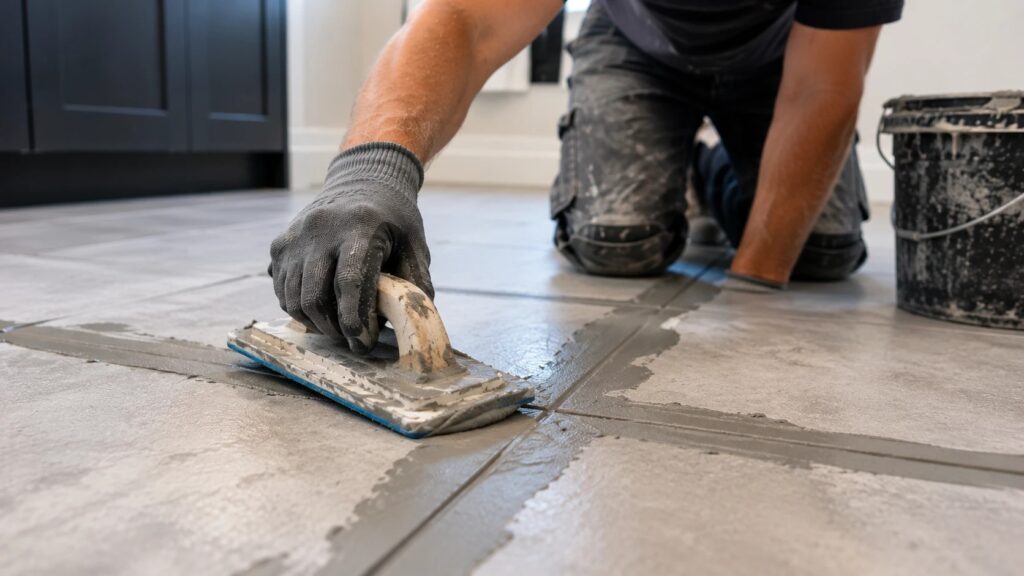
Single-Component Grouts: A Modern Alternative
Over the last several years, manufacturers have introduced a new generation of ready-to-use grouts that combine some of the advantages of both cement and epoxy products.
Single-component grout arrives pre-mixed, eliminating many of the inconsistencies that can occur when installers mix grout on-site. It offers better stain resistance than traditional cement grout while remaining easier to work with than epoxy.
Many contractors now recommend these products for homeowners who want a balance between durability and installation simplicity.
They’re particularly popular for residential bathrooms, kitchen floors, backsplashes, and renovation projects where homeowners want less maintenance without paying the full premium associated with epoxy systems.
| Grout Type | Best For | Water Resistance | Maintenance | Typical Lifespan |
| Cement Grout | Living rooms, backsplashes, dry bathrooms | Moderate (requires sealing) | Medium | 8–15 years |
| Epoxy Grout | Showers, bathrooms, commercial kitchens | Excellent | Low | 20+ years |
| Single-Component Grout | Kitchens, bathrooms, residential renovations | Very Good | Low | 15–20 years |
Even so, no modern product solves every problem. A high-performance grout cannot compensate for poor surface preparation, movement in the subfloor, or improper waterproofing behind a shower wall. Those issues eventually affect every type of grout, regardless of how advanced the product may be.
Experienced installers often say the grout is only as good as the system beneath it. A properly prepared substrate, quality waterproofing, and correct installation techniques will always have a greater influence on the lifespan of a tile floor than choosing the most expensive grout on the shelf.
Small Grout Problems Rarely Stay Small
One of the biggest mistakes homeowners make is assuming grout damage is purely cosmetic. A small crack in the corner of a shower or a few discolored joints on a kitchen floor may not seem urgent, so it’s easy to postpone repairs for another month—or another year.
Unfortunately, grout rarely fails overnight.
In most cases, deterioration happens slowly. Water finds the smallest opening, penetrates below the tile, and begins weakening the adhesive beneath the surface. Because the damage develops out of sight, homeowners often don’t realize anything is wrong until tiles become loose, hollow sounds appear underfoot, or sections of grout start falling out altogether.
This is why experienced contractors recommend addressing grout problems as early as possible. Replacing a few damaged joints is almost always faster and less expensive than rebuilding an entire section of tile after moisture has reached the substrate.
Another mistake is believing that dirty grout always needs to be replaced. In reality, discoloration and structural failure are two different issues.
Kitchen floors, bathroom walls, and entryways naturally collect soap residue, grease, minerals, and everyday dirt over time. Professional tile and grout cleaning Chicago services can often restore grout lines surprisingly well without removing or replacing them. Cleaning, however, won’t solve cracked joints, loose tiles, or water damage hiding underneath the surface. Knowing the difference can save homeowners both time and money.
It’s also important to understand when a repair is still possible and when replacement becomes the better option. If only a small section of grout has deteriorated while the tile remains firmly bonded, a localized repair may be all that’s needed. However, if multiple tiles have become loose, moisture has reached the underlayment, or the substrate has started to deteriorate, a more comprehensive tile and grout repair Chicago project is usually the safer long-term solution.
One detail that often separates durable tile installations from those that begin failing after only a few years is routine maintenance. Even premium materials benefit from periodic inspections. Resealing cement grout when recommended, fixing small cracks early, and avoiding harsh acidic cleaners all help preserve both the grout and the tile itself.
Professional installers often share a similar observation after years in the field: the tile is rarely the weakest part of the installation. More often, grout is the first material to reveal that something beneath the surface has started to change. Paying attention to those early warning signs can prevent far more expensive repairs later.
Final Thoughts
Choosing grout may seem like one of the smallest decisions in a tile project, but it has a lasting impact on how the entire installation performs. The right grout protects against moisture, accommodates everyday movement, supports the edges of each tile, and helps preserve the appearance of the finished surface for years.
For homeowners in Chicago, where seasonal weather places additional stress on building materials, matching the grout to the environment is just as important as selecting the right tile. A bathroom, kitchen, basement, and entryway all present different challenges, and each deserves a solution designed for those conditions.
Taking the time to choose the appropriate grout—and installing it correctly from the beginning—is one of the simplest ways to avoid premature failures, reduce maintenance, and protect your investment. In many cases, the difference between a tile floor that lasts ten years and one that lasts several decades comes down to decisions that are made long before the first grout joint is filled.
We hope this post answered your questions and inspired you! Please note that certain links within this article may be affiliate links. Purchases made through these links may generate a small commission for our website at no added cost to you. All opinions expressed are solely the author’s own and do not necessarily represent the position of Dwellifyhome.com.