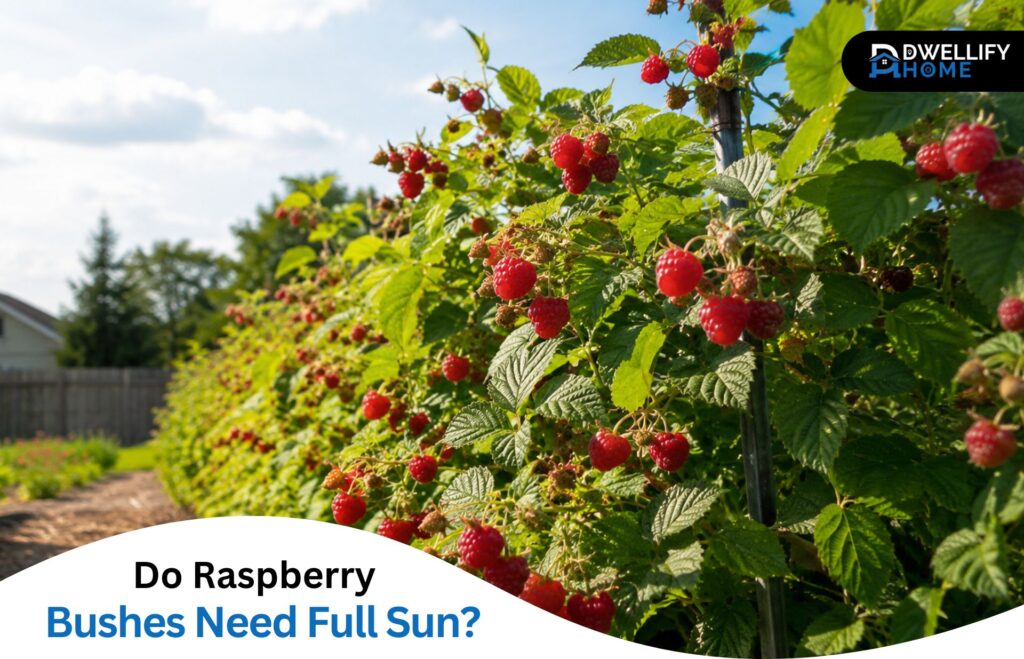
Anyone who has grown raspberries for a few seasons learns quickly that these plants are sun chasers. Raspberry bushes need full sun to give you their best — roughly six to eight hours of direct light a day for the heaviest, sweetest crop. They’ll survive in partial shade, but you’ll pick less fruit, and it won’t taste as good. There’s a catch worth knowing early, though: in hot climates, a spot with morning sun and a little afternoon shade often beats blazing sun all day long.
That’s the headline. The rest comes down to your yard, your climate, and what you’re willing to work with. Below, I’ll walk through how much light actually matters, what happens when raspberries don’t get enough (or get too much), and how the rules shift for pots, hot regions, and different times of year.
Snippet-Ready Definition (38 words)
Raspberry bushes need full sun—at least six to eight hours of direct light daily—to produce the heaviest, sweetest crop. They tolerate partial shade but yield less fruit, and in hot climates afternoon shade helps prevent sunscald.
Mission:
Dwellify Home helps homeowners, renters, and gardeners make practical, confident decisions about their space—down to details like knowing exactly where and how to plant so a raspberry patch actually thrives instead of just surviving.
How Many Hours of Sunlight Raspberries Really Need
Full sun for raspberries means at least six hours of direct, unfiltered sunlight a day, with eight hours being closer to ideal. That range is where the plants set the most flowers, size up the most berries, and develop the best sugar. Less light is workable, but production drops off as you go below it.
When garden books and extension guides say full sun, they mean direct light hitting the plant, not bright shade or sun filtered through a tree. Six hours is the working minimum most growers and university extension programs agree on, though some put the sweet spot at a full eight. I lean toward telling people to aim high. If you can give raspberries eight hours, do it, because the extra light shows up in the harvest basket.
The reason the number matters is that light is the plant’s fuel supply. Every hour of sun feeds the canes’ ability to flower, set fruit, and pump sugar into the berries. Skimp on light and the plant simply has less to work with, so it makes fewer and smaller berries. This is the single biggest factor beginners underestimate when they pick a planting spot.
Quick reference — sunlight hours and what to expect:
| Daily direct sun | What you’ll get |
| Under 4 hours | Plant survives but struggles; leggy, pale canes and minimal fruit |
| 4–6 hours | A partial crop that ripens later and tastes milder |
| 6–8 hours | Full production, best size and sweetest flavor |
Key points at a glance:
- 6–8 hours of direct sun gives the best yield and sweetest fruit.
- Raspberries tolerate partial shade but produce noticeably less.
- Morning sun is preferred; afternoon shade helps in hot climates.
- Full sun also reduces fungal disease by drying dew faster.
- Potted plants need the same light, but afternoon shade matters more in heat.
Why Raspberries Need That Much Sun
Sunlight does three jobs for a raspberry plant, and the third one surprises people. The first is yield. More light means more flower buds, and more flowers mean more berries. The second is flavor. Sun drives the sugars in the fruit, which is why berries from an open, sunny row taste noticeably sweeter than ones grown in a shaded corner.
The third job is keeping the plant healthy, and this is where sun quietly earns its keep. A sunny, open spot dries the morning dew off the leaves and fruit faster. Damp foliage that stays wet for hours is an open invitation to fungal trouble — gray mold on the berries, plus cane diseases like spur blight and anthracnose.
Plant pathologists and extension programs consistently recommend full sun and good airflow as a first line of defense against these problems. So when you put raspberries in full sun, you’re not just chasing a bigger crop. You’re cutting your disease problems before they start.
Can Raspberries Grow in Partial Shade?
Yes, raspberries can grow in partial shade, but you’ll trade away a good share of your harvest. With four to six hours of sun, expect a partial crop that ripens later and tastes milder. Below about four hours, plants tend to stretch, stay weak, and barely fruit at all.
I’ve seen plenty of raspberries soldier on in less-than-ideal light, so I won’t pretend they need flawless conditions to live. But there’s a real difference between surviving and producing. Here’s the rough way I think about it:
- Under 4 hours of sun: the plants survive but struggle. Canes grow tall, thin, and pale as they reach for light, and you’ll pick a handful of berries at best.
- 4 to 6 hours: a partial crop. Workable if it’s all you’ve got, but lighter than a sunny spot would give.
- 6 to 8 hours: full production, the way the plant is meant to grow.
Leggy, stretched canes are the tell-tale sign of too little light. A healthy raspberry in good sun grows sturdy and stocky; one straining toward light gets gangly and weak. If a part-shade spot is your only option, lean toward the tougher varieties — older types like Boyne tend to be more forgiving. It also helps to remember that wild raspberries often grow along woodland edges in dappled light, so a little shade won’t kill them. It just won’t give you a showcase crop.
How to Choose the Right Spot for Your Raspberries
Picking the right spot is mostly about light, with a couple of companions that matter almost as much. Start by watching where the sun actually lands in your yard across a day, not where you assume it lands. A fence, a garage, or a maturing tree can steal more hours than you’d expect, especially as the sun sits lower in spring and fall.
Once you’ve found a spot with six to eight hours of direct sun, look for these things alongside it:
- Good air movement. An open spot where a breeze can pass through dries foliage and cuts disease. Avoid tucking plants into a still, boxed-in corner.
- Shelter from harsh wind. A little airflow is good; a constant battering wind that dries out and snaps canes is not.
- Well-drained soil. Raspberries hate wet feet, and soggy roots will undo even a sunny site.
A couple of layout details pay off later. Run your rows north to south so the canes don’t shade each other as they grow tall. Give plants room to breathe rather than crowding them, because raspberries spread on their own by sending up suckers, and a packed row shades itself and traps moisture. A simple trellis or post-and-wire support keeps the canes upright and open to the light instead of flopping into a tangle. Sun, space, and airflow all work together here.
Morning Sun vs. Afternoon Sun — Which Is Better for Raspberries?
Morning sun is the better of the two, especially in warm regions. Early light dries dew off the plants quickly, which lowers disease risk, and it avoids the harsh midday and afternoon heat that can scorch fruit. In most gardens, morning sun with light afternoon shade is the ideal setup.
Given a choice between a spot that gets strong morning light and one that bakes all afternoon, take the morning every time. Afternoon sun in summer arrives with the day’s peak heat, and that combination is what damages fruit and stresses plants. Morning sun does the useful work of drying and feeding without the punishing part.
This isn’t an absolute rule everywhere. In a cool northern garden, all-day sun is fine and welcome. But the warmer your summers run, the more afternoon shade shifts from a nice-to-have to something close to essential. That’s the bridge to the next question: whether full sun even means the same thing depending on where you live.
Does “Full Sun” Mean the Same Thing in Every Climate?
Not really. In cool northern zones, full sun means exactly that — give raspberries all the light you can. In hot southern regions, all-day sun can do more harm than good, and plants do better with afternoon shade. In the Deep South and Florida, most raspberries struggle regardless of light.
Raspberries are cool-climate plants at heart, and that shapes how much sun they can handle. In cooler zones, roughly USDA 3 through 6, give them unfiltered full sun and don’t think twice. Around zone 7, keep an eye out for heat stress at the height of summer. From zone 8 and warmer, morning sun with afternoon shade tends to produce better fruit than full exposure.
Hot, dry regions add another wrinkle: reflected heat. A planting against a south or west-facing wall can cook in radiated warmth on top of direct sun, which is more than most raspberries want. Extension guidance from hot-summer states regularly warns against exactly this.
The far end of the scale is the Deep South and Florida, where standard raspberries simply don’t thrive. The summers are too long and hot, and the winters often don’t deliver the cold the plants need. Gardeners there usually have to look to heat-tolerant specialty types like the Mysore raspberry, and even then afternoon shade is part of the deal. It’s worth saying plainly: in the hottest climates, full sun stops being the goal and becomes a liability.
How Much Sun Do Raspberries in Pots Need?
Raspberries in pots need the same light as those in the ground — at least six hours of direct sun, and more is better. The difference is that containers heat up and dry out faster, so in warm climates afternoon shade matters even more for potted plants than for ones rooted in open soil.
The sunlight requirement doesn’t change in a container, but the conditions around it do. A pot has far less soil to buffer temperature and moisture, so it warms quickly and dries out fast on a hot day. That makes a scorching all-afternoon spot, or a position against a hot south or west-facing wall, riskier for potted raspberries than for plants in the ground.
The flip side is the real advantage of growing raspberries in pots: you can move them. You can shift a container into the best light through the growing season and pull it back into shade during a brutal heat wave, which is something an in-ground plant can never offer. Just stay on top of watering, because consistent moisture is what keeps a sun-soaked pot from swinging between bone dry and soaked.
Can Raspberries Get Too Much Sun? Sunscald and White Drupelet Disorder
Yes, in hot conditions raspberries can get too much sun. Intense heat and direct light can bleach the small segments that make up each berry, turning them white or tan and hard. This is called sunscald, or white drupelet disorder. The fruit is still safe to eat, but it loses flavor and looks.
Each raspberry is made up of many tiny round segments called drupelets, the little beads that give the berry its texture. When sun and heat get intense, the drupelets on the most exposed side of the fruit can bleach out, going white or pale tan and turning hard. Cut one open and it looks fine inside, because it’s purely the sun-facing surface that’s affected. The berries are safe to eat. They just taste flat and won’t win any beauty contests.
Some varieties are more prone to it than others. Heritage and Caroline, both popular fall-bearing types, are known to scald in strong heat. If you garden in a hot climate, that’s worth weighing when you choose plants.
Heading off sunscald comes back to the same tools from earlier sections. Afternoon shade is the big one. During a forecast heat spike, draping light shade cloth over the row for a few days protects the ripening fruit without much fuss. Keeping soil moisture steady helps too, since a well-watered plant handles heat far better than a thirsty one. And if scald is a recurring problem in your garden, switching to a less susceptible variety fixes it at the root.
Do Raspberry Sun Needs Change Through the Year?
Sun needs do shift across the seasons, and your raspberry type plays a part. The light requirement is highest while plants are actively growing and ripening fruit. It drops to nothing once they go dormant in winter. And whether you grow summer-bearing or fall-bearing canes changes when that peak demand falls.
Summer-Bearing vs. Fall-Bearing — Does Type Change the Sun Rules?
Both types want the same amount of sun; what changes is the timing of when they need it most. Summer-bearing raspberries fruit in early-to-mid summer on canes that grew the year before. Fall-bearing types, also called everbearing or primocane raspberries, fruit in late summer and fall on the current season’s canes. Because that fall crop ripens later, late-season light and warmth before the first frost largely decide how good it turns out. This is also why fall-bearing varieties are often the better pick in hot regions, since the fruit matures after the worst of the summer heat has passed.
Do Raspberry Bushes Need Full Sun in the Fall?
For fall-bearing raspberries, yes. That late crop relies on autumn sun to ripen and sweeten, so don’t write off light just because summer’s over. The good news is that sunscald risk fades in fall. As the days shorten and temperatures cool, the same sun that scorched fruit in midsummer is no longer a threat.
Do Raspberry Bushes Need Full Sun in Winter?
Not in any meaningful way. Once raspberries drop their leaves and go dormant, the canes aren’t using sunlight, so a winter sun position barely matters. What does matter in winter is different: getting enough cold hours to set up next year’s growth, protection from drying winter wind, and avoiding warm south-facing spots where a mid-winter thaw followed by a hard refreeze can damage canes. A blanket of snow actually helps by insulating the crowns. Full sun is a growing-season concern, not a winter one.
Frequently Asked Questions About Raspberries and Sunlight
A few related questions come up again and again once people get past the sunlight basics.
How big do raspberry bushes get?
Most summer-bearing raspberries reach about six feet tall, while fall-bearing types tend to stay shorter, around four to five feet. Left without support, the canes arch over and sprawl wider than that. Their height is part of why spacing and a trellis matter, since tall canes shade each other and the plants around them.
Do raspberry bushes need a trellis?
Not strictly, but it’s strongly worth doing. Raspberry canes are tall and floppy, and without support they bend into a tangle that shades itself, traps moisture, and makes picking a chore. A simple post-and-wire trellis keeps the canes upright and open to sun and air, which means better fruit and fewer disease problems.
Do raspberry bushes spread a lot?
Red and yellow raspberries spread vigorously, sending up new canes called suckers from their roots, sometimes a few feet from the original plant. Black and purple types stay put in a clump. The spreading kinds need managing so the patch doesn’t crowd itself into a dense, shaded thicket that invites disease.
How long do raspberry plants live?
The root system, or crown, is perennial and can stay productive for around ten to fifteen years with decent care. The individual canes, though, are biennial, meaning each cane lives two years and fruits in its second before dying back. New canes come up every year to replace them, so the patch keeps renewing itself.
Can raspberries get too much sun?
Yes, in hot climates. Extreme heat and sun can cause sunscald, bleaching parts of the berries white and hard. Afternoon shade and steady watering are the simplest fixes.
The Bottom Line — Do Raspberry Bushes Need Full Sun?
So, do raspberry bushes need full sun? Yes. Give them six to eight hours of direct light a day and you’ll get the heaviest, sweetest harvest the plant can produce. They’ll tolerate partial shade if they must, but you’ll pick less fruit and wait longer for it. And if your summers run hot, remember that morning sun with a little afternoon shade beats relentless all-day exposure, both for the plant and for the berries.
The simplest way to judge your own spot is to spend one day watching where the light falls and counting the hours of direct sun. Land near six or more, and you’ve got a home for raspberries.
Disclaimer: This article is for general informational purposes only. Growing conditions, climates, and raspberry varieties vary, so your individual results may differ from the general guidance offered here.