
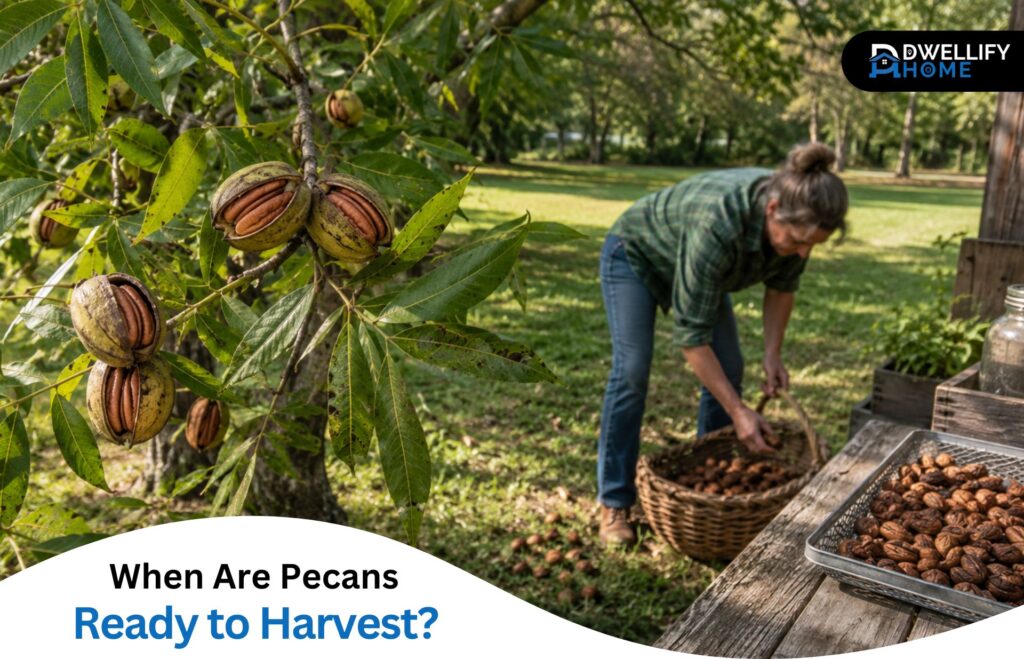
Pecans are usually ready to harvest from early fall into late fall, with many trees dropping nuts sometime between September and November. In some areas, especially with later varieties, harvest can stretch into December. But the calendar is only a starting point.
The better answer is on the tree itself. Pecans are ready when the outer shuck dries, turns brown, and splits open; the shell underneath looks mature; the kernel is filled out; and nuts begin falling naturally.
That last part matters. A pecan tree doesn’t usually drop every good nut in one clean weekend. You’ll often see a few early nuts, then a heavier drop, then scattered nuts for days or weeks afterward. The job is knowing when to start watching closely and when to collect before weather, squirrels, insects, or mold get there first.
Snippet-Ready Definition
Pecans are ready to harvest when their shucks split, shells turn brown, kernels fill out, and nuts begin falling naturally. Knowing these signs helps homeowners collect pecans at peak quality.
Mission Statement
Dwellify Home helps homeowners and property enthusiasts make practical, informed decisions about home, garden, and outdoor living, including knowing when and how to harvest backyard pecans with confidence.
Key Benefits / Uses
- Helps homeowners identify ripe pecans without guessing by date alone.
- Explains the main harvest signs: split shucks, mature shells, full kernels, and natural drop.
- Shows when to collect pecans before damp ground, pests, or mold reduce quality.
- Covers simple hand-harvesting, drying, sorting, and storage steps.
The Short Answer: When Are Pecans Ready to Harvest?
Pecans are ready to harvest when the green outer shuck has turned brown and split open, the shell inside is brown and firm, and the nuts begin falling from the tree. In most U.S. growing areas, this happens from early fall through late fall, often September through November, depending on variety, location, and weather.
The most common mistake is picking by month alone. A pecan on the calendar may be “in season,” but a pecan still locked in a tight green shuck is not ready. Once the shuck opens and nuts start dropping, begin collecting often. Freshly fallen pecans are usually cleaner, drier, and easier to sort than nuts that sit under wet leaves for a week.
What Are the Clearest Signs Pecans Are Ready to Harvest?
The clearest signs pecans are ready to harvest are split shucks, brown mature shells, full kernels, and natural nut drop. A ready pecan should not look green, soft, watery, or trapped inside a tight husk. Check several nuts from different parts of the tree before deciding the whole crop is ready.
A simple pecan ripening chart can help with timing, but your best chart is the tree in front of you:
| What You See | What It Usually Means |
| Green shuck, tightly closed | Not ready |
| Brown shuck beginning to split | Near harvest or ready |
| Brown shell visible inside open shuck | Likely ready |
| Nut drops naturally | Ready to collect |
| Kernel is shriveled, rubbery, or hollow | Poor quality or immature |
The Outer Shuck Turns Brown and Splits Open
The shuck is the thick outer covering around the pecan. Early in the season, it’s green, fleshy, and tight. As the nut matures, that shuck dries, turns brown, and cracks open. This is often called pecan shuck split or pecan hull split.
A split shuck is the first big sign to watch for. It tells you the nut has reached the stage where it can dry down and release properly. When you see several shucks opening across the tree, especially in the upper and outer branches, harvest is getting close.
Don’t confuse one or two odd split shucks with the whole tree being ready. Trees ripen unevenly. Check more than one limb and look at the ground too.
The Shell Underneath Looks Brown and Mature
Once the shuck opens, you should see the pecan shell underneath. A mature shell usually looks brown and firm. It should not look soft, pale, or stuck inside a green covering.
This is one of the easiest checks for homeowners because you don’t need special tools. Pick up a few freshly fallen nuts or look at nuts hanging in open shucks. If the shell has good color and separates cleanly from the shuck, that’s a strong sign the nut is ready.
Nuts that stay wrapped in tight green shucks may not dry well. Some may eventually open, but many of those tight, stuck nuts end up being poor quality.
The Kernel Looks Full, Dry, and Firm
A mature pecan kernel should look filled out inside the shell. It should have a firm texture and a normal nutty appearance, not a wet, rubbery, shriveled, or hollow look.
Crack a few sample nuts before you put much effort into harvesting the whole yard. This is especially useful when the tree has had a stressful season. A shell can look decent from the outside while the kernel inside is poorly filled.
A few bad nuts are normal. But if most samples are hollow, blackened, shriveled, or soft, the crop may have suffered from weather stress, pest damage, poor pollination, or early drop.
Ripe Pecans Begin Falling Naturally
Ripe pecans usually begin falling on their own once the shuck opens and the nut loosens. That natural drop is one of the most reliable harvest cues for a backyard tree.
The first fallen nuts are your signal to start paying attention, not necessarily to harvest everything at once. Walk the area under the tree every day or two during peak drop. Pecans left on damp soil, wet grass, or under leaves can pick up moisture and quality problems quickly.
The cleanest nuts are often the ones gathered soon after they fall.
What Month Do Pecans Usually Ripen in the U.S.?
Across the U.S., pecans usually ripen from late summer through late fall, with most home harvests happening from September through November. Some areas and varieties run earlier, while others continue into December. Region helps estimate timing, but shuck split and nut drop are still the better harvest signs.
Texas and Oklahoma
In Texas and Oklahoma, pecan harvest can start with early varieties in early fall and continue into late fall. Warmer parts of Texas may see earlier activity, while northern areas or later cultivars may run later.
For anyone asking when do pecans fall in Oklahoma, the practical answer is usually fall, often around October and November for many trees. Still, a dry summer, a late freeze, or tree stress can shift the crop. Watch the shucks first, then the ground.
Georgia and the Southeast
When are pecans harvested in Georgia? Many Georgia pecans are harvested from fall into early winter, with early varieties beginning sooner and later varieties stretching the season. The Southeast has a long pecan tradition, but even there, timing changes from year to year.
Humidity also matters in this region. Once nuts drop, don’t let them sit under wet leaves. Frequent pickup is one of the easiest ways to protect quality at home.
North Carolina and South Carolina
In North Carolina and South Carolina, homeowners often see pecans falling in fall, commonly around October through December depending on the tree and local weather. When is pecan season in SC? A safe homeowner answer is fall into early winter, with the most useful signal being nuts falling from open shucks.
Coastal areas, inland areas, and different varieties won’t all behave the same. A yard tree in one county can be a week or two ahead of another tree not far away.
California and Western Growing Areas
When are pecans ready to harvest in California? In many western growing areas, pecans can mature from late summer into fall, depending on variety and local conditions. Warmer, drier climates may help nuts dry cleanly, but the readiness signs stay the same.
Look for split hulls, brown shells, and natural drop. State names give a general range, but the tree gives the final answer.
Can You Harvest Pecans Before They Fall?
You can harvest pecans before they fall only when the shucks have opened and the nuts are mature enough to release. Pecans picked too early often have poor kernel fill, rubbery texture, or weak flavor. It’s usually better to wait for shuck split, then gently shake or pole only the ready nuts loose.
When Shaking or Polling the Tree Makes Sense
Shaking or polling makes sense when the shucks are already open and the nuts are loose but not dropping fast enough. A light shake of a small limb or a gentle tap with a long pole can bring down mature pecans without waiting several more days.
Be careful with this. Don’t beat the limbs or strip green shucks from the tree. Heavy-handed shaking can damage branches and knock down immature nuts that would have been better left alone.
For a home tree, the goal is simple: help ready nuts fall, not force unready nuts off the tree.
When Early Picking Can Lead to Poor-Quality Pecans
Early picking leads to disappointment because pecans don’t behave like fruit that sweetens on the kitchen counter. The kernel needs to mature on the tree. Drying after harvest can improve storage quality, but it won’t turn an immature kernel into a fully developed one.
Green pecans pulled from tight shucks often end up rubbery, shriveled, bitter, or hard to shell cleanly. When in doubt, crack a few samples. A full kernel tells you more than the date on the calendar.
How Should You Harvest Pecans by Hand at Home?
Harvesting pecans by hand at home is mostly about preparation, frequent collection, and quick sorting. Clear the ground before heavy drop, collect nuts often, use simple tools if needed, and remove damaged or moldy nuts as you go. A clean, steady routine protects more of the crop than waiting for one big pickup day.
Clear the Ground Before Peak Drop
Before the tree starts dropping heavily, rake leaves, sticks, and old debris from under the canopy. Pecans hide easily in grass and leaf litter, especially small native or seedling nuts.
A clean area makes pickup faster and helps you spot fresh nuts. It also keeps you from mixing this year’s good pecans with old, dark, moldy nuts left from a previous drop.
You don’t need to scalp the yard. Just make it clean enough that you can see what falls.
Pick Up Pecans Daily or Near Daily
During peak drop, collect pecans daily or near daily if you can. This matters most after rain, heavy dew, or warm damp weather.
Fresh nuts are easier to dry and sort. Nuts that sit too long can absorb moisture, stain, mold, crack, or attract wildlife. Squirrels, birds, and insects don’t wait for you to have a free weekend.
A five-minute pickup each evening often saves more good pecans than one long cleanup after the ground is covered.
Use Simple Tools Without Damaging the Nuts
Hand picking works fine for one small tree, but it gets tiring fast. A bucket, garden rake, nut roller, or pecan picker tool can make the job easier, especially if you have a large tree or a sore back.
Use tools that gather nuts without crushing them. Avoid raking so hard that you crack shells or drag nuts through wet soil. Rolling nut gatherers are handy on short grass, while hand picking is still best around roots, rocks, and uneven ground.
The right tool is the one that helps you collect more often.
Sort Out Bad Pecans as You Gather
Sort while you collect. Toss out nuts that are moldy, cracked, blackened, insect-damaged, lightweight, or stuck in a rotten shuck. This keeps one bad batch from sitting with the good nuts.
A good pecan usually feels solid for its size. Very light nuts are often hollow or poorly filled. Nuts with holes, sour smells, fuzzy mold, or dark wet stains are not worth saving.
This first sort doesn’t need to be perfect. It just needs to remove obvious trouble before drying.
What Should You Do Right After Harvesting Pecans?
Right after harvesting pecans, remove loose shucks, leaves, sticks, and obviously bad nuts. Then spread the good pecans in a single layer in a dry, ventilated place so excess moisture can leave the shell. Once dry, store them cool, dry, and protected from pests.
Remove Loose Shucks and Debris
Start by separating nuts from loose shucks, twigs, leaves, and dirt. Pecans that fall cleanly from open shucks are usually easier to handle than nuts still wrapped in tight hulls.
A few bits of shuck are normal. But pecans stuck hard inside green or blackened shucks deserve a closer look. Some may be immature, diseased, or damaged. Don’t store questionable nuts with your good ones.
Dry or Cure Pecans Before Long-Term Storage
Fresh pecans often need drying before long-term storage. Spread them in a single layer in a warm, dry, well-ventilated place. A screen, shallow tray, or clean table works better than a deep bucket.
Drying time depends on humidity, airflow, and how wet the nuts were when collected. Stir or turn them occasionally so moisture doesn’t get trapped underneath.
A practical check is to crack a few after drying. The kernel should feel crisp and firm, not rubbery or damp.
Store Fresh Pecans the Right Way
Once dry, keep pecans cool, dry, and protected. In-shell pecans usually keep better than shelled kernels because the shell offers some protection. Shelled pecans need more care because the oils can turn stale faster.
For short-term use, a clean airtight container in a cool pantry may be enough. For longer storage, refrigeration or freezing is often better. Whatever method you choose, make sure the nuts are dry before sealing them up.
Moisture trapped in a closed container is one of the fastest ways to ruin a good harvest.
Why Are Pecans Dropping Too Early or Staying Stuck in the Shuck?
Pecans may drop too early or stay stuck in the shuck because of stress, pests, disease, poor pollination, drought, or normal crop thinning. Green pecans on the ground are usually not ready to harvest. Stuck shucks can also mean the nut did not mature or dry properly.
Green Pecans Dropping Before They Are Ready
Green pecans falling early can frustrate any homeowner. Sometimes it’s natural thinning. Other times it points to drought stress, storm damage, insect feeding, disease pressure, or poor pollination.
A green pecan in a closed shuck is not the same as a ripe pecan. Crack a few if you’re curious, but don’t expect much from them. Most early green drops have undeveloped or poor-quality kernels.
The best response is to clean them up so pests and rot don’t build under the tree.
Pecans Stuck in the Shuck
Pecans stuck in the shuck are often called sticktights. The shuck may turn dark and cling to the shell instead of splitting cleanly. These nuts can be hard to dry, hard to shell, and poor inside.
Sticktights can be tied to stress, moisture problems, disease, variety, or weather during nut development. A few are normal. A tree full of them suggests the season was hard on the crop or the tree needs better care before next year’s crop.
Don’t fight every stuck nut. Save your effort for clean, mature pecans.
Empty, Shriveled, or Lightweight Pecans
Empty or shriveled pecans usually come from poor kernel fill. Causes can include drought, insect damage, weak tree condition, poor pollination, or immature drop.
The quick test is weight. Good pecans feel heavier and more solid than bad ones of the same size. Lightweight nuts often sound hollow and crack open to little or no usable kernel.
Don’t assume every shell contains a good nut. Sorting is part of harvesting.
Why Some Years Produce Fewer Pecans
Pecan trees often vary from year to year. A heavy crop one season can be followed by a lighter one, especially if the tree used a lot of energy or dealt with drought, pests, poor pollination, or rough weather.
This is one reason backyard harvests can feel unpredictable. Last year’s full buckets don’t promise the same this year. Good tree care helps, but pecans still respond strongly to the season they’ve had.
How Is Commercial Pecan Harvesting Different from Home Harvesting?
Commercial pecan harvesting uses equipment to do quickly what homeowners do by hand. Growers may use tree shakers to loosen mature nuts, sweepers to move them into rows, harvesters to pick them up, and cleaning systems to remove debris before drying and storage.
At home, you don’t need that machinery. You’re following the same basic idea on a smaller scale: wait for maturity, get the nuts off the ground quickly, clean them, dry them, sort them, and store them properly.
Commercial harvest looks different, but the readiness signals are the same: open shucks, mature shells, filled kernels, and nuts ready to release.
Quick Answers to Common Pecan Harvest Questions
Do Pecans Ripen After Picking?
Pecans do not truly ripen after picking the way some fruits do. They should mature on the tree before harvest. Drying or curing after collection can improve texture, reduce moisture, and help storage quality, but it won’t fix a kernel that was picked too early from a tight green shuck.
That’s why shuck split matters so much. It tells you the nut has reached the stage where harvesting and drying make sense.
How Do You Know If a Pecan Is Wor#th Keeping?
A pecan is worth keeping if the shell is intact, the nut feels solid, there is no mold or sour smell, and the kernel inside looks full and healthy. Avoid nuts that are cracked, blackened, insect-damaged, unusually light, wet, moldy, or stuck in rotten shucks.
When sorting, crack a small sample from each batch. That tells you quickly whether the pile is worth saving.
When Do Pecans Fall in Oklahoma?
In Oklahoma, pecans commonly fall in the fall, often around October and November, depending on variety, weather, and tree condition. Early varieties may start sooner, while later trees may continue dropping later. Watch for shuck split first, then begin collecting as fresh nuts hit the ground.
Because Oklahoma weather can be hard on pecans, check kernel quality before assuming every fallen nut is good.
When Are Pecans Harvested in Georgia?
Pecans in Georgia are generally harvested from fall into early winter, with some early varieties ready sooner and later varieties extending the season. Many homeowners begin watching closely from late September or October onward, but the best cue is still open shucks and mature nuts dropping naturally.
Georgia humidity makes quick pickup especially important. Don’t let good nuts sit too long on wet ground.
When Are Pecans Ready to Harvest in Texas?
Pecans in Texas are ready to harvest when the shucks split, shells look brown and mature, and nuts begin to fall. Depending on region and variety, that can happen from early fall into late fall or even later in some areas.
Texas is too large for one exact harvest date. A tree in South Texas may run ahead of one farther north.
When Are Pecans Ready to Harvest in California?
In California, pecans may be ready from late summer into fall, depending on variety and local climate. Harvest when hulls split, shells are brown, kernels are filled, and nuts release easily or begin falling from the tree.
Dry conditions can help with curing, but you still need to gather promptly and protect the crop from pests and moisture.
When Is Pecan Season in South Carolina?
Pecan season in South Carolina usually falls in autumn and may continue into early winter, depending on the tree, location, and weather. Many homeowners watch for falling nuts from October through December, but readiness should be judged by split shucks, brown shells, and filled kernels.
A small yard tree may drop gradually, so repeat pickup matters more than one big harvest day.
Is Picking Pecans for Money Worth It?
Picking pecans for money can be worth it only when you have enough clean, marketable nuts to justify the time. Value depends on quantity, kernel quality, local buyers, sorting effort, and whether the nuts are fresh, dry, and free from mold or insect damage.
For most homeowners, the better first goal is saving a clean crop for home use. Once you know your tree produces good, consistent nuts, then it makes sense to ask local buyers what they accept.
Conclusion: When Are Pecans Ready to Harvest?
When are pecans ready to harvest? They’re ready when the shuck splits open, the shell underneath is brown and firm, the kernel is full, and nuts begin dropping naturally.
Use the calendar as a reminder, not a rule. Start watching in early fall, check the tree often, collect fresh fallen pecans quickly, and sort before storage. The best harvest comes from paying attention to the signs right in front of you.
Disclaimer
This content is for general informational purposes only. Pecan harvest timing and results can vary by tree variety, region, weather, tree health, and individual growing conditions.