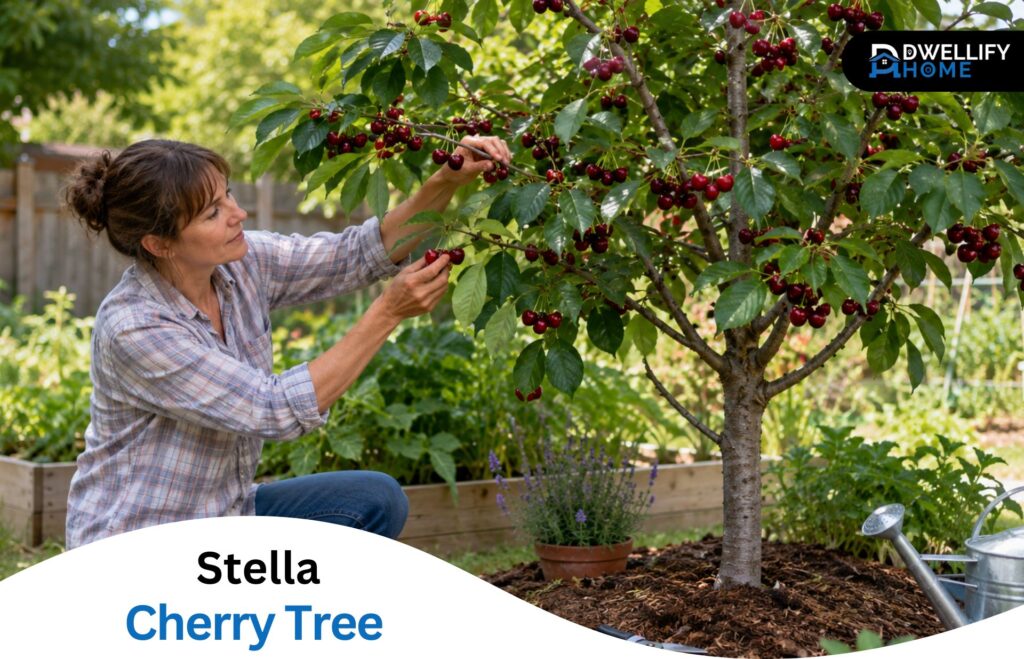
Most people who want cherries from their own yard run into the same problem early on: most sweet cherries need a second compatible tree nearby before they’ll set any fruit. The stella cherry tree is the one that broke that rule. It was the first sweet cherry bred to crop reliably on its own, which is exactly why it shows up in so many small gardens and first orchards.
This guide walks the whole arc, from what Stella actually is and how big it gets to where it grows well, how to plant and care for it, and how to get cherries off it without losing them to birds or bad weather. Whether you’ve got a quarter-acre or a single sunny corner, you’ll know by the end whether this tree belongs in your yard.
Snippet-Ready Definition
A Stella cherry tree is a self-fertile sweet cherry (Prunus avium ‘Stella’) that produces fruit from a single tree, with no pollination partner needed. Gardeners choose it for reliable cherries in small spaces, solving the second-tree problem common to most sweet cherries.
Our Mission
Dwellify Home helps homeowners, renters, and property enthusiasts make practical, well-informed decisions about their homes and gardens. With this guide, our aim is to give you clear, honest, experience-based guidance on growing a Stella cherry tree, so you can decide if it’s right for your space and grow it with confidence.
What Is a Stella Cherry Tree?
Stella (Prunus avium ‘Stella’) is a sweet cherry variety, and a historically important one. It came out of the Summerland Research Station in British Columbia, where breeder Karl Lapins made the cross in the 1950s, and it was named in 1968. Its claim to fame is being the first named self-fertile sweet cherry, the first one that didn’t need a pollination partner to bear fruit.
That breeding mattered well beyond Stella itself. It went on to become a parent of several later self-fertile varieties you’ll still see sold today, including Lapins and Sunburst. It also holds the RHS Award of Garden Merit, a reliable sign that a plant performs for ordinary gardeners and not just in trial plots.
Standard vs. Compact Stella at a glance
| Standard Stella | Compact Stella | |
| Mature size | ~20–30 ft (rootstock-dependent) | ~8–14 ft |
| Best for | Larger yards, higher yield | Small yards, patios, easy netting |
| Self-fertile | Yes | Yes |
Key reasons gardeners choose Stella
- Self-fertile, so one tree alone produces cherries
- Suits small yards through dwarfing rootstocks and the compact form
- Large, sweet, dark cherries good for fresh eating, baking, and freezing
- Ripens early, about a week before Bing
- Pollinates most other sweet cherries in a mixed planting
Is the Stella Cherry Tree Self-Pollinating?
Yes. A stella cherry tree is self-fertile, meaning a single tree will set a full crop with no second cherry anywhere nearby. It carries a self-fertility trait that lets its own pollen fertilize its own flowers. You still need bees to move that pollen between blossoms, but you don’t need another tree to grow cherries.
People use “self-fertile” and “self-pollinating” interchangeably, and for practical purposes they amount to the same thing here: plant one, get fruit. Stella also works as a pollen donor for most other sweet cherries, so it earns its keep in a mixed planting. The one well-documented exception is Bing, which Stella has been found not to reliably pollinate. And while a partner isn’t required, a compatible tree nearby can nudge yields up, which I’ll come back to later.
How Big Does a Stella Cherry Tree Get?
Stella’s mature size depends almost entirely on its rootstock, not the variety name. On a standard, vigorous rootstock it reaches roughly 20 to 30 feet tall and around 15 feet wide. On dwarfing rootstocks it stays much smaller, and either way you can prune it to hold it lower.
This is the part nurseries gloss over, and it causes more disappointment than anything else. The Stella you’re buying is grafted onto a separate root system, and that root system sets the tree’s vigor. Always ask for the rootstock, because “Stella” alone tells you nothing about final stella cherry tree height.
As a rough guide, a vigorous rootstock like Mazzard gives you a full-size tree, while the Gisela series and similar dwarfing stocks bring it down to something you can net and pick from the ground. For most backyards, a semi-dwarf or dwarf rootstock is the smarter buy. Stella cherry tree size is really a choice you make at the nursery, not a fixed number.
Standard vs. Compact Stella: Which One Should You Grow?
Choose standard Stella if you have room and want the biggest harvest; choose a compact stella cherry tree if space is tight. Compact Stella is a naturally smaller form that grows to about half the size, commonly 8 to 14 feet, while keeping the same self-fertility and the same fruit. For a gardener, the short version is simple: it’s Stella in a smaller package.
| Standard Stella | Compact Stella | |
| Mature size | ~20–30 ft (rootstock-dependent) | ~8–14 ft |
| Best for | Larger yards, higher yield | Small yards, patios, easy netting |
| Yield | Higher | Lower but steady |
| Self-fertile | Yes | Yes |
For a typical suburban lot, Compact Stella, or standard Stella on a dwarfing rootstock, usually wins on practicality. You can reach the fruit, throw netting over it, and prune it without dragging out a tall ladder.
What the Fruit Is Like: Size, Flavor, and Uses
The cherries are the payoff, and they’re good ones. Stella produces large, heart-shaped fruit that ripens dark red to nearly black, with a glossy skin and a sweet, well-balanced flavor that isn’t cloying. It tends to ripen about a week ahead of Bing, giving you an early taste of the season.
Like all sweet cherries, the stone clings to the flesh rather than popping free, so these aren’t freestone. For fresh eating that’s a non-issue; for pitting in volume, a cherry pitter earns its place. The fruit is good fresh, baked, canned, frozen, or dried.
On cracking, you’ll see “crack-resistant” claims attached to Stella, and I’d be a little skeptical. Its resistance is about average, and the real trigger is rain right at ripening, when the fruit swells faster than the skin can stretch. No variety is immune to that. If a wet spell lands as your cherries color up, expect some splitting whatever the label promised.
Where to Plant a Stella Cherry Tree
Plant Stella in full sun, in deep, well-drained soil, in a spot that isn’t a frost pocket. It grows best in USDA zones 5 to 8, with some sources stretching to 9. Six hours of direct sun is the minimum, and eight or more gives you sweeter, heavier crops.
Soil is where people go wrong. Sweet cherries hate wet feet, and standing water around the roots invites rot and shortens the tree’s life fast. If your ground stays soggy after rain, plant on a raised mound or find a better spot. Aim for near-neutral soil, somewhere around pH 6 to 7, which most garden soil already sits at.
Be honest about climate, too. Two situations make Stella a fight: hot, humid summers, which push disease pressure hard, and winters that regularly drop below about −15°F, which sits at the edge of what the tree tolerates. For many growers the bigger heartbreak isn’t winter cold at all but a late spring frost catching the blossoms, which can erase a year’s crop in one night. A site with good air drainage, like a gentle slope, lets that cold air slide past.
How to Plant a Stella Cherry Tree
Getting a cherry in the ground correctly matters more than anything you’ll do later. The two decisions that count are the form you buy and how deep you set it.
Bare-Root vs. Potted Trees (and When to Plant Each)
Bare-root trees are dormant, sold without soil, and go in during late winter to early spring while the tree is still asleep. They’re cheaper and establish well, but they want prompt planting. Potted trees can go in through spring and into fall as long as you keep them watered, which gives you more flexibility on timing. For a first tree, either works fine.
Step-by-Step Planting
- Dig a hole as deep as the roots and about twice as wide, so the roots can spread instead of circling.
- Set the tree so the graft union, the knobbly joint low on the trunk, stays a few inches above the soil line. Bury it and the top variety roots over, which cancels out your dwarfing rootstock.
- Backfill with the native soil you dug out. Skip rich amendments; you want roots pushing into the surrounding ground, not staying coddled in a pocket.
- Water deeply to settle the soil and close any air gaps.
- Stake only on windy sites or for top-heavy trees, and remove the stake after the first year.
How to Care for a Stella Cherry Tree
Stella isn’t fussy once established. Good stella cherry tree care comes down to three habits: steady water, a light hand with feeding, and sensible mulching.
Watering
Give an established tree about an inch of water a week, and more during bloom and while the fruit is sizing up. First-year trees need closer attention since they haven’t built a root system yet. One trick worth knowing: ease off watering as the cherries start to color, because a big drink right before harvest is a common cause of splitting.
Fertilizing
Feed lightly in early spring with a low-nitrogen fertilizer, and stop by midsummer. Eager gardeners overdo this. Too much nitrogen pushes soft, leafy growth at the expense of fruit, and that lush growth is exactly what aphids and disease move into. A modest spring feeding is plenty, and a tree already growing well may need none.
Mulching
A ring of mulch holds moisture and keeps weeds down, which young trees appreciate. Keep it pulled back a few inches from the trunk, though. Mulch piled against the bark stays damp and gives mice and voles a covered spot to gnaw the trunk over winter.
When and How to Prune a Stella Cherry Tree
Prune sweet cherries like Stella in summer, right after you harvest, not in the dormant winter months. Summer cuts heal faster and sharply lower the risk of silver leaf and bacterial canker, two serious diseases that enter through fresh pruning wounds during cool, wet weather.
This is where the common “prune in late winter” advice steers cherry growers wrong. It’s fine for apples but risky for cherries. The pathogens behind silver leaf and canker are active and splashing around in wet late-winter conditions, and a new cut is an open door. Dry summer weather after harvest closes that door.
For shape, train a young tree to an open center, like a vase or bowl, or to a modified central leader. Both keep the canopy open so light and air reach the fruit. Each year, remove what’s dead, crossing, rubbing, or growing straight into the middle. Keep cuts modest, because cherries neither need nor want hard pruning. Less is usually more.
Do You Need a Second Tree? Pollination Partners Explained
No. Stella fruits perfectly well on its own, which is the whole reason to grow it. That said, a compatible second sweet cherry blooming at the same time can increase the size of your crop, since more pollen sources mean more flowers get fertilized. Treat it as a bonus, not a requirement.
If you have the room and want maximum yield, a partner like Lapins, Sunburst, or Rainier makes a good neighbor. Just remember the Bing exception: Stella isn’t a dependable pollinator for Bing, so don’t count on that pairing.
Here’s the detail most people skip. Pollination weather matters more than the partner tree. Bees don’t fly much in cold, wind, or rain, and if those conditions hit during the few days your cherry is in bloom, fruit set suffers no matter how many trees you’ve planted. You can’t control the weather, but knowing it’s the real bottleneck saves you from blaming the tree.
Common Stella Cherry Tree Problems and How to Fix Them
Most trouble with Stella falls into a handful of familiar patterns. Here’s how to read them quickly.
- No fruit. Usually the tree is simply too young, since three to five years is normal before real cropping. Other causes are a spring frost that killed the blossoms, too much nitrogen pushing leaves over fruit, or cold, wet weather keeping bees grounded during bloom.
- Cracked or split cherries. Almost always rain at ripening. The fruit takes up water fast and the skin can’t keep pace. Easing off irrigation near harvest helps; the rain itself you can’t control.
- Curled, distorted leaves with sticky residue. That’s black cherry aphid. Look for clusters on new growth and the shiny honeydew they leave behind.
- Maggots inside ripe fruit. Cherry fruit fly or spotted wing drosophila. Both lay eggs in the fruit, and the larvae you find at harvest hatched weeks earlier.
Pests and Diseases to Watch For (and How to Manage Them)
Cherries attract their share of pests, but a few habits keep most of them in check. The aim is prevention and timing, not spraying on a calendar.
On the insect side, watch for black cherry aphid, cherry fruit fly, and spotted wing drosophila. Aphids respond well to a dormant-season oil spray and to the ladybugs and lacewings that hunt them. For the fruit flies, hang monitoring traps so you know when they arrive, clean up fallen fruit so they can’t breed in it, and treat as the fruit colors if pressure is high. And don’t forget birds, the single biggest threat to a ripe crop. Drape netting over the tree as the cherries turn and you’ll actually get to eat them.
For diseases, the main ones are brown rot, bacterial canker, silver leaf, and cherry leaf spot. Most are managed the same sensible way: prune in summer to keep wounds healthy, clear away dropped leaves and shriveled mummified fruit, and don’t let the canopy crowd. A copper spray at leaf fall and again at bud break helps hold canker and leaf spot down. Honestly, good airflow and clean ground do more than any single spray.
What to Expect: Growth Timeline, Yield, and Lifespan
Set your expectations early and you’ll enjoy the tree more. A new stella cherry tree spends its first couple of years settling in and building structure. That’s normal, and it isn’t the time to expect cherries.
Roughly, the arc looks like this: years one and two are establishment and light training, the first real fruit usually appears somewhere in years three to five, and the tree hits its stride after that. A dwarf tree fruits sooner and gives a modest, manageable crop, while a full-size tree makes you wait a little longer but produces far more, the difference between filling a few baskets and filling many.
On lifespan, stay realistic. Sweet cherries aren’t the longest-lived fruit trees. Many give good years across a couple of decades, sometimes more in a dry climate with low disease pressure, sometimes less where canker is a constant problem. You’ll get plenty of harvests from a healthy tree, but don’t expect a cherry to outlive an oak.
Harvesting and Storing Your Stella Cherries
Pick Stella cherries when they’re fully colored, deep red to near-black, firm with a slight give, and sweet when you taste one. Cherries don’t ripen further once picked, so taste before you start filling a bucket. Snip or pull them with the stems attached to keep the fruit from bruising and to help them last.
Time your picking against the birds, who will happily strip a tree the day before you’d planned to harvest. If you netted at color change, you’re in good shape. Fresh cherries keep about one to two weeks in the fridge, unwashed until you’re ready to eat them. For anything longer, pit them, freeze them loose on a tray, then bag them, ready for pies, jam, or a smoothie.
Frequently Asked Questions
How fast does a Stella cherry tree grow?
It’s a moderate grower, putting on noticeable height each year once established. The rootstock sets the pace, with dwarfing rootstocks growing slower and staying smaller.
How long until it produces cherries?
Usually three to five years from planting. Trees on dwarfing rootstocks often fruit a year or two sooner than full-size ones.
Does it really fruit without a second tree?
Yes. Stella is self-fertile, so one tree crops on its own. A pollination partner can raise the yield but isn’t needed.
How tall does it get?
Anywhere from about 8 feet on a compact form to 20 to 30 feet on a standard rootstock, and you can prune it lower.
When do the cherries ripen?
Early in the cherry season, often around early summer and roughly a week before Bing grown in the same area.
Are Stella cherry trees good?
Yes, Stella is a dependable choice for home gardens. It fruits on its own without a partner tree, fits a range of yard sizes thanks to rootstock options, and produces large, sweet, dark cherries. It’s especially well suited to first-time growers and smaller spaces with full sun and good drainage.
How big will a Stella cherry tree grow?
It depends almost entirely on the rootstock. On a standard, vigorous rootstock, Stella reaches roughly 20 to 30 feet tall and about 15 feet wide. On dwarfing rootstocks, or as Compact Stella, it stays closer to 8 to 14 feet, and you can prune any of them lower.
How long does it take a Stella cherry tree to produce fruit?
Usually three to five years from planting. Trees grown on dwarfing rootstocks often begin fruiting a year or two sooner than full-size trees. The first couple of years go into establishment and structure, so don’t expect cherries until the tree has settled in and matured.
Where is the best place to plant a Stella cherry tree?
Plant it in full sun, ideally six to eight hours daily, in deep, well-drained soil that never stays soggy. Avoid frost pockets, since late spring frosts can destroy blossoms. A gentle slope with good air drainage works well, and near-neutral soil around pH 6 to 7 suits it best.
Final Thoughts
The stella cherry tree earns its popularity honestly. It fruits on its own, fits a range of yard sizes thanks to rootstock choice and the compact form, and rewards a little sensible care with sweet, dark cherries year after year. It suits first-time growers and tight spaces especially well, though it’s a solid pick for anyone with full sun and decent drainage.
Get the planting depth right, prune in summer, net against the birds, and keep your expectations grounded. Do that, and this is about as forgiving an entry into homegrown cherries as you’ll find.
Disclaimer: This content is for general informational purposes only. Growing conditions, climate, soil, and individual circumstances vary, so your results may differ from the general guidance described here.