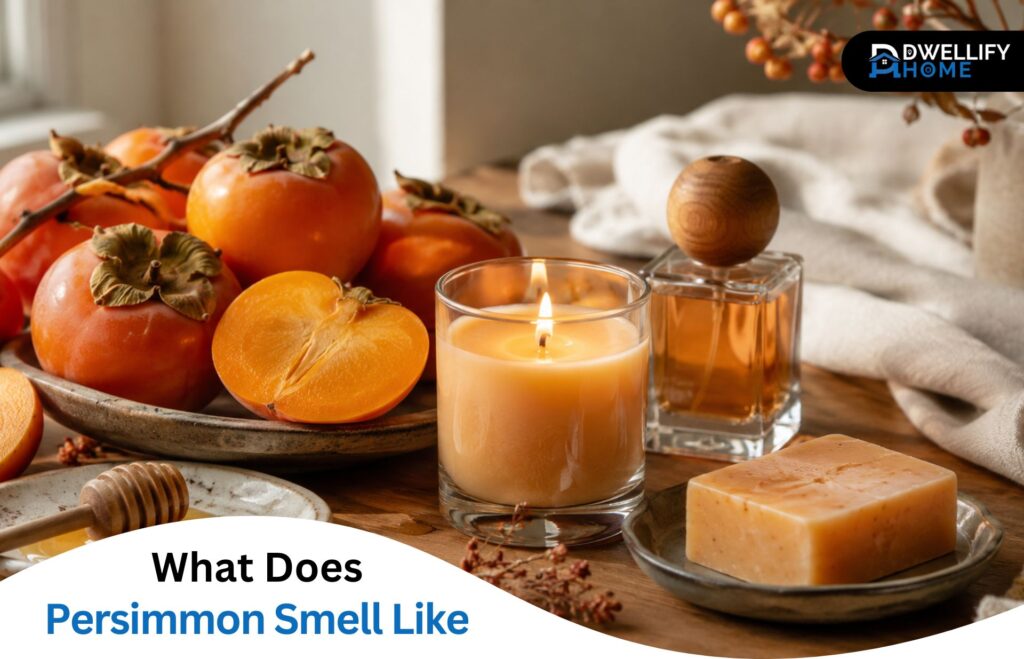
Cut a ripe persimmon open and hold it close, and the first thing that surprises most people is how quiet the smell is. There’s a soft, honeyed sweetness, a little apricot, a little melon, but it doesn’t fill the room the way a ripe peach or a cut mango does. That gentleness is the whole story of this fruit.
It also explains a lot of confusion. The word “persimmon” shows up on candles, perfumes, soaps, and shampoos, and in almost every one of those products it smells nothing like the fruit you’d pick up at the market. So what does persimmon smell like, really? The honest answer depends entirely on the form it takes.
This guide walks through the fresh fruit first — ripe, unripe, and across the main varieties — then follows the scent into the kitchen, the candle jar, the perfume bottle, and the bathroom shelf, so you know what to expect before you buy or bite into anything.
Snippet-Ready Definition
A ripe persimmon smells soft, sweet, and honeyed, with hints of apricot, mango, and melon. The aroma is delicate, so it’s mild up close rather than strong. Cooked, dried, or in candles and perfume, persimmon turns warmer and spicier.
Our Mission
Dwellify Home exists to help homeowners, renters, and property enthusiasts make confident, practical choices for their living spaces. With this guide, that means cutting through the confusion around persimmon scent, so you know exactly what to expect from the fruit and from the candles, perfumes, and home products that carry its name.
What persimmon smells like, by form (quick reference)
- Fresh ripe fruit: soft, honeyed, gentle apricot–mango–melon; delicate and low-key.
- Unripe fruit: almost no scent; the standout is a dry, puckering tannin feel, not a smell.
- Cooked or dried (hoshigaki): warmer and sweeter, with cinnamon, clove, and allspice notes.
- Candles and perfume: a built-up, bolder sweetness, often blended with spice, vanilla, or peach.
- Soap and shampoo (kakishibu): clean and light, sometimes near fragrance-free; made to deodorize, not to smell fruity.
What Does a Ripe Persimmon Smell Like?
A ripe persimmon smells soft, sweet, and honeyed, with gentle hints of apricot, ripe mango, and melon and a faint floral edge. The aroma is delicate rather than bold, so you usually have to bring the fruit right up to your nose. It leans warm and fruity throughout, never sharp, tart, or citrusy.
I’ve smelled a lot of fruit at close range, and persimmon sits firmly in the subtle camp. A bowl of them on the counter won’t perfume your kitchen. You really notice the scent at the moment you slice one open or take the first bite, when the soft flesh releases that quiet honey-and-stone-fruit note.
That’s worth knowing, because plenty of people pick one up, sniff it, smell almost nothing, and assume something’s wrong. Nothing is wrong. A faint ripe persimmon smell is normal for the fruit. The flavor is far more present than the aroma, which is the opposite of how something like a pineapple behaves.
Does an Unripe Persimmon Have a Smell?
An unripe persimmon has almost no smell, at most a faint green or slightly vegetal note. What you notice instead is texture. Bite into an underripe astringent one and the tannins grip your mouth with a dry, chalky, puckering feeling. Real aroma only arrives once the fruit softens and ripens properly.
This is where the famous persimmon “mistake” comes from. Astringent varieties are loaded with soluble tannins when firm, and those tannins bind to the proteins in your saliva, which is what creates that fuzzy, cotton-mouth sensation. It isn’t a smell at all — it’s a feeling.
As the fruit ripens, those tannins change form and stop being soluble, the astringency fades, and the sweetness and gentle aroma finally come through. So if your persimmon seems scentless and tastes harsh, it simply isn’t ready yet. Patience fixes both problems at once.
How Persimmon Smell Differs by Variety
Not all persimmons smell or look the same, and the differences are easy to spot once you know what you’re holding. Aroma intensity tracks two things: how ripe the fruit is and which type it is. Here’s how the common ones compare.
Fuyu (the firm, tomato-shaped one)
Fuyu is squat and flat-bottomed with glossy orange skin, and it’s the variety most often mistaken for a tomato. You eat it firm and crisp, and its scent is the gentlest of the bunch — a clean, light honey note with a touch of apricot. If a persimmon ever smells like “barely anything,” it’s usually a Fuyu.
Hachiya (the soft, acorn-shaped one)
Hachiya is taller and pointed, shaped a bit like an acorn, and it must be ripened until it’s jelly-soft before eating. At that peak stage it’s the most aromatic of the everyday varieties, giving off a deeper honeyed scent with apricot, date, and a faint vanilla warmth. Eaten too early, it’s punishingly astringent.
American persimmon (Diospyros virginiana)
The native American persimmon is small, often just an inch or two across, and golden to reddish-orange. When fully ripe, frequently after the first frost, it punches well above its size — a rich, caramel-like sweetness with a spicy edge that’s more intense per bite than the larger Asian types.
Other varieties worth knowing
A few more turn up at specialty markets. Saijo is very sweet and astringent until soft. Jiro is firm and mild, much like a Fuyu. Chocolate persimmon has brown-flecked flesh and a subtly richer flavor. Cinnamon persimmon carries a faint spiced note. None are dramatic in scent, but each shifts the sweetness a little.
Fresh, Cooked, and Dried: Where the Warm Autumn-Spice Smell Comes From
Here’s the correction I find myself making most often. People expect a fresh persimmon to smell like cinnamon, nutmeg, and pumpkin pie, then feel let down when it doesn’t. Those warm, spiced descriptors don’t really belong to the raw fruit. They belong to persimmon once it’s cooked, dried, or rebuilt as a fragrance.
Bake persimmon into a pudding or a quick bread and the sugars caramelize, the recipe usually adds actual spices, and suddenly you get that cozy autumn aroma. Dry it and the effect is even stronger. Hoshigaki, the traditional Japanese dried persimmon, develops a genuinely warm, faintly floral nose with hints of cinnamon, clove, and allspice as its sugars concentrate.
One thing about hoshigaki throws people off: the white, powdery coating on the surface. That isn’t mold or anything added — it’s the fruit’s own natural sugar crystallizing as it dries. This concentrated, spiced version of persimmon is the bridge between the quiet fresh fruit and the bolder scent you meet in candles and perfume.
What Does Persimmon Smell Like as a Fragrance Note?
In perfumery, persimmon is mostly a constructed or “fantasy” note. The fresh fruit yields virtually no usable essential oil, so perfumers build its scent from aroma materials and fruity facets, then round it out with warmth. That’s why persimmon in a bottle smells bolder, sweeter, and spicier than the fruit ever does on its own.
When I’m working a persimmon accord on the bench, I’m not extracting anything from the fruit — there’s nothing to extract. I’m assembling an impression: a juicy, slightly jammy fruitiness, lifted with a fresh facet so it doesn’t read as syrup, then anchored with something soft and warm underneath.
That freedom is exactly why no two “persimmon” products smell alike. The persimmon scent notes a brand chooses to emphasize are a creative decision, not a fixed fact. Understanding that one point makes every candle, perfume, and body product label far easier to read.
Persimmon in Candles, Diffusers, and Home Scents
A persimmon candle usually smells warm, sweet, and autumnal rather than like fresh fruit. Persimmon is almost always blended, not used alone — often with brown sugar, cinnamon, clove, nutmeg, and vanilla for a cozy effect, or with peach, nectarine, and light florals for something brighter. Expect comfort and sweetness, not tartness.
You can see this in how brands frame their blends. Yankee Candle tends to pair persimmon with warm bakery and spice notes for that fireside, fall feeling. Voluspa’s well-known Saijo Persimmon leans the other way, surrounding the fruit with nectarine and peach for something fresher and more polished. Both are “persimmon,” and both smell quite different.
For a diffuser or room scent, the same logic holds: you’re buying the blend, not the fruit. If you want something cozy for autumn, look for persimmon listed alongside spice and vanilla. If you want it lighter and year-round, look for persimmon paired with peach, citrus, or florals. The supporting notes tell you far more than the word persimmon alone.
What Persimmon Smells Like in Perfume
In perfume, persimmon usually appears as a juicy, lightly sweet note in the top-to-heart range that adds a fresh, fruity glow, then melts into warmer amber, woody, or vanilla bases. It’s rarely the headline — more a bridge between a bright opening and a cozy drydown. Common partners include peach, quince, rose, and sandalwood.
A few widely sold fragrances show the range, and I mention them as examples rather than recommendations. Calvin Klein’s Euphoria uses persimmon in its opening for a plump, exotic fruitiness. Jo Malone’s Wild Bluebell folds it into a soft floral. Demeter’s Persimmon takes the literal route and tries to capture the fruit on its own.
Because persimmon is a built note, its job in a persimmon perfume is usually mood and texture rather than realism. It rounds sharp edges and adds a sense of ripeness. If you love it in one scent and dislike it in another, that’s normal — you’re reacting to the company it keeps as much as the note itself.
Why Persimmon Soap and Shampoo Don’t Smell Like the Fruit
Most persimmon soap and shampoo barely smell of fruit because they’re built on persimmon-tannin chemistry, not fragrance. The Japanese tradition uses kakishibu, fermented juice from unripe astringent persimmons, to fight odor — especially nonenal, the compound linked to age-related body smell, known in Japan as kareishu. These products are made to deodorize and smell clean, not fruity.
Persimmon soap (kakishibu / nonenal)
If you’re hunting for the best persimmon soap expecting a fruity bar, adjust your expectations first. Persimmon-tannin soap is typically described as clean and light, often like fresh linen with a faint herbal or citrus touch, and sometimes nearly fragrance-free. Its appeal is the deodorizing action of the tannins, not a perfume-like scent.
Persimmon shampoo
Persimmon shampoo is a real category, largely from Japanese brands, aimed at scalp odor and excess oil. Like the soap, what does persimmon soap smell like and what persimmon shampoo smells like share the same answer: mild and refreshing, occasionally herbal, not like biting into the fruit. You’re buying function, with scent kept deliberately low-key.
Do Persimmon Leaves Smell?
Persimmon leaves aren’t strongly scented for most people, but some Asian kaki trees — Jiro often gets the blame — can give off a foul, decay-like smell from crushed leaves or cut branches. A few people detect it strongly while others standing right there notice nothing at all. Dried persimmon leaves, by contrast, make a clean, mild tea.
This catches gardeners off guard. More than once, someone convinced an animal died near their tree has traced the smell back to the persimmon’s own foliage after pruning. It seems to vary by both cultivar and the person’s own sensitivity, which is why two people can disagree completely about whether a tree smells bad.
The pleasant side is worth knowing too. Persimmon leaf tea, called kakinoha-cha, is clean, mildly earthy, and faintly sweet, with no harshness. In parts of Japan the leaves are also used to wrap sushi, lending a subtle aroma while helping preserve the fish. Same plant, very different experiences.
What Does Persimmon Taste Like, and Does It Taste Like Tomato?
Ripe persimmon tastes sweet and low in acid — think honey, mango, apricot, and brown sugar — and nothing like a tomato. The tomato comparison is purely about looks, since a firm Fuyu shares that squat, round, flat-bottomed shape. Texture ranges from crisp like a pear to soft, silky, and jammy when fully ripe.
Smell and taste are tied together here, since most of what we call flavor is actually aroma. The gentle honeyed scent of a ripe persimmon is exactly what carries through as you eat it, just amplified. There’s no savory, acidic, or vegetal quality — so persimmon taste like tomato is a myth built entirely on appearance.
Dried persimmon takes that same flavor and concentrates it. Once moisture leaves and the sugars intensify, what does dried persimmon taste like becomes easy to answer: dense, chewy, and intensely sweet, closer to a date or dried apricot with a caramel depth. It’s the fruit at its richest.
Why Your Persimmon Has No Smell
If your persimmon has no smell, it’s usually underripe, too cold, or simply a naturally subtle variety. Aroma develops as the fruit softens, and a firm Fuyu pulled straight from the fridge will barely register. Let it sit at room temperature until it gives slightly, and the scent and sweetness come forward together.
Cold is the most overlooked culprit. Chilling suppresses the release of a fruit’s aromatic compounds, so a refrigerated persimmon smells muted no matter how ripe it is. Take it out an hour or two ahead and let it warm up before you judge it.
To ripen one, leave it at room temperature, and to speed things up, set it near bananas or apples, which give off ripening gas that helps along the way. Give a firm Hachiya several days until it’s truly soft. And remember that Fuyu is gentle by nature, so don’t expect a strong aroma even at its peak.
The Many Sides of Persimmon Scent
So what does persimmon smell like? It depends entirely on the form. As fresh fruit, it’s a quiet, honeyed whisper of apricot and melon. Cooked or dried, it turns warm and spiced. In candles and perfume, it becomes a richer, built-up sweetness. And in tannin soaps and shampoos, it’s clean and nearly scentless.
Once you stop expecting one fixed smell and start reading the form and the supporting notes, persimmon makes perfect sense. Pick the version that matches what you actually want, and it rarely disappoints.
Frequently Asked Questions
What does a persimmon smell like in one sentence?
A ripe persimmon smells softly sweet and honeyed, with gentle apricot, mango, and melon notes and a delicate, low-key intensity you have to lean in to catch.
Do persimmons smell like pumpkin or cinnamon?
Not the fresh fruit. Those warm spice notes come from cooked persimmon, dried persimmon, and fragrance blends, where cinnamon and nutmeg are either added or naturally concentrated.
What does persimmon soap smell like?
Clean and light, often like fresh linen with a faint herbal or citrus edge, and sometimes nearly fragrance-free. It’s designed to deodorize using persimmon tannins, not to smell like fruit.
What does dried persimmon smell like?
Warmer and richer than the fresh fruit — sweet and faintly floral with hints of cinnamon, clove, and allspice. The white surface dusting is crystallized natural sugar, not mold.
Why does my persimmon have no scent?
It’s most likely underripe or cold. Let it sit at room temperature until it softens slightly, and keep in mind that firm varieties like Fuyu are naturally subtle.
Does persimmon taste like tomato?
No. It looks like a tomato but tastes sweet and low in acid, closer to honey, mango, and apricot. There’s nothing savory or sour about it.
Do persimmons have a smell?
Yes, but a gentle one. A fully ripe persimmon gives off a soft, sweet, honeyed aroma with light apricot and melon notes, usually noticeable only up close. Unripe persimmons have almost no scent at all. Persimmon is simply one of the more subtly fragranced fruits, so a faint smell is completely normal.
Is persimmon good for body odor?
Persimmon tannin, known in Japan as kakishibu, is widely used in deodorizing soaps and shampoos. It’s valued for helping neutralize odor compounds, especially nonenal, which is linked to age-related body smell. It’s a traditional, plant-based approach rather than a guaranteed fix, so results vary from person to person.
What is the old wives’ tale about persimmons?
The best-known one is a winter-weather prediction. You cut open a seed from a ripe, locally grown persimmon and read the shape inside: a spoon means heavy, wet snow, a fork means a mild winter, and a knife means cold, cutting winds. It’s folklore and fun, not a reliable forecast.
What is the scent of persimmon?
The scent of a ripe persimmon is soft, sweet, and honeyed, with hints of apricot, mango, and melon and a faint floral edge. It’s delicate rather than punchy. In cooked, dried, candle, and perfume forms, persimmon shifts warmer and spicier, picking up cinnamon, vanilla, and brown-sugar notes that the fresh fruit doesn’t have.
Disclaimer: This article is for general informational purposes only. Scent is personal, and individual products, varieties, and preferences will vary, so treat this as a helpful starting point rather than a guarantee of how any specific persimmon or product will smell to you.