The kitchen is the heart of the home, but it is also ground zero for some of the most frustrating household maintenance issues. A dripping faucet or a suddenly sputtering sink can quickly disrupt your daily routine. According to the EPA, the average family wastes approximately 9,400 gallons of water annually from minor household leaks. Fortunately, you do not need to be a master plumber to tackle many of these everyday inconveniences. In fact, the design of modern fixtures has made basic DIY repairs much more accessible for the average homeowner. The median DIY plumbing repair saves a homeowner approximately $160 per job compared to calling a professional. By addressing small problems early, you can save money, conserve water, and keep your kitchen running smoothly.
Diagnosing Discolored or Cloudy Water
Turning on the sink to fill a glass of water only to find it looking milky can be alarming. The 2025 Water Quality Association Consumer Insights Report revealed that 58 percent of American households are concerned about their tap water safety, yet only 18 percent feel confident understanding its contents. Fortunately, if you notice that water is cloudy from faucet fixtures, the cause is often completely harmless.
In most cases, milky water is simply the result of trapped air bubbles in the plumbing lines. You can verify this by pouring a glass of water and setting it on the counter. If the water clears slowly from the bottom upward, trapped air is the culprit. This is especially common during winter months because cold outdoor temperatures increase the amount of air that can be dissolved in a municipal water supply. If the cloudiness only appears when you turn on the hot water, it could be a sign of sediment buildup in the water heater tank or just the natural result of heated water rapidly releasing dissolved gases as its temperature rises.
Putting an End to the Dripping Faucet
A faucet that refuses to stop dripping is more than just a nuisance. It is a steady drain on your utility bill and an annoyance that can keep you awake at night. Fixing easily corrected plumbing problems, like a worn toilet flapper or a dripping kitchen sink, can reduce a homeowner’s water bill by about 10 percent. The EPA WaterSense program even sponsors an annual Fix a Leak Week campaign to educate households on reducing this domestic water waste.
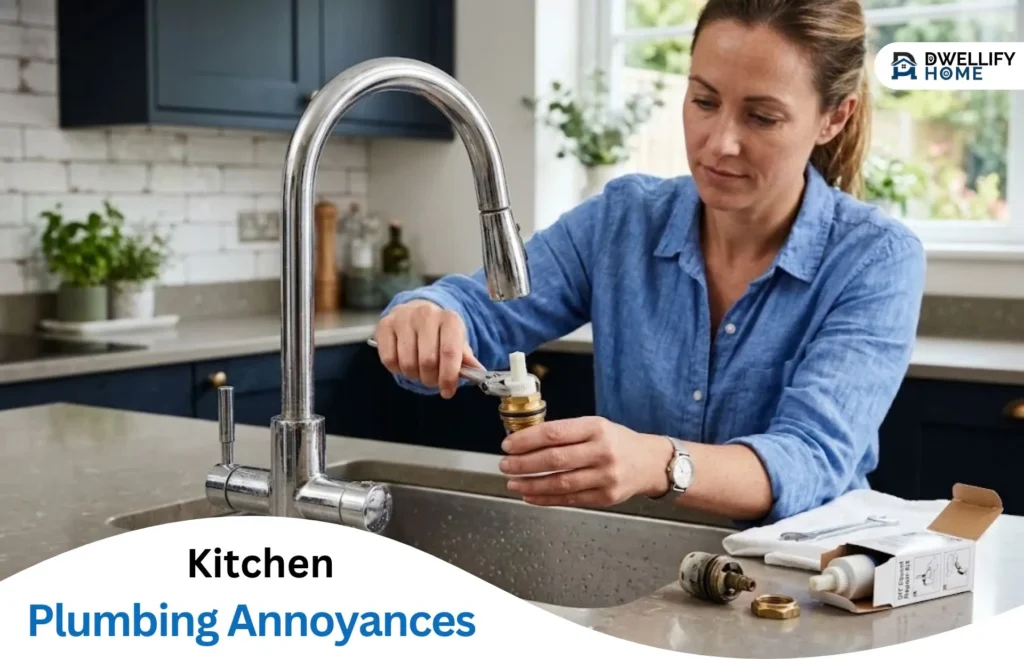
Most modern kitchen sinks use a cartridge system. Routine, low-cost DIY fixes like replacing a kitchen faucet cartridge typically cost $25 to $40 in parts. This represents over a 70 percent savings compared to standard professional service bills. Simply turn off the water valves under the sink, unscrew the handle with an Allen wrench or a standard screwdriver, and swap out the old cartridge for a matching replacement. Be sure to bring the old cartridge to the hardware store to guarantee a perfect match.
Resolving Low Water Pressure and Chalky Residue
If your sink takes forever to fill a pot or you notice a weak stream, you might be dealing with a clogged aerator. The small screen at the tip of your faucet is designed to catch debris and introduce air into the water stream to prevent splashing. Over time, persistent hard water, which contains high levels of dissolved calcium and magnesium, can leave chalky spots and mineral deposits that block water flow entirely.
Unscrewing the aerator and soaking it in white vinegar for a few hours is a simple way to dissolve these minerals. If the aerator is stuck, wrap a rag around it before using pliers to avoid scratching the finish. Adding a new, clean plastic aerator or installing a pressure-reducing valve on your main line are practical, low-cost ways to improve flow and minimize trapped air bubbles in your home plumbing.
Preventative Maintenance for Kitchen Plumbing
The best way to handle kitchen plumbing annoyances is to stop them before they start. Preventative plumbing management is becoming a popular consumer strategy to avoid sudden emergency repair bills. By incorporating a few simple habits into your routine, you can protect your home and gain peace of mind.
Here are a few smart strategies to adopt:
- Conduct monthly visual checks: Look under your kitchen sink once a month to spot damp spots, corrosion, or minor drips before they turn into major leaks.
- Install leak detectors: The adoption of smart, internet-connected water leak detectors is rising rapidly. These devices allow homeowners to receive real-time smartphone alerts and automatically shut off water flow if a problem is detected.
- Choose standard fixtures: When upgrading your kitchen, select fixtures with standard, easily replaceable parts so that future maintenance remains inexpensive and straightforward.
- Monitor water quality: Over half of American households reported using at least one home water treatment product in 2025. Adding a reliable point-of-use filter can help manage hard water minerals that degrade plumbing fixtures over time, ensuring your appliances last longer.
Taking a proactive approach to your kitchen plumbing does not require specialized training. With a bit of basic troubleshooting and some simple DIY fixes, you can easily handle everyday annoyances. From clearing out mineral buildup to swapping a worn cartridge, a little weekend maintenance goes a long way in keeping your home in perfect working order.
Before you leave, please note that some links in this article may be affiliate or sponsored links. Dwellifyhome.com may earn a small commission from qualifying purchases, helping us continue providing informative articles and resources.