
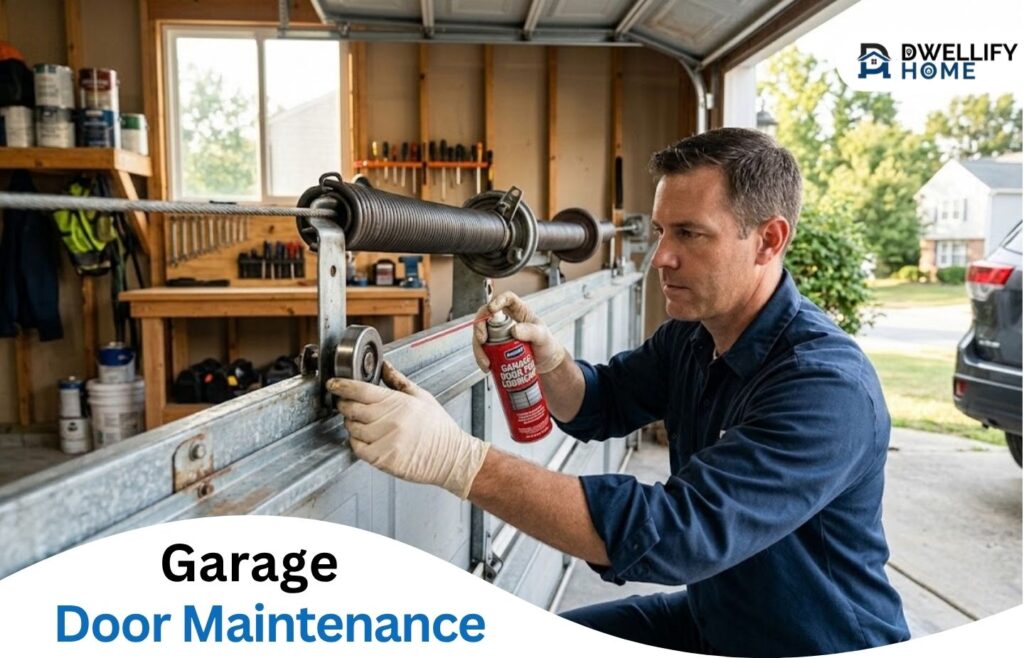
Living in Easton, MD, brings unique challenges for our homes, especially our garage doors. High humidity, corrosive salt air, and significant temperature swings in the Mid-Atlantic severely impact components like springs and openers. Without proper attention, these factors lead to premature wear, rust, and unexpected breakdowns, compromising both convenience and security. Therefore, understanding these specific pressures is vital for keeping your garage door system reliable, safe, and quiet for years to come. Regular garage door maintenance in Easton, MD, isn’t just about reacting to problems; it’s a proactive approach to prevent costly repairs and extend the life of your investment.
This comprehensive guide will walk you through the environmental factors affecting your door, outline essential DIY and professional maintenance practices, and help you identify when it’s time for expert garage door repair.
Easton’s unique geographical position on the Eastern Shore, nestled near the Chesapeake Bay, means our garage doors face a constant battle against the elements. The pervasive humidity, often intensified by proximity to saltwater, creates an environment where metal components are particularly vulnerable. This leads to accelerated rust accumulation and metal oxidation on springs, tracks, hinges, and even the internal workings of garage door openers. These environmental stressors aren’t just cosmetic; they significantly reduce the lifespan and operational efficiency of your entire overhead door system.
Beyond the constant moisture, the Mid-Atlantic region is known for its dramatic seasonal shifts. From scorching, humid summers to freezing winters, garage doors endure a wide range of temperatures. These fluctuations contribute to thermal expansion and contraction of materials, placing additional strain on mechanical and electronic components alike. Understanding these challenges is the first step in developing an effective maintenance strategy for your Easton home or business.
Combatting Coastal Humidity and Salt Air Corrosion
The combination of high humidity and salt air is a formidable adversary for any metal structure, and garage doors are no exception. This corrosive reality can double the rate of rust formation on unprotected steel, leading to weakened springs, stiff rollers, and compromised tracks. Over time, this degradation can cause your garage door to become noisy, unreliable, and eventually fail prematurely.
To effectively combat this, we recommend focusing on corrosion resistance. Upgrading to galvanized or powder-coated hardware is often the most effective way to ensure long-term durability in Easton’s climate. Galvanization involves applying a protective zinc coating, while powder coating provides a robust, durable finish that resists chipping and corrosion. These specialized finishes act as a barrier against moisture and salt, significantly extending the life of hinges, rollers, and other critical components. Regular application of protective lubricants specifically designed for garage door hardware can also create an additional layer of defense, ensuring smooth operation and preventing rust from taking hold. This proactive approach helps maintain hinge durability and prevents costly replacements down the line.
Managing Mid-Atlantic Thermal Expansion and Weather Shifts
The Mid-Atlantic region’s notorious temperature swings, from humid 90-degree summers to frigid winters, pose distinct challenges for garage door systems. Materials expand and contract with heat and cold, a phenomenon known as thermal expansion. This constant movement can affect everything from the structural integrity of the door panels to the delicate electronics of your opener.
For instance, extreme heat can cause internal circuitry within garage door openers to expand and overheat, potentially leading to intermittent signal failures or complete operational breakdowns. Conversely, cold temperatures can thicken lubricants, increasing the load on the motor and causing sluggish operation. These stresses can also impact sensor calibration, leading to safety sensors becoming misaligned and preventing the door from closing properly.
Preventative measures are crucial here. Ensuring your opener’s electronics are protected from direct sunlight where possible, and regularly checking and recalibrating safety sensors, especially before winter, can mitigate these issues. Using lubricants that are effective across a wide temperature range is also vital. By addressing the effects of thermal expansion and contraction, we can prevent undue motor strain and maintain consistent, reliable operation throughout the year.
Comprehensive Garage Door Maintenance Checklist
A well-maintained garage door is not just about convenience; it’s about safety, security, and energy efficiency. Regular inspection and preventative care are paramount to ensuring the operational longevity of your system. Most garage door failures, as industry facts reveal, are caused by worn springs or a lack of lubrication. Furthermore, safety inspections can prevent up to 30% of accidental injuries related to garage door operation. As of September 2026, incorporating a routine maintenance protocol into your home care schedule is an essential practice for Easton homeowners.
Routine DIY Garage Door Maintenance Procedures
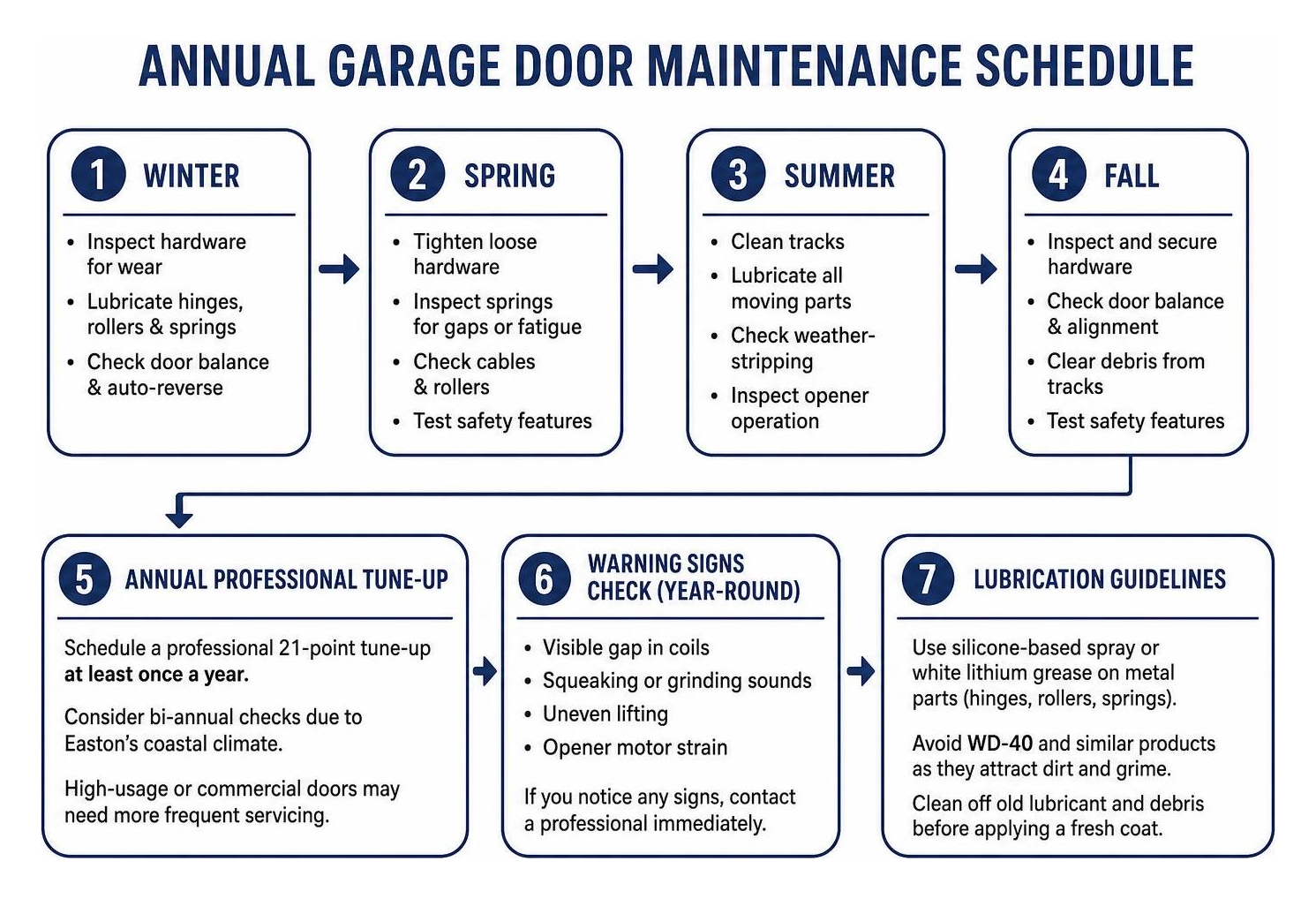
While professional tune-ups are indispensable, there are several routine DIY maintenance procedures you can perform to keep your garage door in top shape between service appointments. These simple steps can significantly extend the life of your door and prevent minor issues from escalating into major repairs.
- Visual Inspection: Start by visually inspecting all components. Look for signs of wear and tear, rust, loose bolts, or frayed cables. Pay close attention to the springs, rollers, and hinges.
- Lubrication: This is perhaps the most critical DIY task. Using a silicone-based spray or white lithium grease, lubricate all moving metal parts, including hinges, rollers (not the wheels themselves, but the bearings), and springs. Avoid using products like WD-40, which can attract dirt and actually hinder performance. Before applying lubricant, clean off any accumulated dust and debris from these components.
- Roller Cleaning: Wipe down the rollers to remove dirt and grime. Ensure they move freely within the tracks.
- Weatherstripping and Bottom Seal Care: Inspect the weatherstripping around the perimeter of the door and the rubber bottom seal. Look for cracks, tears, or signs of deterioration. These seals are crucial for preventing moisture, drafts, and pests from entering your garage. Clean them periodically and replace them if they are damaged to maintain energy efficiency and protection against the elements.
- Track Check: Ensure the tracks are clean and free of obstructions. Gently wipe them down with a damp cloth. Never apply lubricant to the tracks themselves, as this can cause rollers to slip.
By dedicating a little time twice a year to these tasks, you can significantly contribute to the smooth and quiet operation of your garage door.
Professional 21-Point Inspection and Safety Testing
While DIY efforts are valuable, a comprehensive professional tune-up is essential, especially in Easton’s challenging climate. A professional 21-point tune-up goes far beyond what a homeowner can typically assess, covering both door and opener safety inspections, lubrication, and preventative care. We generally recommend scheduling a professional tune-up at least once a year, or even twice a year for homes near the coast or with high-usage doors, preferably before winter and after heavy summer use.
Here’s a comparison of what a homeowner can typically do versus what a professional 21-point inspection includes:
DIY Maintenance Tasks vs. Professional 21-Point Inspection Steps:
DIY Tasks:
- Visual inspection for obvious wear.
- Lubrication of hinges, rollers (bearings), and springs with appropriate spray.
- Cleaning of rollers and tracks.
- Inspection and cleaning of weatherstripping and bottom seal.
- Testing photo-eye sensors for basic functionality.
Professional 21-Point Inspection Steps:
- Balance Test: Checking the door’s balance to ensure springs are properly tensioned. A well-balanced door should stay put when manually lifted halfway.
- Auto-Reverse Test: Verifying that the door reverses automatically when it encounters an obstruction, both using the “eye” sensors and by placing an object in its path.
- Photo-Eye Alignment: Precisely aligning the safety sensors to ensure they detect obstructions correctly.
- Cable Integrity Check: Thoroughly inspecting lifting cables for fraying, wear, or damage, which can indicate imminent failure.
- Spring Tension Assessment: Adjusting spring tension for optimal door balance and longevity, crucial for Easton’s heavier, older doors.
- Track Alignment: Checking tracks for proper alignment, tightness, and any signs of damage or foundation settling.
- Roller and Hinge Inspection: Examining rollers for wear, cracks, or binding, and hinges for looseness or corrosion.
- Opener Inspection: Testing the opener’s motor, limits, force settings, and electrical connections.
- Weatherstripping & Seal Replacement: Recommending replacement of worn weatherstripping and bottom seals.
- Fastener Tightening: Ensuring all nuts, bolts, and screws are securely fastened.
- Lubrication: Professional-grade lubrication of all moving parts.
- Noise Diagnosis: Identifying and addressing sources of unusual noises.
- Safety Release Mechanism Test: Ensuring the emergency release works correctly.
- Panel Inspection: Checking door panels for cracks, warping, or damage.
- Remote/Keypad Functionality: Testing all access devices.
- Track Brackets: Inspecting mounting brackets for security.
- Reinforcement Bars: Checking for proper installation and integrity.
- Pulleys: Inspecting for wear and proper function.
- Drums: Ensuring cables are winding correctly.
- Drive Belt/Chain: Inspecting for tension and wear.
- Overall System Performance: A comprehensive review to ensure the entire system operates safely and efficiently.
This detailed inspection by trained professionals, who have served the Mid-Atlantic region for over 20 years, provides peace of mind and proactively addresses potential issues before they become expensive repairs.
Critical Mechanical Repairs: Springs, Tracks, and Alignment
The structural integrity and mechanical balance of your garage door system are paramount for both safety and smooth operation. When components like springs and tracks begin to show wear, the entire system can be compromised, leading to operational hazards and potential damage. Addressing hardware wear and maintaining operational safety requires a keen eye and, often, professional intervention.
Identifying Torsion Spring Fatigue and Wear
Torsion springs are the workhorses of your garage door system, counterbalancing the door’s weight to allow smooth opening and closing. They are under immense tension, and over time, they will experience fatigue and wear, eventually breaking. Most torsion springs are rated for a certain number of cycles (one cycle is one open and one close). In Easton’s humid climate, corrosion can accelerate this fatigue.
Signs that a torsion spring is fatigued or about to break include:
- A Loud Snap: Often described as a gunshot-like sound, this is the unmistakable sign of a broken spring. This is not the kind of “bang” you want from your garage door!
- Visible Gap in Coils: If you can see a gap in the spring coils, it indicates a break.
- Difficulty Opening: The garage door feels incredibly heavy or won’t open at all, even with the opener straining.
- Uneven Lifting: If the door lifts crookedly or gets stuck halfway, it could be a sign of a single broken spring (if your door has two).
- Motor Strain: The garage door opener motor sounds like it’s working much harder than usual, or the door only opens a few inches.
When a torsion spring breaks, professional replacement is critical. These springs are under extreme tension and can cause serious injury if handled improperly. In Easton’s climate, it’s particularly important to consider replacing broken springs with rust-proof or galvanized options, as a homeowner with a historic carriage-house garage once found when their torsion springs broke due to humidity. For reliable and safe spring replacement, it’s best to consult with an expert garage door repair service that understands the specific demands of our local environment.
Detecting Track Misalignment and Foundation Settling
Garage door tracks guide the rollers, ensuring the door moves smoothly up and down. However, various factors can lead to track misalignment, including minor impacts, loose mounting brackets, or even foundation settling. In the Mid-Atlantic, where soil conditions can shift, property owners should be vigilant for signs of foundation movement that could affect garage door tracks.
Signs of track misalignment include:
- Roller Binding: The door’s rollers seem to stick or bind as the door operates.
- Grinding or Squealing Noises: Metal-on-metal friction indicates parts are rubbing where they shouldn’t be.
- Gaps Between Rollers and Tracks: Visible gaps suggest the tracks are no longer parallel or properly spaced.
- Uneven Door Movement: The door may appear lopsided or struggle to move smoothly.
Operating a garage door with misaligned tracks poses several risks. It can cause excessive wear on rollers and hinges, lead to the door coming off its tracks entirely (a dangerous and potentially damaging event), and put undue strain on the opener motor. A local warehouse, for instance, suffered track misalignment after foundation settling and required professional realignment to avoid operational downtime. If you suspect track misalignment, it’s crucial to have it inspected and corrected by a professional to prevent further damage and ensure safe operation.
Specialized Care for Heavy Carriage Doors and Commercial Systems
Easton’s architectural landscape includes a charming mix of historic homes, many featuring traditional, often heavier, carriage house designs. Alongside these, our community also relies on robust commercial and industrial facilities with high-cycle doors. Each of these distinct types of garage doors requires specialized maintenance to ensure longevity and performance.
Custom Carriage House Garage Door Maintenance
Historic wood carriage house garage doors are undeniably beautiful, adding significant curb appeal and character to Easton homes. However, their beauty comes with unique maintenance considerations. These doors are typically much heavier than modern steel or aluminum doors, requiring stronger lifting mechanisms and more robust hardware. The natural properties of wood, especially in a humid coastal environment, mean they are susceptible to wood expansion and contraction, warping, and moisture damage.
Key maintenance aspects for custom carriage house doors include:
- Heavy-Duty Hardware: Ensuring hinges, rollers, and springs are rated for the door’s significant panel weight. Regular inspection for corrosion and wear is crucial.
- Motor Capacity: The garage door opener must have sufficient motor capacity to handle the heavy load. An underpowered opener will strain and fail prematurely.
- Moisture Sealing: Proper sealing and weatherstripping are vital to protect the wood from humidity and rain, preventing rot and warping. Regular re-sealing or painting may be necessary.
- Wood Treatment: Applying appropriate wood treatments or finishes to protect against moisture, UV damage, and pests.
- Balance and Alignment: Due to their weight and potential for wood movement, these doors require frequent checks for balance and alignment to prevent undue stress on the opener and hardware.
When should a homeowner choose repair versus replacement for their garage door, especially considering older, heavier carriage house designs common in Easton? Often, if the core structure of the wood panels is sound, repairs like hardware upgrades, spring replacement with rust-proof options, and opener upgrades are viable. However, if the wood is extensively rotted, warped beyond repair, or the door lacks modern safety features, replacement might be the more practical and safer long-term solution. Balancing the preservation of historic architecture with modern safety upgrades is a key consideration.
High-Cycle Commercial and Industrial Door Care
Local businesses in Easton, particularly those with loading docks or high-traffic industrial environments, depend on their commercial garage doors for daily operations. These high-cycle doors endure constant use, making preventative servicing absolutely critical to avoid costly downtime. Unlike residential doors, commercial doors are designed for thousands more cycles annually and often feature more robust components, but they also face greater wear and tear.
Essential commercial garage door maintenance practices include:
- Frequent Inspections: Due to high usage, commercial doors need more frequent professional inspections, often quarterly or even monthly, depending on cycle count.
- Heavy-Duty Components: Checking the integrity of heavy-duty commercial openers, springs, and tracks designed for industrial applications.
- Loading Dock Equipment: For facilities with loading docks, maintenance extends to dock levelers, seals, and shelters, ensuring safe and efficient logistics.
- Downtime Prevention: Proactive maintenance identifies potential failures before they occur, preventing unexpected breakdowns that can halt operations and incur significant financial losses. A commercial business in Northern Virginia, for example, avoided costly downtime after a 21-point tune-up caught a developing issue.
- Industrial Safety: Ensuring all safety features, such as photo-eyes, reversing edges, and emergency stops, are fully functional to protect personnel and property.
- Automation Systems: For advanced access control and industrial logistics, regular maintenance of automation systems ensures seamless and secure operation.
Investing in a robust commercial maintenance plan is a smart business decision, ensuring operational continuity and extending the life of these critical assets.
Frequently Asked Questions About Garage Door Care
We understand that homeowners and business owners in Easton have many questions about how to best care for their garage doors. Here, we address some of the most common inquiries to provide clarity and actionable advice.
How often should overhead garage doors receive professional tune-ups?
For most residential overhead garage doors in Easton, we recommend a professional tune-up at least once a year. However, given Easton’s coastal environment with its high humidity and salt air, and the potential for heavy summer use followed by harsh winters, scheduling bi-annual checks is often a wiser approach. This allows for proactive identification and mitigation of rust and wear accelerated by the elements. For high-usage doors, such as those on detached garages used as workshops or for frequent vehicle access, or commercial doors, more frequent servicing (e.g., quarterly) may be necessary to ensure optimal performance and safety.
What are the main signs that a torsion spring is close to snapping?
Beyond the sudden, loud “gunshot” sound of a complete break, there are several warning signs that a torsion spring is experiencing significant fatigue and may be close to snapping:
- Visible Gap in Coils: A noticeable separation or gap within the coiled spring is a clear indicator of a break.
- Squeaking or Grinding Sounds: Unusual noises coming from the spring area, especially during operation, can suggest friction or impending failure.
- Uneven Lifting: If your garage door appears to lift unevenly, with one side higher than the other, or struggles to maintain a level position, it could point to an issue with one of the springs (if your door has two).
- Motor Strain: The garage door opener motor sounds like it’s working excessively hard, or the door moves much slower than usual, indicating the springs are no longer providing adequate counterbalance.
If you observe any of these signs, it’s crucial to contact a professional immediately. Attempting to operate a door with a compromised spring can be dangerous and lead to further damage.
Which lubricants are safe to use on garage door hardware?
When performing DIY lubrication, use the correct type of lubricant. We recommend using a silicone-based spray or white lithium grease specifically designed for garage doors. These lubricants are excellent for metal-on-metal contact points, such as hinges, rollers (at the bearings, not the wheels), and springs, as they reduce friction and help repel moisture. They also tend to dry quickly, preventing the accumulation of dust and debris.
Important: Avoid using products like WD-40, which is primarily a penetrating oil and solvent, not a long-lasting lubricant. It can attract dirt and grime, leading to more problems down the line. Always clean off old lubricant and debris before applying a fresh coat.
Conclusion
Maintaining your garage door in Easton, MD, is a critical investment in your home’s safety, security, and energy efficiency. By understanding the unique challenges posed by our coastal humidity, salt air, and temperature swings, you can take proactive steps to protect your system. From routine DIY lubrication and weatherstripping checks to comprehensive professional 21-point tune-ups, a consistent maintenance regimen ensures system reliability and extends the lifespan of your garage door.
Prioritizing preventative habits not only keeps your garage door operating smoothly and quietly but also safeguards against unexpected breakdowns and costly repairs. A well-maintained garage door is a safer garage door. Don’t wait for a problem to arise; take action today to ensure the long-term performance of this essential home component.
Contact us today for a free maintenance estimate and keep your Easton home protected.
Some links included here may be part of affiliate or sponsored partnerships. Dwellifyhome.com may earn a small commission from qualifying transactions made through these links. These commissions help us continue providing useful articles and resources.