
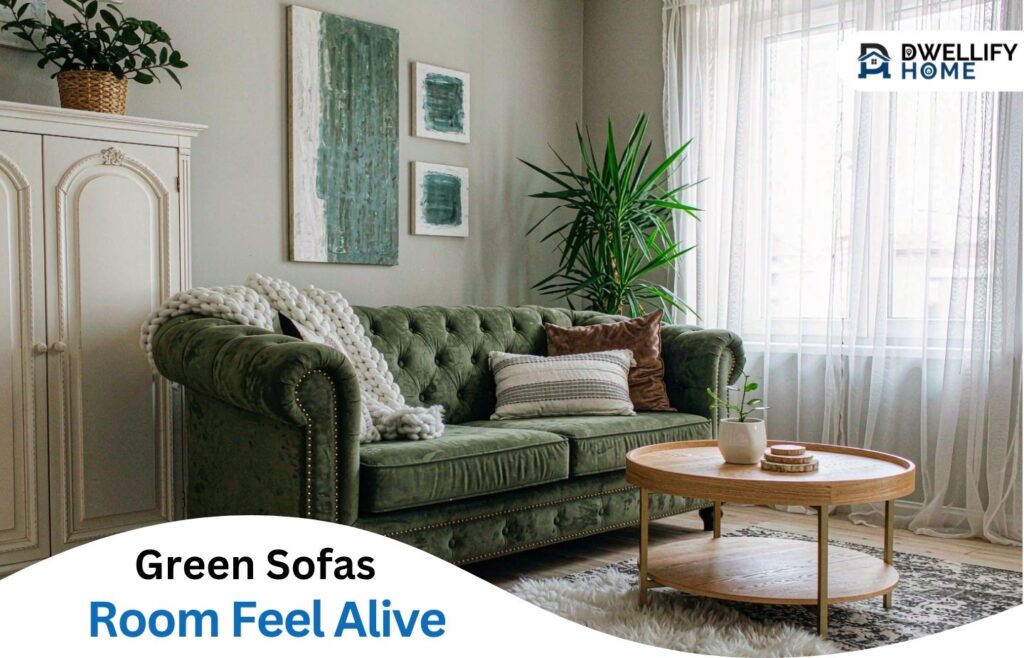
A green sofa is a bold but friendly choice that brings a room to life without the risk of a louder color. It pairs with more neutrals than people expect and reads as fresh rather than as a passing trend. When you shop for green sofas and couches, think of green as a neutral with personality, not as a statement you will tire of by spring.
Green works because it sits between the calm of blue and the warmth of yellow, so it feels both restful and alive. The right shade anchors a room while the walls and the rug stay calm, which lets the sofa be the hero without shouting for the attention that a
Pick the right shade of green
Soft sage suits a bright, airy room and reads as calm rather than as a color that fights the light. Deep emerald suits a darker, moodier space and reads as rich against a warm wall. Olive leans earthy and pairs with wood and cream for a natural look that ages well. Match the shade to the light you have, because a dark green in a dim room can feel heavy, while a pale green in a sunny room can wash out. Test the fabric against your own wall before you commit, since the showroom light lies about the tone. The right green feels like it belonged in the room all along, not like a guest that arrived and refused to leave.
Walls that let green lead
White, cream, and soft greige are the safe backdrops that let a green sofa be the star without competition from the paint. A deep navy or charcoal wall makes emerald pop for a dramatic, moody room that still feels calm. Avoid a green wall behind a green sofa unless the shades are far apart in tone, because the two greens can muddy each other and read as a mistake. Let the second color stay calm so the sofa stays the hero of the space, and add one warm wood note to keep the room human. The wall is the frame, and a simple frame lets the green piece carry the color story without the eye getting lost in too many competing tones.
Fabric and the green tone
Velvet catches the light and makes green look deeper and more luxurious, which is why emerald velvet is a classic that photographs well and lives well. Linen and woven fabric read more casual and suit sage or olive in a relaxed, daytime room. Performance synthetics keep the color true through spills and sun, which matters because a faded green is a sad green by month six. Choose the weave that matches the room’s mood, and protect the tone with a colorfast textile if the sofa sits in a sunny window. The fabric decides whether the green feels rich or humble, so let the material do a little of the decorative work the wall used to do in a plainer room.
Style with wood and brass
Warm wood and a touch of brass are the notes that make green feel designed rather than random, because they pick up the natural side of the color. A walnut table or a brass lamp pulls the green toward earthy rather than toward loud, and the mix reads as intentional. Keep the other pieces few so the sofa leads, and let one wood tone repeat across the room for cohesion. A plant nearby echoes the green without copying it, which adds life without adding a second competing color. The goal is a room where the green sofa feels placed by a designer who knew what they were doing, not dropped by a shopper who loved the color and forgot the rest of the space around it.
Keep the rest neutral
A green sofa does the color work, so the rug, the curtains, and the pillows should stay in the neutral family to avoid a room that fights itself. A cream rug and a linen curtain let the sofa lead; a patterned rug in a second bright color competes and clutters the eye. If you want pattern, put it on a small pillow in a tone pulled from the sofa, not across the floor where it battles the seating. Restraint makes the green feel like a choice, while a rainbow of accents makes it feel like a mistake you made on a restless evening. The sofa is the statement, and everything else should support it calmly rather than argue with it for the attention of every guest who sits.
Green for small rooms
A deep green in a small room can feel cozy rather than cramped if the rest of the space stays light, because the sofa becomes a rich anchor instead of a dark block. Pair it with white walls and a pale rug so the green reads as a feature, not as a weight that closes the room. Avoid pushing a dark green sofa against a dark wall, since the two together swallow the light and make the space feel smaller than it measures. Let the green be the only dark note, and the room will feel grounded rather than boxed. The trick is contrast: one deep piece against a light field, which is how a small room carries a bold color without apologizing for the square footage it was given.
Care for the color
Green dyes vary, and some fade faster in direct sun, so keep the sofa out of the harsh window or use a curtain that filters the light during peak hours. Rotate the cushions so one seat does not fade faster than the rest, because uneven tone is the first sign of a piece past its prime. Vacuum weekly so grit does not dull the surface, and blot spills at once since a stain sets faster on a saturated color. A little routine care keeps the green true for years, and the color stays the thing guests notice first for the right reason. The sofa was chosen for its tone, so protecting that tone is the habit that makes the choice look good long after the new has worn off and
Buy the green you will keep
Choose a shade you can live with for years, not the one that wowed you for ten minutes under showroom lights that flatter everything. Sage and olive are safer long term; emerald is a commitment that rewards a room built to support it with the right wall and wood. Read owner notes that mention month six rather than week one, because the early love rarely reveals whether the color still feels right once the novelty ends. Spend on the frame and the fabric, and treat the green as the permanent note around which you build the rest of the room. The right green sofa becomes the piece everyone remembers about the space, and the one you stop noticing only because it fits so completely into the life happening around it.
| Shade | Room it suits |
| Sage | Bright, airy rooms |
| Emerald | Moody, warm walls |
| Olive | Natural, wood heavy |
| Velvet | Rich, formal feel |
| Linen | Casual, daytime |
A green sofa brings a room to life without the risk of a louder color, because green reads as fresh, restful, and alive all at once. Pick a shade that matches your light, let neutral walls and warm wood support it, and keep the rest of the room calm so the sofa leads. Care for the tone so it stays true, and choose a green you will keep past the first thrill.
For transparency, certain links within this article may be associated with affiliate or sponsored partnerships. Dwellifyhome.com may earn a small commission from qualifying purchases. These partnerships help support our work while allowing us to maintain independent editorial opinions.