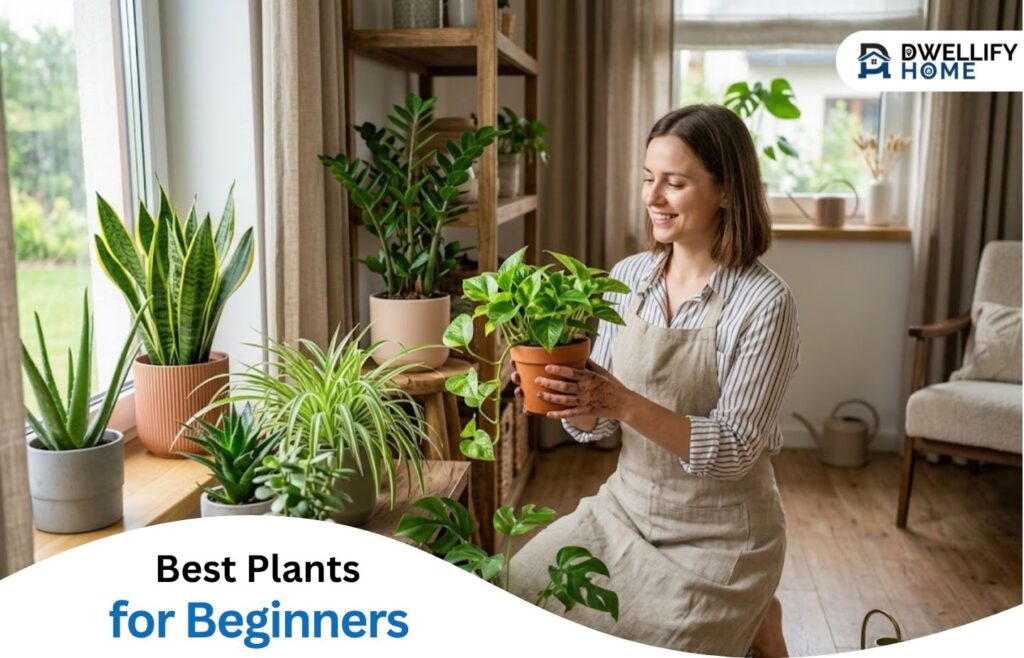
Pothos, snake plants, ZZ plants, and spider plants are among the best plants for beginners, but they suit different homes. Start with your available light, watering habits, and pets. Choose pothos for trailing greenery, snake or ZZ plants for less frequent watering, and spider plants when pet compatibility matters.
A plant can be forgiving and still struggle in the wrong spot. These ten choices cover different spaces and routines, with enough care guidance to help you choose one you can realistically keep healthy.
Short Definition
The best plants for beginners are forgiving, manageable plants suited to a new owner’s home and care routine. Choosing by light, watering needs, space, and pet compatibility helps avoid common first-plant mismatches.
DwellifyHome Mission Statement
DwellifyHome helps homeowners, renters, and home lovers make informed, practical choices that bring comfort, style, and everyday usefulness to their living spaces.
Quick Plant-Selection Checklist
- Check the daylight where the plant will actually sit.
- Match watering needs to the attention you can realistically provide.
- Confirm the exact species and its toxicity to cats and dogs.
- Allow space for mature leaves, spreading growth, or trailing vines.
- Choose a healthy plant in a pot with drainage holes.
Choose a Plant That Fits Your Light, Routine, and Space
Look at the plant’s spot, not just the room. A sunny living room can have a surprisingly dim bookshelf. Bright indirect light means plentiful daylight without prolonged, strong sun falling directly on the leaves. A sheer curtain can soften intense window light.
“Low-light tolerant” means a plant can manage with less light; it doesn’t mean darkness. Distance from windows, nearby buildings, curtains, and seasonal changes all affect what reaches the leaves. University of Maryland’s lighting guidance explains these differences.
Match care to your habits. Someone who forgets watering may prefer a ZZ plant. Someone who checks plants regularly may enjoy a spider plant or parlor palm. Neither routine suits every species.
Consider pets and future growth. Choose a non-toxic option when curious cats or dogs can reach the leaves. Allow room for vines to lengthen and arching foliage to spread beyond the pot.
Before buying, inspect leaf undersides and stem joints for insects, webbing, or sticky residue. Avoid plants with widespread yellowing or soft, collapsing stems. A modest plant in a draining nursery pot is enough to start; an expensive decorative planter is optional.
Compare the 10 Plants at a Glance
Use the watering cues as checks, not calendar appointments. “Let the mix dry” means more than waiting for the surface to look dry.
| Plant | Suits | Light | Watering cue | Space needs | Cats and dogs |
| Pothos | Trailing greenery | Medium to bright indirect | Upper mix has dried | Room for vines | Toxic |
| Snake plant | Less frequent watering | Indirect; tolerates lower light | Mix dries through | Upright; size varies | Toxic |
| ZZ plant | A slower-growing display | Bright indirect; tolerates lower light | Mix dries through | Eventually broader | Toxic |
| Spider plant | Arching foliage | Medium to bright indirect | Surface begins drying | Leaves and plantlets spread | Non-toxic |
| Heartleaf philodendron | Trailing or climbing | Medium indirect | Surface begins drying | Room for vines | Toxic |
| Cast iron plant | Lower-light placement | Low to medium indirect | Upper mix has dried | Upright clump | Non-toxic |
| Baby rubber plant | Tabletops | Bright indirect | Upper mix has dried | Compact, bushy growth | Non-toxic |
| Parlor palm | Feathery foliage | Medium to bright indirect | Surface begins drying | Fronds need elbow room | Non-toxic |
| Hoya carnosa | Waxy trailing foliage | Bright indirect | Mix dries between waterings | Room to trail or climb | Non-toxic |
| Zebra haworthia | Small bright spots | Bright indirect | Mix dries through | Compact rosette; offsets spread | Non-toxic |
Non-toxic plants still aren’t pet food: chewing plant material can cause stomach upset. For suspected toxic-plant ingestion, contact a veterinarian or ASPCA Poison Control promptly.
10 Beginner-Friendly Indoor Plants and What Each Needs
These are different starting points, rather than a strict ranking. Match the care requirements to the space you actually have.
1. Pothos: A Trailing Option for Shelves
Why choose it: Pothos, Epipremnum aureum, provides leafy vines you can trim to fit a shelf or let cascade from a basket.
- Light and placement: Medium to bright indirect light; lower light is tolerated, but growth and variegation may decline.
- When to water: Let the upper potting mix dry, then water thoroughly and drain. Avoid keeping the root ball constantly wet.
- Size and growth: Vines can extend several feet; occasional pruning keeps them manageable.
- Cats/dogs status: Toxic if chewed or ingested.
- Choose another if: Pets can reach the vines, or you want a plant that stays upright without support.
2. Snake Plant: Upright Leaves and Less Frequent Watering
Why choose it: Dracaena trifasciata, formerly Sansevieria trifasciata, offers upright foliage without a frequent watering routine.
- Light and placement: Indirect light works well; lower light is tolerated. Avoid suddenly moving a shaded plant into intense sun.
- When to water: Allow the potting mix to dry through. A dry surface alone can hide moisture farther down.
- Size and growth: Dwarf and tall varieties differ considerably; check the label before buying.
- Cats/dogs status: Toxic if ingested.
- Choose another if: You tend to water whenever you pass a plant. Persistently wet soil can cause root rot.
3. ZZ Plant: A Slower-Growing Upright Choice
Why choose it: Zamioculcas zamiifolia stores water in fleshy underground rhizomes and foliage, helping it tolerate missed waterings.
- Light and placement: Bright indirect light is preferable, though it tolerates dimmer locations.
- When to water: Wait until the mix dries through; use pot weight and a deeper moisture check rather than appearance alone.
- Size and growth: Slow-growing, but eventually capable of reaching roughly 2–4 feet tall and wide.
- Cats/dogs status: Toxic if ingested.
- Choose another if: You want frequent visible growth. A quiet period doesn’t automatically mean something is wrong.
4. Spider Plant: Arching Leaves and Baby Plants
Why choose it: Chlorophytum comosum brings movement to a shelf or hanging basket, with mature plants producing small plantlets.
- Light and placement: Medium to bright indirect light, away from harsh sun.
- When to water: Let the surface begin drying while avoiding prolonged dryness throughout the pot.
- Size and growth: Arching leaves spread beyond the container; dangling plantlets need additional clearance.
- Cats/dogs status: Non-toxic.
- Choose another if: You need a narrow, tidy silhouette. Its spreading shape can crowd a small desk.
Brown tips aren’t automatically a sign of thirst; water quality and fertilizer buildup can also contribute.
5. Heartleaf Philodendron: A Vine to Trail or Climb
Why choose it: Philodendron hederaceum has soft, heart-shaped foliage and can hang down or grow along a support.
- Light and placement: Medium indirect light; lower light is tolerated.
- When to water: Allow the surface to begin drying, then water and drain. Keep the mix lightly moist below, rather than saturated.
- Size and growth: Vines lengthen over time and may need trimming.
- Cats/dogs status: Toxic if ingested.
- Choose another if: You routinely leave plants dry for long stretches or cannot keep trailing foliage away from pets.
Check the botanical name: a philodendron label covers many plants with different habits.
6. Cast Iron Plant: An Option for Lower-Light Spaces
Why choose it: Aspidistra elatior offers broad, upright leaves for a spot where more light-demanding choices may struggle.
- Light and placement: Low to medium indirect light; protect it from strong direct sun.
- When to water: Let the upper mix dry before watering again. Its tolerance of occasional dryness doesn’t justify leaving it dry indefinitely.
- Size and growth: Forms an upright clump around 2 feet tall.
- Cats/dogs status: Non-toxic.
- Choose another if: The intended corner receives virtually no daylight and you won’t add suitable artificial lighting.
Its usefulness comes from tolerating less-than-ideal conditions, not eliminating basic care.
7. Baby Rubber Plant: Compact Greenery for a Tabletop
Why choose it: Peperomia obtusifolia has rounded, glossy leaves and a bushy form that suits smaller displays.
- Light and placement: Bright indirect light; avoid intense sun against the glass.
- When to water: Let the upper mix dry, then water and drain. Avoid both soggy soil and extended, severe dryness.
- Size and growth: Usually a tabletop plant, although mature specimens can approach 2 feet.
- Cats/dogs status: Non-toxic.
- Choose another if: You want a tall floor plant or your only space is very dim.
The name matters here: baby rubber plant is a peperomia, not Ficus elastica, commonly sold as rubber plant.
8. Parlor Palm: Feathery Foliage for Indoor Spaces
Why choose it: Chamaedorea elegans provides a soft, leafy shape for readers who prefer palm fronds to vines or succulent leaves.
- Light and placement: Medium to bright indirect light; it tolerates lower light.
- When to water: Let the surface begin drying, keeping deeper soil lightly moist rather than waterlogged.
- Size and growth: Fronds spread sideways, and established plants may eventually reach several feet tall.
- Cats/dogs status: Non-toxic.
- Choose another if: Frequent travel means nobody will check the soil.
Keep it away from cold drafts and direct blasts from heating or air-conditioning vents.
9. Hoya Carnosa: Waxy Leaves and Trailing Stems
Why choose it: Hoya carnosa offers thick foliage and stems you can let trail or guide onto a small support.
- Light and placement: Bright indirect light.
- When to water: Let the loose, well-draining mix dry between waterings, without imposing prolonged drought.
- Size and growth: Allow room for extending vines.
- Cats/dogs status: Non-toxic; ASPCA’s wax-plant entry specifically lists the ‘Krinkle Kurl’ cultivar.
- Choose another if: Your only available position is dim.
Treat flowers as a bonus. When flowering does occur, retain the short flower-bearing spurs; future blooms can develop from them.
10. Zebra Haworthia: A Small Succulent for a Bright Spot
Why choose it: Haworthiopsis attenuata forms a compact rosette of pointed leaves with white markings.
- Light and placement: Bright indirect light; intense direct sun can scorch leaves.
- When to water: Let the mix dry through, then water and drain. Use a well-draining succulent mix.
- Size and growth: Slow-growing; the central rosette stays relatively small, while offsets gradually widen the clump.
- Cats/dogs status: Non-toxic.
- Choose another if: The pot would sit far from a window, or you enjoy frequent watering.
Look for the botanical name rather than relying on “zebra plant,” which is used for unrelated plants too.
Avoid the Mistakes That Make Easy Plants Struggle
Watering by the calendar. A reminder to check plants is useful; an instruction to water them all every Sunday isn’t. Check the relevant soil depth and lift the pot to learn how its weight changes as it dries.
Leaving water in the outer pot. Keep the plant in a nursery pot with drainage holes inside the decorative container. Remove it to water, let excess drain, and empty any collected water before replacing it.
Treating every yellow leaf as thirst. Check moisture and recent conditions first. Wet roots can also lead to yellowing; adding water automatically may worsen the problem.
Keeping the same routine through every season. Changing daylight, indoor heating, and room temperature affect drying. Recheck conditions rather than assuming winter always means the same watering interval.
Ignoring placement problems. Move leaves away from cold glass and direct HVAC airflow. Choose a brighter suitable position when a plant stretches toward the window; extra fertilizer cannot replace missing light.
Questions About Caring for Your First Houseplant
Can I Keep a Houseplant in a Room Without Windows?
Yes, provided suitable artificial lighting supplies enough light for growth. A grow light can make a windowless room workable; a ceiling light used briefly each evening may not. Follow the light’s placement guidance and provide a regular day-and-night cycle. Low-light tolerance never means a plant needs no light.
Should I Repot a New Houseplant Straight Away?
Usually, there’s no need to repot a healthy plant immediately. First check drainage, root crowding, and how the mix dries. Let it settle into its new location unless a pot or root problem needs attention. When repotting is necessary, choose a modestly larger container with drainage holes.
Do Beginner Houseplants Need Fertilizer?
Yes, eventually, but the amount and timing depend on the plant, growth, and existing potting mix. Some mixes already contain fertilizer. Follow the product label and species guidance during active growth, reducing or pausing feeding when growth slows. Fertilizer won’t correct overwatering, damaged roots, or inadequate light.
Start With One Plant That Suits Your Home
The best plants for beginners fit the conditions you can provide. Choose pothos for trailing greenery, a ZZ or snake plant for a less frequent watering routine, or a spider plant or baby rubber plant when pet compatibility guides the decision.
Start with one, give it an appropriate spot, and learn its watering cues. A manageable first plant makes building confidence—and eventually adding another—much easier.
Disclaimer
This content is for general informational purposes only. Homes, needs, preferences, budgets, and circumstances vary. Seek qualified professional advice for safety, installation, repairs, legal matters, structural work, electrical systems, plumbing, HVAC, or major property decisions.