A drooping plant in wet soil creates a frustrating choice: give it more water, leave it alone, or pull it out of the pot. The right response depends on what’s happening around the roots.
To fix overwatered plants, stop adding water, empty any standing water, and check the drainage and soil moisture. Plants with mild symptoms may recover with adjusted care. Persistent sogginess, worsening wilt, or damaged roots call for closer inspection and possibly repotting.
The goal is to restore suitable growing conditions without putting the plant through unnecessary disturbance.
Short Definition
Fixing an overwatered plant means correcting excess moisture around its roots, assessing damage, and adjusting care. Depending on the plant’s condition, recovery may involve improved drainage, changed watering habits, or repotting.
Mission Statement
DwellifyHome helps homeowners, renters, and home lovers make informed, practical choices for comfortable, stylish spaces that work for everyday life.
SERP Enhancement Elements
- Pause watering and empty saucers or decorative outer pots.
- Check drainage openings and moisture below the soil surface.
- Compare wetness with leaf symptoms and recent care.
- Monitor stable plants as excess moisture decreases.
- Inspect roots when persistent wetness accompanies worsening symptoms.
- Repot when root damage, unsuitable mix, or poor drainage warrants it.
- Resume watering according to the plant’s needs.
What to Do First if You’ve Overwatered a Plant
Pause watering and check where excess water can escape. Empty the saucer, lift the nursery pot out of its decorative outer pot, and let it drain. Then assess the soil and plant together before deciding whether repotting is necessary.
Start with these simple checks:
- Look inside the outer pot. Water can collect beneath a nursery pot even when the visible soil surface looks dry.
- Check the drainage openings. Remove an external stopper or obstruction that prevents runoff from escaping.
- Let the pot drain somewhere suitable. Use a sink or tray, then empty the collected water.
- Note the symptoms. Record whether the plant is upright, wilting, dropping leaves, or developing soft stems.
Keep the plant in suitable light without suddenly exposing it to intense sun to dry the soil. A stressed root system may struggle to supply the leaves with water even when the potting mix is wet.
Is Your Plant Overwatered or Underwatered?
Check moisture below the surface and consider recent watering alongside the symptoms. Overwatering and underwatering can both cause wilting, yellowing, and leaf loss. A plant that looks thirsty may have damaged roots rather than dry soil, so another drink could make the problem worse.
| What you observe | More consistent with excess moisture | More consistent with insufficient moisture |
| Potting mix | Remains wet below the surface | Dry through much of the root area |
| Pot weight | Still heavy compared with its usual dry weight | Noticeably lighter than after watering |
| Leaves | May yellow, soften, droop, or fall | May droop, curl, or develop dry edges |
| Recent care | Repeated watering before enough moisture was used | A long gap in watering or unusually rapid drying |
| Roots, if inspected | Soft, deteriorating tissue raises concern | Dry conditions require assessment; root damage is still possible |
These are clues, not a diagnosis from appearance alone. Pot weight is most useful when you know how that same container feels after watering and as it dries.
Excess moisture reduces oxygen around roots, impairing their ability to take up water. That explains the otherwise confusing combination of wet soil and wilted leaves.
Can You Save the Plant Without Repotting?
Yes, an overwatered plant may recover without repotting when the roots remain functional, drainage works, and the mix is gradually losing excess moisture. Correcting the watering routine may be enough. Continued decline or a container that keeps the roots waterlogged changes that decision.
| Situation | Sensible next step |
| Accidental extra watering; plant looks normal; pot drains | Let it drain and monitor moisture before watering again |
| Mild symptoms; mix is gradually drying; no worsening decline | Adjust care and watch closely |
| Water cannot escape the growing container | Move the plant into a suitable container with drainage |
| Persistent wetness plus increasing wilt, odor, or soft tissue | Inspect the roots and choose treatment from what you find |
When to Adjust Care and Monitor
A plant that received an extra watering but remains firm and upright doesn’t automatically need its roots disturbed.
Leave it in a suitable location, check moisture periodically, and watch whether symptoms stabilize. “Recovering on its own” still involves correcting the conditions that caused the problem.
Avoid replacing overwatering with severe drought. The appropriate amount of drying depends on the plant; moisture-loving plants and drought-tolerant succulents need different treatment.
When to Inspect the Roots or Replace the Mix
Inspection becomes more useful when the plant is deteriorating despite corrected drainage and paused watering. Increasing wilt, a soft stem base, or an unpleasant smell deserves attention.
Repotting may be appropriate when the mix remains unsuitable, the container lacks drainage, or damaged roots require treatment. It should solve an identified problem. Simply moving wet roots into another pot without assessing them leaves that problem unresolved.
How to Repot an Overwatered Plant When Needed
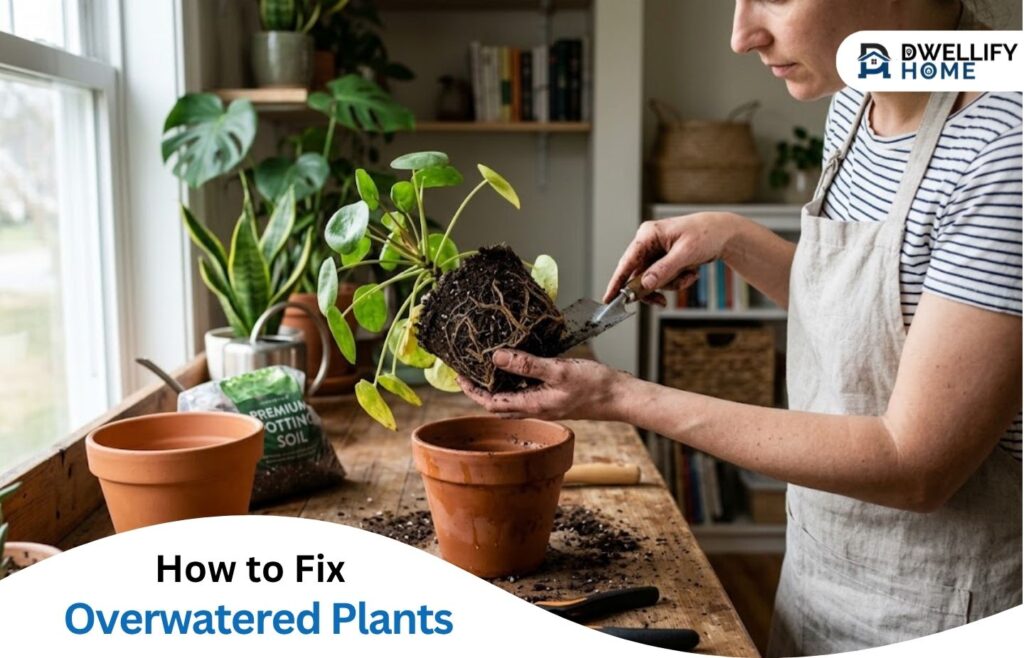
Prepare a suitable container, fresh potting mix, clean scissors or pruners, and a washable work surface before removing the plant. Having everything ready reduces handling and avoids leaving exposed roots sitting out while you search for supplies.
Check Root Condition Before Removing Damaged Tissue
- Slide the plant out gently. Support the root ball rather than pulling on the stems.
- Loosen enough old mix to inspect the roots. Work carefully around healthy tissue; don’t tear through roots to remove every particle.
- Assess texture as well as color. Firm roots are more reassuring than soft, slimy, or collapsing roots. Color alone is an unreliable reason to cut.
- Remove clearly rotten tissue with clean, disinfected tools. Retain sound roots and clean the tools afterward.
- Discard the removed material and suspect potting mix.
Root inspection and selective trimming are common salvage steps, but success depends on how much healthy tissue remains.
Extensive decay, particularly into the stem base, may make recovery unrealistic. Repeated repotting cannot restore dead tissue.
Choose a Pot and Mix That Suit the Remaining Roots
Use a container with open drainage holes and enough space to accommodate the surviving roots comfortably. After substantial root loss, the plant may need a smaller pot rather than a larger one.
Excess mix around a small root system can remain wet for too long. The Royal Horticultural Society’s guidance on overpotting explains why container size matters.
Choose a fresh potting mix intended for the plant type. Ordinary garden soil is unsuitable for this rescue procedure. Set the plant at its previous growing depth and settle the mix gently around the roots without packing it tightly.
Keep healthy foliage where possible. Removing large amounts of leaves simply because the plant is stressed adds another intervention without addressing the original cause.
Why the Soil Stays Wet After You Stop Watering
Pausing watering removes one source of moisture, but the existing water still has to leave the pot. How quickly that happens depends on the plant, container, mix, and surrounding conditions. Drainage holes allow runoff to escape; they don’t guarantee that the remaining mix will dry quickly.
Investigate these possibilities:
- The pot is too large for the roots. A large volume of unused mix can retain moisture.
- The mix holds more water than the plant needs. Changing potting mix may require changing your watering routine.
- Runoff remains in the outer pot. The nursery pot may be sitting in water between checks.
- Growth or light levels have changed. A plant in a dimmer location may use water more slowly.
- Roots are damaged. Poor water uptake can accompany continued wetness.
There’s no universal number of wet days that proves something is wrong. Compare current drying with the plant’s needs and condition.
For patio pots, also check recent rain and blocked drainage. For plants in garden beds, investigate irrigation and pooling water rather than applying container-repotting instructions. Persistent landscape drainage problems need a separate assessment.
How to Monitor Recovery and Know When to Water Again
Watch for stabilization before expecting fresh growth. A recovering plant may stop losing leaves before it produces new ones. Water according to moisture and the plant’s requirements, rather than counting a fixed number of days after the original mistake or repotting.
Signs of Improvement—and Reasons to Reassess
Useful signs include:
- Wilting stops getting worse.
- Remaining leaves hold their position more consistently.
- Fewer additional leaves yellow or fall.
- The mix begins following a more appropriate drying pattern.
- Healthy new growth eventually appears.
Recovery time varies with the plant, season, and extent of root damage. Early improvement and complete recovery are different milestones.
Take a photo from the same angle every few days. This makes gradual changes easier to notice than repeatedly examining the plant throughout the day.
Reassess if collapse continues, the stem base softens, or deterioration spreads. A local extension service or plant diagnostic clinic can help when the cause remains unclear.
Watering and Fertilizing During Recovery
Check moisture below the surface before reaching for the watering can. Combine that observation with pot weight and the plant’s normal moisture needs. A fern shouldn’t be managed as though it were a cactus.
When watering is appropriate, moisten the root area and allow excess water to drain. Frequent small splashes can make it difficult to judge what is happening deeper in the pot.
After rescue repotting, don’t automatically soak an already-moist mix or impose a universal waiting period. Consider the replacement mix’s moisture, the remaining roots, and the plant type. Succulents with cut roots may require different aftercare from leafy tropical plants; use species-specific guidance before watering.
Hold off on extra fertilizer while the plant is struggling. Resume appropriate feeding once it has recovered and is actively growing, accounting for any fertilizer already included in the fresh mix.
How to Prevent Another Overwatering Problem
Build a habit of checking plants rather than watering them all on the same day. A reminder can prompt an inspection; it doesn’t have to trigger watering.
Several small changes make that routine more reliable:
- Learn the moisture needs of each plant.
- Let runoff escape before returning a nursery pot to its decorative cover.
- Reassess watering after repotting, moving the plant, or a seasonal change.
- Choose containers that suit the root system.
- Check moisture before treating drooping as thirst.
Skip gravel layers intended to improve drainage inside a pot. They can interfere with drainage rather than correct it. Also avoid reusing suspect potting mix or drainage water around other plants.
Don’t add hydrogen peroxide, cinnamon, or a fungicide simply because the soil is wet. A rescue remedy should have a clear purpose supported by the diagnosis. Correcting moisture and container problems comes before experimenting with treatments.
Frequently Asked Questions
Will One Accidental Extra Watering Harm My Plant?
One extra watering doesn’t automatically mean lasting damage. Risk depends on the plant, existing moisture, and whether excess water can escape. Drain the container, empty collected runoff, and assess the plant before watering again. Persistent saturation deserves more attention than the size of one drink alone.
Can Yellow Leaves Turn Green Again?
A fully yellowed, declining leaf generally won’t return to its previous condition. Focus on whether further yellowing stops and healthy growth develops. Partly green leaves don’t automatically need removal, and pruning yellow foliage won’t correct the cause.
Do Fungus Gnats Mean My Plant Has Root Rot?
No. Fungus gnats are associated with moist growing media, but their presence doesn’t establish that roots are rotting. Check drainage, moisture, and the plant’s overall condition separately. Identify and address the insects without assuming that root pruning or repotting is necessary.
Choose the Next Step Based on the Plant’s Condition
A stable plant in a draining pot may need corrected care and observation. A plant declining in persistently wet mix needs closer inspection. Choose the intervention that addresses what you find, then monitor the response before making another change.
Disclaimer
This content is for general informational purposes only. Individual homes, needs, preferences, budgets, and situations vary. Seek qualified professional advice for safety concerns, installation or repairs, legal matters, structural work, electrical, plumbing or HVAC systems, and major property decisions.