
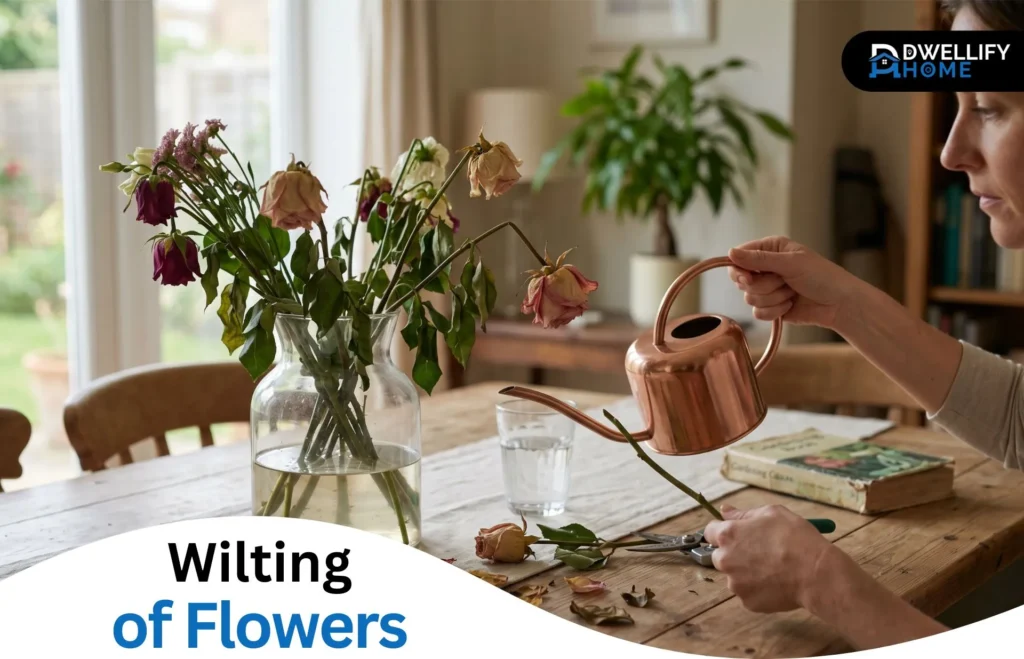
There’s a moment every flower lover knows well — that quiet sinking feeling when a once-bright bouquet starts drooping a day or two earlier than expected. Petals lose their bounce, stems bend at odd angles, and the colour seems to fade overnight. After years of arranging, delivering, and rescuing all kinds of bouquets, I’ve learned that the wilting of flowers is rarely a mystery. It’s almost always one of a handful of issues, and most of them are completely fixable if you catch them in time.
This guide walks you through what’s actually happening inside the stem, why your flowers are giving up, and exactly what to do about it — for both vase arrangements and garden blooms.
Snippet-Ready Definition
The wilting of flowers happens when blooms lose more water than they take in, causing petals and stems to droop. Catching it early lets you revive flowers through fresh cuts, clean water, and proper care before damage becomes permanent.
Mission Statement
At Dwellify Home, we help homeowners make practical, stylish, and informed décor decisions for every part of the home — from modern living spaces and gardens to everyday lifestyle choices that turn a house into a place you genuinely enjoy.
What Wilting of Flowers Really Means
Wilting is what we call the visible loss of firmness in a flower’s petals, stem, or leaves. The bloom that once stood upright starts curling downward, the stem softens, and the whole arrangement looks tired.
What’s happening underneath is simple: the flower is losing more water than it’s taking in. Once that balance tips, the cells lose their internal pressure and the structure collapses. It’s not death yet, just a warning. Most flowers can still be saved at this stage if you act quickly.
Key Reasons Flowers Wilt (Quick Reference)
- Dehydration from skipped or shallow watering
- Heat, direct sunlight, or warm placement near vents
- Cloudy water and bacterial buildup in the vase
- Sealed stem ends or trapped air bubbles
- Ethylene gas exposure from nearby ripening fruit
Common Signs Your Flowers Are Wilting
A wilting flower doesn’t always look dramatically bad at first. The early signs are subtle, and that’s where most people miss the chance to step in.
Watch for these:
- Petals feeling soft or papery instead of crisp
- The flower head bending at the neck, just below the bloom
- Stems that bow rather than stand straight
- Leaves turning a dull yellow or pale green
- A sour or musty smell from the vase water
If you spot any of these, treat it as the first signal — not the final verdict.
The Science Behind Why Flowers Wilt
Cut flowers stay upright thanks to something called turgor pressure. Each cell in the stem and petals is filled with water, and that pressure keeps everything firm — almost like a balloon holding its shape.
Flowers also constantly lose moisture through tiny openings in their petals and leaves through a process called transpiration. As long as the stems pull up enough water to replace what’s lost, the bloom stays perky. The moment that water uptake slows or stops, turgor pressure drops and the flower starts to droop.
Understanding this one mechanism makes the rest of flower care click into place.
The Main Causes of Flower Wilting
In my experience, almost every wilting case traces back to one of these five culprits. Sometimes more than one is at play.
Dehydration and Lack of Water
The most common cause, by a wide margin. Cut flowers drink far more water than people expect — a fresh hydrangea or peony can empty a small vase in a single day. If the water level drops below the stems, the flowers are essentially gasping. Check the vase daily, not weekly.
Heat, Sunlight, and Temperature Stress
Flowers cut from the field don’t behave like potted plants. Direct sunlight, a warm windowsill, or being placed near a heating vent speeds up moisture loss dramatically. I’ve seen a perfect bouquet droop in three hours simply because it was sitting on a sunny kitchen counter.
Cloudy Water and Bacterial Buildup
This one catches most people off guard. Bacteria grow rapidly in vase water — especially when leaves are submerged or the vase wasn’t cleaned properly. Those bacteria clog the tiny channels inside the stem, blocking water flow even when the vase is full. If the water looks cloudy or smells off, that’s your warning.
Sealed Stem Ends and Air Bubbles
When a stem sits out of water for more than 30 minutes, the cut end starts to seal over. That seal, plus any air bubbles that form inside, blocks water from travelling up the stem. This is why florists always recut stems before placing them in a vase — and why a fresh trim is usually the first revival step.
Ethylene Gas from Nearby Fruits and Plants
A subtle one, but a real problem. Ripening fruit — especially apples, bananas, and pears — releases ethylene gas, which speeds up the aging process in cut flowers. A bouquet placed beside a fruit bowl will wilt noticeably faster than one across the room.
Naturally Droopy Flowers vs. Truly Wilting Ones
Not every drooping bloom is in trouble. Some flowers are just naturally droopy by design.
Hellebores, fritillaries, certain tulip varieties, and trailing amaranthus all hang downward as part of their natural form. Tulips in particular keep growing after they’re cut and bend toward the light, which often gets mistaken for wilting.
The simple test: if the petals still feel firm and the stem is flexible rather than soft, it’s probably just the flower’s natural posture. If the texture has gone limp, then it’s genuine wilting.
How to Revive Wilting Flowers in a Vase
When you catch the wilting of flowers early, revival is often quicker than people think. Here are the three methods I rely on most.
The Fresh Cut and Lukewarm Water Method
This works for the majority of bouquets. Take the flowers out of the vase, hold the stems underwater in a bowl, and trim about an inch off each one at a 45-degree angle. The underwater cut prevents air bubbles from sneaking in.
Refill the vase with fresh lukewarm water — never icy cold, never hot. Add the flower food packet if you have one, and place the bouquet somewhere cool and shaded. Most flowers perk up within a few hours.
The Cold Water Submersion Trick
For flowers that have wilted badly but still feel alive — limp roses, droopy hydrangeas, sad gerberas — fill a clean basin with cold water and lay the entire flower in it, head and all. Leave them submerged for 30 minutes to an hour.
Hydrangeas especially respond beautifully to this. They drink through their petals as well as their stems, and the cold bath often brings them right back.
The Boiling Water Method for Stubborn Stems
This sounds counterintuitive, but it works on woody-stemmed or thick-stemmed flowers when nothing else does. Boil a kettle, pour the hot water into a heatproof jar, and dip just the bottom inch of the freshly cut stem into the hot water for about 30 seconds — keeping the bloom angled away from the steam.
The heat clears any blockage inside the stem and forces air out. Move the stem straight into a vase of cool water afterward. I’ve revived stems I’d already written off this way.
How to Revive Dying Flowers in Soil
Garden flowers and potted blooms wilt for slightly different reasons — usually overwatering, underwatering, or root stress.
Start by checking the soil with your finger. If it’s bone dry several inches down, water deeply and slowly so the moisture reaches the roots. If the soil is soggy, you may have root rot setting in — let it dry out before watering again.
Trim away any clearly dead leaves and stems so the plant can put its energy into recovery. Move pots out of harsh afternoon sun for a few days while they recover, and skip fertilizer until you see new growth. Most plants bounce back within a week.
How to Revive Wilted Flowers Overnight
For an overnight rescue, the cold water bath is your best friend. Trim the stems fresh, lay the flowers flat in a sink or basin of cold water, and leave them submerged for several hours or overnight in a cool room.
By morning, most blooms will have rehydrated noticeably. After the soak, place them upright in a clean vase with fresh water. This trick has saved more event arrangements than I can count.
Common Mistakes That Make Flower Wilting Worse
A few popular tips out there actually do more harm than good.
- Smashing stem ends with a hammer crushes the very channels that move water
- Adding pennies to the vase does nothing modern coins barely contain copper
- Using freezing-cold water shocks delicate flowers
- Refilling without rinsing the vase reintroduces all the bacteria you were trying to remove
- Leaving leaves submerged speeds up bacterial growth dramatically
Skip these, and you’ll already be ahead of most home arrangers.
How to Prevent Flower Wilting in the First Place
Prevention is honestly easier than revival. A few habits make a real difference.
Always start with a clean vase scrubbed in hot soapy water. Strip any leaves that would sit below the waterline. Cut stems at an angle right before they go into water. Change the vase water every two days, or sooner if it looks cloudy.
Keep the bouquet away from direct sun, heating vents, drafts, and ripening fruit. If your home runs warm, popping the arrangement in the fridge overnight can add days to its life.
When Flowers Are Beyond Reviving
There’s a point where revival isn’t realistic, and recognizing that saves you a lot of frustration.
If the stem feels mushy and slimy, the bloom has lost colour entirely, the petals fall at the lightest touch, or the flower has been wilted for several days, you’re past the point of recovery. At that stage the cells have collapsed and the tissue is breaking down — no amount of fresh water will reverse it.
The best move is to remove that stem so it doesn’t speed up the decline of the others.
The Hidden Science: How Plants Reuse Energy from Wilting Flowers
Here’s something most people never hear about. A 2024 study published in the journal Plant Biology by researchers at Macquarie University showed that some plants actually reclaim resources from their wilting flowers — pulling nutrients like nitrogen, phosphorus, and stored carbohydrates back into the roots and bulbs to fuel next season’s growth.
In other words, wilting isn’t always a sign of poor health. For many plants in the garden, it’s a deliberate strategy to save energy for future blooming. It’s a quiet reminder that nature is often smarter than it looks.
The Spiritual and Symbolic Meaning of Wilting Flowers
Beyond the science, wilting flowers carry meaning across many cultures. They’ve long symbolized the passage of time, the impermanence of beauty, and the natural cycle of letting go.
People sometimes ask what it means when flowers die fast spiritually. In various traditions, fast-fading blooms are read as a reflection of emotional energy in the home, a marker of transition, or simply a reminder to be present in the moment. Whether or not you connect with the symbolism, there’s something quietly grounding about watching a flower complete its full life cycle.
Creative Ways to Repurpose Wilted Flowers
Just because flowers are past their freshness doesn’t mean they’re done. There’s a lot you can do with them.
- Hang bouquets upside down in a dark, dry spot to preserve them as dried arrangements
- Press individual blooms inside heavy books for cards, frames, or bookmarks
- Mix dried petals with essential oils to make potpourri or scented sachets
- Use dried petals as natural confetti for outdoor celebrations
- Add petals into homemade candles or resin keepsakes
- Compost what you can’t reuse to feed your garden soil
Some of my favourite keepsakes came from bouquets I almost threw away.
Frequently Asked Questions About Wilting Flowers
Can you bring fully wilted flowers back to life?
Sometimes, yes. If the stem is still firm and the petals haven’t dried out, a fresh cut and a cold water bath can revive them. Once the tissue feels mushy, recovery isn’t realistic.
Why do my flowers wilt so fast even with water?
Usually because of bacterial buildup, sealed stem ends, or warm placement. Clean the vase, recut the stems, and move the bouquet to a cooler spot.
Does sugar really help wilting flowers?
A small amount of sugar can feed the flowers and improve uptake, but only in the right concentration. Most commercial flower food packets contain a balanced mix and work better than home mixtures.
How often should I change vase water?
Every two days, or whenever it starts looking cloudy. Rinse the vase each time before refilling.
Are wilted flowers a sign of bad luck?
Not in any meaningful sense. It’s almost always down to care, environment, or how fresh the flowers were when you got them.
Can flowers come back after they wilt?
Yes, in most cases. If the stems still feel firm and petals haven’t dried out, a fresh angled cut and a cold water bath can restore them within a few hours. Mushy stems and brittle petals usually mean recovery isn’t possible.
Can flowers bloom again after wilting?
Cut flowers won’t rebloom once they’ve wilted, but garden plants often will. With proper watering, light adjustment, and the removal of dead growth, perennials and many annuals can produce new blooms in the same season or the next.
Why do my flowers wilt so quickly even with water?
The water itself isn’t the only factor. Bacterial buildup, sealed stem ends, warm placement, or nearby fruit can all block hydration or speed up aging. A clean vase, fresh cut, and cooler spot usually solve the issue.
What’s the fastest way to revive wilted flowers?
Trim about an inch off each stem at a 45-degree angle and submerge the entire flower in cold water for 30 minutes to an hour. Most blooms recover noticeably, especially hydrangeas and roses.
Does sugar help revive wilting flowers?
A small amount can feed the flowers and improve uptake, but only in balanced concentration. The flower food packet that comes with most bouquets does this far more reliably than home mixtures.
Final Thoughts on the Wilting of Flowers
The wilting of flowers can feel disappointing, but once you understand what’s actually going on — the lost water balance, the sealed stems, the bacterial buildup, the temperature stress — it stops feeling like bad luck and starts feeling like something you can manage.
Pay attention to the small signals, act quickly when you spot them, and treat your flowers like the living things they are. With a little practice, you’ll find your bouquets last longer, look fresher, and reward you with more of what made you bring them home in the first place.
Disclaimer
This article is intended for general informational purposes only. Flower care results may vary depending on the variety, environment, and individual conditions. Readers are encouraged to use their own judgement and adapt the guidance to suit their specific situation.