
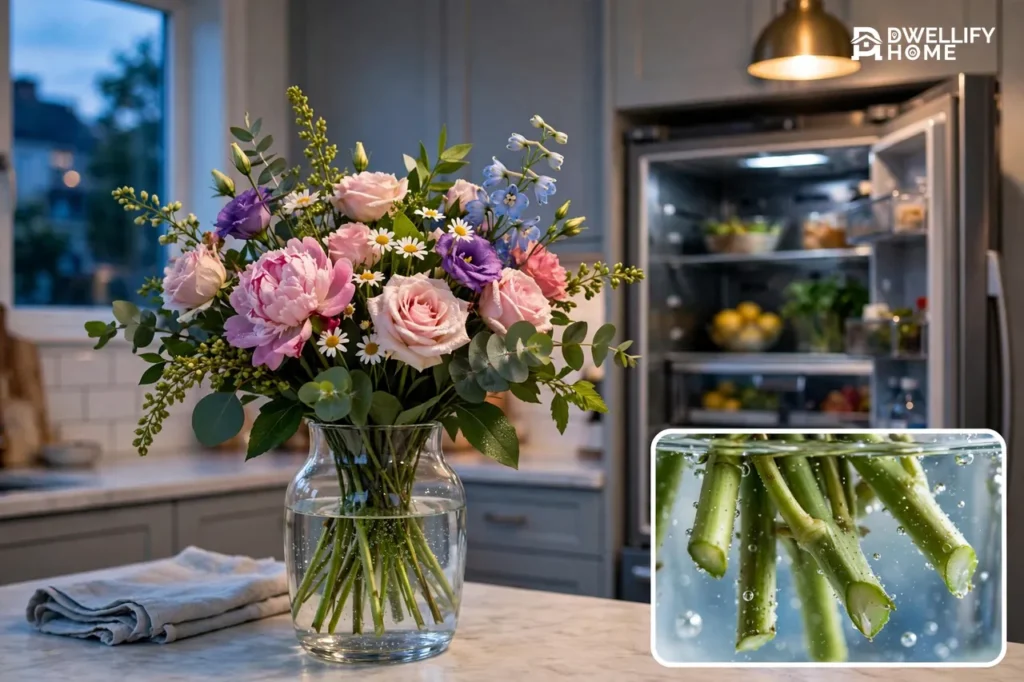
Flowers are surprisingly fussy about how they spend the night. One wrong move — a warm kitchen, a fridge shelf next to apples, a forgotten cellophane wrap — and you wake up to droopy petals and a bouquet that looks half its age. The truth is, knowing how should you store flowers overnight isn’t complicated, but it does come down to a handful of small details most people skip.
This guide walks you through everything that actually matters: what to do, what to avoid, and how to keep your blooms looking like they were just cut, even after twelve or fifteen hours of waiting.
Snippet-Ready Definition
To store flowers overnight, trim stems at a 45-degree angle, place them in a clean vase with cool water, and keep them in a fridge set between 35–40°F or a cool, dark room away from sunlight, heat sources, and ripening fruit.
Mission Statement
Dwellify Home is committed to helping homeowners create thoughtful, comfortable, and well-cared-for living spaces. From practical home solutions to garden, lifestyle, and property guidance, we share clear, honest advice that makes everyday décor and home decisions simpler and more rewarding.
Why Proper Overnight Storage Matters for Cut Flowers
A cut flower is still alive. It keeps breathing, drinking, and reacting to its environment long after it leaves the field. The moment you bring it home, the clock starts — and how you handle the next few hours decides whether it lasts three days or ten.
Heat speeds up that biological clock. Warm rooms, sunlight, and dry air make flowers burn through their stored energy faster, which is why an unprotected bouquet on a kitchen counter can lose half its life by morning.
Overnight is the longest stretch your flowers will sit unattended. Get this part right and the rest of their vase life takes care of itself. Get it wrong, and no amount of fresh water the next day will undo the damage.
Quick Reference Guide
| Storage Option | Best For | Ideal Temperature | Key Tip |
| Refrigerator | Most cut flowers | 35°F – 40°F | Keep away from fruit and back wall |
| Cool Dark Room | When fridge isn’t available | 60°F – 68°F | Use AC, basement, or pantry |
| Plastic Bag in Fridge | Wired pieces (corsages, boutonnieres) | 35°F – 40°F | Mist lightly before sealing |
| Room Temperature | Tropical flowers (orchids, anthuriums) | 65°F – 75°F | Never refrigerate these |
Key Benefits of Proper Overnight Storage
- Slows water loss and preserves petal freshness
- Prevents wilting before events, gifting, or display
- Extends overall vase life by several days
- Protects delicate petals from heat and bruising
- Keeps bouquets looking just-cut by morning
What You’ll Need Before Storing Flowers Overnight
You don’t need anything fancy. A clean vase or bucket, sharp scissors or floral snips, cool tap water, and a little space somewhere out of direct heat. That’s the core kit.
If you have flower food packets, keep them. A spray mister helps too, especially in summer. For wired pieces like corsages or boutonnieres, you’ll want a clear plastic bag or a small box with a lid.
The one thing people underestimate is cleanliness. A vase that looks clean to the eye can still have bacteria left from the last bouquet, and that bacteria is the biggest reason flowers die early. A quick wash with warm soapy water makes a real difference.
Step-by-Step: How to Prepare Flowers for Overnight Storage
Most flower problems come from rushing this prep stage. Five extra minutes here saves the whole bouquet.
Trim Stems at a 45-Degree Angle
Cut about an inch off the bottom of each stem at a slanted angle. The angled cut gives the flower a wider drinking surface and prevents the stem from sealing flat against the bottom of the vase, which blocks water uptake almost completely.
Use sharp scissors or floral snips. Dull blades crush the stem fibers, and crushed fibers can’t pull water up properly. If you’ve ever wondered why one bouquet wilts overnight while another stays perky, this is often the reason.
Strip Lower Leaves and Clean the Vase
Pull off any leaves that would sit below the waterline. Submerged leaves rot fast, and rotting leaves turn the water cloudy within hours — which is exactly what kills flowers from the bottom up.
Give the vase a quick rinse before you fill it. If it had flowers in it recently, scrub it with a drop of dish soap and rinse well. Bacteria buildup is invisible but ruthless.
Add Cool Water and Flower Food
Fill the vase about two-thirds with cool water — not cold, not lukewarm. Cool water is gentler on the stems and slows down respiration overnight.
If your bouquet came with a flower food packet, sprinkle some in. Flower food is a small thing that does three jobs at once: it feeds the bloom, balances the water’s pH, and keeps bacteria in check. Skip the homemade hacks involving sugar, pennies, or aspirin — they don’t work nearly as well as people claim, and a few of them actively shorten vase life.
How to Store Flowers Overnight in the Fridge
A refrigerator is the closest thing most homes have to a florist’s cooler. Used correctly, it can dramatically slow down how fast your flowers age.
The Ideal Fridge Temperature for Cut Flowers
Aim for somewhere between 35°F and 40°F (about 2°C to 5°C). Most home fridges run colder than this, so turn the dial to its warmest setting before you put your flowers in. Anything below freezing will damage the petals from the inside, and that damage doesn’t show up until they thaw and turn translucent or brown.
Where to Place Flowers Inside the Fridge
Keep the bouquet in the middle area of the fridge, never pressed against the back wall or the side panels. The back wall is where freezing pockets form, and side panels can get colder than the readout suggests.
Give the flowers a little breathing room. Crowded blooms bruise easily, and bruised petals brown overnight.
Why Fruits and Vegetables Damage Your Blooms
Apples, bananas, tomatoes, and most ripening fruit release ethylene gas. Ethylene is harmless to humans but it ages flowers fast — sometimes overnight. A bouquet stored next to a bowl of apples can drop petals by morning even if everything else was done right.
If your fridge has fruit in it, either move the fruit into a sealed container or store the flowers somewhere else. There’s no in-between.
Can You Put Flowers in the Fridge Without Water?
Yes, but only the right kind of flowers. Wired pieces like corsages, boutonnieres, hairpieces, and flower crowns can’t sit in water because their stems are wrapped in tape and floral wire. For these, place them in a clear plastic bag or a small lidded box, give the inside a light spritz of water, and put them in the fridge.
For a regular cut bouquet though, water is non-negotiable. A loose bouquet left dry overnight will lose hours of vase life it can’t get back, and the petals closest to the stem tend to wilt first.
How to Keep Flowers Fresh Overnight Without a Fridge
No fridge space, or a fridge full of food? An air-conditioned room is the next best thing. The goal is simple: cool, dark, still, and away from anything that radiates heat.
A few realistic options that work well:
- A spare bedroom with the AC turned down low and curtains drawn
- A basement, if it stays cool and dry
- A pantry, mudroom, or interior closet
- A garage — but only if it’s insulated and the weather isn’t extreme
Avoid kitchens, bathrooms, sunrooms, and anywhere near a heating vent or a south-facing window. Drafts are also a problem; they dry out petals quickly even when the room temperature feels fine.
A trick that works in warmer climates: lightly mist the petals with cool water, then drape a loose plastic dry-cleaning bag over the bouquet to trap a little humidity. Don’t seal it — just let it rest gently over the blooms.
Should You Ever Store Flowers in the Freezer?
For fresh flowers you plan to use the next day — no. Freezing turns the water inside the petals into ice crystals, and those crystals rupture the cell walls. When the flower thaws, the petals go limp, dark, and translucent. There’s no recovering from it.
The only time the freezer comes into play is if you’re trying to preserve flowers as a keepsake using specific drying or pressing techniques, and even then, freezing is rarely the right method. For overnight storage of fresh blooms, the freezer is something to avoid completely.
How to Store Flowers Overnight Before Gifting Them
Gifting situations are a little different. The bouquet is usually wrapped, sometimes pre-arranged, and you want it to look untouched when you hand it over.
If the bouquet came with a water tube or hydration pack on each stem, leave it in place and store the whole thing upright in a cool, dark spot. If it’s wrapped in cellophane without water, unwrap it carefully, recut the stems, and put them in a vase of cool water overnight. You can re-wrap it gently the next morning — most cellophane re-folds without a trace if you’re careful.
For transport the next day, keep the flowers upright in the car. A cardboard box with rolled-up towels around the vase prevents tipping. Never leave them in a hot car, even for ten minutes — that’s enough to wilt them noticeably.
Flowers That Should Not Be Refrigerated
Tropical flowers come from warm climates and they hate the cold. Cooling them down doesn’t preserve them — it injures them. The damage often shows up as black or translucent petal edges within a day.
The main ones to keep out of the fridge:
- Orchids
- Anthuriums
- Birds of paradise
- Proteas
- Heliconias
- Most calla lilies
A few non-tropical flowers also do better at room temperature. Some lilies, irises, and dahlias can turn brittle in cold storage. When in doubt, a cool dark room around 60–68°F is safer than a fridge for these varieties.
Special Care for Wedding Flowers and Wired Arrangements
Wedding flowers come with extra pressure because they need to look perfect at a specific hour the next day. The general rules still apply, but the stakes are higher.
Bridal and bridesmaid bouquets that are tied and ribboned should sit in shallow water — just enough to cover the stem ends without soaking the ribbon. Centerpieces in vases or floral foam should stay hydrated; foam-based arrangements need a little water poured over the top before bed and another splash in the morning.
Boutonnieres, corsages, and flower crowns go in the fridge in a covered container or sealed bag, lightly misted. Keep them away from the back wall. In the morning, take them out about 30 minutes before they’re worn so they’re not cold to the touch.
If a florist made the arrangements, ask them directly what each piece needs overnight. Different flowers, foliage, and finishes sometimes have specific quirks worth knowing.
Summer vs. Winter: Seasonal Storage Adjustments
Hot weather is harder on flowers than most people realize. In summer, the fridge or AC is no longer optional — it’s the difference between a fresh bouquet and a sad one. Mist the petals before bed, keep the storage area as cool as possible, and don’t underestimate how warm an upstairs room gets at night.
Winter brings the opposite problem. An unheated garage or porch can drop below freezing without warning, and frozen petals don’t recover. Never leave flowers in a parked car overnight in cold weather. A cool indoor room — not a freezing one — is the right call.
Humidity matters too. Dry winter air from heaters pulls moisture out of petals fast, so a light misting before storage helps in cold months as much as in hot ones.
Common Mistakes That Ruin Flowers Overnight
Most overnight flower disasters come down to the same handful of errors:
- Leaving the bouquet in cellophane wrap with no air or water
- Storing flowers near a fruit bowl or in a fridge with apples, bananas, or tomatoes
- Pushing the vase against the back of the fridge
- Skipping the stem trim because the flowers “look fresh”
- Using warm or stale water from the tap
- Placing the vase on a windowsill or near a heater
- Forgetting tropical flowers don’t belong in cold storage
- Cramming too many stems into too small a vase
Each one of these is fixable in under a minute, and avoiding them is most of the battle.
How Long Cut Flowers Can Stay Fresh in Storage
For overnight, twelve to sixteen hours is well within the safe range when the flowers are properly prepped and stored. Most bouquets handle this without losing any noticeable freshness.
In a fridge with the right temperature and conditions, cut flowers can hold up for two to four days, and some hardy types like chrysanthemums or carnations push longer. Beyond that, you start seeing droop, color fade, and petal drop no matter how careful you’ve been.
Signs your flowers have been stored too long: cloudy water, slimy stems, brown petal edges, and a slightly sour smell from the vase. When you see these, it’s time for a fresh trim and a vase change — or to accept that the bouquet has run its course.
How to Revive Flowers That Look Tired the Next Morning
Tired flowers in the morning aren’t always a lost cause. Most of the time, they just need a reset.
Start with a fresh diagonal cut, taking off about half an inch from each stem. Fill a clean vase with cool water — some florists swear by lukewarm for the first soak because it travels up the stem faster. Add fresh flower food if you have it.
Mist the petals lightly and leave the bouquet in a cool, shaded spot for an hour or two. Most flowers perk back up noticeably. Roses respond especially well to this; if a rose head is drooping at the neck, wrapping the top in a slightly damp paper towel for thirty minutes often straightens it back out.
Pro Florist Tips for Maximum Overnight Freshness
A few small habits separate average flower care from genuinely good flower care:
- Clean tools cut better and spread fewer bacteria. Wipe scissors with a little rubbing alcohol between bouquets.
- Change the water completely if it looks even slightly cloudy. Topping it off isn’t enough.
- Keep flowers away from anything that pulls moisture out of the air — ceiling fans, vents, dehumidifiers, fireplaces.
- Anti-desiccant sprays designed for flowers (often sold under names like Crowning Glory) are worth keeping around for hot summer events.
- Use the comfort test: if the room feels comfortable to you, it’s probably comfortable for the flowers. If you’re sweating or shivering, they are too.
- Handle flowers as little as possible. Every touch slightly bruises the petals, and bruising shows up most after a night of storage.
Frequently Asked Questions
How long can flowers stay in the fridge?
Properly stored, most cut flowers hold up well for two to four days in a home fridge set to its warmest setting. Some varieties last longer, others shorter, but overnight is well within the safe range.
Can I put flowers in the fridge without water?
Only wired pieces like corsages and boutonnieres should go in dry. Loose bouquets need water — leaving them dry overnight shortens their life noticeably.
Should I leave flowers in their wrapping overnight?
Cellophane wrapping traps heat and humidity, which encourages mold and stem rot. Unwrap the bouquet, give the stems a fresh cut, and put them in clean water before bed.
How do I keep flowers fresh overnight?
Trim the stems at a 45-degree angle, place them in a clean vase with cool water, and store the bouquet in a fridge set to its warmest setting or a cool, dark room away from heat, sunlight, and ripening fruit.
What is the 3-5-8 rule in bouquets?
The 3-5-8 rule is a floral design principle suggesting that arrangements look most balanced when built using groupings of three, five, or eight stems of the same flower. It’s a styling guideline, not a storage rule, but florists often apply it when prepping bouquets the night before an event.
Can immunocompromised people have flowers?
Many hospitals advise caution because cut flowers and their water can carry bacteria and mold. People with weakened immune systems should check with their doctor first and avoid flowers in standing water within their immediate environment. For everyday home use, regular water changes and clean vases reduce most risks.
Are there flowers that should never be refrigerated?
Yes. Tropical varieties such as orchids, anthuriums, birds of paradise, proteas, and most calla lilies suffer cold damage in the fridge. Some lilies, irises, and dahlias also store better at cool room temperature than in refrigeration.
How long can a bouquet stay in the fridge?
A properly prepped bouquet can safely stay in a home fridge for two to four days when stored at the warmest setting and kept away from fruit. Overnight storage is well within this safe window.
Conclusion
Storing flowers overnight isn’t about complicated tricks — it’s about respecting what the flower needs: cool air, clean water, fresh-cut stems, and a little distance from heat, fruit, and cold drafts. Once you understand the why behind each step, the routine becomes second nature, and your bouquets start lasting noticeably longer.
The next time someone asks how should you store flowers overnight, you’ll know it really comes down to a few simple decisions made well. Get those right, and your blooms will look just as alive in the morning as they did the moment you brought them home.
Disclaimer
The information shared in this article is intended for general informational purposes only. Flower care results may vary based on the type of bloom, climate, storage conditions, and individual handling. Readers are encouraged to use their own judgment and adjust the suggestions to suit their specific situation.