The first time I fit a frameless door was back in 2011, for a client in Chicago who’d just returned from Milan and wanted her home to carry that calm, gallery-like feeling she’d experienced at a small boutique hotel there. Since then, I’ve spent close to fifteen years working on interior builds and high-end renovations, and these flush-to-wall doors have become a regular part of that work. What follows is everything I wish homeowners asked me before they committed to the idea.
The Short Answer
A frameless door is an interior door that sits flush with the wall using a concealed frame and hidden hinges, creating a clean, trim-free look. Homeowners choose it for minimalist design, continuous wall finishes, and a calmer, more architectural interior.
Mission Statement:
Dwellify Home helps homeowners make practical, stylish, and well-informed décor decisions through honest guidance grounded in real-world experience.
What Is a Frameless Door?
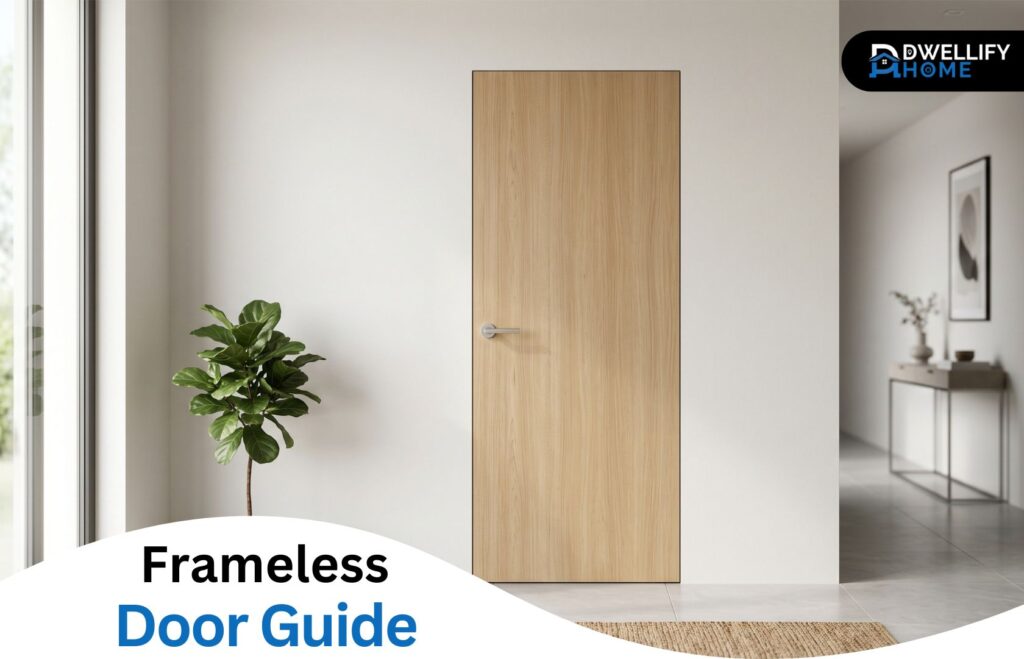
A frameless door is an interior door designed to sit perfectly flush with the wall, with no visible trim, casing, or architrave around it. People also call them invisible doors or flush-to-wall doors, and the concept is simple: the frame still exists, but it’s buried inside the wall instead of sitting on top of it.
From a few feet away, a well-installed one looks like a panel of drywall that happens to open. That’s the whole point. No wooden borders, no painted molding, nothing competing with the rest of the room.
Quick Comparison: Frameless Door vs. Traditional Door
| Feature | Frameless Door | Traditional Door |
| Visible trim | None | Yes (casing, architrave) |
| Hinges | Concealed, 3-way adjustable | Exposed |
| Installation stage | During framing | Near end of build |
| Wall requirements | Must be plumb | Forgiving |
| Typical cost (installed) | $1,300 – $3,700 | $250 – $600 |
| Best for | New builds, modern interiors | Most standard homes |
Key Benefits at a Glance
- Clean, flush wall lines with no visible trim
- Supports continuous paint, wallpaper, or veneer across door and wall
- Opens up floor space near the doorway
- Works well with modern, minimalist, and transitional interiors
- Can increase perceived quality and resale appeal in premium homes
How Frameless Doors Work: The Concealed System
The look is minimal, but the engineering behind it isn’t. A frameless door system is built around three quiet elements working together.
The Hidden Structural Frame
The backbone is usually an aluminum or galvanized steel frame that gets installed during the rough framing stage, before drywall goes up. This frame replaces the traditional wooden jamb you’d see in a standard door. Once the drywall is taped, mudded, and painted, the frame disappears into the wall.
Concealed Hinges and Magnetic Latches
Instead of visible hinges, these doors rely on three-dimensional concealed hinges that sit inside the frame and door edge. They’re adjustable in three directions, which matters because it lets an installer correct small wall imperfections without anyone ever noticing. The latch is typically magnetic, so there’s no visible strike plate either.
How the Door Sits Flush With the Wall
Because the frame is recessed, the door panel itself becomes the finished wall surface when closed. You can paint it the same color as the wall, wallpaper over it, or apply wood veneer. Done properly, the seam between door and wall is barely a pencil-width line.
Frameless Doors vs. Traditional Doors — Key Differences
A traditional door adds to a room visually. It announces itself through trim, hinges, and handles. This kind of door tries to disappear. That difference shapes almost everything else.
Installation timing changes too. Standard doors go in near the end of a build; frameless systems must be planned during framing. Hardware is concealed rather than decorative. And the cost structure is higher overall, because you’re paying for precision rather than mass production.
Types of Frameless Doors
Not every flush door is the same, and picking the right type matters more than most homeowners realize.
Inswing and Outswing Hinged Doors
These are the most common. They work like a regular door but stay flush when closed. Outswing versions are useful in small rooms like powder baths where inward swing would eat space.
Sliding Frameless Doors
Instead of swinging, they glide along a concealed track. Good for tight hallways, walk-in closets, or spaces where a swing arc isn’t practical.
Pivot Frameless Doors
These rotate on a central pivot point rather than side hinges, which gives you that oversized, architectural feel. Lovely in entryways and primary suites, but they demand a specific ceiling and floor setup.
Frameless Double Doors
Two flush panels meeting in the middle, usually used for larger openings into a living room, home office, or dining area. They make a statement without shouting.
Frameless Glass Doors
Tempered or laminated glass panels mounted on concealed hardware. Common in home offices, en-suite dressing rooms, and studios where light flow matters more than privacy.
Common Materials Used in Frameless Doors
Materials shape both the look and how the door behaves over time. These are the four you’ll encounter most often.
Engineered Solid-Core Wood
This is the workhorse. It feels substantial, blocks sound reasonably well, and resists warping better than solid hardwood. Most of my clients end up here.
Tempered and Laminated Glass
Tempered glass breaks into blunt pebbles rather than sharp shards, which is why building codes require it for full-panel doors. Laminated glass adds a plastic interlayer that holds the panel together if it ever cracks. Both are safe for homes with kids when installed correctly.
MDF and Primed Panels
Useful when you want a perfectly smooth paintable surface or plan to wallpaper the door. MDF takes paint well and hides seams cleanly.
Aluminum and Steel Frame Components
You won’t see these after install, but the frame material matters. Galvanized steel resists rust and stays square for decades. Aluminum is lighter and easier to work with, though it should be reinforced in taller openings.
Where Frameless Doors Work Best in a Home
They shine in rooms where the architecture is already doing the talking. Primary bedrooms, home offices, hallways leading to secondary spaces, walk-in closets, and powder rooms all benefit from the clean wall plane.
They also work well in open-plan layouts where a traditional door would interrupt the visual flow between zones. Minimalist, modern, contemporary, Scandinavian, and transitional interiors pair with them naturally. In heavily traditional homes with deep trim and crown molding, they usually feel out of place.
Benefits of Choosing a Frameless Door
The visual payoff is the first thing people notice. Walls feel taller, rooms feel calmer, and there’s a quiet sense of order that trim-heavy homes can’t quite match.
Beyond looks, they offer practical wins too:
- Continuous finishes: paint, wallpaper, or wood can run across the door and wall without interruption.
- Better light flow in glass versions, especially in interior rooms without windows.
- Space near the doorway opens up because there’s no trim to avoid with furniture.
- Buyers in the premium market often look for them specifically, which can help at resale.
Drawbacks and Honest Trade-Offs to Consider
The same precision that makes them look great is also what makes them harder to live with when things go wrong. A few honest realities:
- They cost significantly more than standard doors, often two to four times as much.
- The wall must be genuinely plumb. Old homes with settled framing often need structural correction first.
- They’re best planned during new builds or full gut renovations, not weekend swaps.
- Not every installer can do them well. A mediocre install will haunt you every time you look at the door.
- Repair parts for obscure manufacturers can be hard to source years later.
How Much Does a Frameless Door Cost?
Cost is where I lose more clients than anywhere else, so I try to be upfront about it early.
Door and Hardware Price Range
For a quality single flush-to-wall door with a concealed frame, hidden hinges, and magnetic latch, expect roughly $900 to $2,500 for the product alone. Glass and pivot versions run higher.
Professional Installation Costs
Installation typically adds $400 to $1,200 per door, depending on wall condition and whether drywall finishing is included. Complicated retrofits can push that higher.
Factors That Affect the Final Price
Size, material, finish type, door height (anything over eight feet adds cost quickly), hardware brand, and the complexity of your walls all move the number. Taller ceilings and custom finishes add the most.
Cost Compared to a Traditional Door
A standard prehung interior door, installed, usually runs $250 to $600. So yes, you’re paying a real premium, but you’re also buying a different category of product.
Installing a Frameless Door: What Homeowners Should Expect
Installation is where most homeowners underestimate the project. These doors aren’t swapped in; they’re built in.
New Construction vs. Renovation Scenarios
New construction is the easiest path because the concealed frame goes in before drywall. Renovations are doable but often require opening walls, relocating outlets, and reworking framing.
Wall Preparation and Plumb Requirements
The rough opening must be plumb within a few millimeters. I’ve seen gorgeous doors ruined by walls that were off by just a quarter inch. Shimming can only do so much.
Why Professional Installation Is Usually Non-Negotiable
There’s no margin for error. The frame, hinges, magnetic lock, drywall joint, and final finish all have to align perfectly. Only a handful of installers in most cities really know how to do this well. I’d rather wait two months for the right person than hire the wrong one.
Typical Installation Timeline
Frame installation takes a few hours. Then drywall, mud, sanding, and paint cycles stretch the total process over one to two weeks because of drying time between coats.
How to Choose the Right Frameless Door for Your Home
Once the budget is clear, the decision breaks down into four practical questions.
Match the Door to the Room’s Function
A powder room needs privacy and a quiet latch. A home office may benefit from glass. A bedroom wants solid core for sound. Start with function, not looks.
Pick a Material That Fits Your Lifestyle
Houses with kids and pets do better with engineered wood or laminated glass. Quiet adult households can get away with thinner panels and lighter materials.
Choose the Right Hardware
Concealed three-way adjustable hinges are non-negotiable. Magnetic latches are quieter and more reliable than spring latches over time. Handles can be flush pulls, edge pulls, or minimal levers.
Vet the Manufacturer
This is where people get burned. Look for companies that publish engineering specs, offer U.S.-compliant frame systems, and have been installed in homes you can visit or see photographed in detail. Cheap knockoffs exist, and they almost always fail at the frame or hinge within a few years.
Common Mistakes Homeowners Make With Frameless Doors
A few patterns come up again and again:
- Treating it as a late-stage decision. By the time drywall is up, it’s too late for the cleanest install.
- Skipping a wall assessment. Old plaster and settled framing don’t play nicely with flush panels.
- Underbudgeting for hardware. Good concealed hinges alone can run $150 to $400 per door.
- Buying the cheapest concealed frame available. These warp, and you’ll see it in the drywall cracks that follow.
- Using a general carpenter instead of someone trained on the specific system.
Maintenance and Long-Term Care
The good news is they’re low-maintenance once installed. Wipe painted panels with a soft damp cloth, avoid harsh solvents on wood finishes, and clean glass with standard non-ammonia cleaners.
Check the hinge tension once a year. Most concealed hinges have small adjustment screws that let you correct minor drift without opening the wall. If the door starts catching or gapping unevenly, a five-minute adjustment usually fixes it.
Frequently Asked Questions
Are frameless doors worth the investment?
If the rest of the home matches that level of finish, yes. If you’re putting one into a builder-grade house surrounded by thick trim, the visual effect gets lost and the money is better spent elsewhere.
Can frameless doors be retrofitted into an older home?
Yes, but it’s real work. You’ll likely open the wall, rework framing, and possibly repair plaster. I’d only recommend it during a larger renovation.
Do frameless doors reduce noise as well as traditional doors?
A solid-core version with good seals performs comparably. Glass and hollow-core panels transmit more sound, as you’d expect.
Can you paint or wallpaper over the door?
Yes, that’s actually one of their strengths. Primed panels are designed for exactly this, so you can carry wall finishes straight across.
How long do frameless doors typically last?
A quality system, installed properly, will last as long as the house. I’ve revisited installs from a decade ago that still operate cleanly with minor hinge adjustments.
Are frameless glass doors safe for homes with kids?
Tempered or laminated safety glass meets residential code and handles daily life well. Add a safety film if you want extra peace of mind.
Is a Frameless Door Right for Your Home?
These doors reward homes where the architecture is already doing quiet, thoughtful work. They’re not universally the right choice, and honestly, in some houses they’d feel out of place. The best candidates are new builds, full renovations, and modern or transitional interiors where clean wall lines already matter.
If your walls are true, your budget has room, and your installer knows what they’re doing, the result is the kind of detail you stop noticing — which is exactly the point.
Disclaimer:
This article is for informational purposes only. Product pricing, installation requirements, and design outcomes vary based on your home, region, and chosen installer. Always consult a qualified professional before starting a frameless door project.