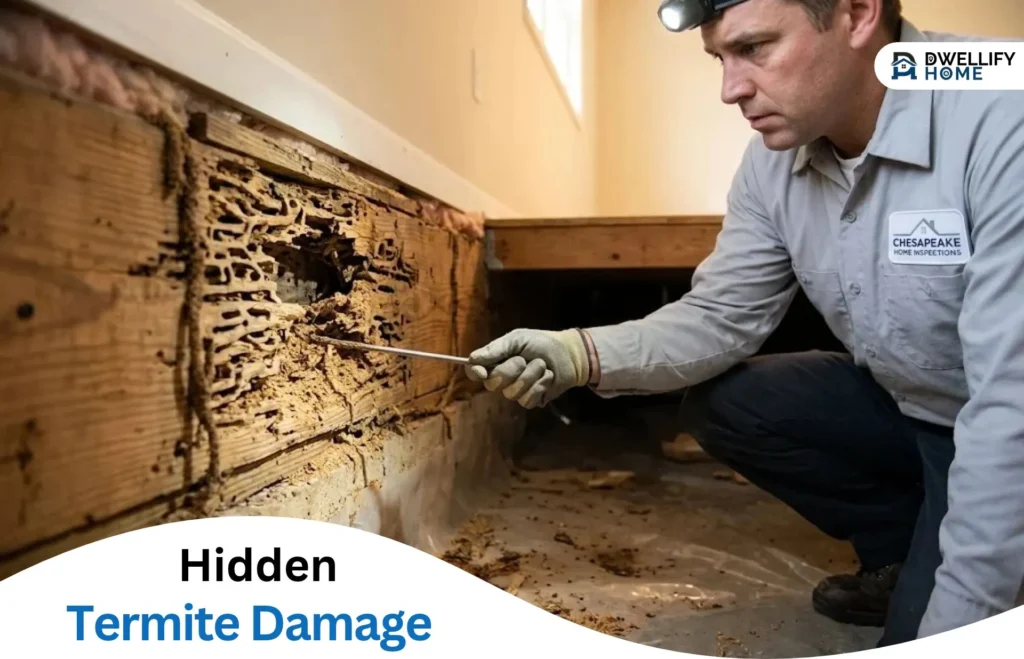
It’s never cheap to repair damage caused by termites and more often than not homeowners have waited too long to call in a termite inspection Chesapeake VA. Something as simple as a floor that feels spongy, a door that sticks, or a hollow sounding baseboard that a screwdriver can be pushed into as though it were cake, is a sign that you’ve already got a major termite problem on your hands.
Most termites live in colonies that reside in your walls and can be damaging your home for years before you notice any signs of activity. It’s for this reason that it’s always best to get a termite inspection done before you notice any issues as opposed to waiting for problems to arise. An inspector will be able to pick up on things that the average homeowner wouldn’t be likely to notice.
Termites love a high water table, warm summers, humid air and damp soil conditions. In fact, for underground termites, your home is pretty much a beeline to a termite buffet. Common culprits that attract termites include: Crawlspaces. Many homes in the area have
crawlspaces, which can contribute to higher humidity levels. When combined with a small plumbing leak, clogged gutters or even sloping soil towards the foundation, it creates the perfect conditions for attracting termites. Older neighborhoods. Older wood combined with years of exposure to moisture provides easy access for termites. However, newer
construction can also be at risk due to wood framing, mulch up against the siding or even firewood stacked too close to the home.
Why Chesapeake Homes Are Such Easy Targets
With nice warm summers, high humidity levels, a high water table and long periods of damp soil this creates the perfect environment for subterranean termites.
Termites love living underground and require moisture to survive. Your home becomes an all you can eat buffet!
Crawlspaces can make it worse. Many homes in the area have crawlspaces which create a high humidity. If there is a slight leaking pipe, blocked gutter or damp soil running towards your foundation you have created an inviting entrance.
Older areas can pose a higher risk. Older wood and years of exposure to moisture makes it easy for termites to enter. New homes can still be at risk. Wood frames, mulch beds next to the siding and stacked firewood can cause problems.
Signs You May Notice Yourself
You don’t need to be an expert to pick up on some of these common signs of termites:
- Thin mud tubes, about the width of a pencil, on the foundation wall or in the crawlspace
- Piles of wings, particularly around windows and doors (usually after the spring swarming season)
- Wood that sounds hollow when tapped
- Doors and windows that are difficult to open or close
- Paint that bubbles or peels where there’s no obvious water source
- Floors that sag or feel spongy in one spot
One sign alone doesn’t prove anything. Two or three together? Call someone.
And here’s the catch. Many infestations show none of these. That’s where an inspection earns its fee.
What a Professional Inspection Looks At
A qualified inspector would know where termites like to hide and how they behave. They will be able to read the house.
Generally:
Outside first, looking at the foundation, cladding, window frames, decks, fencing and any timber in contact with the ground. The grading of the property can also be an issue as water can pool close to the house.
Crawlspace or basement. This is where the majority of issues will be found. The floor joists, sill plates, structural beams and subfloor boards will all be carefully looked at. Tap testing, probing and moisture meters will be used to locate any moist or soft sections.
Inside the living areas. The baseboards, door frames, window sills and areas close to plumbing. Sometimes thermal imaging or moisture detection equipment will be used to identify any issues behind the drywall.
Attic and roofline. Not so common but worth checking if there has been a leak from the roof.
This will usually take between 1-2 hours to complete, depending on the size of the home. Once completed you will receive a report. The report should highlight any issues found, where they were found, how severe they are and what you need to do.
Hidden Damage
Common findings during inspections include:
Termites have a tendency to eat the inside of wood leaving the outside looking perfectly fine. The wood may even have been painted and cleaned but underneath there is just a very thin layer of wood. This can only be seen when the material actually fails.
Floor joists and sills. These are structural supports within your house.
Window and door frames. Moisture and wood go hand in hand making them a prime spot.
Old damage. Sometimes during an inspection the inspector will find signs of past infestations. This could be because the damage has never been treated or treated but nothing has been done to repair. This is a common occurrence for buyers so many people request an inspection prior to purchase.
To put simply, most of the time you won’t see the whole picture.
What happens if there are termites?
Don’t worry! This is fixable. Finding the issue is the difficult bit.
Once an inspector has confirmed there has been some activity, the next step will be to treat the issue. There are two main ways to treat termites. A liquid barrier can be used to form a protective barrier around your foundation. Or bait stations can be placed in the ground. Over time these are monitored. This means the colony will bring the active ingredient back to the nest.
Depending on your home, soil type and how severe the issue is, your inspector should be able to explain clearly what would be best for your home. A good inspector will not push you into anything.
Most people in Hampton Roads will be suffering from the same pests. You will often see people comparing termite treatments Virginia Beachand Chesapeake. Whilst location isn’t as important as the method used, it is worth asking what product they use, how long it will last and what follow up visits will be like.
The wood will need to be repaired. This will stop the termites but won’t repair the damaged beam.
How often should I get one?
As a general rule it is a good idea to get an annual inspection. If your home has had termites before or is on a moist plot then it is recommended to have one annually.
You should also have an inspection:
- When purchasing/selling a home.
- Following flooding, large leaks or severe storm damage.
- If you notice any of the signs above.
- Prior to any renovations where walls or floors will be opened up.
This is a small cost compared to replacing a joist or part of your subfloor.
Tips to Make Home Less Attractive to Termites
Keep mulch a few inches away from your foundation. Store firewood off the ground and away from your home. Fix leaky faucets and clogged gutters. Make sure there’s good airflow in your crawlspace and no standing water. No tips will ever completely protect your home from termites, but these can help make your home a little less inviting.
Final Thoughts
Termites can do a lot of damage, and it can go unnoticed for a long time. It’s important to get a professional termite inspection to see what’s going on inside your walls and under your floors so you can catch the problem early. If it’s been over a year since your last termite inspection or you’ve never had one, now is the time.
Frequently Asked Question
How much does a termite inspection cost in Chesapeake?
Some termite companies offer free or low-cost termite inspections, especially if you’re also considering termite treatment. Termite inspections for real estate closings tend to be a little more expensive.
How long does a termite inspection take?
Termite inspections generally take one to two hours, but this can vary depending on the size of the home and access to the crawlspace. It may take longer for larger homes or homes with complicated layouts.
Can Termites be present in new homes?
Yes! It doesn’t matter how old your home is. There are certain things that are more likely to cause a problem. Things such as moisture, wood sources nearby and contact with soil. New homes can suffer from termites sometimes even in the first few years.
Do I need to be present?
Not necessarily but it’s helpful. You will be able to ask questions and see where there may be issues. The inspector will need access to your crawlspace, attic and main areas.
What’s the difference between inspection and treatment?
The inspection will check for and confirm any current termite activity and damage. The treatment will kill off the colony to protect your home.
For clarity, some references and links in this article may involve affiliate commissions or sponsored arrangements. These commercial relationships provide support for Dwellifyhome.com and its ongoing content initiatives.