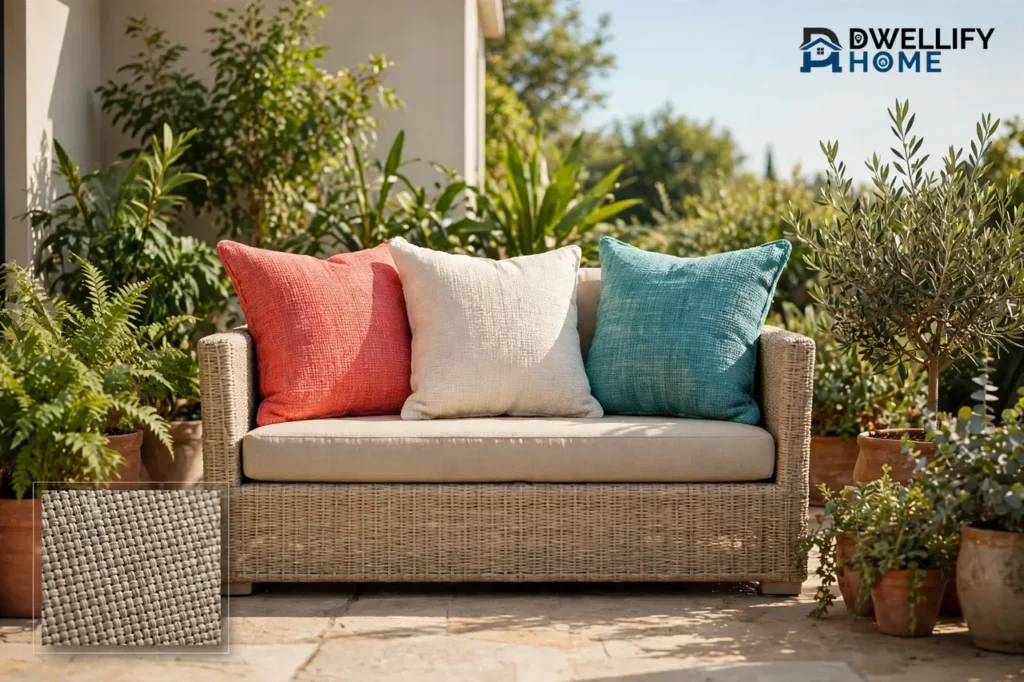
Patio pillows are outdoor throw pillows built with weather-resistant fabric and quick-dry fill, and the ones that last are made from solution-dyed acrylic like Sunbrella or olefin, with sealed seams and a removable, machine-washable cover. The difference between a pillow that lasts three summers and one that fades in three months is the fabric, not the price. This guide shows you which fabric to buy, which size fits your furniture, and how to wash and store pillows so they still look new next spring.
One word on a product page decides whether a pillow survives rain or soaks it up, and most listings use the wrong word on purpose. The difference between waterproof and water-resistant is in the fabric section below, and it takes one minute to learn before you spend a dollar.
What Are Patio Pillows?
Patio pillows are throw pillows made for outdoor furniture, built to survive rain, sun, and temperature changes without losing shape or color. Unlike indoor pillows, they use tightly woven synthetic fabrics and sealed seams that keep moisture out, and quick-dry foam or polyester fiberfill inserts that resist mildew instead of holding water like a sponge.
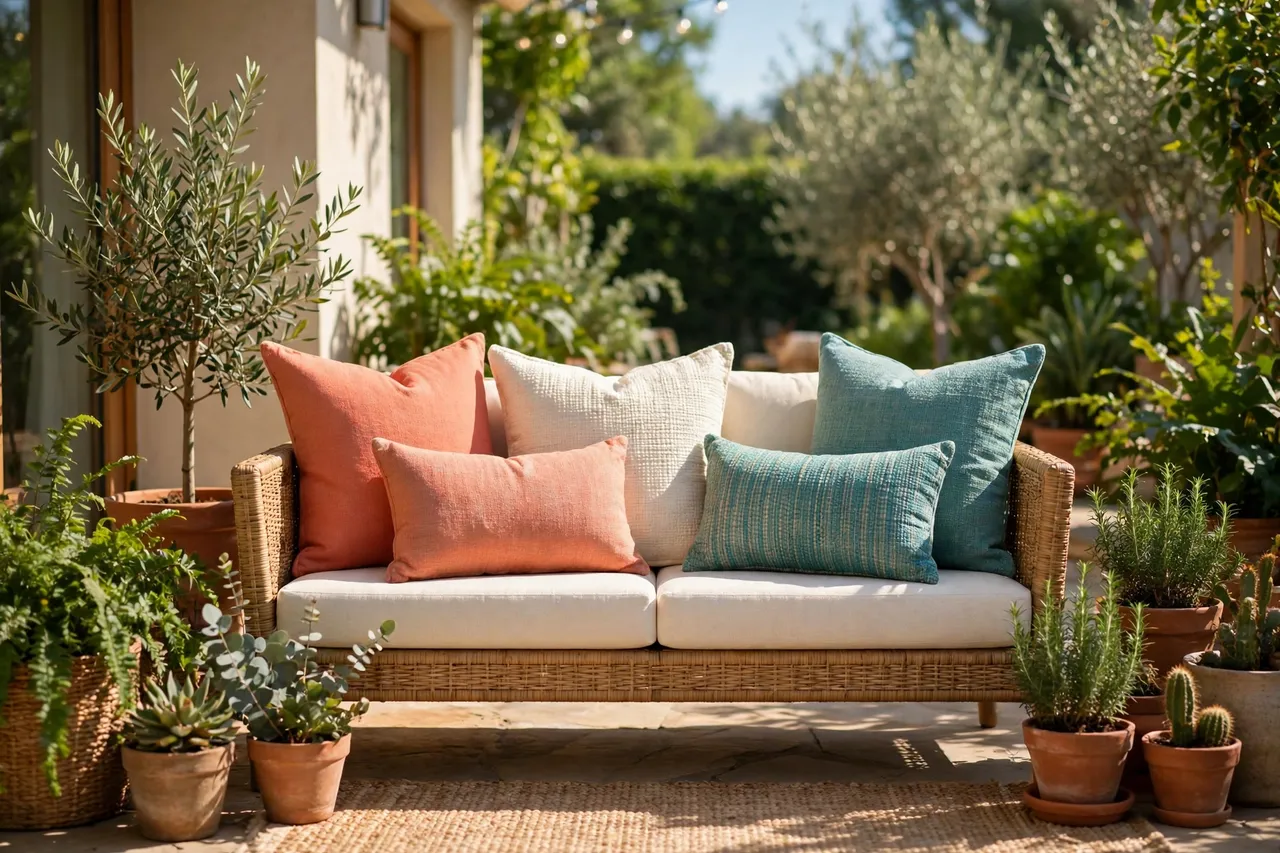
Three shapes cover most patios. Square throw pillows, usually 18 by 18 inches, fit most chairs and sofas and are the easiest to mix and match. Lumbar pillows, usually 12 by 20 inches, support your lower back on a deep sofa or a lounge chair. Round pillows suit a boho or relaxed look, and floor pillows turn a deck into a casual sitting area for kids and guests. Match the shape to the furniture: lumbar pillows for deep seats, square pillows for upright chairs, and floor pillows for open deck space.
Patio pillows do two jobs at once. They add comfort, because a bare outdoor chair is hard and flat, and a pillow gives your back and arms something soft to rest on. And they add style, because pillows are the cheapest way to change the look of a whole patio: swap the pillow colors and the set looks new, without buying new furniture. That is why pillows are the first upgrade most owners make, and why buying the wrong ones stings, because a faded, soggy pillow makes a good set look tired.
Do not confuse patio pillows with seat cushions. A cushion is the thick pad you sit on, shaped to the chair, and it carries your weight. A pillow is the soft throw you lean on, and it carries nothing but your back. Our replacement cushions for patio furniture guide covers the seat pads, and this guide covers the throws. Both need the same fabric, but they are different pieces, and they are bought differently.
Waterproof vs Water-Resistant: The Word That Matters
Waterproof means no water passes through, achieved with coatings and sealed seams. Water-resistant means the fabric sheds light moisture and dries quickly, but it is not fully impermeable. Most patio pillows are water-resistant, not waterproof, and the label on the listing rarely says which one honestly, because no federal rules govern waterproof claims for pillows.
That gap matters. A water-resistant pillow with solution-dyed acrylic fabric sheds a light shower and dries in an hour, which is enough for a covered patio or a chair that goes under cover when rain comes. A truly waterproof pillow with taped seams and a hydrophobic coating survives a downpour on an open deck, because water beads up and rolls off instead of soaking in. The waterproof outdoor pillow guide from Wellness Alibaba puts the rule plainly: look for sealed seams and a hydrophobic coating, and test it by watching whether water beads or soaks in.
Here is the test you can run at home. Pour a spoonful of water on the pillow and watch. If it beads up and rolls off, the fabric is doing its job. If it darkens and soaks in within seconds, the pillow is not what the listing claimed, and it will hold water, grow mildew, and smell by midsummer. Run that test on the first pillow before you buy the set, because a set of six soggy pillows is a set you will throw away.
The honest rule is simple: buy waterproof construction only if your pillows stay fully exposed to rain with no cover and poor drainage. For a covered patio, a screened porch, or a set that goes under cover when rain comes, water-resistant fabric with quick-dry fill is enough, and it is softer and more breathable than a sealed waterproof shell. Buy the protection your patio needs, not the word on the listing.
Which Fabric Lasts Longest Outside?
Solution-dyed acrylic, sold as Sunbrella and similar brands, lasts longest outside, because the color runs through the fiber instead of sitting on the surface, so it resists fading, mold, and mildew for years. Olefin is the strong budget alternative: it resists water and fading well and costs less. Polyester is affordable but fades faster, and untreated polyester can discolor in 6 to 12 months of full sun.
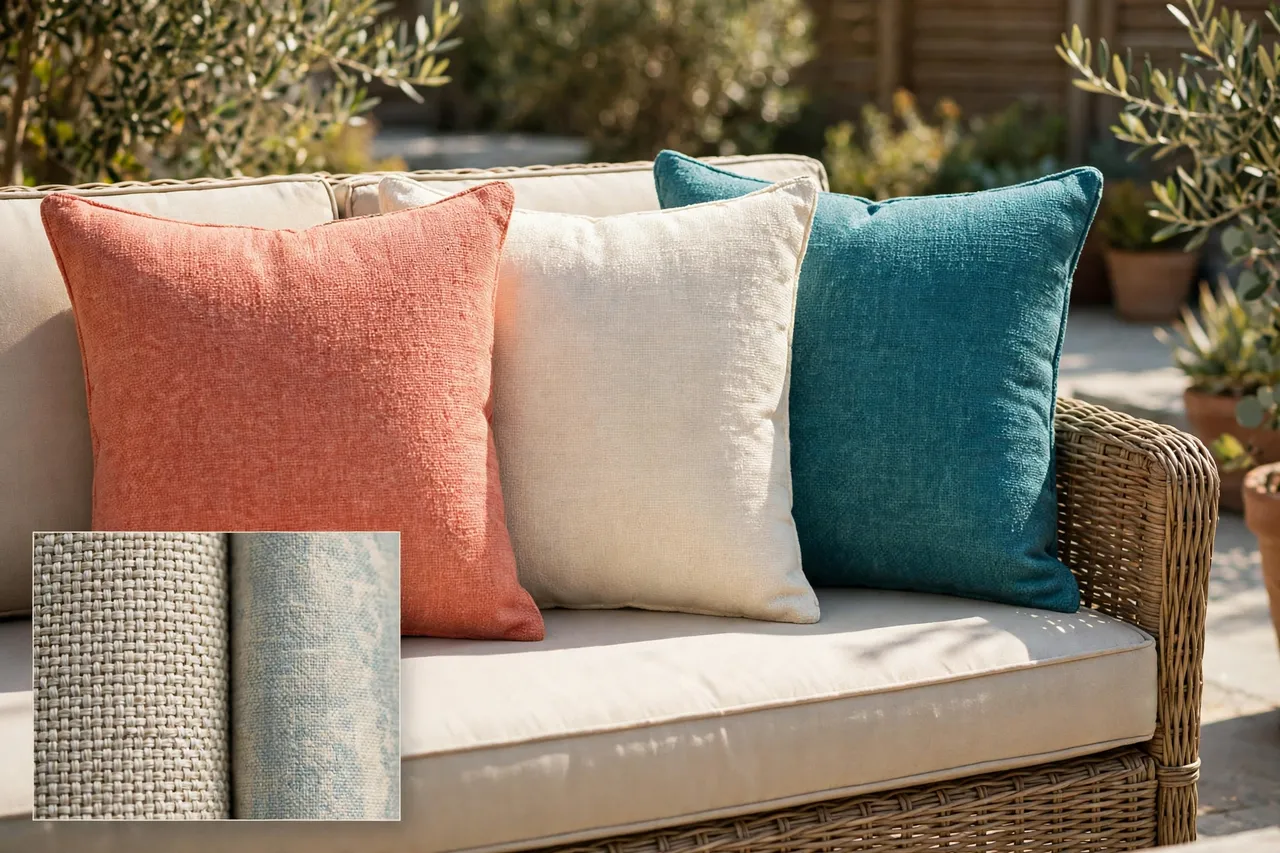
Solution-dyed acrylic is the fabric every serious outdoor brand uses, and it earns its price. The color is mixed into the fiber before it is woven, so sun cannot bleach it off, and the fabric resists water, mold, and mildew without a coating that wears away. Look for fade-resistance ratings of 1,000 hours or more of sun exposure, because that number separates real outdoor fabric from indoor fabric with an outdoor label. Our weather-resistant outdoor furniture guide covers the same fabric on cushions and covers.
Olefin, also called polypropylene, is the value pick. It resists water and fading well, dries fast, and costs less than acrylic, which makes it the right choice for a large set of pillows on a budget. It feels slightly stiffer than acrylic and it holds fewer colors, but it lasts far longer than polyester. Polyester is the cheapest option and the shortest-lived: it fades fast in full sun, holds water longer, and grows mildew sooner. Avoid cheap polyester blends that degrade quickly in sun and rain, and avoid cotton blends unless they are coated, because cotton soaks up water and never dries.
The fill matters as much as the fabric. Closed-cell foam drains quickly and will not harbor mold, which makes it the best fill for pillows that stay outside. Polyester fiberfill is softer and cheaper, but it compresses faster and holds water longer, so it suits pillows that go indoors when rain comes. Avoid low-density fiberfill unless it is removable and washable, because it clumps after the first wash and never fluffs back. The best combination for most patios is a solution-dyed acrylic cover with a quick-dry foam or high-density fiberfill insert, and a removable cover you can wash.
What Size Patio Pillows Should You Buy?
You should buy patio pillows sized to your furniture: 18 by 18 inches for most chairs and sofas, 12 by 20 inches for lumbar support on deep seats, and 20 by 20 inches for large sectionals. A pillow that is too big overwhelms a small chair, and a pillow that is too small disappears on a deep sofa, so measure the seat before you shop.
| Pillow size | Shape | Best for |
|---|---|---|
| 16 × 16 inches | Square | Small chairs, bistro sets |
| 18 × 18 inches | Square | Most chairs and sofas |
| 20 × 20 inches | Square | Deep sectionals, large sofas |
| 12 × 20 inches | Lumbar | Lower back support on deep seats |
| Round, 16–18 inches | Round | Accent, boho looks, floor seating |
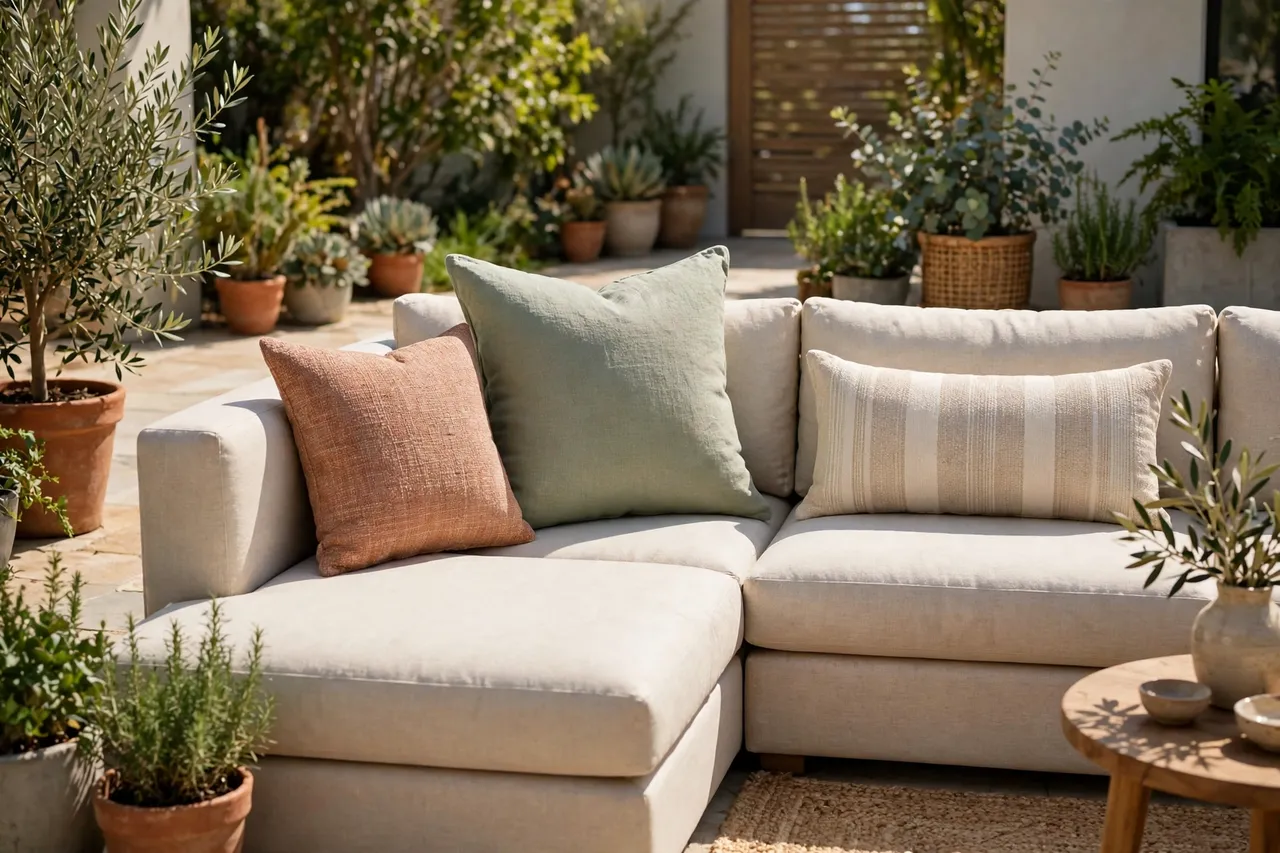
Count pillows by the seat, not by the set. One pillow per chair is enough for a dining chair or a bistro chair. Two pillows per sofa seat is comfortable: one square pillow for the back and one lumbar pillow for the lower back. A 3-seat sectional takes four to six pillows, and more than that looks cluttered and gets in the way of sitting. The pillows should fill the seat without covering it, because a sofa buried in pillows is a sofa nobody can sit on.
Check the insert, not just the cover. A pillow cover that is 18 by 18 inches needs an insert that is 18 by 18 inches or slightly larger, because a full insert keeps the pillow plump and stops the corners from going flat. A cover with a hidden zipper looks cleaner than a cover with ties, but ties hold the pillow to the chair in wind, which matters on an exposed patio. Our outdoor pouf ottoman guide covers the floor pillow alternative for casual seating, and our lounger guide covers the lumbar pillow that makes a chaise comfortable.
What Most People Get Wrong About Patio Pillows
Most people get one thing wrong about patio pillows: they buy on color and price, and they ignore the fabric label. A pretty pillow in cheap polyester looks perfect in the store and fades to a washed-out grey in one summer, while a plain pillow in solution-dyed acrylic still looks new in year three. The fabric label decides the life of the pillow, and it is printed on the listing if you look for it.
The second wrong belief is that outdoor pillows never need washing. They do. Pollen, dust, sunscreen, and food stain any pillow left outside, and a pillow that is never cleaned grows mildew inside the cover where you cannot see it. Wash the covers every four to six weeks in summer, and the pillows will last twice as long. The washing routine is in the next section, and it takes ten minutes.
The third wrong belief is that a pillow left outside all winter will be fine because it is “outdoor.” It will not. Freeze-and-thaw cycles crack waterproof coatings, and a pillow left wet all winter grows mildew that never washes out. Bring the pillows indoors before the first frost, or store them dry in a sealed bin. A pillow stored dry in November is a pillow that still looks new in May. Here is the problem with buying a set of six at once: one bad fabric choice wastes six pillows, so buy one first, test it in the rain, and then buy the rest.
How to Wash Outdoor Pillows
You wash outdoor pillows by removing the cover, machine-washing it in cold water on a gentle cycle, and air-drying it completely before putting it back. Never machine-dry a waterproof cover, because the heat damages the coating. Never use bleach or strong solvents, because they break down the fabric and the waterproof layer.
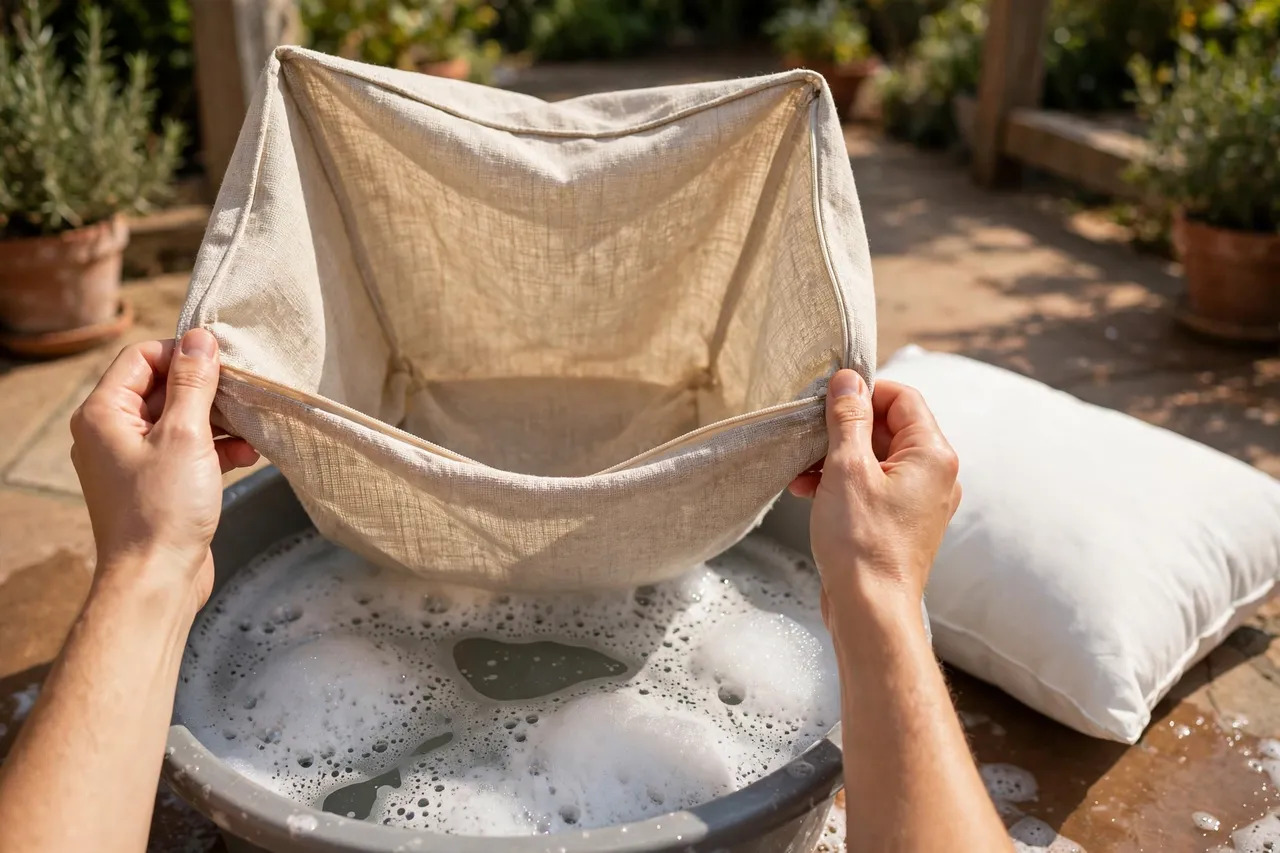
Start by reading the care label, because it tells you whether the cover comes off and what temperature to use. Most removable covers wash in cold water with mild detergent, and they air-dry in a few hours. If the cover does not come off, spot-clean it with a damp cloth and mild soap, and never submerge the whole pillow, because the fill will hold water for days and grow mildew inside. For a stubborn stain, let the soap sit for ten minutes before you wipe it, and rinse with clean water so no soap residue attracts dirt.
For the insert, check whether it is washable. Quick-dry foam inserts can be rinsed and left to drain in the sun. Polyester fiberfill inserts can usually be machine-washed on gentle and air-dried, but they clump if they are dried on heat, so always air-dry them. If an insert smells musty after washing, it is holding water inside, and it needs a full day in the sun, or it needs replacing. A musty pillow never gets better on its own.
Clean the pillows every four to six weeks in summer with mild soap and water, and always let them dry fully before storage. The outdoor patio pillow guide from Pixelfy makes the same point: using the wrong type of pillow leads to discoloration, fading, mold, and lumping, and the fix is buying the right fabric and washing it regularly. For the cushions underneath, our guide to replacement cushions for patio furniture covers the same wash routine at a bigger scale.
How to Style Patio Pillows Without Clutter
You style patio pillows without clutter by picking two colors and one pattern, and stopping there. A solid color for the big pillows, a second solid for the lumbar pillows, and one pattern for a single accent pillow gives a patio a finished look without turning the sofa into a pillow shop. More than three patterns fights for attention and makes the space feel messy.
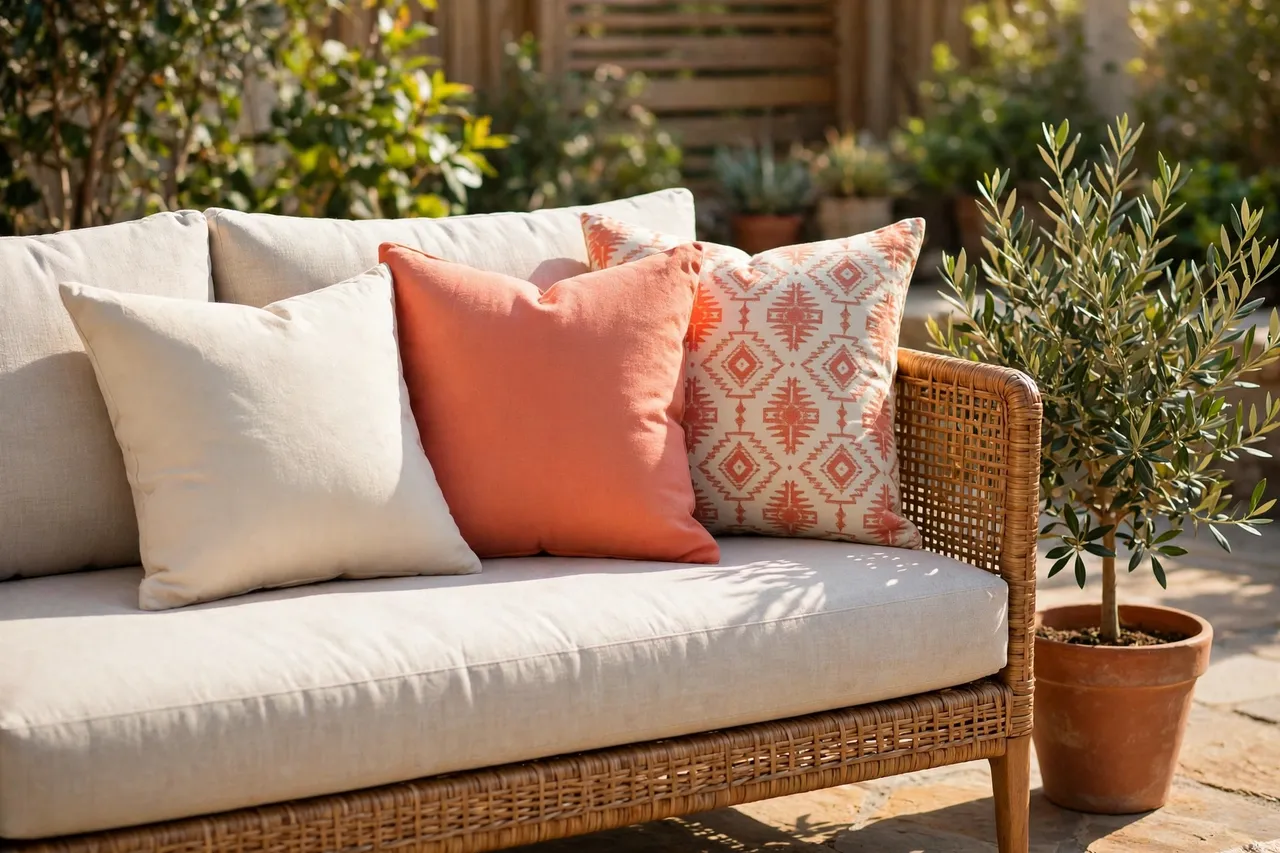
Pick colors by the furniture, not by the season. A neutral sofa takes any color, so pick the color you love and will still love in three years. A colored sofa needs neutral pillows, because two strong colors compete. Light colors show dirt faster but stay cooler in sun. Dark colors hide dirt but absorb heat, so a dark pillow on a sunny sofa can feel hot to lean on. If your patio gets full afternoon sun, pick a light or mid-tone color and let the plants carry the bright color instead.
Mix textures, not just colors. A smooth acrylic pillow next to a woven-look pillow adds depth without adding clutter, and a lumbar pillow in a different texture breaks up a row of square pillows. Keep the count low: two pillows per sofa seat is comfortable, three is the maximum, and a chair needs one. When the season ends, store the pillows in a sealed bin or a storage bench, because a pillow left on the sofa all winter is a pillow you will replace in spring. Our outdoor covers for furniture guide covers the bin and bench options, and our guide on how to store outdoor furniture covers the winter routine for the whole patio.
Related Guides
If patio pillows are on your list, these guides answer the next questions most owners ask. Start with our replacement cushions for patio furniture guide to measure and pick the seat pads underneath, then read our weather-resistant outdoor furniture guide for the fabric that lasts. Our outdoor pouf ottoman guide covers the floor pillow alternative, and our lounger guide covers the lumbar pillow that makes a chaise comfortable. For the sectional they sit on, see our outdoor sectional couch guide.
Frequently Asked Questions
Are outdoor pillows waterproof?
Most outdoor pillows are water-resistant, not fully waterproof. Water-resistant fabric sheds light rain and dries quickly, but it is not impermeable. Truly waterproof pillows have taped seams and a hydrophobic coating, so water beads up and rolls off. Buy waterproof construction only if your pillows stay fully exposed to rain, and buy water-resistant fabric with quick-dry fill for a covered patio.
What is the difference between waterproof and water-resistant pillows?
Waterproof means no water passes through, achieved with coatings and sealed seams. Water-resistant means the fabric repels light moisture and dries quickly but is not fully impermeable. Water-resistant pillows suit a covered patio, while waterproof pillows suit an open deck with no cover. Test it yourself: pour water on the fabric and watch whether it beads or soaks in.
How do you wash outdoor pillows?
You wash outdoor pillows by removing the cover, machine-washing it in cold water on a gentle cycle with mild detergent, and air-drying it completely before putting it back. Never machine-dry a waterproof cover, because heat damages the coating, and never use bleach or strong solvents. Pillows with covers that do not come off should be spot-cleaned with a damp cloth and mild soap, never submerged.
How do you clean outdoor pillows?
You clean outdoor pillows by wiping them with a damp cloth and mild soap every four to six weeks in summer, and washing removable covers in cold water on a gentle cycle. Let the soap sit for ten minutes on a stubborn stain, rinse with clean water, and air-dry fully before storage. Never use bleach, because it breaks down the fabric and the waterproof coating.
What size patio pillows should I buy?
You should buy 18 by 18 inch square pillows for most chairs and sofas, 12 by 20 inch lumbar pillows for lower back support on deep seats, and 20 by 20 inch pillows for large sectionals. One pillow per chair and two per sofa seat is comfortable, and more than three per seat looks cluttered. Match the insert to the cover size, so the pillow stays plump.
How long do outdoor pillows last?
Outdoor pillows last 2 to 3 years in solution-dyed acrylic or olefin with regular washing and dry winter storage, and 1 to 2 seasons in cheap polyester left outside all year. The fabric decides the life: acrylic resists fading and mildew for years, while untreated polyester can discolor in 6 to 12 months of full sun. Wash the covers often and store the pillows dry in winter.
Patio pillows are the smallest purchase with the biggest effect on a patio. Buy the fabric first and the color second, test one pillow in the rain before you buy six, and wash the covers every few weeks. Do that, and the pillows you buy this summer will still be the reason your patio looks finished three summers from now.
Note: This guide gives general advice for choosing outdoor textiles. Check care labels before washing, and store pillows dry indoors over winter.