
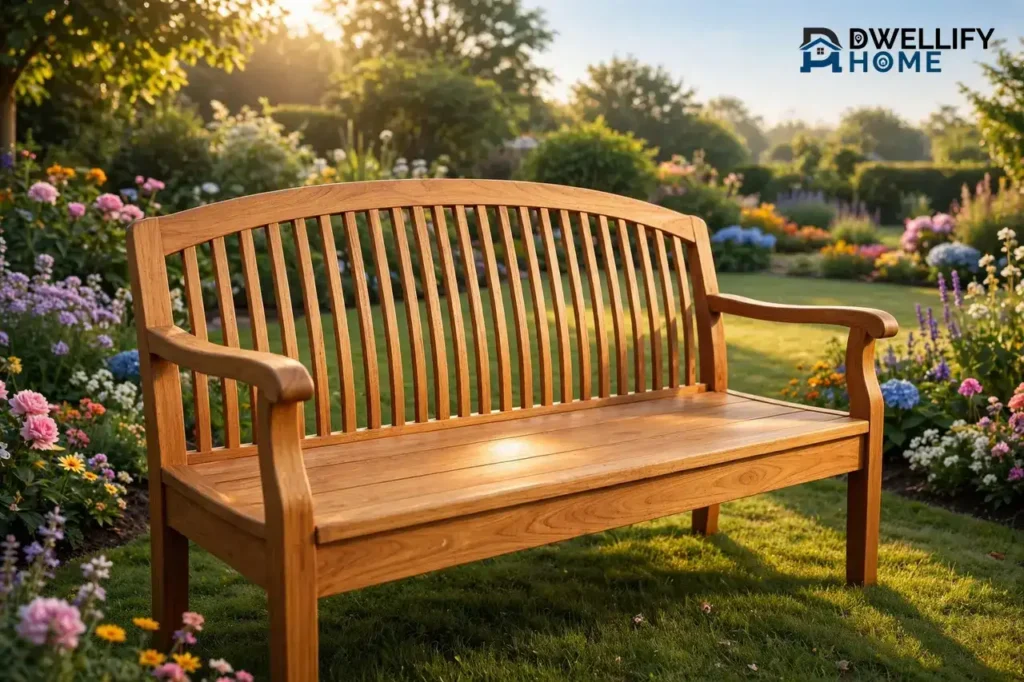
A teak outdoor wooden bench lasts 25 to 50 years outside with almost no care, while a cheap untreated pine bench can split and rot within 3 years, and the wood decides which one you get, not the brand or the price tag. Teak carries natural oils that fight rot and insects on their own, cedar resists damp with its own tannins, and acacia gives you hardwood strength at half the price if you oil it twice a year. This guide compares every wood that matters, shows real checked prices, sizes, and care routines, and helps you pick the bench that still looks good a decade from now.
One item on the list below can void your bench warranty and cut its life in half, and it has nothing to do with the wood you buy. It sits in the care section, and most owners do it in the first month without knowing. Before that, you need the wood decision right, because no oil or cover can save the wrong wood in the wrong spot.
What Is an Outdoor Wooden Bench?
An outdoor wooden bench is a long seat made of weather-rated wood, built to live outside on a patio, porch, deck, or garden path, and it seats two or three people where a chair seats one. Most benches run 4 to 5 feet long, stand 17 to 19 inches high, and offer a seat about 16 to 18 inches deep.
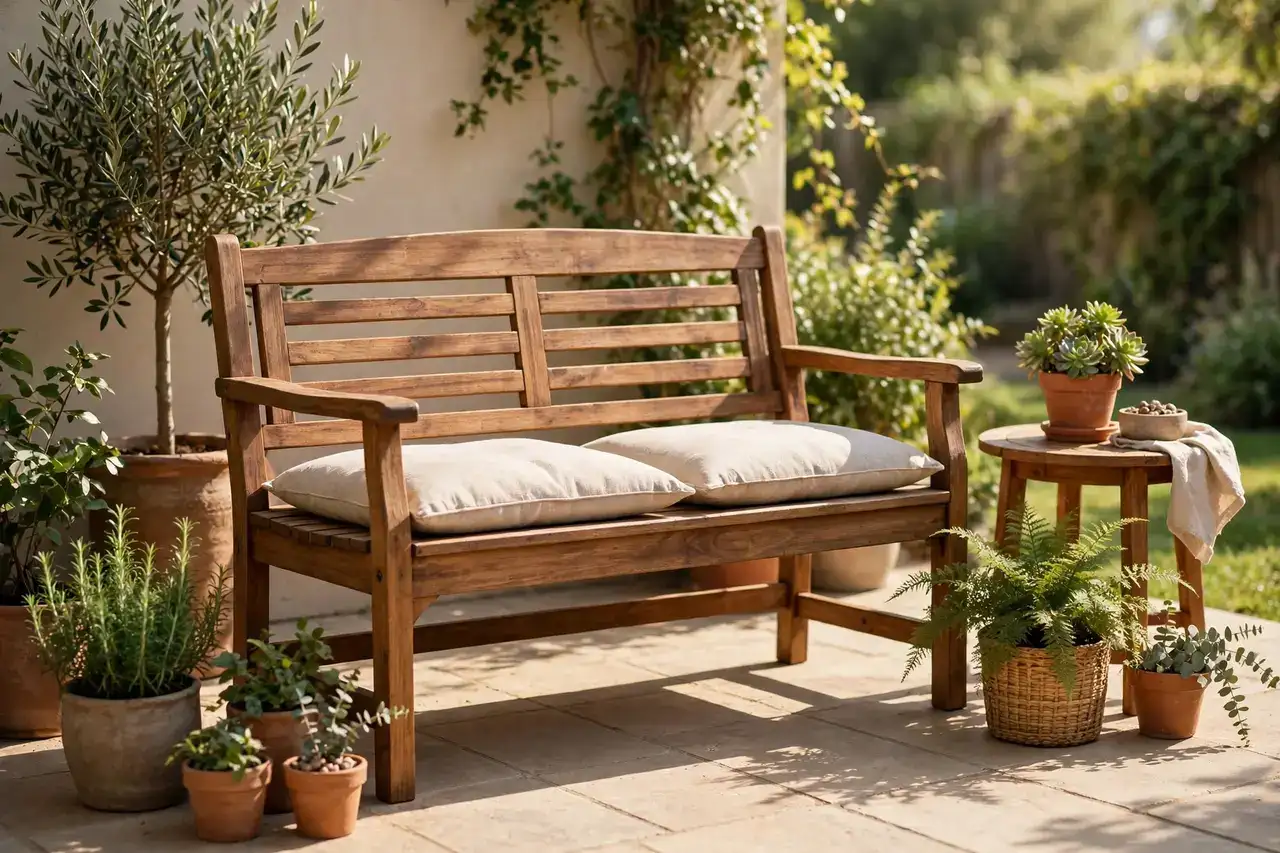
Shoppers meet five common styles. A backless garden bench slides under a table or against a wall and suits dining. A bench with a back and armrests suits long sits in the garden, where comfort matters more than tucking it away. A storage bench hides cushions and tools under a hinged seat, and our outdoor bench with storage guide shows how to pick one that stays dry inside. A park-style bench with a curved cast-iron frame suits a front yard or a long driveway edge. A rustic log or live-edge bench suits a woodland garden and doubles as a feature piece.
Wooden benches beat metal and plastic on warmth and looks. Wood stays comfortable to sit on in sun and cold, it ages into a silver-gray patina that most owners love, and it blends into a garden instead of shouting at it. The trade-off is honest: wood needs a little care, and the wrong wood in full weather will check, crack, and gray unevenly. That is why the next section matters more than the style you fall in love with first.
The wood decides the bench. Style picks the look, but the species picks the lifespan.
Which Wood Lasts Longest Outdoors?
Teak lasts longest outdoors, with a realistic life of 25 to 50 years, because The Wood Database rates it “very durable” for decay resistance and its natural oils repel water and insects without any finish. Cedar runs 10 to 20 years, acacia 5 to 10 with twice-yearly oiling, and pressure-treated pine 5 to 10 with regular sealing.
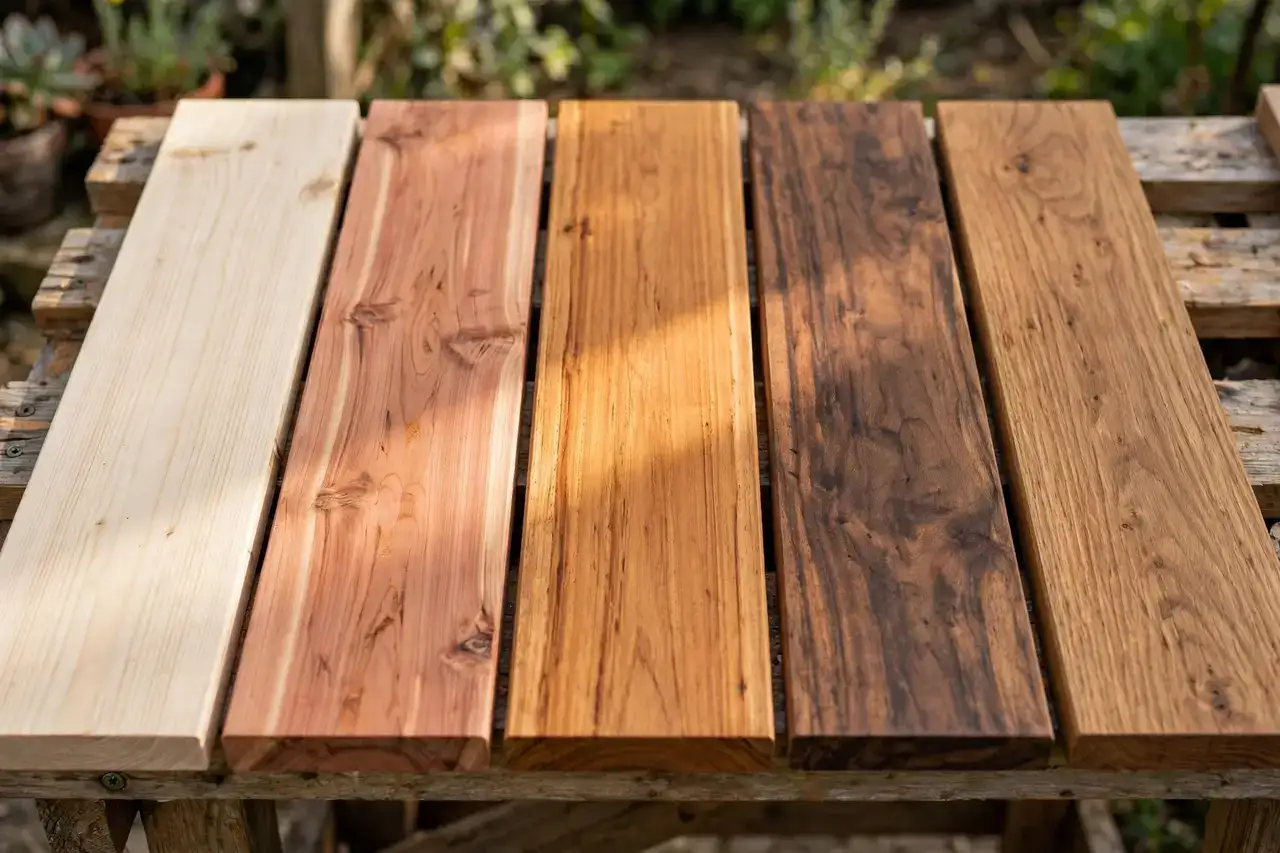
Wood choice is the single biggest decision in this guide, so here is the honest comparison in one place. Guess which wood costs the least over ten years: the $900 teak bench or the $250 acacia bench? The answer is in the table, and it surprises most buyers.
Best wood for an outdoor bench at a glance
| Wood | Realistic life | Yearly care | Typical price, 4–5 ft |
|---|---|---|---|
| Teak | 25–50 years | None, or one sealer coat | $600–$1,500+ |
| Western red cedar | 10–20 years | One clean-and-oil afternoon | $200–$400 |
| Acacia | 5–10 years | Two oil coats | $150–$350 |
| Eucalyptus | 8–15 years | One oil coat | $200–$450 |
| Pressure-treated pine | 5–10 years | Sealer every 1–2 years | $100–$250 |
Price and lifespan ranges in this table come from the five-wood comparison at Outdoor Wooden Bench, checked November 16, 2026. Teak wins the ten-year math: a $900 teak bench with almost no care costs about $90 a year over a decade, while a $250 acacia bench plus oil and two hours of your time each year lands near the same total, and then the teak keeps going for decades more. Read the full wood-by-wood breakdown at Outdoor Wooden Bench’s five wood types compared.
Teak: the buy-it-once wood
Teak earns its reputation honestly. The Wood Database calls it the gold standard for decay resistance, and its heartwood holds natural oils and silica that push back moisture and insects with no finish at all. Left alone, a teak bench weathers to a smooth silver-gray within a year or two, and the gray is only the surface layer: the wood underneath stays sound for decades. One coat of sealer each spring holds the honey color if you prefer it. Watch out for “teak-look” benches, which use a cheaper hardwood under the same name: real teak feels heavy for its size and smells faintly like leather.
Western red cedar: the value pick
Cedar is the wood most buyers should start with. It carries natural tannins that resist rot and insects, it handles damp climates well, and it costs a fraction of teak. Cedar is also one of the lightest bench woods, so the seat stays cool in full sun while a dense hardwood bench can feel hot on bare legs by mid-afternoon. Its softness is the trade-off: cedar dents easily, so seat slats should run at least an inch thick, and ordinary screws leave black stains in it, so check that the hardware is stainless steel or hot-dip galvanized.
Acacia: the budget hardwood with one catch
Acacia is how most people get a hardwood bench on a softwood budget. The wood is heavy, often 1,700 or more on the Janka hardness scale, which makes it harder than teak, and its honey-brown grain looks far more expensive than it is. The catch is movement: acacia grows fast in wet tropical climates, and once it reaches dry air it keeps shrinking for years. Skip the oiling and it checks and cracks; give it two coats of hardwax or tung oil a year, generously on the end grain and feet, and it is the deal of the whole category. A covered patio or a breathable cover relaxes the schedule to once a year.
Eucalyptus and pressure-treated pine
Eucalyptus sits between acacia and teak on almost every axis, at $200 to $450, with one oil coat a year and a life of 8 to 15 years. Much of it carries FSC certification, which matters if sustainable sourcing is part of your decision, and the real variable is the supplier: eucalyptus must be properly kiln-dried, because cheap stock from hurried drying cracks early and no oil saves it. Pressure-treated pine is the cheapest seat in the garden at $100 to $250, because copper-based preservatives forced deep into the wood fight rot and insects. The treatment does nothing against sun, though, so pine still grays, checks, and cups, and it needs a sealer every one to two years plus stainless or hot-dip galvanized hardware, since the copper treatment corrodes ordinary fasteners.
Teak is the only wood that asks for nothing. Every other wood trades a lower price for a yearly habit.
How Much Does an Outdoor Wooden Bench Cost?
An outdoor wooden bench costs $65 to over $1,500 depending on the wood, the size, and the maker, with most good 4-to-5-foot benches landing between $150 and $700. Teak runs $600 to $1,500 and more, cedar $200 to $400, acacia $150 to $350, eucalyptus $200 to $450, and pressure-treated pine $100 to $250, all checked November 16, 2026.
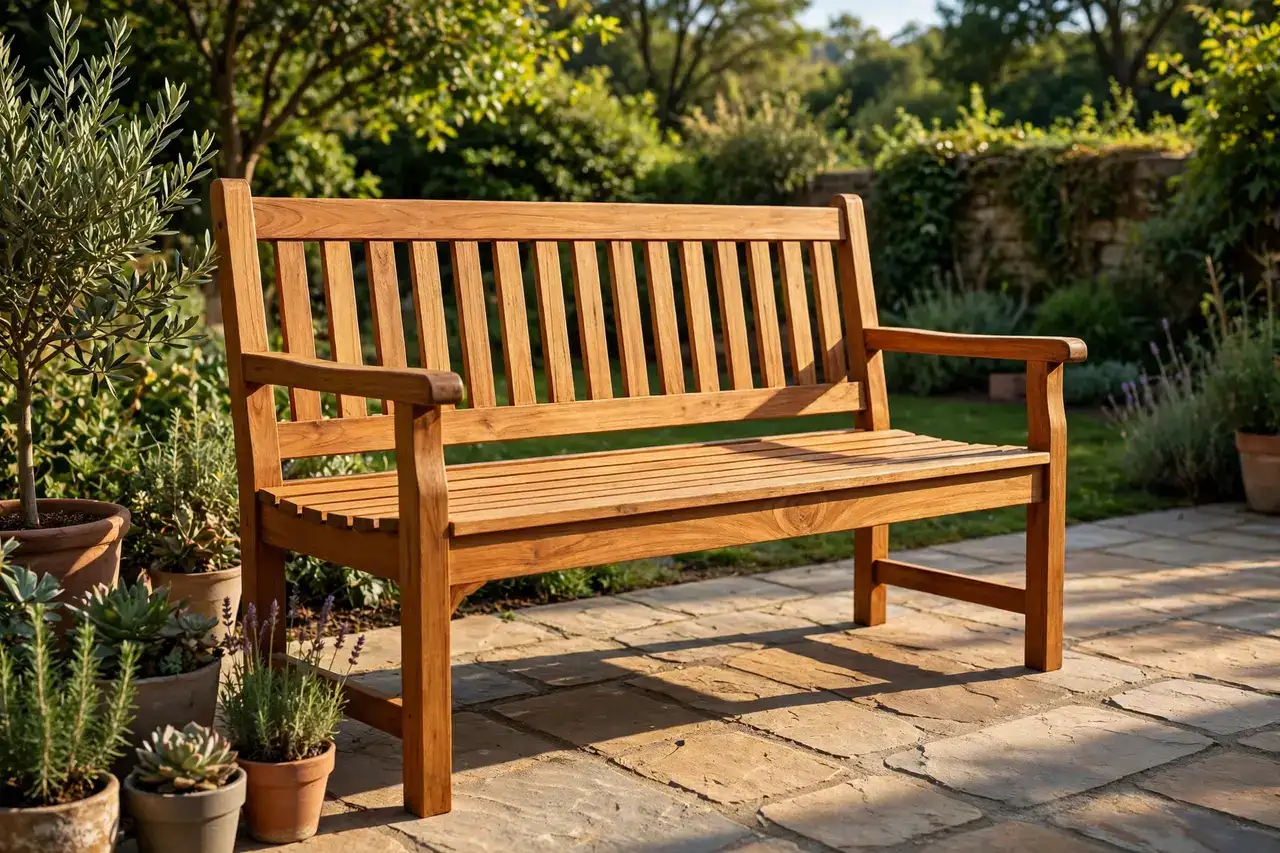
Retailer prices show the same spread. At Target, a Costway 55-inch teak wood bench lists at $119.99, a Costway acacia bench at $65.99 to $149.99, and a Christopher Knight Home acacia bench at $273.99. At Birch Lane, a 48-inch acacia garden bench lists at $329, down from $419, a Bea teak garden bench at $699, and a solid teak vidaXL bench at $309.99 to $318.99. The gap between a $120 “teak” bench and a $700 teak bench is usually the wood itself: budget listings often use teak-colored stain on a cheaper hardwood, or thin slats joined with screws instead of mortise-and-tenon joints.
Three things push the price up beyond the wood. Size adds cost fast: a 6-foot bench seats three people but uses half again as much lumber as a 4-foot bench, and a 72-inch Polywood bench lists at $1,129 at Birch Lane against $409 for the 47-inch version. Joinery adds cost too: mortise-and-tenon joints outlast dowels and pocket screws through freeze-thaw winters, and they cost more to build. And a backrest with armrests adds lumber, hardware, and assembly time over a backless bench of the same length.
Do not judge a bench by its sticker price alone. A $250 acacia bench plus about $15 of oil a year reaches roughly $325 over five years, while a $900 teak bench costs $900 and almost no hours, and it is just getting started. The expensive bench is the one you buy twice, so compare the five-year total, not the price on the tag.
Compare the five-year total, not the tag. Oil, sealer, and a replacement bench all count.
What Size Outdoor Wooden Bench Do You Need?
A 4-foot outdoor wooden bench seats two people, a 5-foot bench seats two comfortably or three snugly, and a 6-foot bench seats three adults, so pick the length by the number of people first and the space second. Seat height should run 17 to 19 inches, and seat depth 16 to 18 inches.
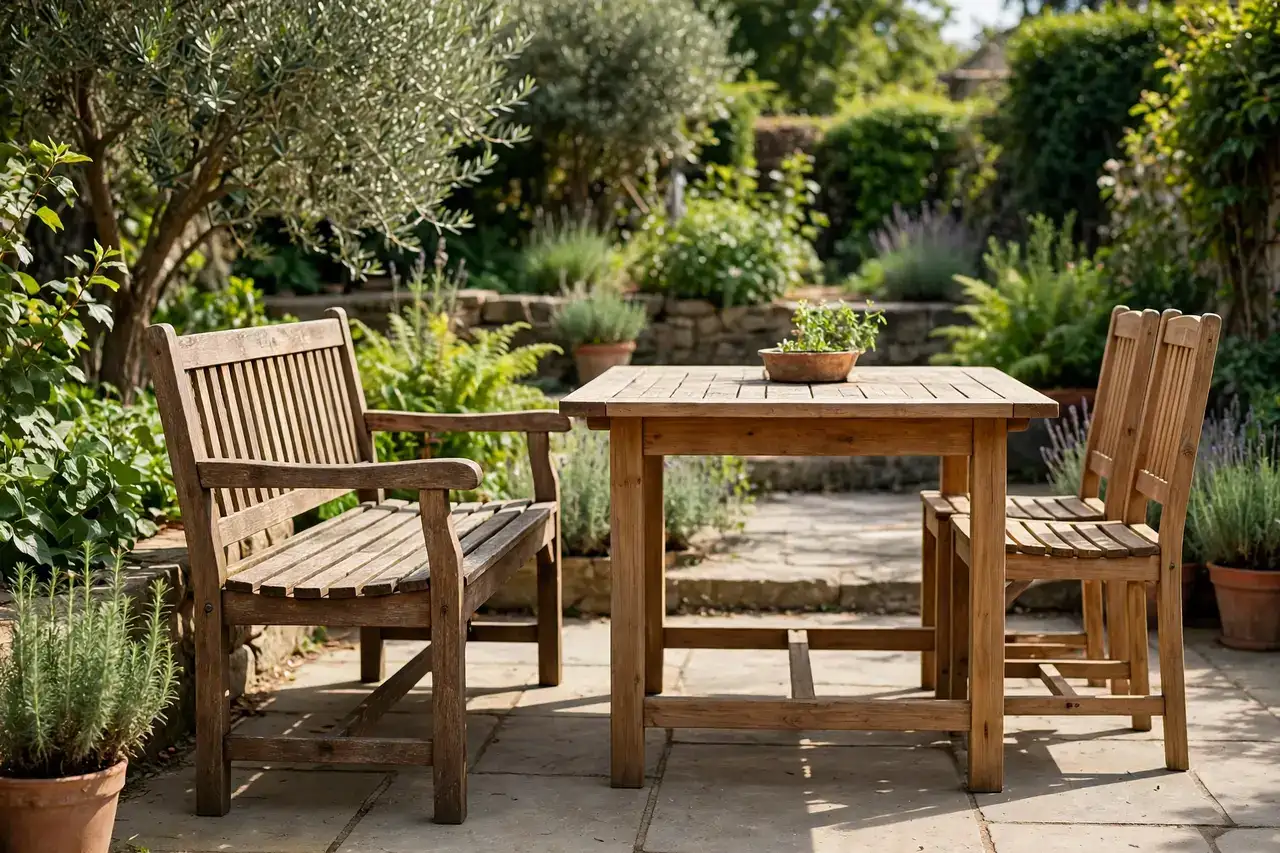
Measure the spot before you shop. Leave at least 18 inches of clearance behind the bench for airflow and for pulling it out to clean, and 24 inches in front of it for legs and for walking past. On a small patio, a 4-foot backless bench slides under a table when dinner ends, and our outdoor furniture for small spaces guide shows seven layouts where a bench earns its footprint. On a wide porch, a 6-foot bench with a back anchors the space and reads as real furniture instead of an afterthought.
Seat depth decides comfort more than length does. A seat shallower than 16 inches feels like a ledge, and a seat deeper than 20 inches leaves short legs dangling. Add a cushion and the numbers shift: a 3-inch outdoor cushion raises the seat, so a bench that measures 17 inches bare can sit at 20 inches with a cushion on it. If you plan to use cushions, measure with them in place, and read our replacement cushions for patio furniture guide before you buy, because a cushion that fits badly slides, bunches, and soaks up rain.
Weight capacity is the number most listings hide. A well-built 5-foot hardwood bench should hold at least 500 pounds, and many solid acacia and teak benches list 800 pounds. Check the listing for a stated capacity, and be wary of any bench that lists none: thin slats flex every time someone sits down, and that repeated flexing, not rot, is what cracks them. Seat slats should run at least an inch thick for softwoods like cedar and pine, and three-quarters of an inch can work in dense hardwoods like teak and acacia.
Measure people first, space second. A bench that seats two where three gather is a bench nobody uses.
What Most People Get Wrong About Wooden Benches
Most people get wooden benches wrong in the same three ways: they believe “teak oil” feeds teak, they believe a higher price always means better wood, and they believe a cover or a coat of sealer can save a bench that lives in a puddle. All three beliefs cost money, and the first one is the most common.
The teak-oil myth is the big one. Bottles labeled “teak oil” are mostly tung and linseed blends with a nice name, and real teak does not need feeding at all: its own oils already protect it, and a bottle of oil adds a sticky layer that attracts dust and needs reapplying every few months. What teak needs is either a sealer, to hold the honey color, or a decision to let it go gray. The Wood Database’s decay ratings back this up: teak earns its “very durable” rating from its own chemistry, not from anything in a bottle. Read how the seven garden bench woods compare on hardness and decay resistance at Woodworking Advisor’s best wood for a garden bench.
The price myth runs the other way: a $120 “teak” bench and a $700 teak bench can look identical in a product photo. The cheap one is usually a teak-colored stain on a softer wood, thin slats, and screws instead of joints, and it shows its true nature after two winters. Weight, joinery, and a stated wood species tell you more than the price does: real teak is heavy, Grade A plantation teak feels slightly oily, and a listing that names only “solid wood” is hiding something.
The placement myth is the quiet killer. No finish protects a bench whose feet sit in standing water, under a sprinkler line, or pressed against a damp wall. Water wicks up through the end grain, the feet rot first, and the frame fails before the seat does. Feet off wet ground, airflow underneath, and a spot that dries after rain matter more than any oil you buy.
Oil never fixes the wrong wood or the wrong spot. Buy the right species, then put it where it can dry.
How to Protect a Wooden Bench Outdoors
Protect a wooden bench outdoors with a 30-to-60-minute routine once a year: wash it with mild soapy water and a soft brush, rinse, let it dry fully, then oil or seal it. Teak needs nothing but a wash, cedar and eucalyptus need one thin oil coat, and acacia needs two oil coats a year.
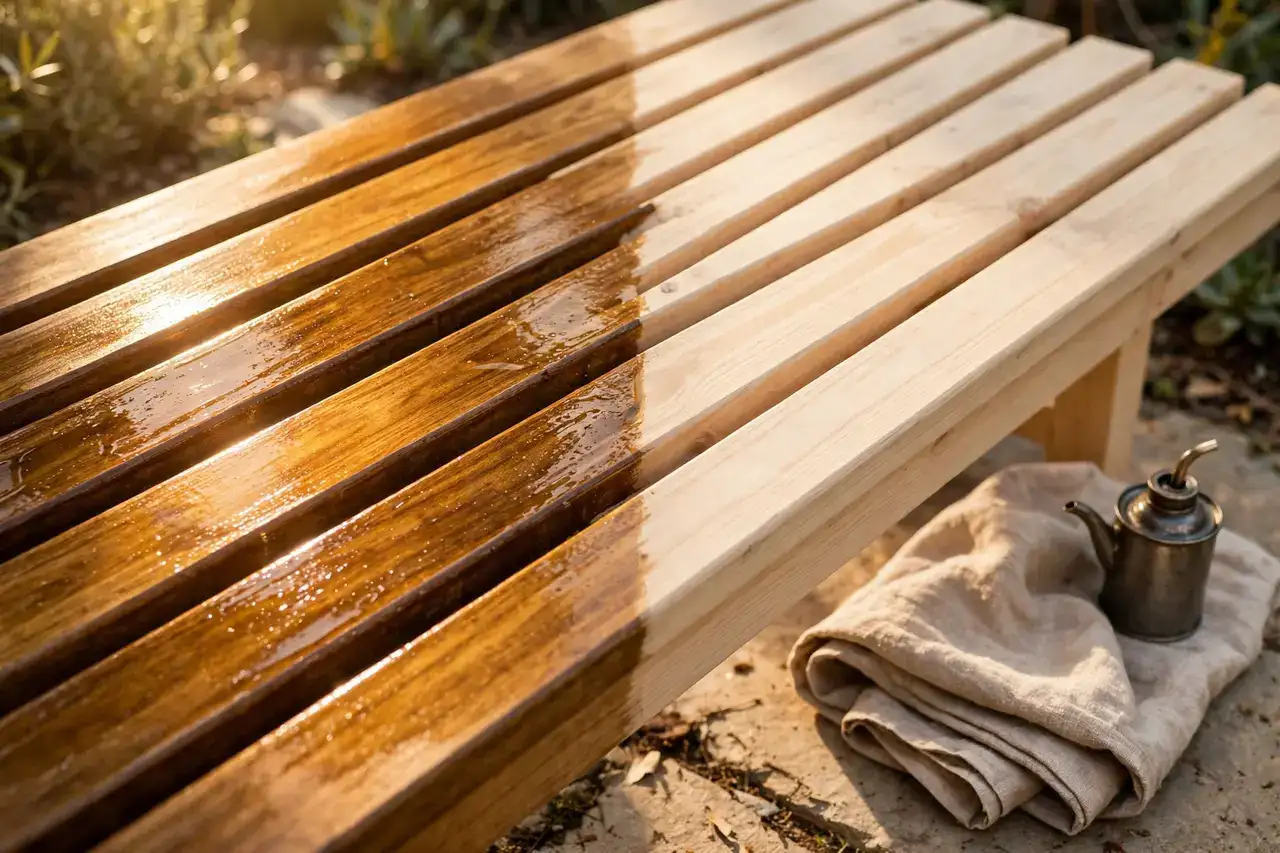
Start each season by washing the bench with mild soapy water and a soft brush, then rinse and let it dry fully for a day or two. Never pressure-wash close up: the jet shreds the surface grain into fuzz that never looks right again. The gray you see on a neglected bench is not dirt, it is oxidized wood, and it harms nothing; if you want the color back, use a two-step cleaner and brightener, then oil while the wood is still slightly damp from the rinse.
Oil the right way and the right amount. Apply one thin coat of penetrating oil with a cloth or brush, working along the grain, and wipe off the excess before it turns tacky. Hit the end grain and the feet twice, because that is where water gets in. Teak oil lasts about 3 to 4 months per coat, while a proper teak sealer lasts 12 to 18 months, so a sealer beats oil for anyone who wants long protection with one spring job. Oily rags can self-ignite, so soak used cloths in water and seal them in a bag before you throw them away.
Winter care is where benches live or die. Teak, cedar, and eucalyptus can stay outside all winter if you clean them first and cover them with something breathable, or tuck them under shelter. Freeze-thaw is the killer: water sits in small checks, freezes, expands, and pries them wider all winter, and treated pine suffers most. A breathable cover helps, but a plastic tarp traps condensation underneath and grows mold exactly where you cannot see it. If you have the space, a garage shelf from November to March doubles the life of a bench in cold climates, and our how to store outdoor furniture guide covers the full winter routine.
Check the hardware once a year while you clean. Bolts loosen, screws chew out, and the frame almost always fails before the wood does, so tighten what is loose and replace any rusted fastener with stainless steel. And here is the warranty-voiding item from the intro: never sand or seal a bench that is still damp inside, and never paint over a finish that is peeling without stripping it first, because trapped moisture rots the wood from the inside while the outside looks fine.
One hour a year beats a new bench every three. Wash, dry, oil, and check the bolts.
Wood vs Polywood: Which Bench Should You Buy?
Polywood beats real wood on maintenance and loses on warmth and price, so buy Polywood if you want a bench you never oil, seal, or sand, and buy real wood if you want the look, feel, and smell of timber. Polywood is recycled plastic lumber that resists water, sun, and insects without any finish.
The prices tell the story. At Birch Lane, checked November 16, 2026, a Polywood Vineyard patio bench lists at $409 to $429, a Lakeside 49-inch garden bench at $509 to $539, a Traditional Garden 47-inch bench at $709, and a Rockford 72-inch bench at $1,129. See the current listings at Birch Lane’s Polywood garden bench page.
Real wood earns its keep differently. Wood stays cool in sun, warms fast in shade, and ages with character instead of fading to a flat color. It also repairs: a scratched teak bench sands out in minutes, while a gouged Polywood bench shows the mark forever. Polywood wins in one setting above all: a bench that sits in full sun and rain with nobody to care for it, like a rental property or a community garden, where the owner never visits with an oil can.
Color choice matters more with Polywood than with wood. Black Polywood benches run hot in direct sun, white ones show pollen and dirt, and the teak and mahogany colors read most like real timber. With real wood, the color decision is simpler: let it gray, or seal it once a spring to hold the honey tone.
Zero maintenance is Polywood’s only real win. If you enjoy one spring afternoon with an oil can, real wood gives you more bench for the money.
Where to Put Your Wooden Bench
Put a wooden bench where it dries after rain, gets morning sun, and sits on a hard, level surface with airflow underneath, because a bench that dries is a bench that lasts. A garden path, a patio edge, a covered porch, or the end of a dining table all work, as long as the feet stay out of standing water.
The garden is the classic spot: a bench at the end of a path, under a tree, or facing a flower bed turns a walk into a destination. Set it on pavers, gravel, or decking rather than bare soil, and leave a gap behind it so air moves around the backrest. If the bench anchors a planting bed, our patio garden guide shows how to pair seating with plants that do not drop sap and debris onto the seat all summer.
The patio is the practical spot. A bench beside the dining table adds seats for guests without adding chairs to store, and a bench against the house wall catches the evening sun. Pair it with a table of matching wood and the set reads as one piece of furniture: our patio dining set guide covers sizing a bench to a table so knees and elbows fit. A bench also earns its keep by the front door, where it holds bags, shoes, and a parcel while you find your keys.
The porch is the kindest spot for any wood. Rain never touches the bench, so even pine becomes reasonable there, and you can choose by comfort and looks instead of durability. A porch bench with a cushion becomes the morning-coffee seat, and a cushion that lives under cover lasts years longer than one left in the rain. For a bench that faces open weather, a cover helps: our balcony cover ideas guide covers breathable covers that keep rain off without trapping damp underneath.
A dry bench is a long-lived bench. Pick the sunny, breezy spot over the shady, damp one every time.
Related Guides
If you are planning the whole outdoor space, these guides pick up where this one leaves off:
- Outdoor Bench With Storage — sit down, stash the clutter, and reclaim your patio.
- Outdoor Sectional Couch — deep seating for the lounge corner beside your bench.
- Patio Dining Set — size a bench to your table so everyone fits.
- Outdoor Furniture for Small Spaces — seven layouts that make a tiny patio feel big.
- Replacement Cushions for Patio Furniture — get the fit, fabric, and price right the first time.
- How to Store Outdoor Furniture — keep it clean, dry, and ready for spring.
- Balcony Cover Ideas — stay dry and cool on a small balcony.
- Patio Garden — pair your bench with plants that earn their place.
Frequently Asked Questions
What is the best wood for a garden bench?
Teak is the best overall choice, with 1,070 lbf Janka hardness, a “very durable” decay-resistance rating from The Wood Database, and a 50-plus-year outdoor life without sealing. Black locust matches teak’s decay class at roughly a fifth of the price, and cedar is the best value in damp climates.
How long will an acacia bench last outside?
An acacia bench lasts five to ten years outside with twice-yearly oiling, with the oil applied generously to the end grain and feet. Left uncovered and neglected, expect surface checking within the first couple of years, and a tired-looking bench by year five.
Does teak really need oil?
No. Untreated teak weathers gray and stays structurally sound for decades, because its own natural oils already protect it. Sealer exists only to hold the honey color, and most “teak oil” bottles are tung and linseed blends that add a sticky layer without feeding the wood.
Can I leave a wooden bench outside all winter?
If it is teak, cedar, or eucalyptus, yes. Clean it, cover it with something breathable, or put it under shelter, and it will be fine. Freeze-thaw is what kills benches, and treated pine suffers most, so a garage shelf from November to March doubles a bench’s life in cold climates.
What is the most weather-resistant wood for an outdoor bench?
Teak, and it is not close. Its natural oils and silica resist rot, insects, salt spray, and sun better than any other common bench wood. Quality kiln-dried eucalyptus is the best value in that direction, and western red cedar is the best value in damp climates.
Disclaimer: This guide gives general advice for choosing and caring for outdoor furniture, not professional woodworking or structural instructions. Check weight limits before seating several people on one bench, keep oily rags away from heat and dispose of them safely, and hire a qualified pro for any structural repair or custom build.
Pick the wood first and the bench second. Teak if you want to buy once and forget it, cedar if you want the best value, acacia if you enjoy one or two easy oiling afternoons a year. Measure your spot, check the slats and the joints, and put the bench where it dries after rain. Do that, and the bench you buy this year is still the best seat in the garden ten years from now.
