An outdoor lounger is a full-length reclining chair built for stretching out completely by the pool or on the patio, and the one worth buying is 72 to 80 inches long when reclined, 20 to 25 inches wide, with an adjustable backrest and a frame of aluminum, teak, or HDPE that survives sun and chlorine. A good outdoor lounger costs $400 to $1,500, checked November 16, 2026, and the best value for most patios is a $400 to $600 aluminum or HDPE chaise with quick-dry sling fabric. This guide explains the types, the materials, the sizing, and the care that keeps a lounger comfortable for years.
First, a word on the name itself. Search for “lounger” and you will find indoor recliners, baby loungers, and even shoes, because the bare word means almost anything that lets you lie back. This article is about the outdoor lounger: the poolside chaise, the sun lounger, the patio recliner. If that is what you are shopping for, you are in the right place, and the next section sorts out the types.
What Is an Outdoor Lounger?
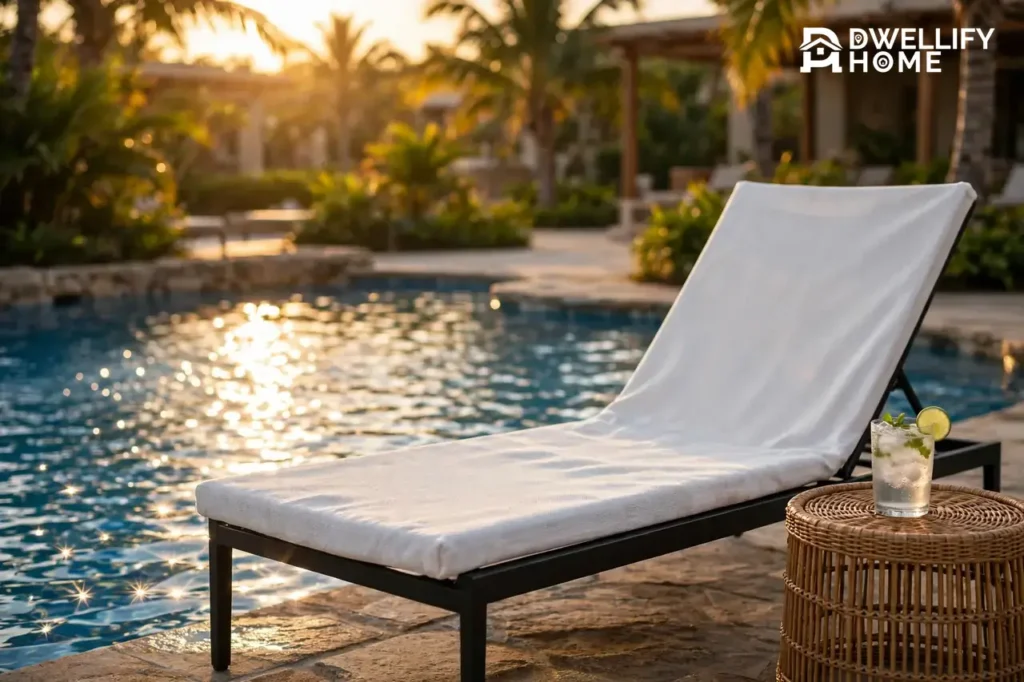
An outdoor lounger is a long reclining chair designed for lying flat outdoors, usually beside a pool or on a sunny patio, with a full-length seat of 42 to 48 inches, an adjustable backrest with three to five positions, and weather-proof materials that handle sun, rain, and chlorine. A chaise lounge is the classic outdoor lounger, and a sun lounger is the same chair sold for sunbathing.
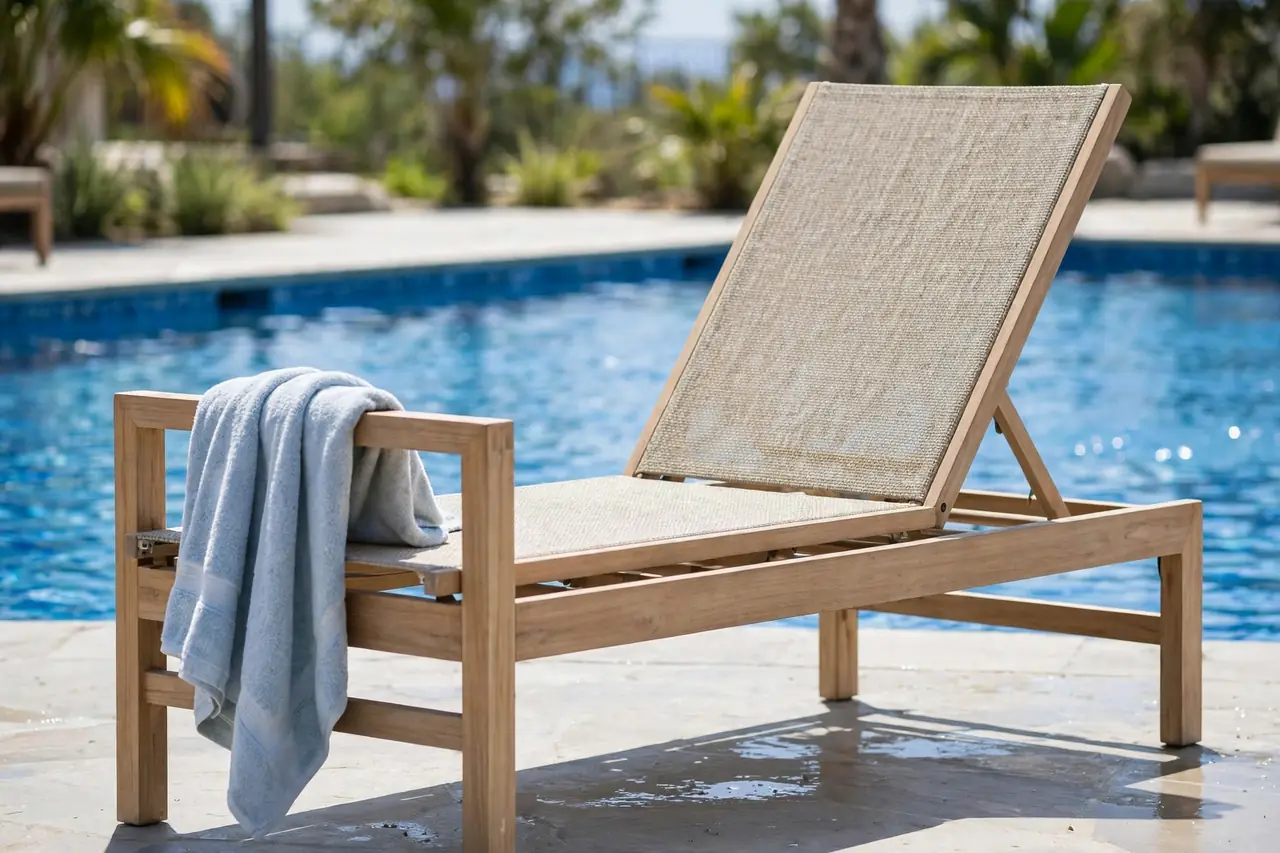
Loungers differ from other outdoor chairs because they are built to let you lean and lie back, recline and relax. Patio Productions’ lounge guide puts it plainly: lounge chairs include chaise loungers, outdoor recliners, and similar styles, and they are great for lazy days, grabbing some sun or a quick snooze, or sinking into a good book. Read their full guide at Patio Productions’ outdoor lounge chair buyer’s guide.
Three types dominate. The chaise lounge is the full-length recliner with an adjustable back, made for serious sunbathing and poolside dozing. The outdoor recliner is a cushioned lounge chair with a reclining back and often a footrest, closer to a living-room recliner that learned to live outside. The sling lounger is a frame with a fabric sling stretched across it, no cushions needed, which dries fast and stays cool in the sun. Daybeds and cabanas are the luxury end: room for two, a canopy overhead, and a price to match.
A lounger is a chair you lie on, not a chair you sit in. If it cannot go flat, it is not a lounger.
How to Choose the Right Outdoor Chaise Lounge for Your Poolside or Deck?
Choose the right outdoor chaise lounge for your poolside or deck by working through six factors in order: the climate and exposure, the frame material, the fabric, the ergonomics, the size, and the budget. Start with exposure, because a lounger that lives in full sun and chlorine needs different materials from one that lives under a covered porch.
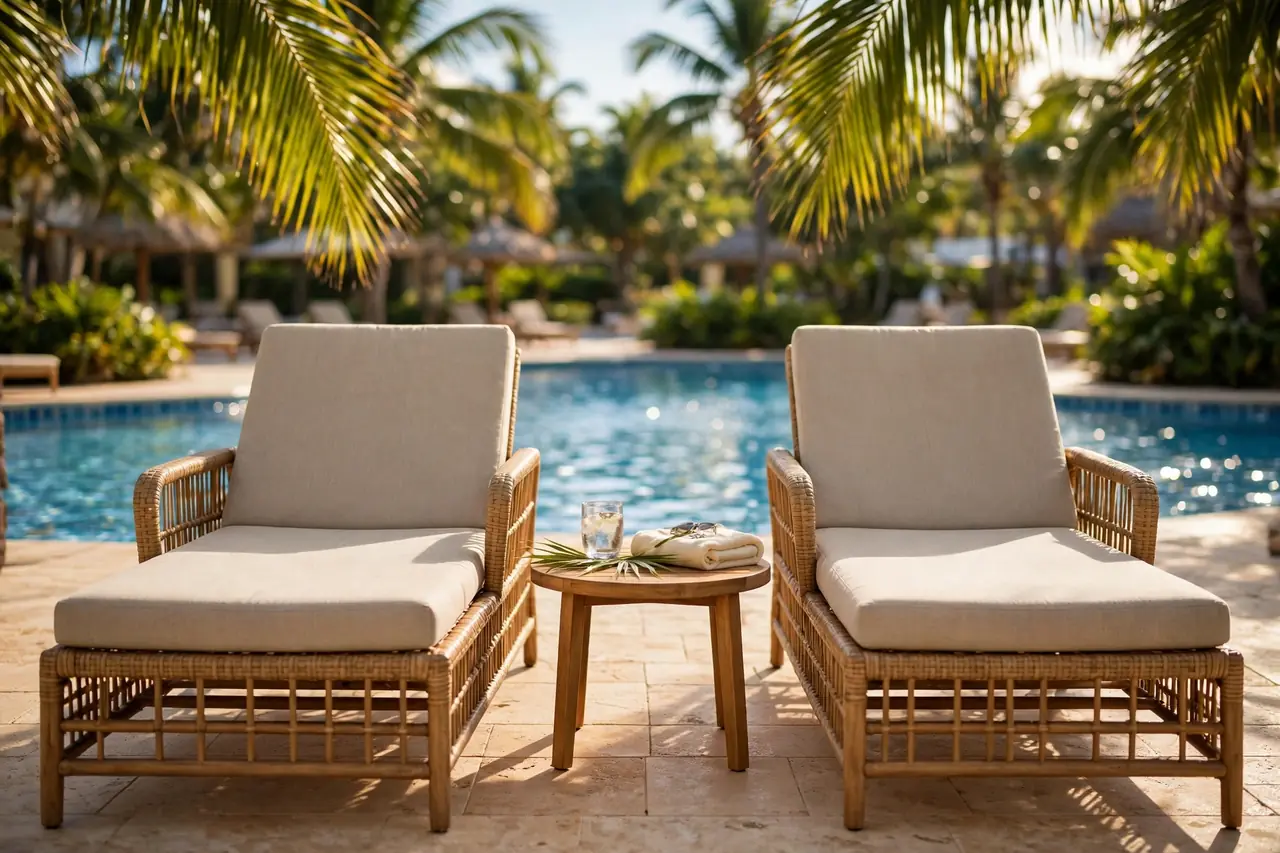
Exposure decides the material. Full sun with no cover means UV is the enemy, so look for powder-coated aluminum frames, solution-dyed acrylic fabrics like Sunbrella, and HDPE resin parts, and avoid natural wood and standard polyester unless you will oil or cover the chair. Poolside means chlorine and constant wet, so aluminum and resin wicker win, and teak handles it well too if you rinse it. Coastal means salt air, so marine-grade aluminum or 316 stainless steel is essential.
Ergonomics decides the comfort. Look for a seat at least 20 inches wide if you want wiggle room, a backrest with three to five adjustable positions so you can switch from upright reading to flat sunbathing, and a seat height of 11 to 13 inches, which is low enough to feel like lounging and high enough to stand up from without a struggle. Serwall’s chaise guide warns that the low seat height makes chaises a poor pick for elderly users who struggle to stand, and that is honest advice worth keeping.
Budget decides the tier. A $400 to $600 aluminum or poly lumber chaise is the value zone, a $600 to $1,000 resin wicker chaise is the mid-range, and a $1,200 to $1,500 teak or designer chaise is the premium. Spend more only if you want the teak look or the designer name, because the comfort difference between a $500 chaise and a $1,500 chaise is smaller than the price gap suggests.
Exposure first, comfort second, budget third. A beautiful chaise in the wrong climate is a one-season chair.
What Materials Are Best for Durable and Stylish Chaise Lounge Chairs?
For frames, aluminum, teak, and HDPE are the most durable materials for chaise lounge chairs, and for the sling or mesh seating, Sunbrella or Textilene fabrics are the best, because they breathe, resist weather, and last for many years. Aluminum is light and rust-proof, teak is beautiful and lasts decades, and HDPE never needs sealing or staining.
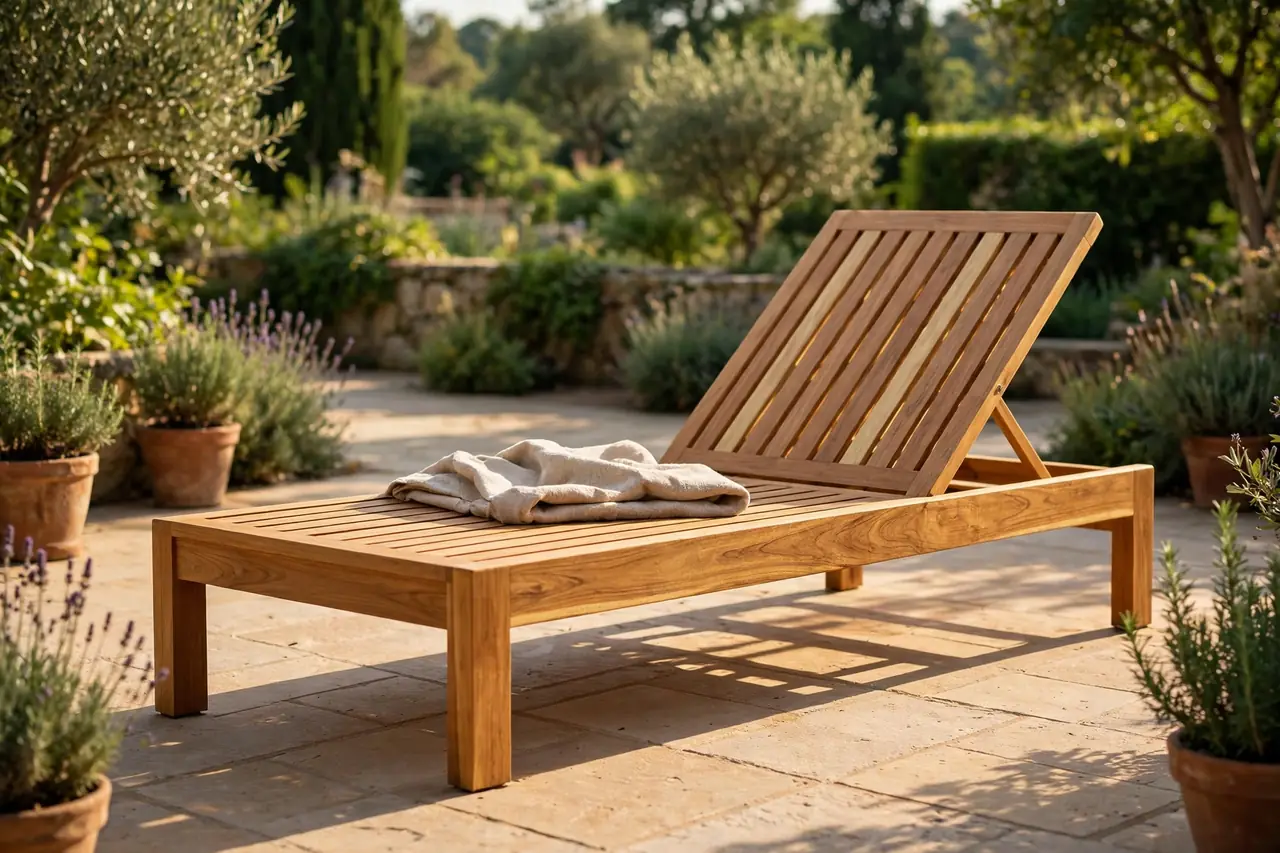
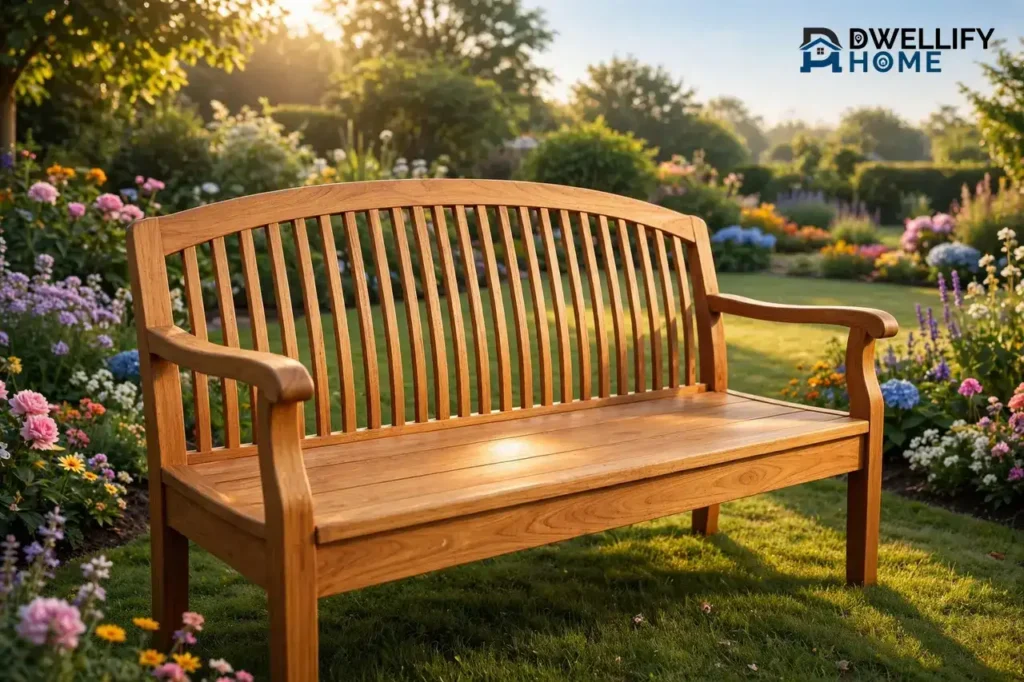
Teak is the king of lounger woods for a reason: naturally weather-resistant, durable, and beautiful as it ages into a soft gray. Patio Productions calls it the timeless choice, and notes that certified-sustainable Grade A teak is the standard to look for. Acacia is the budget wood alternative, and ipe is the rare dense option that is so heavy it sinks in water. Wood needs annual oiling if you want the golden color, or nothing at all if you like the silver patina.
Aluminum is the poolside workhorse. It is lightweight, rust-proof, and easy to move, and when paired with quick-dry mesh it dries in minutes after a swim. HDPE poly lumber is the zero-maintenance pick: recycled plastic molded into boards that look like wood, resist cracking and fading, and never need oiling. Resin wicker gives the coastal look, but only buy high-quality polyethylene wicker, not cheap vinyl, or the weave cracks in the sun.
Fabrics decide the comfort. Sunbrella is the benchmark solution-dyed acrylic: fade-proof, mold-resistant, and quick to dry. Textilene is the mesh standard: breathable, strong, and cool in direct sun. Cheap polyester cushions fade in one summer and hold water for a day, so check the fabric name on the listing before you buy.
Aluminum for the pool, teak for the look, HDPE for zero work. The frame decides the lifespan; the fabric decides the comfort.
How Much Space Does a Lounger Need?
A lounger needs 6 to 7 feet of length plus walkways, because most chaise lounges run 72 to 80 inches long when fully reclined, and you need at least 24 to 30 inches around each chair for comfortable walking paths and easy access. Plan on about 7 by 3 feet of floor per lounger, and leave 2 to 3 inches of free space on all sides so the chair can move without blocking furniture.
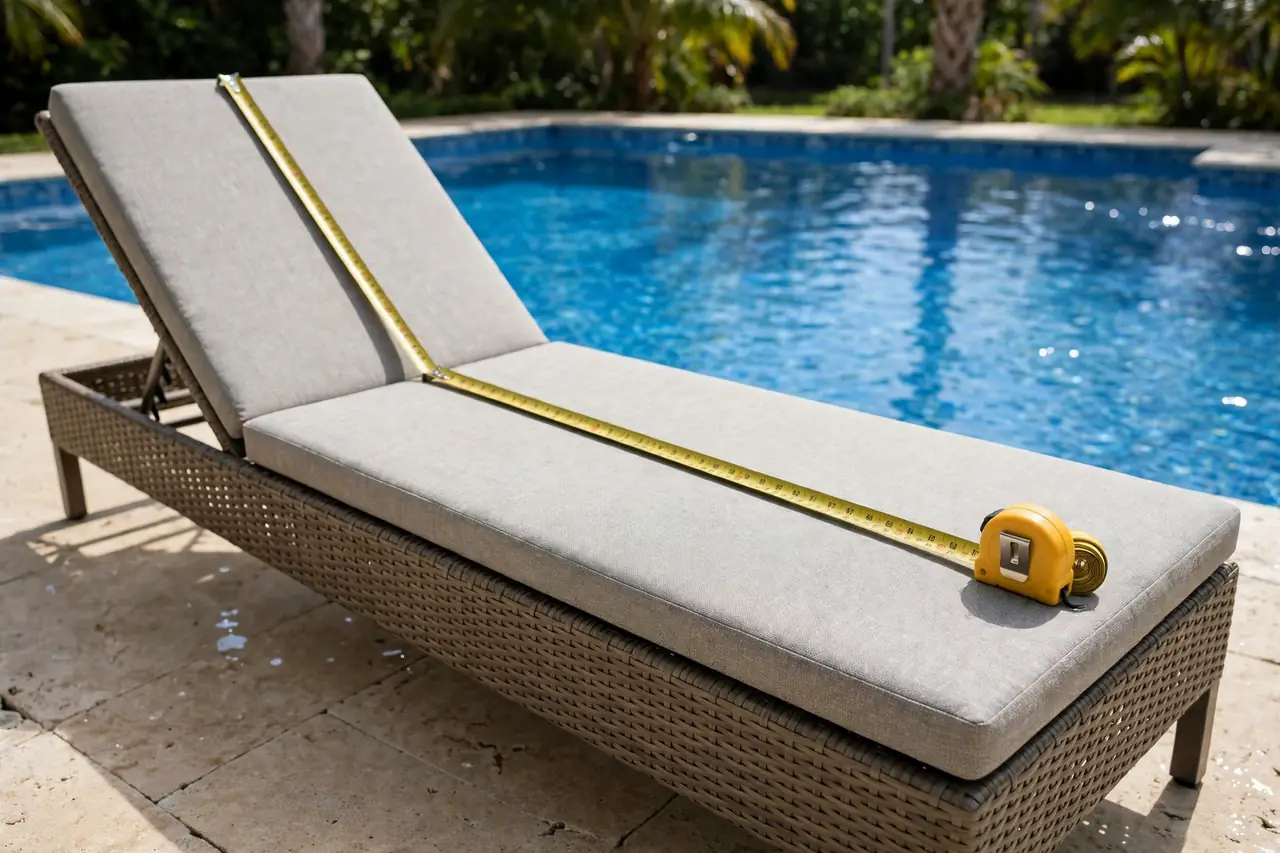
Standard pool lounge chair dimensions are a max length of 73 to 80 inches, a max height of 35 to 40 inches, a width of 20 to 25 inches, and a seat height of 11 to 13 inches, with a seat length of 42 to 48 inches. Serwall’s chaise guide lists those exact numbers, and adds a useful rule: an 80-inch-long, 25-inch-wide chaise needs a patio area of 83 inches long and 28 inches wide to fit with breathing room. Read their full size guide at Serwall’s complete guide for buying outdoor chaise lounges.
Two loungers need more than twice the space of one, because you need a walkway between them and a side table within reach of both. Three loungers around a pool need a deck at least 10 feet deep, or the chairs crowd the water’s edge. Measure the deck before you buy, and mark the footprint with chalk, including the reclined length, not the folded length.
Narrow spaces are the exception. A chaise is larger than an ordinary outdoor chair and needs room to stretch, so porches and balconies are usually the wrong home for one. If your space is under 40 square feet, buy a reclining lounge chair instead of a full chaise, and save the chaise for the pool deck or the big patio.
Seven feet long, three feet wide, per lounger. If the chalk does not fit, the chaise does not fit.
How Much Should I Spend on an Outdoor Lounge Chair?
Expect $400 to $1,500 per chair for quality, checked November 16, 2026. Budget aluminum or poly lumber chairs start around $400 to $600, mid-range resin wicker runs $600 to $1,000, and premium teak or designer pieces reach $1,200 to $1,500 and more, with the biggest jump in durability happening between $400 and $600.
Real prices show the same ladder. At Loomlan, a Sunset West Laguna aluminum chaise with Sunbrella cushions lists at $1,639, a Provence wrought-iron Sunbrella chaise at $1,309 to $1,407, and a Monterey aluminum Sunbrella chaise at $1,699. At the value end, a Polywood Nautical chaise with arms lists at $329, and Patio Productions’ guide puts the quality range at $400 to $1,500 per chair, with budget aluminum or poly lumber starting at $400 to $600.
Guess which purchase costs more over ten years: a $450 HDPE chaise bought once, or a $200 steel-and-polyester chaise replaced three times? The cheap chair costs $600 plus three rounds of shopping and assembly, while the good chair costs $450 and still looks new. The table below makes the math plain, and it is the decision most buyers get backwards.
Budget $400 to $600 for the value zone. Under $300, you are renting the lounger, not buying it.
Lounger Costs and Materials at a Glance
The best-value outdoor lounger is a $400-to-$600 aluminum or HDPE chaise with a quick-dry sling, because it survives poolside chlorine, needs almost no care, and lasts 10 years or more, while a $1,500 teak chaise lasts longer but asks for annual oiling, and a $200 budget chaise costs more over five years once you replace it twice.
| Lounger type | Price each | Realistic life | Yearly care |
|---|---|---|---|
| Aluminum + sling | $400–$600 | 10–15 years | Wash only |
| HDPE poly lumber | $400–$700 | 15–20 years | Wash only |
| Resin wicker | $600–$1,000 | 8–12 years | Wash, brush weave |
| Teak chaise | $1,200–$1,500+ | 25+ years | One oil coat a year |
| Budget steel/polyester | $150–$300 | 2–3 years | Cover or replace |
Price ranges come from Patio Productions’ lounge guide and Loomlan listings, checked November 16, 2026. The table’s lesson is that the $400-to-$600 aluminum chaise is the cheapest lounger you will ever own, because you only buy it once. But the cheapest chair on paper can still be the wrong chair in practice, and the next section is about the mistake that turns a good lounger into an unused one.
What Most People Get Wrong About Outdoor Loungers
Most people get outdoor loungers wrong in three ways: they buy a lounger for a space that cannot fit one, they buy cushions instead of sling fabric for a poolside chair, and they assume a lounger is a chair for sitting. All three mistakes waste money, and the first one is the most common.
The space mistake is the big one. A chaise needs 7 feet of length, and buyers measure the folded chair, not the reclined one. The chair arrives, it reclines into the planter, and it lives folded in the corner for the rest of the summer. Measure the reclined length, mark it with chalk, and buy the chair only if the chalk fits.
The cushion mistake is the poolside one. Cushions feel wonderful for the first hour and then soak up pool water, grow mildew, and need hauling inside every night. A sling chair needs no cushions at all: the fabric flexes with your body, dries in minutes, and stays cool in the sun. If you want softness, choose quick-dry cushions with Sunbrella fabric, and store them inside when it rains.
The sitting mistake is the comfort one. A lounger is built for lying flat, not for sitting upright with a book and a coffee. If you mostly sit upright, buy a reclining lounge chair or a deep club chair instead, and save the chaise for the pool. A chaise used as a dining chair is a chaise nobody enjoys.
Measure reclined, buy sling for the pool, lie flat or buy a chair. The lounger’s job is lying down, not sitting up.
How to Care for an Outdoor Lounger
Care for an outdoor lounger with a 15-minute routine each month: hose off the frame, scrub the fabric with mild soap, rinse, and let it dry fully in the sun. Teak needs one oil coat a year if you want the golden color, and nothing at all if you like the silver-gray patina. Store cushions indoors during heavy rain, and cover the frame in winter.
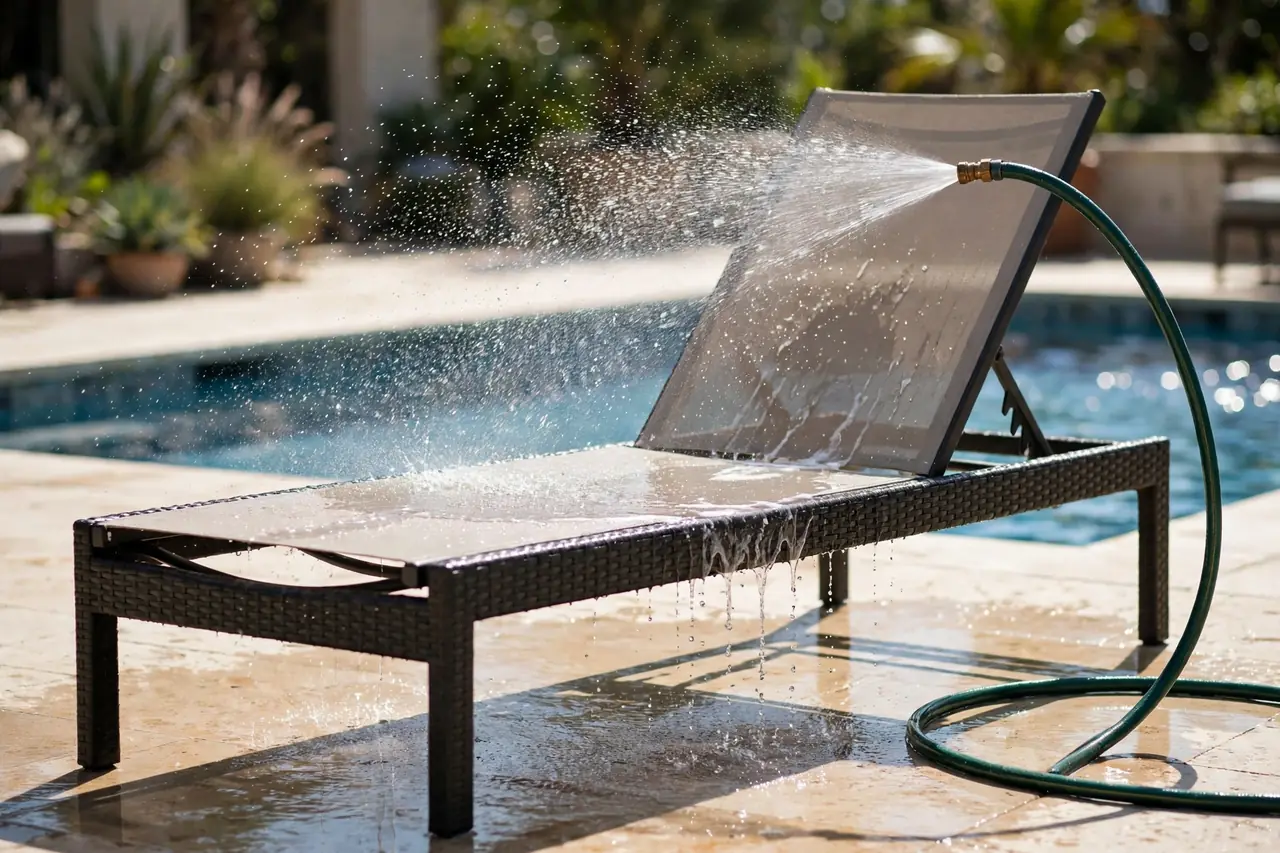
Aluminum and HDPE need almost nothing: a hose and a soft brush, once a month, and they look new for a decade. Resin wicker needs a brush through the weave to clear trapped dirt and chlorine, because dirt holds moisture and moisture grows mildew. Teak needs a wash along the grain and one oil coat a year, applied while the wood is dry, and never pressure-wash close up, or the jet shreds the surface grain.
Winter storage is where loungers live or die. Folding chaises fold flat and stack, and Serwall’s guide recommends stacking no more than 12 pieces high. If indoor storage is not possible, a high-quality cover keeps snow and UV off the frame, and the cover should breathe, because a plastic tarp traps condensation and grows mold exactly where you cannot see it. Our how to store outdoor furniture guide covers the full winter routine, and our balcony cover ideas guide covers covers that keep rain off without trapping damp.
Pair the lounger with the right setting. A deep sectional beside the loungers turns the pool deck into a living room, and our outdoor sectional couch guide shows how to size one. For shade over the loungers, our sunshade for patio and pergola shade ideas guides cover the options, and if your cushions need replacing, our replacement cushions for patio furniture guide shows how to get the fit right.
Hose monthly, oil teak yearly, cover in winter. Fifteen minutes a month is the whole job.
Related Guides
If you are planning the whole poolside or patio, these guides pick up where this one leaves off:
- Outdoor Sectional Couch — deep seating for the lounge corner beside your loungers.
- Replacement Cushions for Patio Furniture — get the fit, fabric, and price right the first time.
- Sunshade for Patio — shade over the loungers without a permanent roof.
- Pergola Shade Ideas — a permanent shade structure for the pool deck.
- How to Store Outdoor Furniture — keep it clean, dry, and ready for spring.
- Balcony Cover Ideas — stay dry and cool on a small balcony.
- Outdoor Furniture for Small Spaces — seven layouts that make a tiny patio feel big.
- Patio String Lights Ideas — finish the evening glow around the pool.
Frequently Asked Questions
What is the difference between a lounge chair, a chaise lounge, and club chair?
Chaise lounges are full-length recliners, designed for stretching out completely, perfect for sunbathing or napping. Regular lounge chairs may be shorter or more upright, better suited for reading or casual relaxing without fully reclining, while club chairs are upright seats built for conversation.
How to choose the right outdoor chaise lounge for your poolside or deck?
Work through six factors in order: climate and exposure, frame material, fabric, ergonomics, size, and budget. Full sun and poolside use call for aluminum or HDPE frames with Sunbrella or Textilene fabric, a seat at least 20 inches wide, and 7 feet of floor space per chair.
What materials are best for durable and stylish chaise lounge chairs?
For frames, aluminum, teak, and HDPE are the most durable materials. For the sling or mesh seating, consider Sunbrella or Textilene fabrics. They are breathable, weather-resistant, and can last for many years, while cheap polyester fades in one summer.
How much should I spend on an outdoor lounge chair?
Expect $400 to $1,500 per chair for quality. Budget aluminum or poly lumber chairs start around $400 to $600, mid-range resin wicker runs $600 to $1,000, and premium teak or designer pieces can reach $1,200 to $1,500 or more. Quality materials justify the investment through longevity.
What materials work best for outdoor chaise lounges?
Premium aluminum, teak wood, and perforated HDPE work best, with Sunbrella fabrics for cushions. Marine aluminum lasts 20 or more years with low maintenance, Sunbrella fabrics last 10 or more years with medium fabric care, and teak lasts decades with annual oiling for color.
Disclaimer: This guide gives general advice for choosing outdoor lounge furniture, not professional design or structural instructions. Check weight limits before use, keep loungers on a level surface, and move lightweight loungers inside before strong winds. Take care in strong sun: use shade and sunscreen, and never fall asleep in direct sun without protection.
Measure seven feet, buy aluminum or HDPE with a sling, and spend $400 to $600 for the chair you will still love in ten years. Do that, and the lounger becomes the seat everyone quietly fights for on the first warm day of the year.