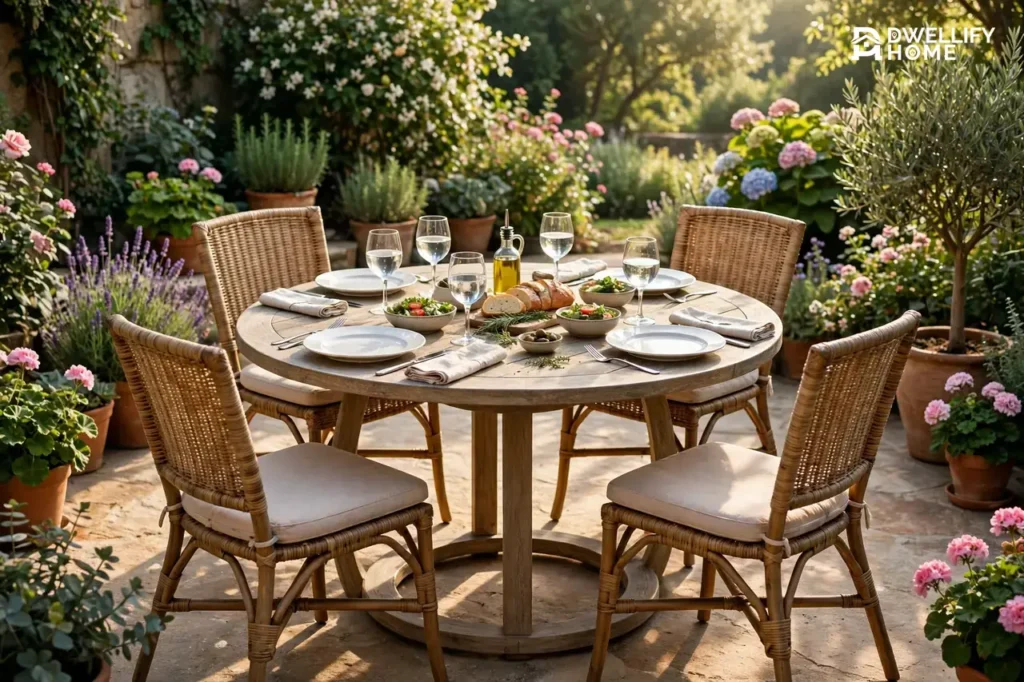
A round outdoor dining table seats four people comfortably at 48 inches across and six at 60 inches, and it does it in less floor area than a rectangular table for the same number of guests, because a circle has no corners to waste and no head of the table to leave anyone out of the conversation. A good 48-inch round table costs $300 to $900, checked November 16, 2026, and the right one for most patios is a 48-inch powder-coated aluminum or teak table with a pedestal base and a center umbrella hole. This guide covers sizing, materials, bases, prices, and care.
One sizing mistake ruins more round-table purchases than any other, and it has nothing to do with the table you buy. It sits in the sizing section below, and it is the reason so many 48-inch tables end up seating three instead of four. Get the number right first, and the rest of the choice is easy.
What Size Round Outdoor Dining Table Do You Need?
A 36-to-42-inch round outdoor dining table seats two to four people, a 48-inch table seats four comfortably, a 54-to-60-inch table seats four to six, and a 60-to-72-inch table seats six to eight, so pick the diameter by the number of people first and the patio second. Allow 24 to 30 inches of table edge per person, and at least 36 inches of clearance between the table edge and any wall, railing, or planter.
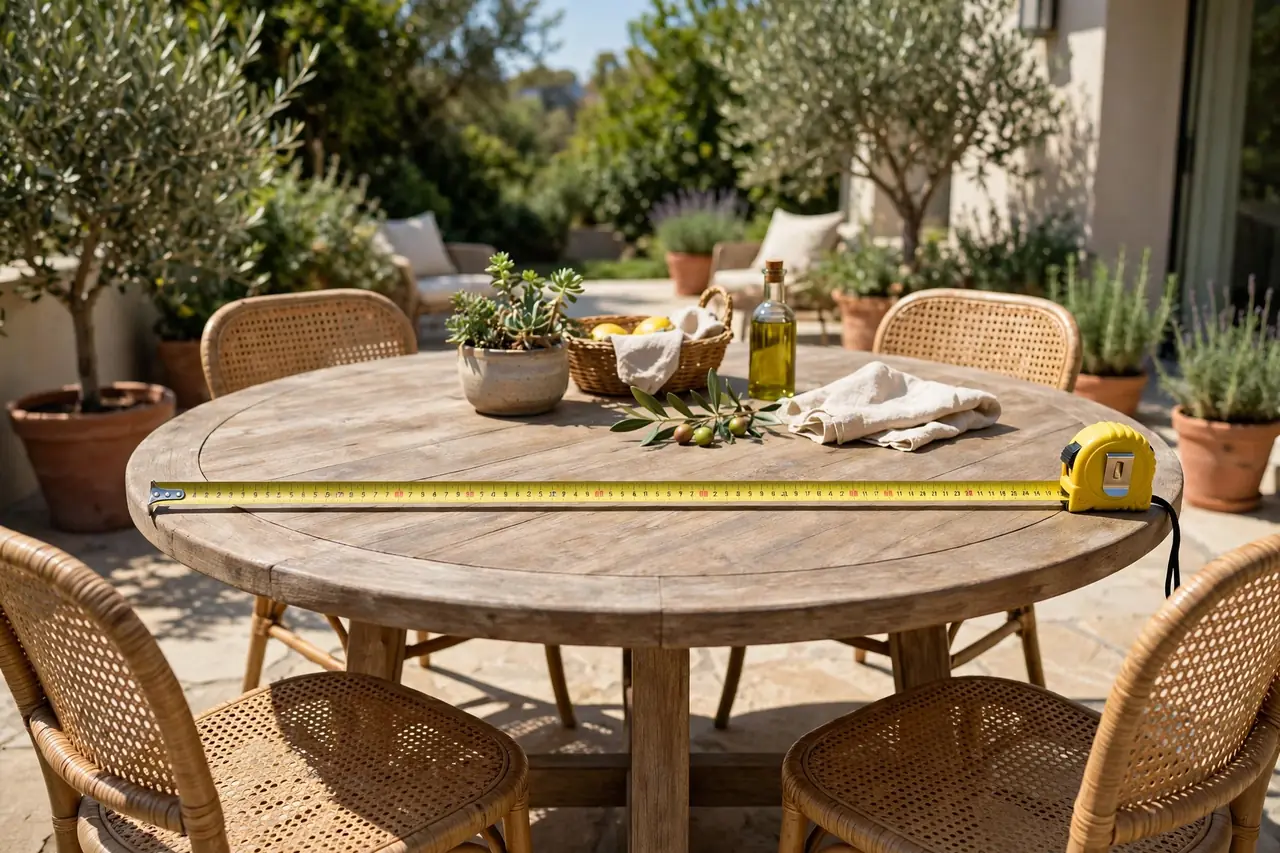
The seating math is simple once you know the rule. Each person needs about 24 inches of edge to eat without elbowing the neighbor, so a 48-inch table has about 150 inches of circumference and seats four with room to spare, while a 60-inch table has about 188 inches and seats six. Outdoor Furniture Atlas puts the same numbers in a clean size table: 36 to 42 inches for two to four people, 48 inches for four, 54 to 60 inches for four to six, and 60 to 72 inches for six to eight. See their full size guide at Outdoor Furniture Atlas’s round outdoor dining guide.
Here is the mistake from the intro: buyers count chairs, not edge. A 48-inch table with four wide armchairs seats three comfortably, because armchairs need 28 inches of edge each and the math runs out. Armless chairs need only 24 inches, so the same table seats four. If you want armchairs, go one size up on the table, or accept three seats instead of four.
Footprint matters too. A 4-seat round table, typically 36 to 42 inches in diameter, needs roughly a 9-by-9-foot patch once you count the 36 inches of clearance on every side. A 6-seat round table needs about 11 by 11 feet. Measure the patch, not the table, and mark it with chalk before you buy.
24 inches of edge per person, 36 inches of clearance behind every chair. The chalk outline decides, not the listing photo.
Round vs Rectangular: Which Outdoor Dining Table Is Better?
A round outdoor dining table is better for conversation, small spaces, and umbrella use, while a rectangular table is better for seating eight or more and for pushing against a wall, so round wins on patios up to about 12 feet across and rectangular wins on long narrow decks and big family gatherings. Round tables have no corners, so nobody bumps a hip, nobody sits at the awkward end, and everyone sees everyone else.
Conversation is the round table’s real advantage. At a rectangular table, the people at the ends talk to the people beside them and shout at the people across. At a round table, every seat is a good seat, and the distance across a 48-inch table is short enough for a normal voice. That is why round tables feel friendlier at dinner, and why they suit families who actually talk while they eat.
Rectangular tables win on capacity and placement. A rectangular table seats eight to ten in the same floor area where a round table seats six, and it slides against a wall or fence when not fully in use, which a round table cannot do. If your patio is long and narrow, or you regularly host eight or more, rectangular is the honest answer. If your patio is square and your crowd is four to six, round is the better table.
Round for talking, rectangular for crowding. Pick by how you eat, not by how the table looks empty.
What Material Lasts Longest for a Round Outdoor Dining Table?
Teak lasts longest for a round outdoor dining table, with a realistic life of 25 years or more, because its natural oils resist rot, insects, and moisture with no finish at all. Powder-coated aluminum is the low-maintenance winner at 15-plus years with almost no care, resin wicker lasts 8 to 12 years, and cast iron lasts decades but needs rust prevention.
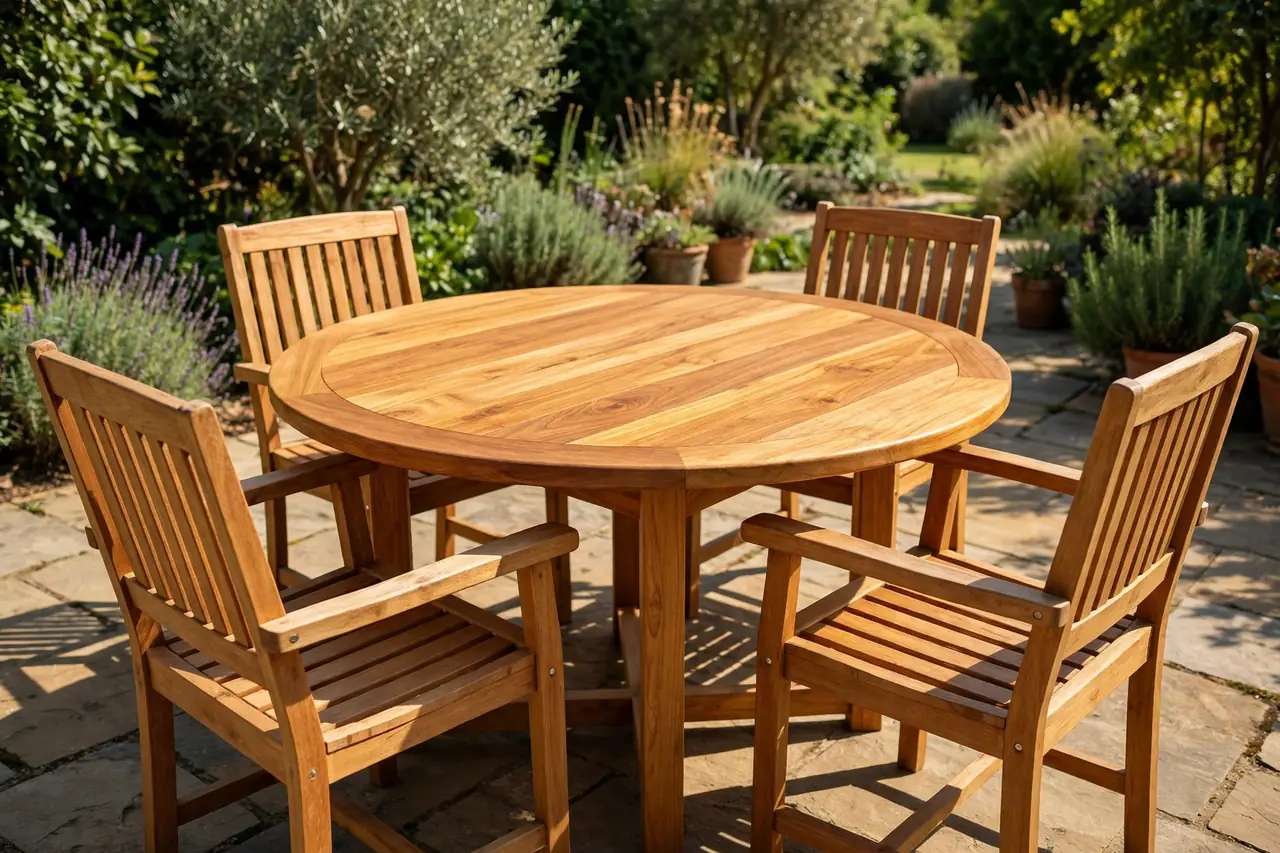
Teak is the gold standard, and the Atlas guide prices it at $800 to $2,500 and more for a round table. It weathers to a silver-gray patina if you leave it alone, or holds its honey color with one sealer coat each spring. Aluminum runs $400 to $1,500, weighs little, never rusts, and the powder coat resists chipping and fading. Resin wicker runs $300 to $1,200 and gives a soft woven look, but check the frame inside: aluminum lasts, steel rusts. Cast iron and steel run $500 to $2,000, feel rock-solid in wind, and need touch-ups on any chip before rust starts.
Plastic and resin tables at $150 to $500 are the budget pick: light, stackable, easy to clean, and fine for a casual patio, but they fade and flex after a few summers. Concrete and stone at $1,000 to $3,000 and more are the permanent pick: sculptural, immovable, and nearly indestructible, but they need professional delivery and they never move again.
Weight is a feature, not a detail. A light aluminum table blows across a patio in a storm if you forget to bring it in, while a heavy teak or cast-iron table stays put. If your patio is windy, weight is worth paying for.
Teak for a lifetime, aluminum for easy living, concrete for forever. The material decides the maintenance, not the look.
How Much Does a Round Outdoor Dining Table Cost?
A round outdoor dining table costs $150 to $2,500 or more, checked November 16, 2026, with most good 48-inch tables landing between $300 and $900. Entry-level plastic and resin tables run $150 to $500, mid-range aluminum and wicker sets run $500 to $1,500, and premium teak or cast aluminum tables reach $2,500 and beyond.
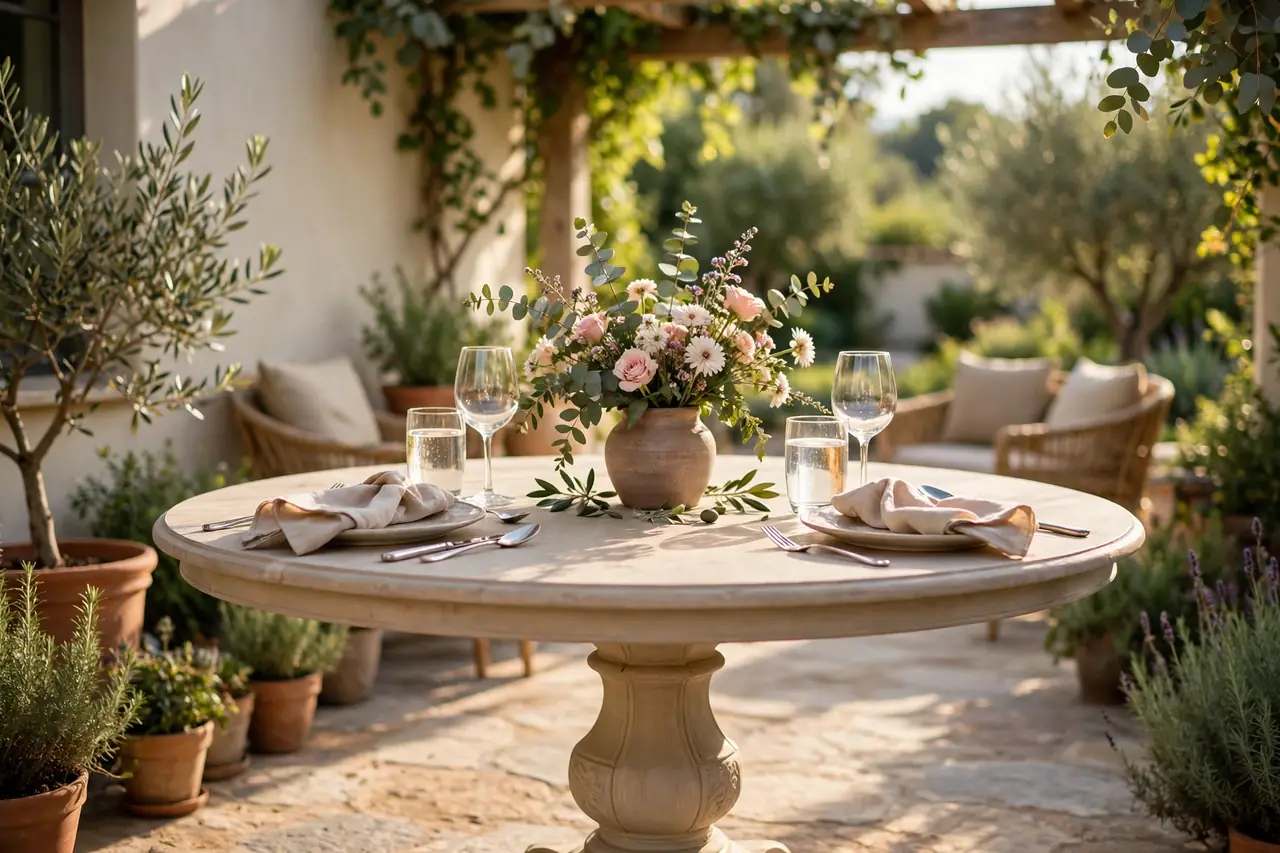
Sets hide the real price, so read them carefully. A 5-piece set means one table plus four chairs, a 7-piece set means one table plus six chairs, and the table counts as one of the pieces, so seating capacity is always one less than the piece count. Patio Productions’ dining-set guide spells this out, and it is the detail that catches first-time buyers: a “7-piece round dining set” seats six, not seven. Read their set guide at Patio Productions’ outdoor dining sets.
Real prices from the Atlas guide’s recommended sets show the range: a 45-inch HDPE round dining set with four chairs lists in the mid-hundreds, while a 59-inch acacia wood round dining set with six armchairs lists higher, and premium teak sets pass $2,000. The table alone usually costs about half the set price, so a $900 set is roughly a $450 table and four $100 chairs.
Three things push the price up beyond the material. A pedestal base costs more than four legs but gives every chair full legroom. An umbrella hole with a weighted base costs more but saves you buying a separate stand. And a tempered glass top costs more than slats but wipes clean in seconds after a meal.
Budget $300 to $900 for the table, then count the chairs separately. A set price is not a table price.
Round Outdoor Dining Table Prices at a Glance
The best-value round outdoor dining table is a 48-inch powder-coated aluminum table at $300 to $900, because it seats four, never rusts, weighs little enough to move for cleaning, and costs a third of a teak table while lasting 15 years or more. Go teak only if you want a table that outlives the house, and go concrete only if it never moves.
| Table diameter | Comfortable seating | Best for | Typical price |
|---|---|---|---|
| 36–42 inches | 2–4 people | Small balconies, bistro setups | $150–$500 |
| 48 inches | 4 people | Standard patios, small families | $300–$900 |
| 54–60 inches | 4–6 people | Medium patios, entertaining | $500–$1,800 |
| 60–72 inches | 6–8 people | Large patios, hosting | $800–$2,500+ |
Size and price ranges come from Outdoor Furniture Atlas, checked November 16, 2026. The table’s lesson is that 48 inches is the sweet spot for most homes: it seats a family of four, fits a 9-by-9-foot patch, and costs half what the 60-inch table costs. But size is only half the decision, because the base under the table decides whether anyone’s knees fit, and that is the next section.
Pedestal vs Legs: Which Base Works Best Under a Round Table?
A pedestal base works best under a round outdoor dining table for most buyers, because one center column leaves every chair full legroom and lets you slide in from any angle, while a four-leg base is more stable on uneven ground but puts a leg exactly where a chair wants to go. Choose pedestal for flat patios and legs for uneven decks and windy spots.
The pedestal’s advantage is freedom. With no legs in the way, four chairs tuck in close, a wheelchair or a high chair fits, and nobody’s knees hit a table leg. The trade-off is stability: a pedestal table can tip if someone leans hard on one edge, and on uneven pavers it rocks. A heavy pedestal base, or a base with a weighted insert, fixes most of that.
Four legs win on stability. A legged table stands firm on a sloped deck, resists wind, and holds a heavy stone top without complaint. The cost is legroom: each leg claims a slice of the circle, and a chair pulled up tight will bump a leg. Folding round tables use a legged base for the same reason, and they store flat, which a pedestal table never does.
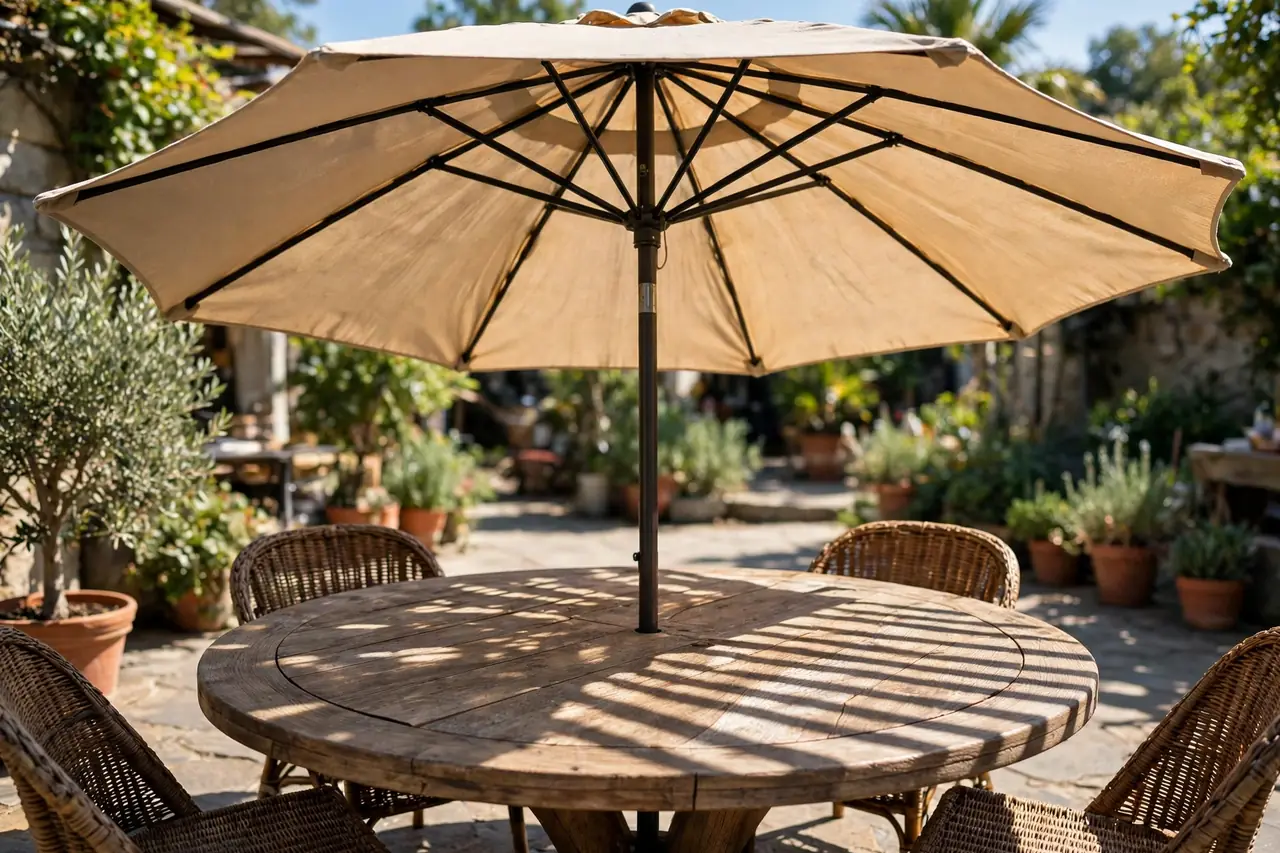
Umbrella compatibility decides the base too. Most round tables include a 1.5-to-2-inch umbrella hole at the center, and a pedestal base often has a weighted base built in, which keeps the umbrella upright in wind. A legged table needs a separate umbrella stand, which takes floor space and adds cost.
Pedestal for legroom, legs for stability. Flat patio means pedestal; sloped deck means legs.
What Most People Get Wrong About Round Outdoor Dining Tables
Most people get round outdoor dining tables wrong in three ways: they buy the diameter for their dream party instead of their everyday dinner, they forget the umbrella, and they pair the table with the wrong chairs. All three mistakes are easy to avoid once you see them.
The dream-party mistake is the big one. A 60-inch table seats six, but if dinner is usually two or four people, a 60-inch table means reaching across a wide empty circle for the salt, and the conversation dies in the middle. Buy for the everyday number, and add a folding table for the rare big night. A 48-inch table you use every evening beats a 60-inch table you eat at twice a year.
The umbrella mistake is the sunny-day one. A round table without a center hole cannot take a market umbrella, and a patio umbrella on a separate stand shades half the table and blocks a chair. Check for the 1.5-to-2-inch hole before you buy, and check that the base is heavy enough to hold the umbrella in wind. The Atlas guide’s FAQ confirms most round tables include the hole, but not all do, so always check the specifications.
The chair mistake is the comfort one. Curved-back chairs follow a round table’s shape and tuck in neatly, while straight-back dining chairs leave gaps and bump elbows. If you are buying a set, make sure the chairs were designed for round-table spacing. Our patio dining set guide covers sizing a full set so knees and elbows fit, and our outdoor furniture for small spaces guide shows how a 36-inch round table can turn a tiny patio into a dining nook.
Buy for Tuesday dinner, not for Thanksgiving. The everyday table is the right table.
How to Care for a Round Outdoor Dining Table
Care for a round outdoor dining table with a 15-minute routine each season: wash it with mild soapy water, rinse, dry it fully, then treat the material — one sealer coat for teak, a touch-up on any paint chip for metal, and nothing at all for aluminum. A fitted cover between uses adds years to any table, and cushions should live indoors or in a deck box when not in use.
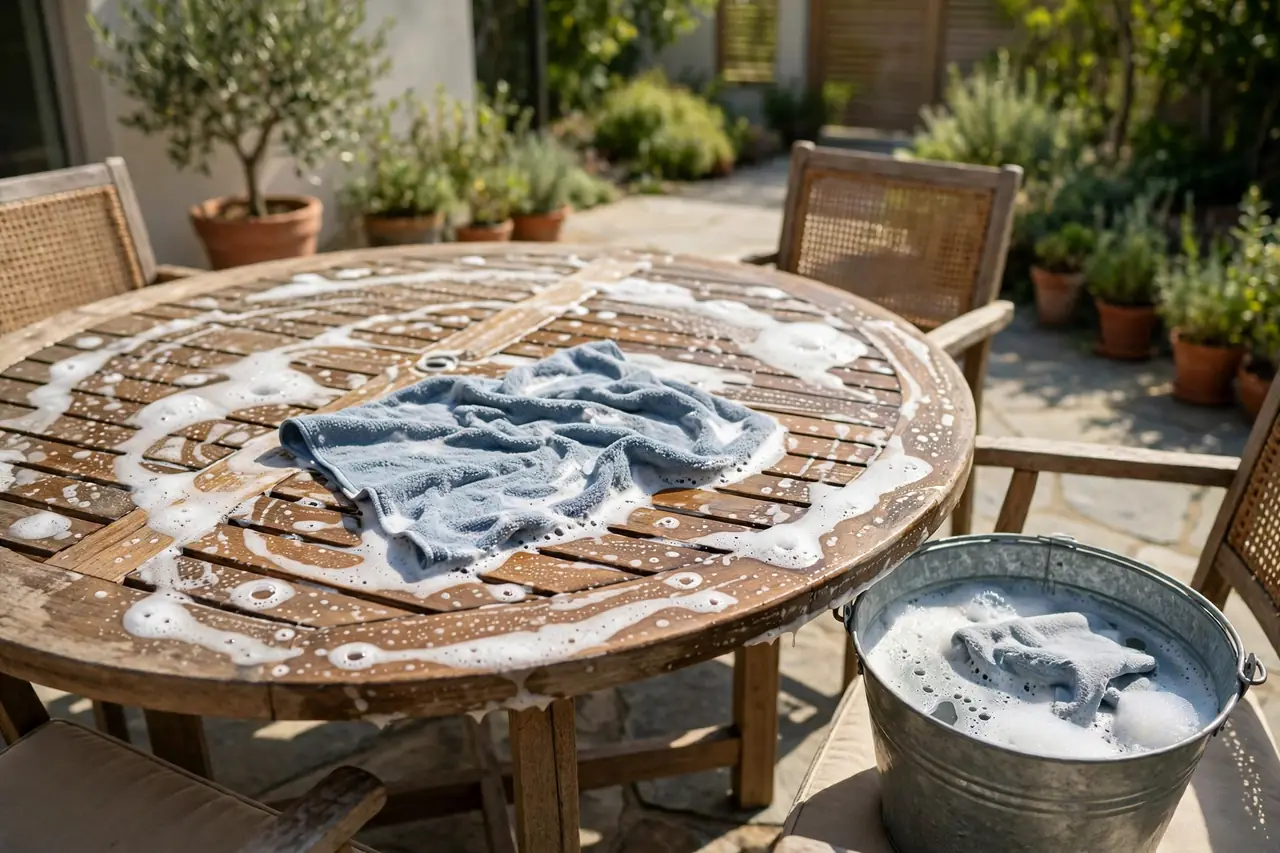
Teak needs the most attention and rewards it the most. Wash it along the grain, let it dry, and apply one thin sealer coat each spring if you want the honey color. Left alone, it grays gracefully and loses nothing structurally. Aluminum needs almost nothing: a wash and a dry, and a dab of touch-up paint on any chip before rust can start under the coating.
Glass tops need a different habit. Wipe them after every meal, because food and bird droppings etch glass if they sit in the sun. Resin wicker needs a brush through the weave to clear trapped dirt, and a rinse with the hose. Stone and concrete need a sealer coat once a year, or they stain from the first dropped glass of red wine.
Winter storage is simple: cover it, or bring it in. A fitted cover keeps rain off the top and out of the umbrella hole, which is where water pools and freezes. Our how to store outdoor furniture guide covers the full winter routine, and if your chairs need new cushions after a season outside, our replacement cushions for patio furniture guide shows how to get the fit right. For shade over the table, our balcony cover ideas guide covers covers that keep rain off without trapping damp.
Wash, dry, seal the wood, cover the table. Fifteen minutes a season is the whole job.
Related Guides
If you are planning the whole outdoor dining space, these guides pick up where this one leaves off:
- Patio Dining Set — size a table and chairs so everyone fits.
- Outdoor Furniture for Small Spaces — seven layouts that make a tiny patio feel big.
- Small Patio Decorating Ideas — finish the space once the table fits.
- Patio Garden — pair your dining table with plants that earn their place.
- Outdoor Bench With Storage — extra seats that hide the clutter too.
- Replacement Cushions for Patio Furniture — get the fit, fabric, and price right the first time.
- How to Store Outdoor Furniture — keep it clean, dry, and ready for spring.
- Balcony Cover Ideas — stay dry and cool on a small balcony.
Frequently Asked Questions
How many people can sit at a 60-inch round table?
A 60-inch round table comfortably seats 6 adults. In a pinch, you can fit 8 if you use narrower chairs or if some guests are children. For 8 adults comfortably, consider a 72-inch round table or a round outdoor dining table for 6 with a larger diameter.
Is a round or rectangular outdoor dining table better?
It depends on your space and how you entertain. Round tables are better for conversation, small spaces, and umbrella use. Rectangular tables offer more surface area and can seat more people in a linear arrangement, so they suit long decks and big gatherings.
Do round outdoor dining tables come with umbrella holes?
Most round outdoor dining tables include a pre-drilled umbrella hole, typically 1.5 to 2 inches in diameter, at the center. However, not all do, so always check the product specifications, and make sure you have a compatible umbrella and base.
What is the best material for a round outdoor dining table?
The best material depends on your climate, budget, and maintenance preferences. Teak is the most durable and beautiful but requires occasional oiling. Aluminum is lightweight, rust-proof, and low-maintenance, while resin wicker offers a great balance of style and weather resistance.
Can I use a round outdoor dining table on a small balcony?
Absolutely. Round tables are actually ideal for small balconies because they eliminate wasted corners. A 36 to 42 inch round table with two to four chairs can transform a small balcony into a cozy dining nook.
How do I protect my round outdoor dining table from the weather?
Use a fitted furniture cover when the table is not in use, especially during rainy or snowy seasons. For wood tables, apply a fresh coat of sealant annually. For metal tables, touch up any chips in the finish promptly to prevent rust, and store cushions indoors.
Disclaimer: This guide gives general advice for choosing outdoor dining furniture, not professional design or structural instructions. Check weight limits before use, keep the table on a level surface, and move lightweight tables inside before strong winds.
Measure your everyday crowd, buy the 48-inch table for four or the 60-inch for six, and pick aluminum for easy living or teak for a lifetime. Pedestal base, umbrella hole, armless chairs. Do that, and the round table becomes the place where dinner lasts an hour longer than anyone planned.