
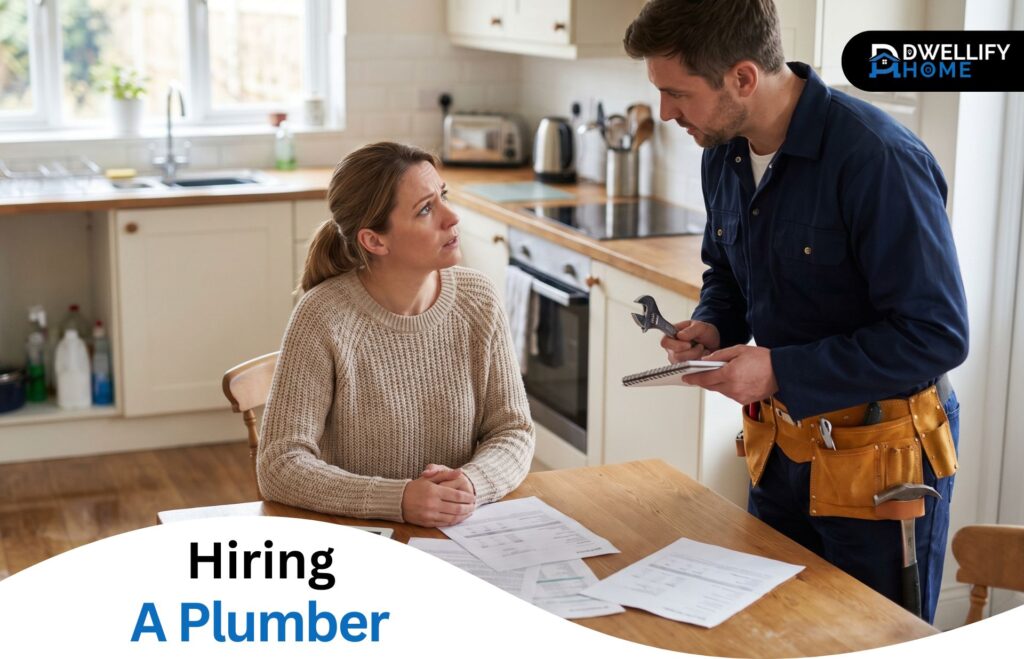
Plumbing problems rarely give you advance warning. One day everything works fine, and the next you’re dealing with a flooded bathroom, a backed-up drain, or a water heater that’s completely stopped working. That kind of urgency pushes homeowners into quick decisions — and quick decisions without the right questions often lead to costly regrets.
Knowing what to ask before you hand over the job puts you in control. It helps you separate capable, trustworthy professionals from those who look good on paper but fall short when the work begins. The questions below aren’t meant to be interrogative — they’re the kind of practical, sensible inquiries any good plumber will welcome.
Questions to Determine Plumber’s Experience
Why does experience matter more than you might think? Because plumbing systems aren’t isolated — every pipe, fixture, and valve connects to a larger network. When something goes wrong in one spot, a less experienced technician may fix the visible problem while missing its root cause entirely. An experienced professional recognizes patterns, anticipates complications, and works more efficiently because they’ve seen similar situations before.
The right starting question is simple: “How long have you been doing residential plumbing work, and have you handled jobs similar to mine?” It’s direct, professional, and tells you immediately whether this person has relevant hands-on background — or whether your project might be outside their comfort zone.
Years on the job matter, but so does the type of work. A plumber with fifteen years of experience in commercial construction may not be the strongest choice for a residential bathroom remodel. Align their experience with your specific need.
Ask for references from past clients — ideally two or three people whose projects were similar to yours. Then actually call those references. Ask whether the work was completed on time, whether the final cost matched the estimate, and whether they’d hire the same person again. A brief conversation with a previous customer gives you context that no review website can fully replicate.
One question worth asking directly: “Has your work ever needed to be redone or corrected?” A plumber who answers this honestly — and walks you through what happened and how they resolved it — is demonstrating accountability. That’s a meaningful quality indicator.
Evaluating Plumber’s Licensing and Insurance
What does licensing actually protect you from? Quite a lot. A licensed plumber has met the minimum technical and legal standards required by your state or local government. Unlicensed work isn’t just risky in terms of quality — it can void your homeowner’s insurance policy and create compliance problems down the line, especially if you ever sell your home.
Always ask: “Can I see your plumbing license?” A legitimate professional will have this ready. Once you have the license number, verify it directly with your state’s licensing board or local regulatory authority. This takes five minutes and confirms that the license is current, active, and hasn’t been flagged for disciplinary issues.
Insurance is equally non-negotiable. There are two specific types you need to confirm:
- General liability insurance — This covers damage to your property if something goes wrong during the job. A broken pipe that floods your kitchen during a repair, for example.
- Workers’ compensation insurance — This protects you if a worker gets injured while on your property. Without it, you could be held financially responsible for medical expenses.
Ask for a certificate of insurance — not just a verbal confirmation. If you want to be thorough, contact the insurance carrier directly to verify that the policy is active and the coverage amounts are adequate. This is a completely standard request, and any reputable professional will understand why you’re asking.
Skipping this step is one of the most common mistakes homeowners make, especially under the pressure of an urgent repair. One uninsured accident can create a financial and legal situation far more stressful than the original plumbing problem.
Understanding Plumbing Costs and Estimates
How do you evaluate whether a plumber’s pricing is reasonable? The only way to know is if the estimate is detailed enough to examine. A single number handed over verbally tells you almost nothing. A proper written estimate, on the other hand, gives you something concrete to work with.
Before any work starts, request a written estimate that clearly breaks down:
- Labor (whether charged hourly or as a flat fee for the job)
- Materials and fixtures, listed specifically
- Any applicable service fees, travel charges, or after-hours premiums
- The process for handling unexpected issues that arise mid-job
That last point deserves special attention. Plumbing work sometimes uncovers hidden problems — corroded pipes behind a wall, a deteriorated seal beneath a floor, unexpected root intrusion in a drain line. Ask upfront: “What happens to the cost if additional problems are found once the job has started?” A straightforward plumber will explain their process for notifying you before proceeding with anything beyond the original scope.
Collecting two or three estimates from different professionals is a smart practice — not purely for comparison shopping, but because the exercise reveals how each plumber communicates. Pay attention to how organized each estimate is, whether the plumber explains it clearly, and whether they’re willing to answer follow-up questions. The cheapest quote isn’t always the best value, particularly if it’s vague about what’s actually included.
Also ask whether permits are part of the cost. Many types of plumbing work — especially anything involving the main line, gas connections, or significant fixture replacements — legally require permits in most jurisdictions. A plumber who doesn’t mention permits when they’re required may be planning to skip them, which creates code compliance issues you’ll have to deal with eventually.
Exploring Warranty and Service Guarantees
What should a warranty on plumbing work actually cover? At its core, a workmanship warranty means the plumber stands behind the quality of what they did. If a repair fails within a reasonable time — not because of misuse or unrelated causes, but because of how the work was done — they should return and correct it without charging you again.
Ask directly: “Do you offer a warranty on your labor, and how long does it last?” Most established plumbers offer workmanship warranties ranging from 30 days to one year, depending on the scope and type of job. Some also pass along manufacturer warranties on the parts and fixtures they install, which can extend coverage considerably.
Understanding the distinction between these two protections is useful:
- Labor warranty — Covers the quality and durability of the plumber’s actual work
- Parts or materials warranty — Covers the fixtures and components used, typically issued by the manufacturer
These aren’t interchangeable. A new fixture installed incorrectly may fail due to improper installation — and in that case, the manufacturer’s warranty won’t apply because the failure wasn’t a product defect. That scenario falls under the labor warranty.
Get everything in writing. The warranty documentation should specify the duration, what’s covered, what actions would void the warranty, and how to initiate a claim if something goes wrong. A plumber who’s willing to offer a strong verbal guarantee but hesitates to put it in the contract is sending a clear signal about how much that guarantee is worth.
Some professionals also offer a broader satisfaction guarantee — a commitment to address concerns if the outcome doesn’t meet agreed-upon standards. This is worth asking about on larger or more complex jobs.
Why Communication Is Part of the Job
Technical skill alone doesn’t make a great hire. Pay attention to how a plumber communicates during your initial conversation. Do they explain things in plain language? Do they seem patient when you ask for clarification? Do they give you a clear picture of the process, the timeline, and what to expect?
A plumber who is vague, dismissive of questions, or reluctant to explain their approach is likely to create confusion and frustration — even if the actual work is adequate. You should leave every conversation with a plumber feeling more informed, not less.
Conclusion
Asking the right questions before hiring isn’t about being difficult — it’s about being informed. Verifying experience, confirming licensing and insurance, reviewing written estimates, and understanding warranty terms are all basic, reasonable steps that protect your home and your investment.
The right professional will answer every question clearly and without defensiveness. They’ll provide documentation without being asked twice. That combination of skill and transparency is exactly what you’re looking for — and now you know how to find it.
We hope this article has been helpful! Feel free to browse our other posts on Dwellifyhome.com for more tips and insights. Transparency matters to us, so we want you to know that some links in this content may be affiliate or sponsored. If a purchase is made through one of these links, Dwellifyhome.com may earn a small fee — at absolutely no cost to you. All perspectives and views presented here are solely those of the author.