
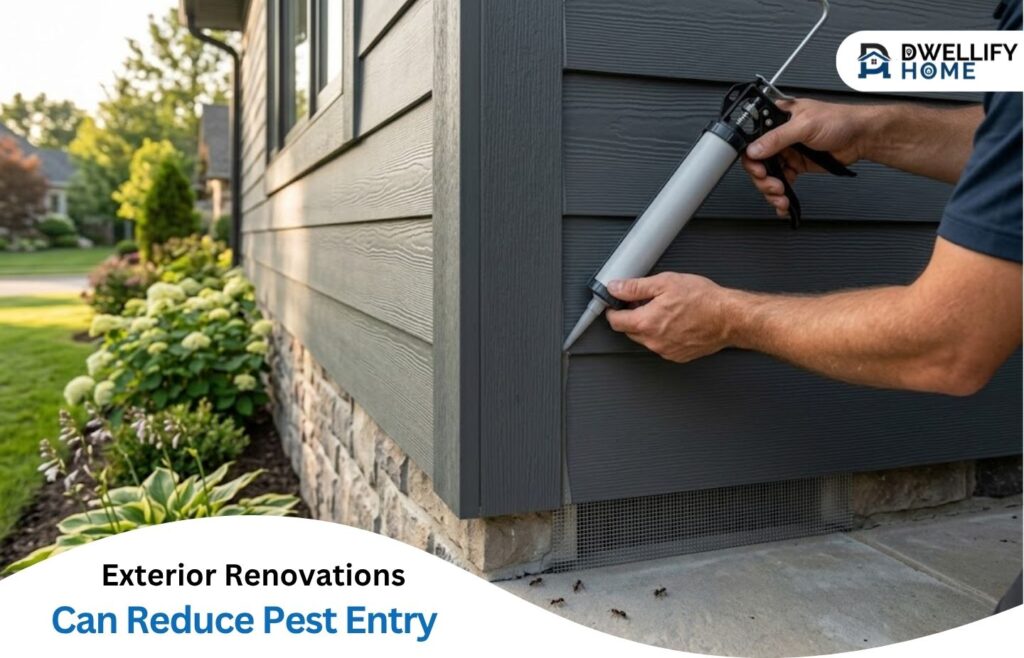
A renovation is usually planned around appearance and comfort: new siding, a fresh coat of trim, replacement windows, a better front door, or a roof that no longer leaks. Pest resistance rarely appears on the list. Yet many of these same projects touch exactly the places where pests find their way in, and a little extra attention during the work can improve protection without altering how the house looks.
Renovations also pull back the layers of a building. Old siding comes off, trim is removed, and windows are taken out, which sometimes reveals gaps, damage, and nests that were hidden for years. The sections below explain how exterior upgrades can close entry points, what to inspect during remodeling, and when persistent problems suggest something that needs professional evaluation.
How Gaps and Transitions Let Pests In
Most pest entry happens at transitions, the places where one material meets another. Siding meets trim, windows meet walls, roofs meet walls, pipes meet exterior surfaces, and doors meet thresholds. Each junction relies on sealant, flashing, or tight fitting to stay closed, and each can open over time.
Small gaps matter more than most people expect. Ants, spiders, and beetles pass through cracks too narrow to see easily, and mice can squeeze through openings smaller than a finger. Wasps and bees enter through gaps in soffits and trim. Termites use hairline cracks in foundations and mud tubes to reach wood.
Age and weather widen these gaps. Caulk shrinks, wood swells and shrinks with moisture, fasteners loosen, and settling shifts the structure. A house that was well sealed when built may have many small openings after fifteen or twenty years. Because the openings are scattered, they are hard to find without a deliberate search.
Concealed spaces add to the challenge. Gaps behind siding, inside soffits, and around window frames connect to wall cavities. Once pests are inside, they can travel through the structure to reach attics, kitchens, and basements, far from where they entered.
How Upgrades Improve Pest Resistance
Replacing worn materials with well-detailed new ones gives a chance to restore a tight exterior. New siding installed with proper flashing and sealed joints leaves fewer gaps than old, warped boards. Fresh trim, installed with tight joints and sealed edges, closes cracks that had opened around windows and doors.
Doors and windows are especially important. Modern units with good weatherstripping and sealed frames keep out insects and rodents as well as drafts. Installing new thresholds and door sweeps closes the gap at the bottom of the door, a common entry point for ants, spiders, and mice.
Roofing details count too. Proper flashing at roof-wall junctions, sealed vents, and tight fascia and soffit closures reduce openings that wasps, bats, birds, and rodents use. Replacing damaged vent screens with durable metal mesh protects openings that need airflow.
Utility penetrations are another opportunity. When new lines or fixtures are installed, or old ones are replaced, the openings can be sealed carefully with appropriate materials. Sleeves, collars, and sealants around pipes, cables, and conduits close gaps that were left loose.
None of this requires changing the look of the house. Pest-resistant details are usually hidden: better flashing, tighter joints, sealed edges, and metal screening behind a decorative vent. The result looks the same and performs better.
What Renovations Can Reveal
Opening a wall or removing trim can expose problems that no one knew existed. Contractors and homeowners sometimes find old rodent nests, chewed insulation, wasp nests inside wall cavities, carpenter ant galleries, or termite damage in framing. Water stains and rot behind siding point to leaks that also support pests.
Finding such issues mid-project can be unwelcome, but it is far better than sealing them in behind new materials. Covering damage or active infestations with fresh siding hides the problem, and pests may continue to live and spread inside the wall. Stopping to deal with what is found protects the investment in the renovation.
When something unexpected appears, document it. Photographs, notes about location, and a description of the damage help in planning repairs and in discussions with contractors or professionals. If the finding suggests active pests, a professional inspection before closing the wall is a sensible step.
Repairs should address cause as well as symptoms. Replace damaged wood, correct moisture sources, clean out nests and debris, and seal the entry points the animals used. A renovation that fixes only the visible surface leaves the underlying problem to return.
If signs of nests, chewed insulation, or damaged framing appear when walls are opened, the pest control experts at Official Pest Prevention can assess them before new materials cover the area.
Inspecting Joints, Flashing, Vents, Thresholds, and Service Openings
A systematic inspection during remodeling pays off. Walk the exterior with the contractor and check each category of detail:
- Joints between siding, trim, corners, and windows, looking for gaps and failed sealant
- Flashing at roof-wall junctions, windows, doors, and chimneys, checking that it is intact and lapped correctly
- Vents of all kinds, confirming that screens are present, undamaged, and secured with fasteners
- Thresholds and door sweeps, checking for light showing under closed doors
- Service openings where pipes, cables, gas lines, and conduits enter, ensuring that gaps are sealed
- Foundation edges and sill plates, looking for cracks and gaps between wood and masonry
Use the right materials. Metal flashing and mesh resist chewing, while foam and thin plastic do not. Exterior-grade sealants stay flexible and bonded through temperature changes. Where rodents are a concern, metal or cement-based fillers over larger gaps give lasting protection.
Ask contractors to include sealing steps in the scope of work, and to photograph key details before covering them. Those photographs serve as a record of what lies behind the finished surface. They also help with future maintenance and with any later inspections.
After the project, schedule a follow-up check.
Where a contractor and a pest professional can walk the exterior together, the pest control experts at Official Pest Prevention can point out likely entry routes before sealing work begins.
When Persistent Activity Points to a Structural Issue
Some pest problems continue after a renovation. Mice may still be heard in the walls, ants may keep appearing near a new window, or termite signs may reappear at the foundation. This pattern suggests that something has been missed: a hidden entry point, a moisture source, damaged framing, or conditions that support pests in a way that surface sealing cannot fix.
At that stage, professional evaluation is worthwhile. A pest professional can inspect the exterior and interior, identify the species, trace likely entry routes, and recommend treatment and exclusion measures. They can also work alongside contractors to coordinate repairs with treatment.
Structural issues may include rotted sill plates, failed flashing, gaps in the foundation, or voids in wall assemblies that connect different parts of the house. These cannot be solved with caulk alone and may require repairs by a qualified builder, along with pest treatment.
Clear communication between homeowner, contractor, and pest professional keeps work efficient. Share findings, agree on the order of tasks, and confirm that treatment and repairs do not undo each other. A coordinated plan produces better results than separate efforts.
Final Analysis
New siding, trim, doors, windows, roofing details, and utility penetrations offer a chance to make a home more resistant to pests, provided that gaps and transitions are properly sealed. The improvements are mostly hidden and need not change a home’s design.
Renovation can also uncover entry points and damage that were concealed. Inspecting joints, flashing, vents, thresholds, and service openings as the work proceeds, and bringing in professional evaluation when activity persists, helps ensure that the finished exterior looks good and keeps pests out.
A renovation is a rare chance to see and fix the parts of a house that are normally hidden. Taking a little extra time to seal transitions and check for damage protects the investment and keeps the finished home comfortable.
As a reader, you may come across affiliate or sponsored links within our content. These links may provide Dwellifyhome.com with a small commission when a qualifying purchase is made, helping us continue publishing helpful resources.



