
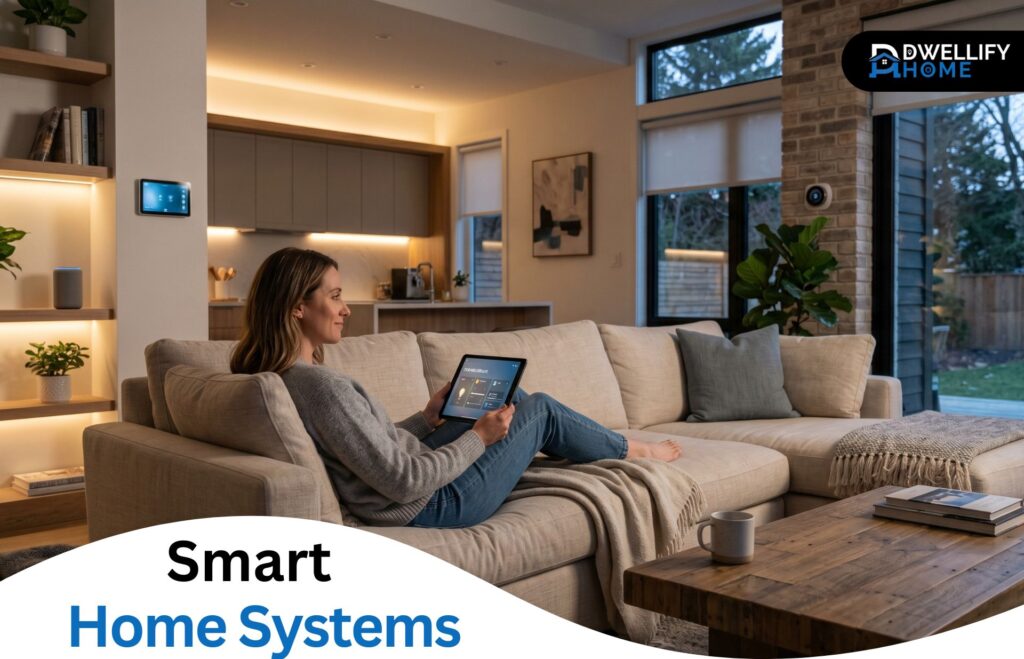
Modern homes are no longer passive spaces. They respond, adjust, and adapt — and that shift has quietly transformed how people experience daily life at home. Smart home systems have moved well past novelty. For many homeowners today, they’re a practical layer of control that handles tasks in the background, keeps energy use in check, and makes everyday routines noticeably smoother.
This isn’t about having the flashiest gadgets on the market. It’s about a home that works with you rather than requiring constant attention from you.
Smart Climate Control Enhances Daily Comfort

Maintaining a comfortable indoor temperature sounds simple, but it’s one of those things that takes more effort than it should — especially with changing seasons, varying schedules, and different preferences across family members.
Smart thermostats solve this by learning your routine. They adjust temperatures based on when you’re home, when you’re asleep, and even what time of year it is. You stop thinking about it, and the home just stays comfortable.
Providers like Advanced Home Services show how pairing professional system support with smart technology creates a more stable indoor environment. The technology is only as reliable as the system behind it, so having both working together makes a real difference.
HVAC Integration Improves Energy Efficiency
A smart thermostat on its own is useful. But when it’s fully integrated with your heating and cooling system, it becomes genuinely efficient. The system can track usage patterns, reduce output during low-demand hours, and flag when something isn’t performing as it should.
That kind of intelligent operation cuts down on waste without asking you to manually manage anything. Over time, the savings on utility bills reflect how well the system is running.
Southern California HVAC services are a good example of how regional climate demands require this type of advanced integration. In areas where cooling runs heavily for most of the year, having a system that self-regulates isn’t just convenient — it’s cost-effective.
Automation Simplifies Everyday Tasks
Think about how many small adjustments you make at home throughout the day — turning lights on and off, managing appliances, setting the temperature before bed. Individually, none of these feel like a burden. Collectively, they add up.
Automation handles these repetitive actions through scheduled routines or simple triggers. Lights dim at a set evening hour. The thermostat shifts before you wake up. The coffee maker starts on a weekday schedule. These aren’t complicated setups — they’re small adjustments that make the day feel more organized without extra effort on your part.
Consistency is one of the underrated benefits here. Automated settings don’t forget, don’t get skipped on busy mornings, and don’t vary from day to day.
Monitoring Systems Improve Home Management

One of the quieter advantages of smart home systems is visibility. Sensors placed throughout the home can track temperature consistency, humidity levels, air quality, and even early signs of system inefficiency. That information is available in real time, usually through a single app.
The U.S. Department of Energy has noted that smart technologies contribute meaningfully to better energy management and reduced household waste. When homeowners can actually see how their systems are performing, they make better decisions — whether that’s scheduling maintenance earlier or adjusting usage habits.
Catching a minor issue before it develops into a repair is one of the most practical returns on smart home investment.
Security Features Add Peace of Mind
Smart home security has become one of the most commonly adopted features for good reason. Connected cameras, motion-activated lighting, video doorbells, and remote access controls give homeowners a clear picture of what’s happening around their property — whether they’re inside or away.
These systems don’t just record. They allow for active responses. A light that turns on when motion is detected, a door that can be locked remotely, an alert that arrives before a situation escalates — these features reduce risk without requiring constant monitoring.
Security features also work well alongside other smart systems. Lighting that mimics occupancy patterns when no one is home, for example, adds a layer of deterrence that doesn’t demand anything from the homeowner.
Integration Creates a Seamless Living Experience
Each smart system has its own value, but the real benefit comes from how they connect. When climate control, lighting, security, and monitoring all operate through a unified platform, the home becomes noticeably easier to manage.
Instead of switching between multiple apps or control panels, everything lives in one place. Adjustments are faster. Routines are easier to set up. And the overall experience feels coordinated rather than fragmented.
This level of integration is what separates a collection of smart devices from an actual smart home.
Long-Term Benefits Extend Beyond Convenience
The appeal of smart home systems often starts with convenience, but the long-term value runs deeper. Consistent energy efficiency lowers costs over time. Proactive monitoring reduces unexpected repair expenses. Better system performance extends the lifespan of appliances and infrastructure.
Homeowners who invest in these systems aren’t just upgrading for comfort today — they’re building a home that runs more efficiently for years ahead. That combination of immediate ease and long-term performance is what makes smart home technology a practical choice rather than just a trend.
We hope you found this article useful — and there’s plenty more where that came from, so feel free to browse around on Dwellifyhome.com! A quick transparency note: this post may contain affiliate or sponsored links. Should you choose to purchase through one of these links, Dwellifyhome.com may receive a small referral fee. Rest assured, this never affects our editorial integrity — every opinion expressed is genuinely ours.