
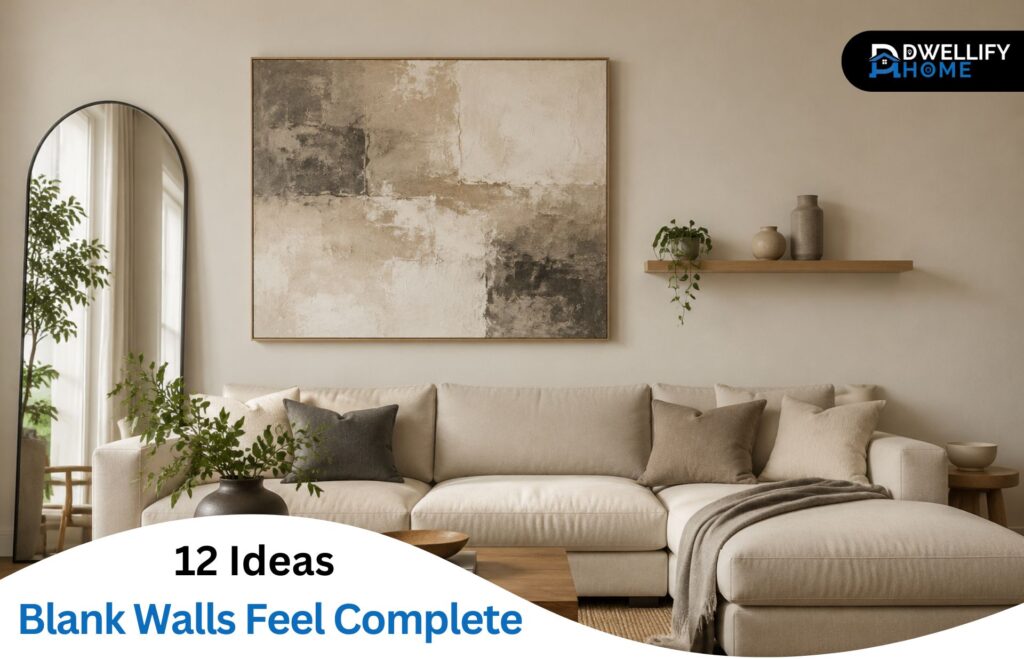
A blank wall usually feels unfinished because it has no visual relationship with the furniture around it. The most reliable way to solve it is to choose one clear focal point—art, shelving, a mirror, texture, or storage—scaled to the wall and the room while leaving enough open space for the design to breathe.
The goal isn’t to cover every visible patch. A successful arrangement connects nearby furniture, supports the room’s purpose, and reflects the people who live there. That may mean a quiet canvas above a bed, useful shelves in an office, or family photographs in a hallway.
Scale is often the deciding factor. Small pieces can disappear on a wide wall, while an oversized feature can overpower compact furniture. Budget, natural light, and whether you own or rent also shape the choice.
This guide covers 12 practical approaches, followed by room-specific advice and common mistakes to avoid.
Start by Understanding Why Your Wall Feels Empty
An undecorated wall isn’t always a problem. Open space lets the eye rest, especially in a room with patterned rugs, colorful upholstery, or detailed furniture. A wall needs attention when the furniture below appears isolated or one side of the room feels visually lighter.
Look at the wall from the main doorway and from the seat you use most. Then consider four questions:
- Is the wall meant to become a focal point or quietly support another feature?
- Does the room need decoration, storage, better lighting, or a combination of these?
- How much visual weight does the furniture below the wall already have?
- Can you drill into the surface, or do you need a removable option for a rental?
Measure the wall and any sofa, bed, console, or table below it before shopping. Use painter’s tape to outline the proposed arrangement. Seeing its actual footprint is more useful than judging dimensions from a product photograph.
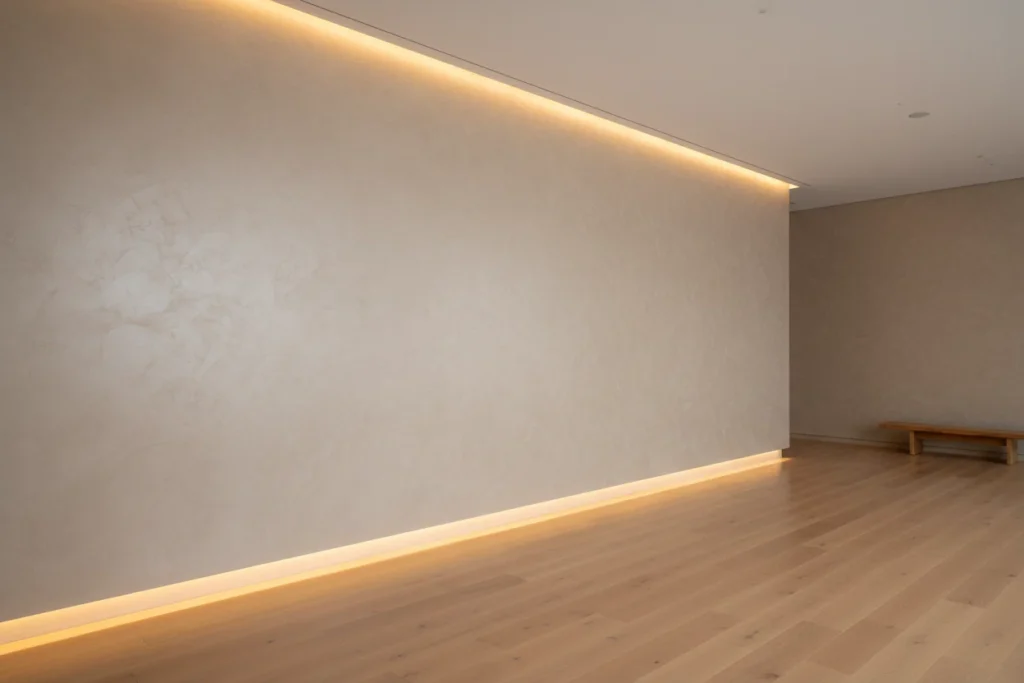
12 Ideas to Fill Empty Wall Space
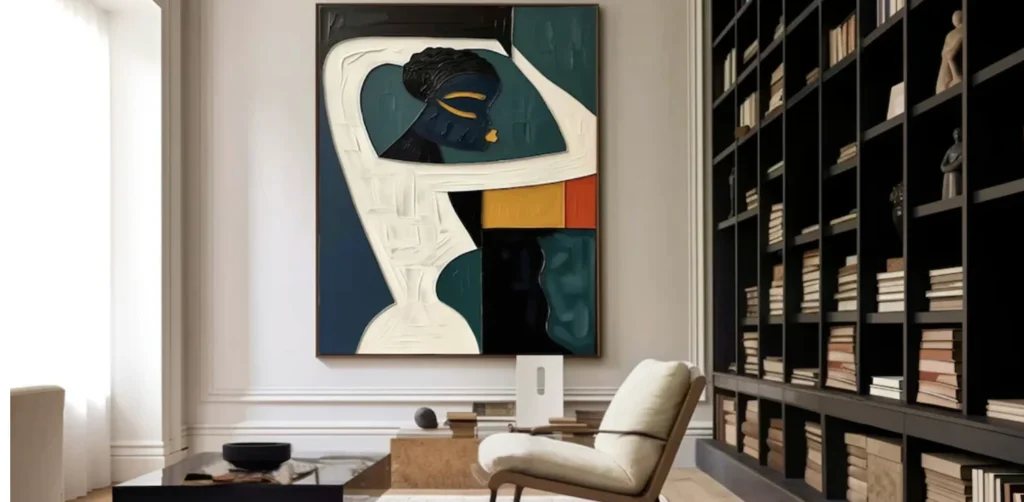
1. Add Large Wall Art as a Statement Piece
One substantial artwork can give a blank wall a clear purpose without introducing clutter. It works particularly well above a sofa, bed, sideboard, or dining table because the artwork and furniture read as one composition rather than separate objects.
As a starting point, choose art that measures roughly two-thirds to three-quarters of the furniture’s width. Hang it about 6 to 10 inches above the furniture, adjusting for tall headboards or accessories. Test the outline with painter’s tape before making holes.
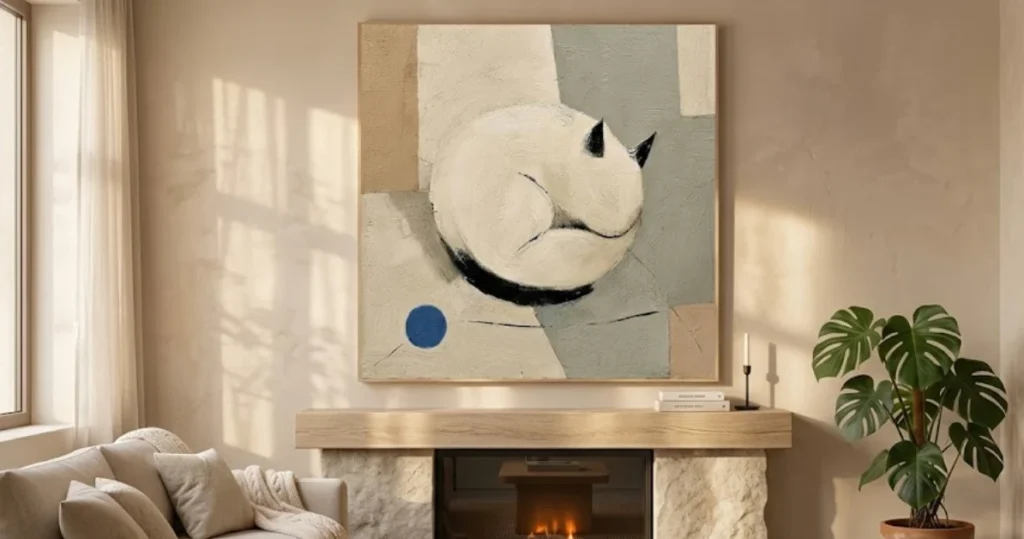
A framed print feels crisp, while canvas or plaster-style work adds dimension. Eleanos Gallery offers minimalist and textured art for modern, Scandinavian, and Wabi-Sabi-inspired rooms. Check the dimensions, hanging method, and return terms before choosing a large piece online.
2. Create a Gallery Wall
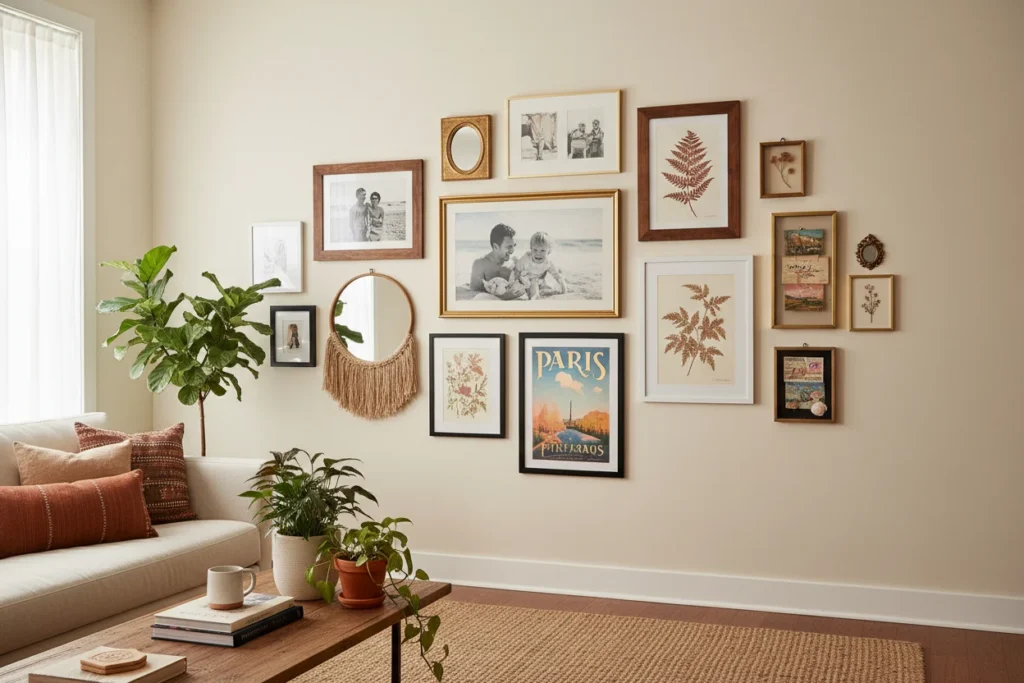
A gallery wall suits people who want to display photographs, prints, children’s art, postcards, or collected objects together. The arrangement will feel intentional when one element repeats, such as matching frames, similar matting, a limited color palette, or a shared subject.
Build the layout on the floor, beginning with the largest piece. Keep gaps reasonably consistent, often 2 to 3 inches. Paper templates taped to the wall let you check the shape and eye level before installing the frames.
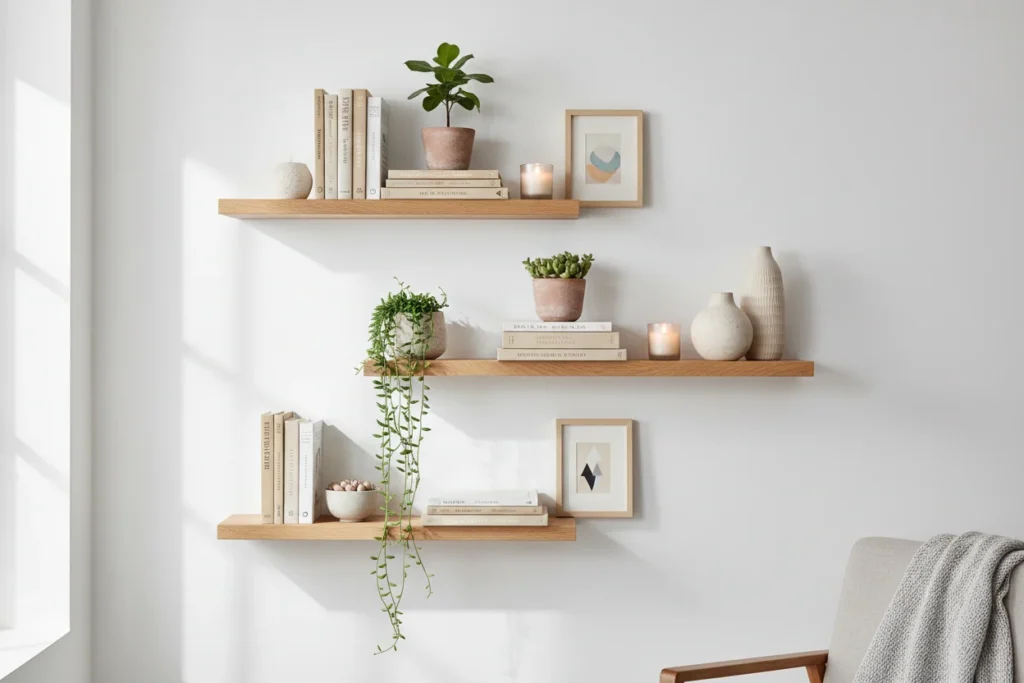
3. Install Floating Shelves for Style and Function
Floating shelves provide display space without the visual bulk of a cabinet. They can hold books and ceramics in a living room, framed photographs in a bedroom, or frequently used items in a kitchen or office.
Choose fixings for the wall material and expected load. Drywall anchors, masonry screws, and studs aren’t interchangeable. Leave some shelf surface visible and vary the height of displayed pieces. A few grouped objects look more considered than a row of small accessories.
4. Add Textured Wall Art for More Depth
Texture is useful in a neutral room where more color would feel distracting. Raised canvas, plaster work, fiber art, carved wood, and handmade wall pieces catch changing daylight and add depth through shadow rather than bold pattern.
Choose texture according to the room. Soft fabric warms a bedroom, while plaster or wood can ground a living area. Deeply textured pieces collect dust, so keep them away from stoves and damp bathrooms unless the material suits those conditions.
5. Use Mirrors to Make the Space Feel Larger
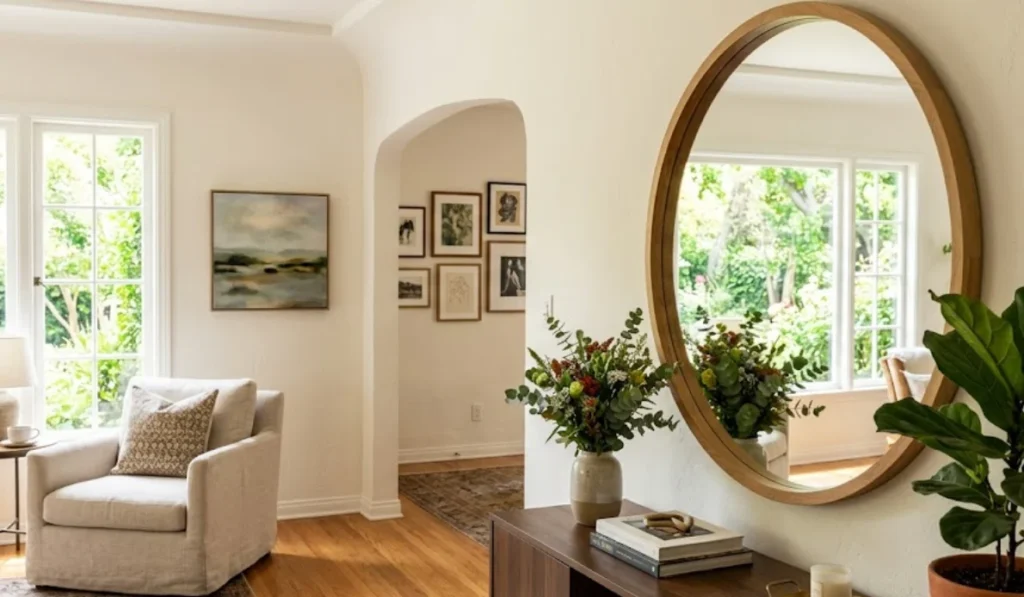
Mirrors brighten a room by redirecting available light and extending the view beyond the wall. A large round mirror can soften angular furniture, while an arched or rectangular design often suits a console, mantel, or dining sideboard.
Position the mirror to reflect a window, artwork, or greenery rather than clutter or a blank ceiling. This can make a room feel bigger and more open. Use hardware rated for its weight, especially with heavy glass or a wide frame.
6. Bring Nature Indoors With Wall Plants
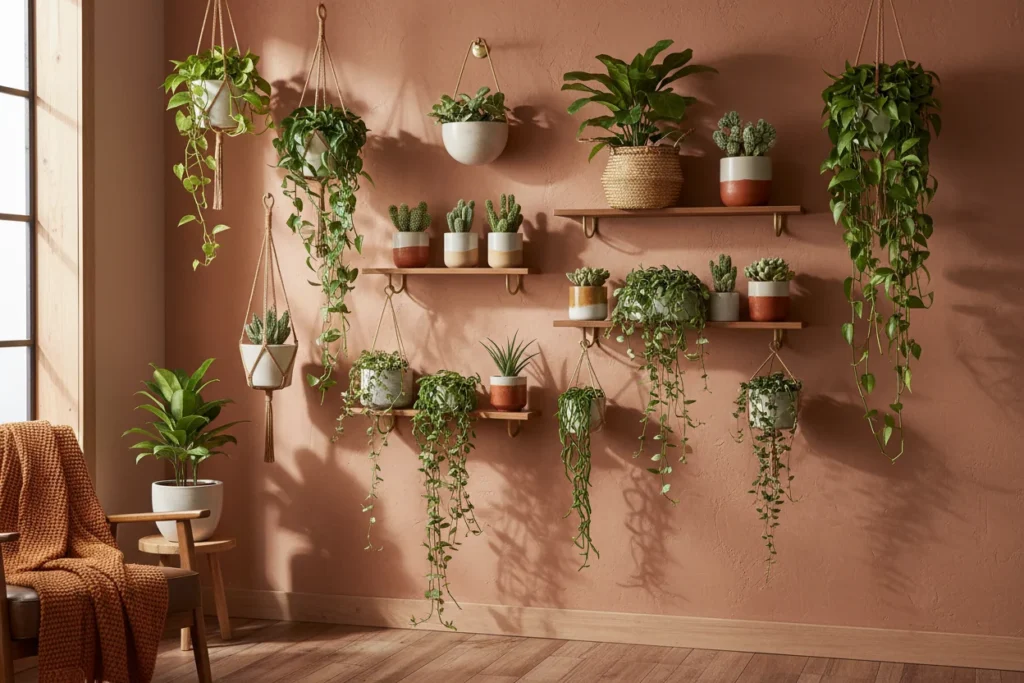
Wall-mounted planters, trailing plants, and narrow plant shelves bring movement and organic texture to a bare surface. They pair naturally with timber, linen, stone, and quiet color schemes.
Match the plant to the available light and consider how you’ll water it without marking the wall. A removable pot and drip tray simplify maintenance. Where light or upkeep is limited, preserved foliage or a convincing artificial plant can create a similar effect.
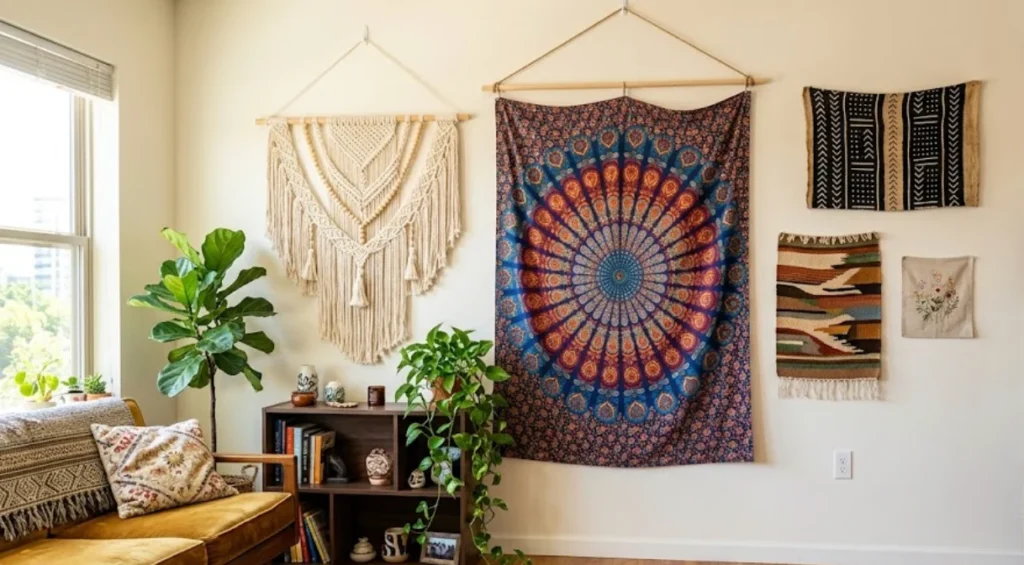
7. Try Large Tapestries or Fabric Art
Fabric is a practical way to cover a broad wall without the cost or weight of oversized framed art. It also softens rooms with hard floors and minimal upholstery, making it useful in bedrooms, rental homes, and casual living spaces.
Hang a tapestry from a slim rod, or use removable fasteners when the fabric and wall allow it. Steam out folds and keep the lower edge clear of heaters, candles, and rubbing furniture.
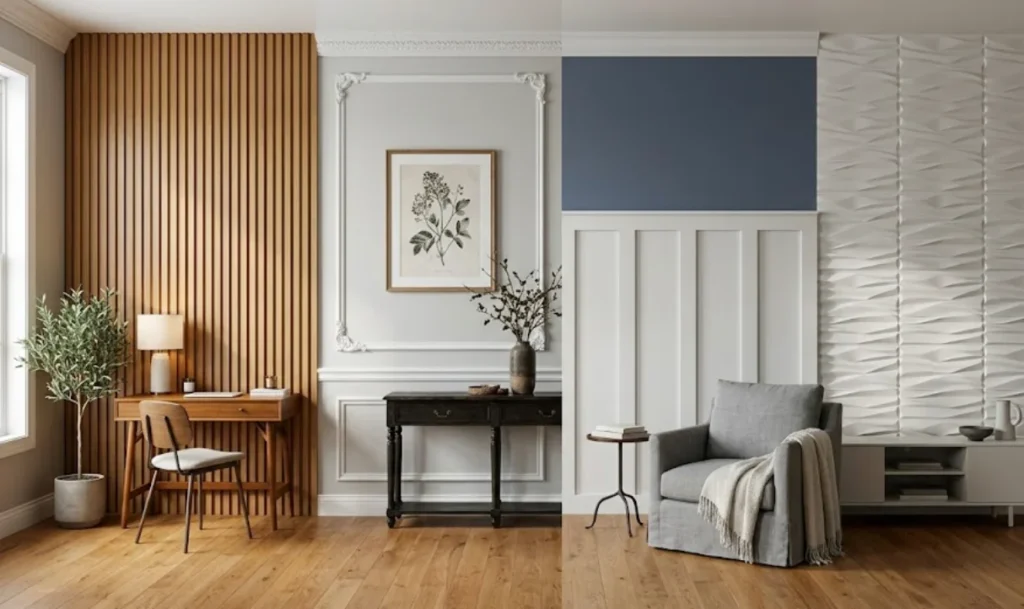
8. Add Wall Panels or Architectural Details
Wall treatments create interest through the surface itself. Wood slats bring rhythm, molding adds traditional structure, and board-and-batten can give a plain wall more definition. Covering only the lower portion or a central section may be enough to balance a room.
Sample the material beside your flooring and furniture, check it in morning and evening light, and account for outlets. Renters can try removable molding or peel-and-stick panels, but should test the adhesive in a hidden area first.
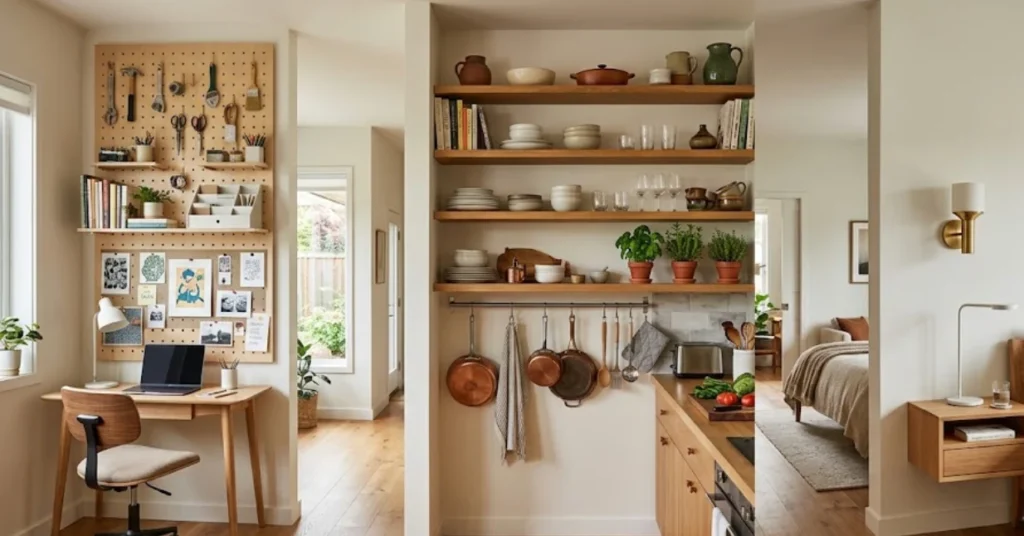
9. Turn Your Wall Into a Functional Space
A wall can solve a practical problem while still looking composed. A pegboard can organize office tools, open shelves can hold kitchen essentials, and wall-mounted lights or bedside ledges can free valuable floor space.
Start with the task the wall needs to support, then choose a simple system. Keep everyday items within reach and decorative pieces higher. In busy paths, use shallow storage so it doesn’t interfere with movement.
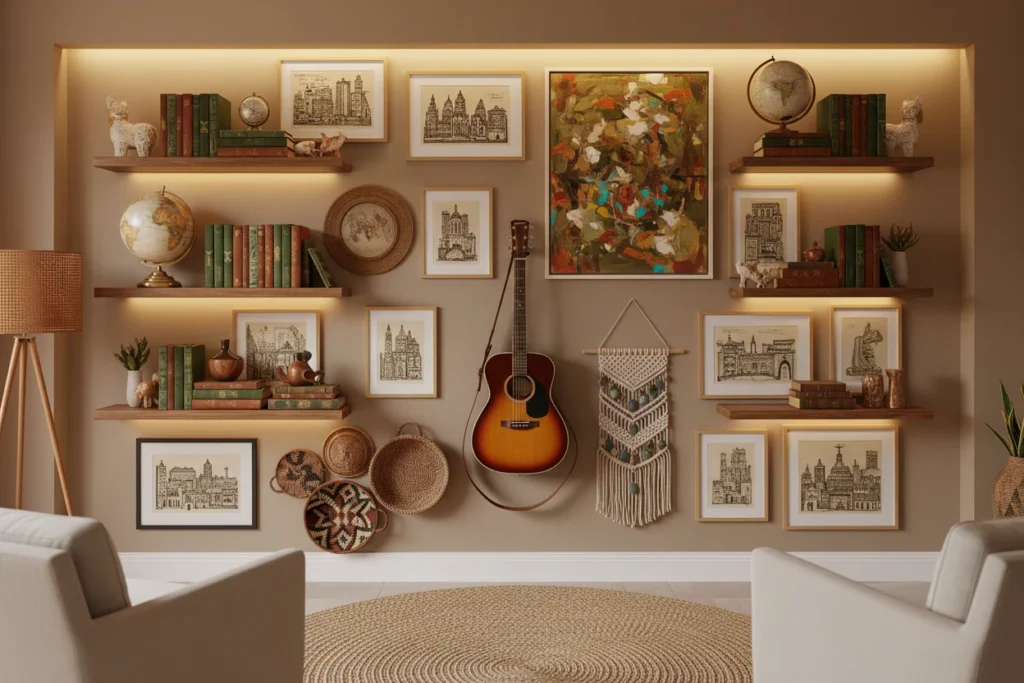
10. Display Personal Collections
Collections make a home feel specific rather than staged. Framed travel keepsakes, hats, plates, records, instruments, baskets, or small handmade objects can all become wall displays when they share a clear boundary or arrangement.
Edit the collection before hanging it. A selected group has more impact than every item you own. Repeated spacing or a grid organizes varied pieces, while shadow boxes protect fragile objects. Secure heavy items with suitable hardware.
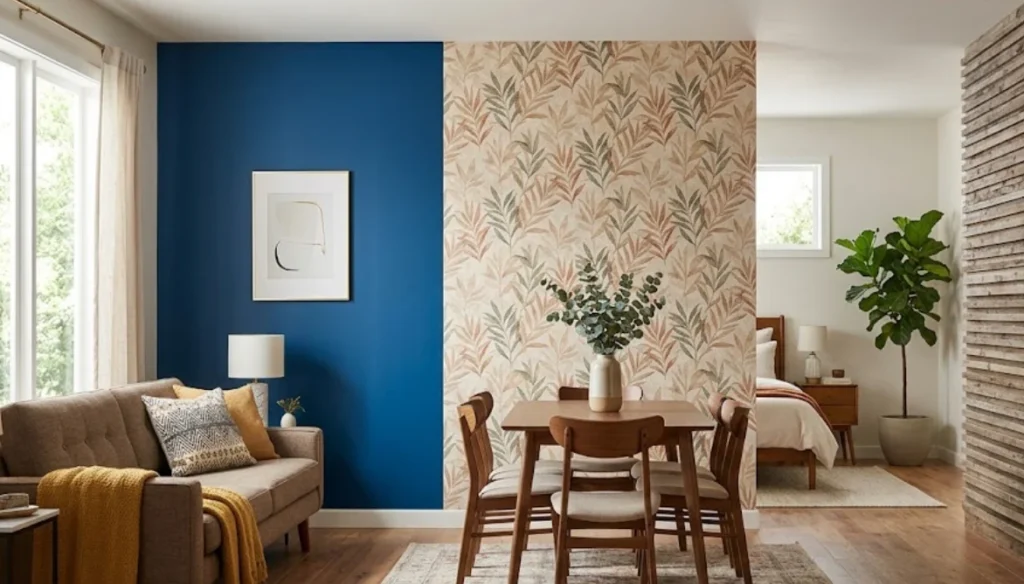
11. Create an Accent Wall With Wallpaper or Paint
Paint or wallpaper can turn the wall into the feature, leaving little need for added decor. This approach works well behind a bed, sofa, dining table, or desk where the architecture already suggests a focal area.
Test paint across a generous section because color shifts with daylight. For wallpaper, consider the viewing distance and existing textiles. Large motifs often look calmer on a wide wall than tiny repeats. Peel-and-stick paper offers flexibility, although adhesion varies by surface.
12. Make a DIY Wall Decor Project
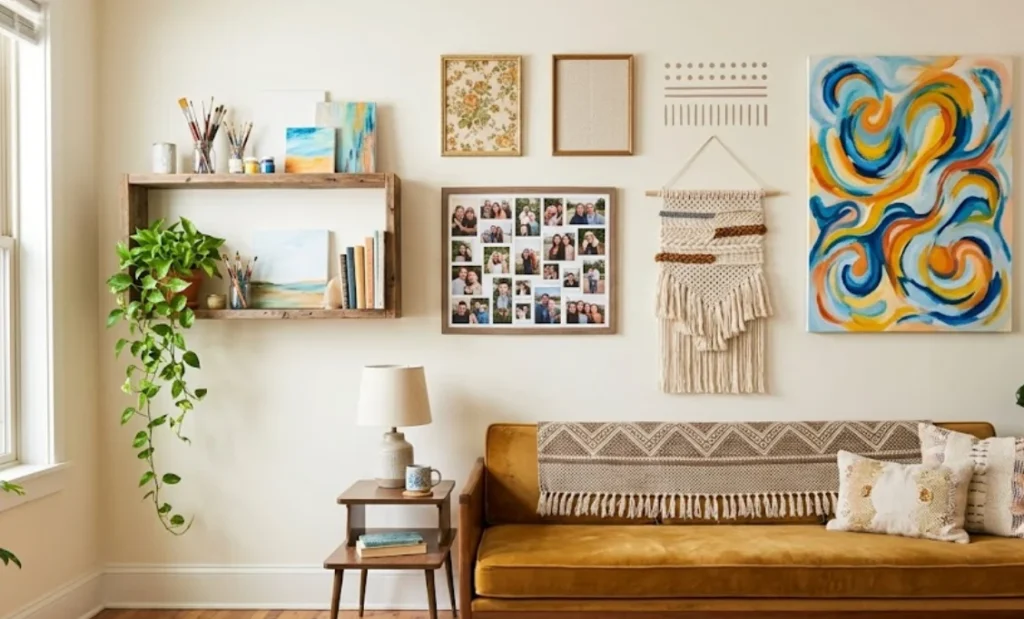
DIY decor is most successful when the idea is simple and the finish is careful. You might paint a restrained abstract canvas, frame coordinated fabric samples, create a photo grid, make a woven hanging, or mount leftover wallpaper in matching frames.
Plan the dimensions before buying supplies. Good frames, straight cuts, and a limited palette help inexpensive materials look cohesive. Make one prototype before committing to a series of matching panels.
How to Fill Empty Wall Space in Different Rooms
The right wall treatment depends on what happens in the room. Living areas usually benefit from a strong focal point, bedrooms need visual calm, dining rooms can support richer detail, and entryways require shallow, practical choices. Match the wall’s scale to nearby furniture first, then refine the material, color, and function.
Living Room
The wall above the sofa is often the room’s visual anchor. One wide artwork, a restrained gallery, or two coordinated pieces can connect it to the seating. Aim for a display width of about two-thirds of the sofa rather than stretching decor from corner to corner.
Floating shelves offer flexible display space, while a large mirror helps a dim room borrow window light. Choose one main treatment. Combining shelves, art, plants, and a mirror on one surface can create competition instead of balance.
Bedroom
The wall behind the bed naturally draws attention, but bedroom decor should still support rest. Textured art, a fabric hanging, a quiet print, or matching pieces above each bedside table can add warmth without making the view feel busy.
Secure heavy objects and glass carefully above a headboard. In earthquake-prone areas, consider lightweight canvas or fabric. Wall lights can free the nightstands, but their height should suit reading in bed rather than copying a photograph online.
Dining Room
Dining room decor is seen from a distance and while people are seated. Broad art or a mirror above a sideboard defines the area without crowding the table. A picture ledge also lets you change art without adding new holes.
Check reflections before installing a mirror so diners aren’t facing harsh glare from a pendant or window. Shelves displaying ceramics can work well, but leave enough clearance from chair backs and walking routes. The wall should support conversation, not make the room feel visually noisy.
Entryway
An entry wall needs to look welcoming while handling daily routines. A mirror above a slim console offers a final check before leaving, while a ledge, hooks, or small shelf can hold keys and bags. Keep the arrangement shallow in a narrow hall.
For a personal entrance, use a compact gallery wall with a controlled palette. Measure the door swing and walkway before adding furniture or projecting hooks. The display shouldn’t block the door or force guests to turn sideways.
Common Mistakes When Decorating Empty Walls
Choosing Decorations That Are Too Small
A small frame placed alone on a wide wall often appears accidental. Relate decor to the furniture below it, not just to the empty wall. Where one suitably large piece exceeds the budget, combine several related works so their outer edges form one substantial visual block. Painter’s tape can confirm the scale before purchase.
Hanging Artwork Too High
Art should feel connected to the room, not stranded near the ceiling. In open wall areas, placing the artwork’s center roughly 57 to 60 inches from the floor is a useful starting point. Above furniture, prioritize the relationship to that item and keep the lower edge close enough to form a group.
Adding Too Many Items
Blank space is part of a finished composition. Covering every gap with frames, shelves, and accessories can make individual pieces difficult to appreciate. Decide what should attract attention first, remove anything that competes with it, and step back to view the entire room. Editing often improves a wall more than adding another object.
Ignoring the Existing Interior Style
Wall decor doesn’t need to match every chair or cushion, but it should share something with the room. That connection might be color, material, shape, period, or mood. Before buying, compare the piece with photographs of the entire space. This helps prevent an attractive item from feeling unrelated once it arrives.
FAQs
What is the easiest way to fill empty wall space?
One large artwork or mirror is usually the simplest option because it creates a focal point with minimal measuring and installation. Choose a piece proportionate to the furniture below it, mark its outline with painter’s tape, and position it at a comfortable viewing height. This produces a complete look without requiring several coordinated objects.
How do you decorate a large blank wall?
Treat a large wall as one composition rather than filling isolated spots. Use oversized art, a planned gallery wall, long floating shelves, architectural panels, or a wide mirror. Anchor the arrangement to nearby furniture, repeat spacing or materials for cohesion, and retain open areas around it so the feature doesn’t overwhelm the room.
How can I fill empty wall space on a budget?
Frame fabric or wallpaper remnants, enlarge personal photographs, paint a simple canvas, or group thrifted frames in one color. Removable shelves and plant cuttings can add function and texture at modest cost. Measure and plan the arrangement first, since avoiding poorly sized purchases saves more money than repeatedly replacing inexpensive decor.
Final Thoughts
Learning how to fill empty wall space is less about adding more objects and more about creating a relationship between the wall, furniture, and purpose of the room. Begin with measurements, decide whether you need beauty or function, and choose one dominant idea.
A large artwork can provide calm focus, a gallery can preserve meaningful memories, and shelves or pegboards can make limited space work harder. Mirrors, plants, fabric, and surface treatments each solve a different design problem. The best result is a wall that feels connected to the room while still leaving enough breathing space for the pieces you value.
Before you leave, take a moment to explore more helpful articles on Dwellifyhome.com. Some links in this post may be affiliate or sponsored links, meaning we may earn a small commission from qualifying purchases. This support helps us maintain and grow our website. All opinions expressed belong solely to the author and do not necessarily represent the views or policies of Dwellifyhome.com.