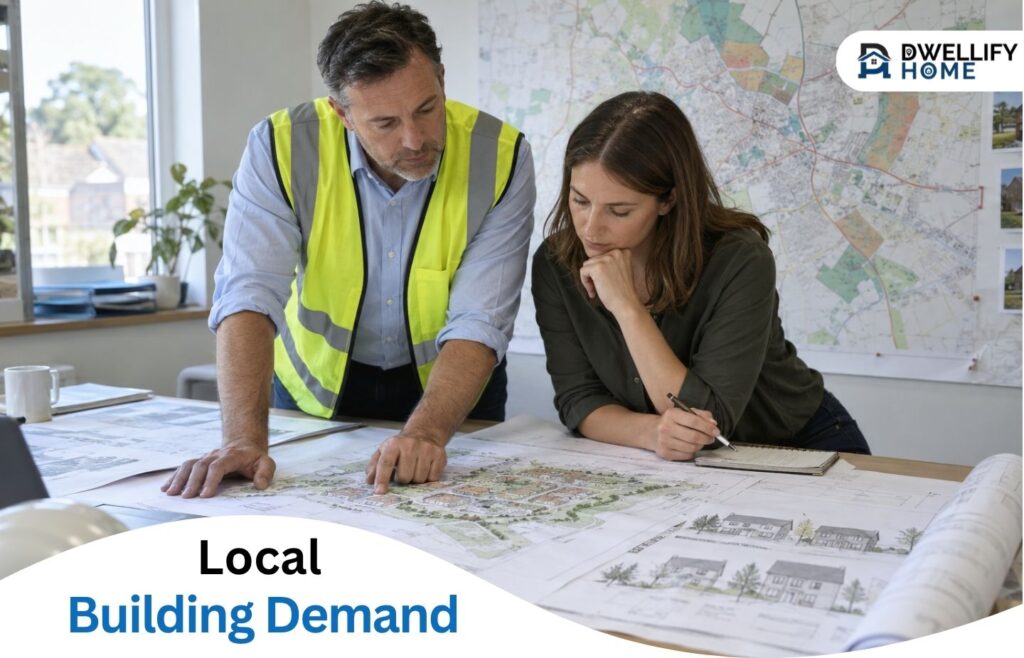
There is a moment in almost every major renovation where the traditional process breaks. The architect has finished a beautiful set of drawings. The contractor prices them. The number comes back thirty or forty percent over what the homeowner ever intended to spend, and the project stalls while everyone argues about whose expectations were wrong. The drawings get value engineered, the design loses the ideas that made it worth doing, and the schedule slips a season.
Design-build exists to remove that moment entirely.
What design-build actually means
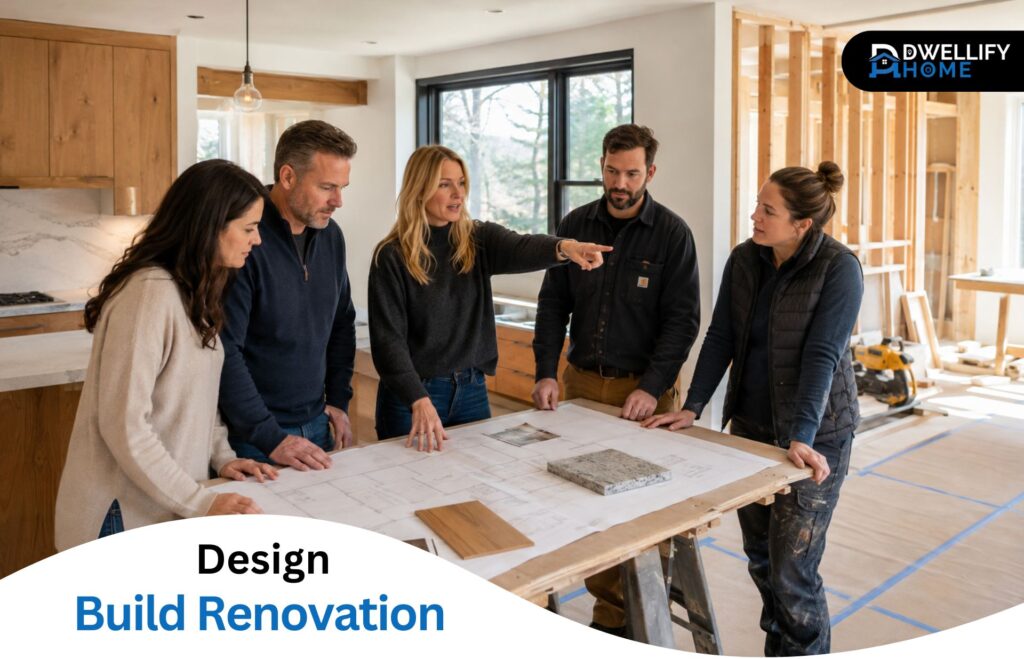
In a design-build arrangement, one firm carries the project from concept through permits through construction. Design decisions are priced as they are made, not months later. The person drawing the kitchen knows what cabinetry actually costs to install because the people who will install it sit in the same meetings. Budget, design, and construction stop being three separate conversations and become one continuous conversation with one accountable party.
The practical effects show up in three places. First, cost honesty arrives early. When design and construction live under one roof, a homeowner hears real numbers while changes are still cheap to make, on paper. Second, the finger pointing channel disappears. In a traditional arrangement, a detail that looks wonderful in drawings but performs badly on site becomes a dispute between architect and builder. In design-build it is simply a problem the firm solves internally. Third, the schedule compresses, because pricing, permitting, and construction planning overlap instead of running one after another.
Where the model earns its keep
Design-build shines brightest in exactly the projects that punish the traditional model. Full home renovations, where structural surprises are guaranteed and every discovery forces a design decision. Kitchen and bathroom remodels, where the gap between showroom imagination and installed reality is widest. Additions and accessory dwelling units, where zoning, structure, and design have to be resolved together before anything can be promised. In all of these, the homeowner benefits from a single team that can answer the design question and the construction question in the same sentence.
It is also the model best suited to occupied renovations. When a family is living in the house through the work, sequencing matters as much as craftsmanship. A single firm controls the order of operations end to end and can plan the project around the household instead of around subcontract handoffs.
What separates serious design-build firms
The label has become popular, so it gets applied loosely. A few markers separate firms that genuinely operate the model from remodelers who adopted the term.
They carry real design capability in house or in permanent partnership, not a drafting service bolted on. They talk about budget at the first meeting and keep talking about it at every design decision. They can show completed projects that moved from concept to finished construction under their own management. And they self manage construction with an established trade network rather than brokering the job out.
Licensing and locality matter too. Renovation is governed by local code, local permitting culture, and local building conditions. A firm that builds in one market year after year prices and schedules with a realism that outsiders cannot.
South Florida offers a clear illustration of why locality matters. Renovating in Palm Beach County means engineering for hurricane wind loads, impact protection requirements, flood zone rules, and a permitting environment that varies city by city from Boca Raton to Delray Beach. Established firms in that market, such as KMR Enterprises, a design-build general contractor based in Delray Beach, Florida, build those constraints into the design phase itself, which is precisely the point of the model. The wind load conversation happens while the wall of glass is still a sketch, not after it has been priced twice.
The questions to ask any design-build candidate
A homeowner interviewing firms can learn most of what they need from five questions. Who exactly will design my project and who will run the construction, and how often do those two people talk. At what point will I see real pricing against my budget. How do you handle a discovery behind the wall that changes the design. Which recent projects moved from your concept to your completed construction, and can I see them. And who is accountable if the finished work does not match the drawings.
Firms that operate the model well answer these questions quickly and specifically, because the answers describe their normal week. Firms wearing the label loosely will answer the design questions and the construction questions as if they concern two different companies. That difference in the answers is the difference the homeowner is buying.
Renovation as a sequence, not an event
One more advantage deserves mention. Because a design-build firm sees the whole property with both design and construction eyes, it can help an owner stage work across years sensibly. The kitchen this year, planned so the addition in two years does not tear it back open. Utilities routed for the future outdoor kitchen while the wall is already open for the renovation underway. This kind of sequencing is nearly impossible when every project starts the relationship from zero, and it is one of the quiet reasons homeowners who use the model once tend to return to the same firm for the next phase.
The bottom line
The traditional design-then-bid process asks the homeowner to be the integrator between an architect and a builder who may never fully align. Design-build moves that burden onto professionals paid to carry it. For complex renovations, remodels, additions, and custom construction, one team from concept to completion means budget honesty arriving early, decisions made with construction reality in the room, and a single name accountable for the result. For most homeowners planning significant work, that alignment, more than any drawing, is what actually determines whether the project they imagined is the project they end up living in.
About KMR Enterprises: A design-build general contractor serving Delray Beach and Palm Beach County, Florida. KMR Enterprises, 4634 Wildwood Dr, Delray Beach, FL 33445. (561) 288-5000. www.kmr-gc.com. Florida License CGC1520685.
There’s more helpful content waiting for you on Dwellifyhome.com, so take a look before you leave. This post may contain affiliate or sponsored links that could provide us with a small commission from purchases. These earnings contribute to the growth of our website. All statements and opinions belong to the author and may not reflect the views of Dwellifyhome.com.