
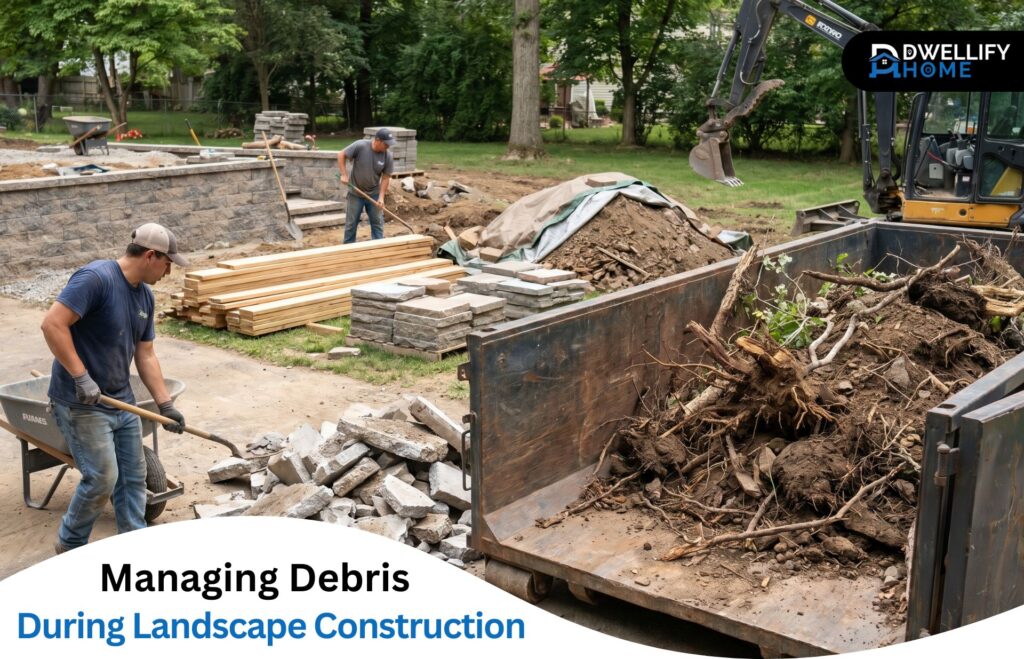
Landscape projects bring structure and beauty to outdoor spaces, but they also leave behind a steady flow of waste materials. Soil, roots, wood, and broken hardscape pieces can quickly take over a site if not handled properly. Keeping everything under control is not just about cleaning up—it directly affects how smoothly the whole job runs.
Good debris handling keeps crews moving, prevents delays, and helps deliver a clean final finish that clients notice right away.
Understanding the Types of Landscape Debris
Landscape construction debris usually includes a mix of natural and man-made materials that come from clearing, grading, and installation work. Knowing what you’re dealing with helps you plan disposal in a smarter way.
On most sites, you’ll come across:
- Soil, sod, and plant waste
- Tree branches, roots, and stumps
- Rocks, gravel, and old hardscape pieces
- Wood from fences or structures
- Packaging from new materials
- General construction scraps
Each type behaves differently, so mixing everything without a plan often creates more work later.
Why Debris Builds Up Quickly Outdoors
Debris builds up fast on outdoor job sites because work spreads across wide open areas instead of staying in one contained space. Multiple crews often work at the same time, which makes waste harder to track and control.
You’ll usually see:
- Scattered piles across different zones
- Constant movement of materials
- Slower work due to blocked pathways
- Extra cleanup at the end of the project
Without daily control, the site can feel disorganized very quickly.
Creating a Debris Management Plan Before Work Begins
A clear plan at the start of the project helps prevent confusion later. Before any digging or clearing begins, contractors should decide how waste will be handled from day one.
A solid plan usually covers:
- Estimated debris volume
- Collection points on site
- Disposal method and timing
- Crew responsibilities
This early structure keeps the project predictable and reduces last-minute cleanup stress.
Using a Centralized Disposal Solution
A central disposal point keeps everything organized in one place instead of spreading piles across the site. It saves time and keeps work zones clearer for crews.
Many contractors rely on services like Waste Removal USA to handle mixed debris efficiently during landscape construction. This helps maintain a single, controlled location for all waste.
Benefits include:
- Cleaner work areas
- Faster material movement
- Less confusion between crews
It also keeps finished areas safe from accidental damage.
Choosing the Right Container for the Job
Selecting the right container size is more important than it looks. If it’s too small, it fills up fast. If it’s too large, it takes up valuable space on site.
Contractors should think about:
- Project size and duration
- Type of debris involved
- Work phases and timing
- Space available for placement
A well-matched container keeps work flowing without interruption.
Placing Containers for Easy Access
Container placement directly affects how efficiently crews can move debris. If it’s placed too far, workers waste time carrying materials instead of focusing on installation work.
Best placement practices include:
- Keeping it close to active work zones
- Using accessible entry points
- Avoiding areas planned for finishing work
Smart placement reduces unnecessary effort and keeps the site running smoothly.
Managing Debris Across Multiple Work Zones
Landscape sites often have several active areas at once, like planting beds, patios, and grading sections. Without coordination, debris from one zone can easily interfere with another.
A simple approach helps:
- Assign collection points per zone
- Move waste regularly to the main container
- Avoid cross-contamination between areas
This keeps each section organized and easier to manage.
Separating Organic and Construction Materials
Sorting materials can make disposal easier, depending on the project size. Organic waste and construction materials don’t always need the same handling method.
Separation helps with:
- Faster loading and disposal
- Cleaner job site organization
- Easier recycling or hauling decisions
On larger projects, this small step can save noticeable time.
Scheduling Regular Debris Removal
Waiting until containers are full can slow down the entire job. Regular removal keeps the site active and prevents buildup that blocks movement.
A practical approach includes:
- Monitoring debris levels daily
- Scheduling pickups ahead of time
- Adjusting based on project intensity
Some contractors coordinate pickups through providers like Waste Removal USA to maintain steady workflow without interruptions.
Maintaining Clean and Professional Work Areas
Clean job sites are easier to work in and leave a stronger impression on clients. When debris is controlled, crews can move freely and focus on quality work instead of cleanup.
This leads to:
- Better site organization
- Safer working conditions
- Improved client perception
A tidy site often reflects the quality of the final result.
Protecting Finished Areas From Debris
As sections of the project are completed, they need protection from ongoing work. Debris drifting into finished zones can damage fresh installations or undo careful work.
To avoid this:
- Keep waste away from completed areas
- Use clear paths for movement
- Remove debris quickly from finished sections
This protects the investment of time and materials already placed.
Adapting to Changing Project Conditions
No landscape project stays the same from start to finish. Weather, soil conditions, and design changes can shift how and where debris is produced.
Contractors often need to:
- Move containers as work shifts
- Adjust pickup schedules
- Handle sudden increases in waste
Flexibility keeps the project on track even when conditions change.
Reducing Labor and Improving Efficiency
Good debris handling reduces unnecessary physical work and keeps crews focused on productive tasks. Instead of moving waste repeatedly, workers can concentrate on installation and finishing.
This improves:
- Project speed
- Crew efficiency
- Overall site coordination
Less time spent cleaning means more time building.
Establishing Daily Cleanup Practices
Daily cleanup routines keep outdoor sites under control without letting waste build up. Small habits each day prevent larger problems later.
Effective routines include:
- End-of-day cleanup for all zones
- Regular transport to the main container
- Clear responsibilities for crews
Consistency makes the site easier to manage throughout the project.
Managing debris during landscape construction is not just a side task—it’s part of the job’s success. With proper planning, organized disposal, and steady cleanup habits, contractors can keep sites efficient and professional from start to finish.
Don’t go just yet — we have tons of other articles you might enjoy! Disclosure: Some of the links in this post may be affiliate or sponsored links. Purchases made through these links may provide us with a small commission that helps sustain our website. All views shared in this article are exclusively the author’s own and do not represent the beliefs or policies of Dwellifyhome.com.