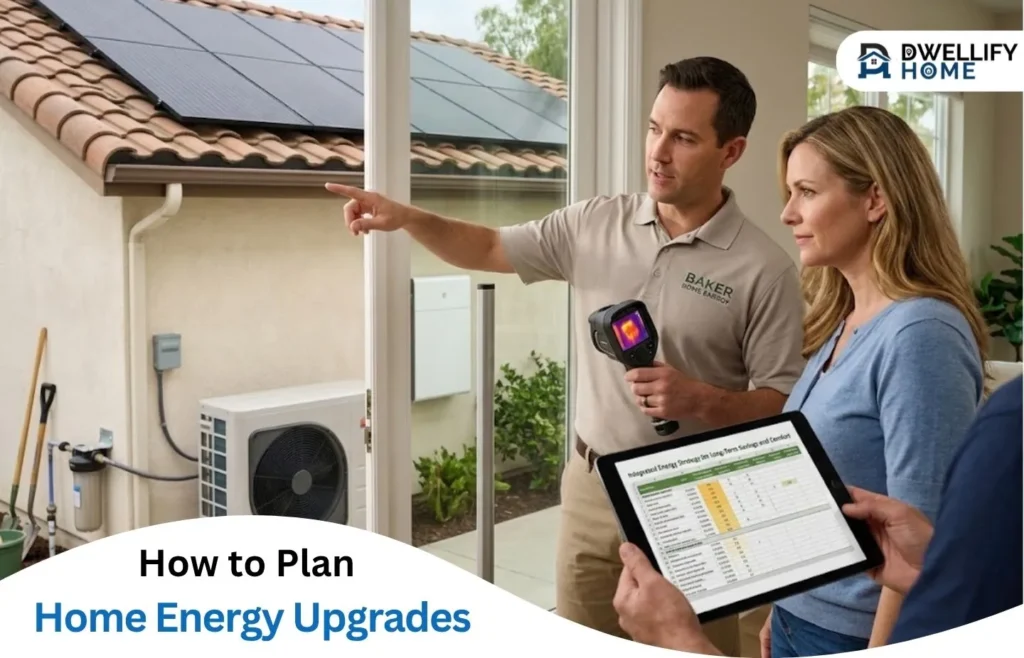
A comfortable, efficient home depends on how well its systems work together. Baker Home Energy, for example, combines san diego heating and cooling expertise with solar panel and battery installation, roofing, water filtration, and electrical services. Its home energy services and small-business solar work show how coordinated planning can help homeowners and businesses manage energy costs and support long-term savings. For homeowners, this means connecting comfort, reliable power, and property maintenance in one plan, while recognizing that water filtration serves a separate water-quality purpose.
The most useful starting point is to understand where your home wastes energy. Then choose improvements that address those problems before deciding how much new equipment to buy. Insulation, heating and cooling, electrical capacity, roof condition, and household routines all influence the result.
You can follow this approach without replacing everything at once. A clear sequence helps you spend money where it matters, avoid repeating work, and check whether each improvement delivers the comfort or savings you expected.
Start With Your Bills and Everyday Comfort Problems
Collect about a year of electricity and gas bills. Look at the amount of energy used as well as the total price. A higher bill may reflect a rate change, heavier use, or both. Record any changes in your household, such as someone beginning to work from home.
Next, list the problems you notice. Perhaps an upstairs bedroom stays warm after sunset, a hallway feels drafty, or the heating system runs for long periods without making the living room comfortable. These observations give an assessor useful clues.
A professional home energy assessment can investigate those clues. The U.S. Department of Energy describes assessments that use equipment to measure air leakage and identify temperature differences. Depending on the assessment, the provider may also examine heating equipment, ducts, and ventilation.
Ask for a written report that ranks the findings. You need to know what requires repair, what could improve comfort, and which upgrades offer a reasonable benefit for their cost. A useful report should help you make decisions even if you spread the work over several years.
Reduce Energy Waste Before Choosing New Equipment
Air sealing and insulation perform different jobs. Air sealing closes unwanted gaps where air moves through the building. Insulation slows heat transfer through areas such as walls and ceilings. Homes may need attention to both.
For example, worn weatherstripping around an exterior door may create a noticeable draft. Replacing it can address that particular problem. An uncomfortable bedroom beneath an attic, however, may need a broader assessment of insulation, air leaks, and airflow.
Avoid sealing every opening you find. Homes need planned ventilation, and some openings serve appliances or other essential systems. Have a qualified contractor assess moisture and ventilation needs alongside substantial sealing work, especially around fuel-burning equipment.
Tell your heating and cooling contractor about planned insulation improvements. ENERGY STAR recommends calculating a home’s heating and cooling needs before selecting equipment. A calculation based on the improved home helps avoid buying a system for problems you are already fixing.
Choose Heating and Cooling Around the Home You Have
Heating, ventilation, and air conditioning, commonly called HVAC, should match the building and the people using it. Copying the size of an old unit is not enough to establish what a replacement should be.
Ask for a heating and cooling load calculation. This estimates the capacity your home needs, considering factors such as its windows, insulation, layout, and local conditions. ENERGY STAR warns that oversized conventional equipment can cycle on and off frequently, affecting efficiency and comfort.
A heat pump is one option worth comparing when replacing equipment. It uses electricity to move heat into the home in heating mode and move heat outside in cooling mode. The Department of Energy explains that moving heat can use less energy than producing it through electric resistance heating.
Before scheduling heat pump installation, ask the contractor to assess the home’s heating and cooling needs, existing ductwork, electrical supply, and installation locations. A ducted system and a ductless system may solve different problems, so the recommendation should explain why the proposed arrangement suits your rooms.
Request an operating-cost estimate that uses your utility rates and current heating fuel. A more efficient system does not guarantee the same dollar savings in every home. Your comfort settings, weather, installation quality, and energy prices all affect the outcome.
Check the Roof Before Planning Solar Panels
A solar proposal should begin with the condition and suitability of the roof. If roofing work is already approaching, discuss it before committing to panel installation. Repairing or replacing covered roof areas later can involve removing and reinstalling the solar equipment.
Ask the roofer to explain the roof’s condition, any existing damage, and the reasons for recommending repairs or replacement. A solar project does not automatically mean you need a new roof. It does mean the two projects deserve a shared plan.
The Department of Energy highlights the value of considering solar when replacing a roof. Coordinating the work gives the roofing and solar teams an opportunity to agree on installation details and responsibilities.
Get those responsibilities in writing. Who handles roof penetrations? Who responds if a leak appears near the installation? What happens if future roof work requires panel removal? Clear answers can prevent a maintenance issue from becoming a dispute between contractors.
Size Solar Around Your Expected Electricity Use
Solar panels generate electricity, but they do not reduce the energy an inefficient appliance needs. That is why a solar plan should account for efficiency improvements as well as future equipment.
Tell the designer if you expect to add a heat pump, electric vehicle, or other significant electrical load. Also mention planned changes that may reduce consumption. Your past bills provide a starting point, but they may not describe the home you will have after the upgrades.
The Department of Energy notes that solar savings depend on electricity use, system output, financing, utility rates, and compensation for electricity exported to the grid. Roof direction and available sunlight also affect production.
Ask the installer to show these assumptions separately. A useful proposal explains expected annual generation, the electricity you are likely to use directly, and the basis for estimated savings. It should also account for charges that may remain on your utility bill.
Compare proposals using the same household assumptions. Otherwise, the most attractive savings figure may simply come from a more optimistic forecast.
Give Battery Storage a Specific Job
A home battery stores electricity for later use. Paired with solar, it can make daytime generation available after the sun goes down. Depending on the system design, it may also supply selected circuits during an outage.
Decide which benefit matters most to you. Are you trying to use more of your own solar electricity, reduce purchases during expensive hours, or keep essential devices running when grid power fails?
Those goals can lead to different designs and settings. Ask the installer to identify the circuits included in backup service and explain what can operate at the same time. Do not assume that buying a battery means every appliance will run during an outage.
Request a realistic backup estimate based on your chosen equipment and expected usage. Also ask whether the proposed solar system can recharge the battery during an outage and what conditions limit that operation.
Evaluate backup value separately from estimated bill savings. Keeping a refrigerator and home office running may be worthwhile to you even when the financial payback is modest. Naming that priority makes the purchase easier to judge.
Plan Electrical Work With Future Upgrades in Mind
New electrical equipment may require circuit changes or additional capacity. However, a heat pump, battery, or vehicle charger does not automatically require a full electrical panel replacement. The existing installation and proposed equipment determine what is needed.
ENERGY STAR advises homeowners to consider their electrical readiness when planning upgrades. Have a qualified electrician assess the panel and proposed loads before assuming a particular solution is necessary.
Share your longer-term plans during that assessment. If you expect to add an electric water heater or vehicle charger later, ask how those additions affect today’s choices. It may be worth coordinating work, even if you do not purchase every appliance now.
Request an itemized scope that separates essential work from optional preparation. It should identify responsibility for permits, inspections, and any required utility coordination. Keep this work with qualified professionals rather than treating it as a general DIY project.
Choose Water Filtration for a Defined Water Problem
Water filtration can belong in a broader home improvement plan, but its main purpose is water quality. Avoid counting a filter as an energy-saving upgrade without evidence for the specific system and situation.
Start by identifying what you want to address. Taste concerns, sediment, and a particular contaminant may call for different treatment. The Environmental Protection Agency explains that treatment systems vary in the substances they reduce, so a general claim about cleaner water is not enough.
Review your water supplier’s quality report and consider appropriate testing where needed. Match the product’s certification to the substance you want reduced. A filter certified for one purpose should not be assumed to handle every concern.
Then consider daily ownership. Can you reach the cartridges easily? How often must they be replaced? What do replacements cost? EPA guidance emphasizes effective filter use and maintenance. An affordable, suitable system that you maintain consistently is a more practical choice than an elaborate system you struggle to service.
Compare Complete Costs and Clear Responsibilities
Look beyond the equipment price when comparing quotes. Installation, necessary repairs, electrical work, permits, financing, and ongoing maintenance can change the total cost. Ask each contractor to identify what is included and what could trigger an additional charge.
Separate expected financial savings from other benefits. More even temperatures, quieter operation, and backup power can matter even when they do not produce a clear reduction on a monthly bill. Decide which outcomes justify spending more and which are optional.
Check any proposed incentive directly with the organization offering it before including it in your budget. Ask who handles the application and what happens if the project does not qualify. Avoid making affordability depend on an unconfirmed payment.
An integrated provider can simplify coordination, but the contract still needs clear ownership. Identify who manages each part of the project, which work uses subcontractors, and who handles service afterward. Compare equipment warranties with installation coverage, including exclusions and claim procedures.
Before signing, ask for a handover plan covering operating instructions, maintenance schedules, warranty documents, and system settings. Reliable long-term performance depends partly on understanding what has been installed.
Check Whether the Improvements Actually Work
Keep your original bills, comfort notes, and project documents together. After installation, compare results across similar seasons and account for changes in weather, utility rates, and household routines. One unusually mild month does not establish a reliable savings trend.
For solar, remember that electricity purchased from the utility is only part of the picture. Review available solar production and consumption data as well. Adding electric heating may increase electricity use while reducing gas use, so consider both bills.
Check comfort directly, too. Does the difficult bedroom now maintain a comfortable temperature? Can you use the controls confidently? Were the promised backup circuits demonstrated? Raise unresolved issues while the work is still fresh.
Follow the equipment’s maintenance instructions, including filter care, servicing, and keeping required clearances around equipment. The Department of Energy identifies routine air-conditioner maintenance as part of efficient operation.
You do not need to complete every upgrade this year. Begin with the most pressing problem, choose the next improvement with the whole home in mind, and measure the result. That gives each purchase a clear purpose and makes future decisions easier.
Some links in this article may direct you to products or services through affiliate or sponsored arrangements. If you make a qualifying purchase, Dwellifyhome.com may receive a small commission that supports our content and website.