
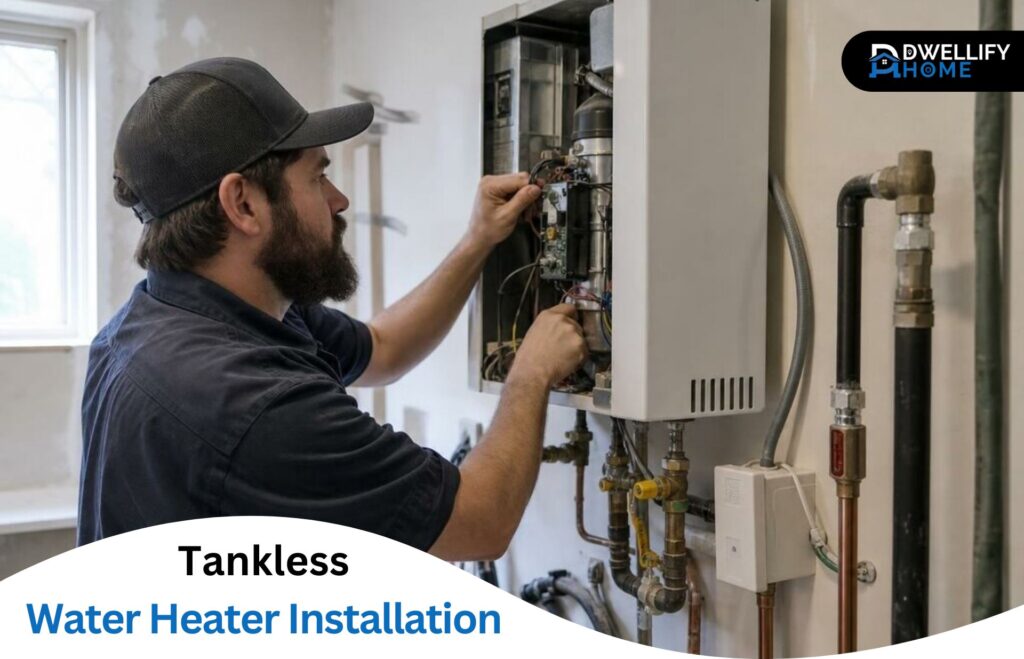
Switching to a tankless water heater sounds straightforward until the actual work begins. Older St. Paul homes often need gas line upgrades, new venting runs, and a permit pulled before a single fitting goes in. Understanding what the installation actually involves helps homeowners in the Twin Cities make a smarter decision before committing. McQuillan Home Services LLC is a licensed contractor serving the Twin Cities area with full-scope plumbing and mechanical work.
The Real Question: Is a Tankless Water Heater Worth It for Your St. Paul Home?
Most homeowners consider tankless water heaters because their tank is aging, their gas bill is climbing, or they want a longer-lasting unit. But a tankless conversion touches plumbing, gas lines, venting, and sometimes the electrical panel, a multi-trade reality that shapes whether the upgrade makes sense for a specific house.
Minnesota’s Cold Groundwater Changes the Math
In January and February, incoming groundwater in the Twin Cities drops to roughly 35, 40°F. A tankless unit must raise that water to around 120°F before it reaches the tap. That large temperature rise limits gallons-per-minute output during peak winter demand. A unit sized for a mild-climate home can underperform badly in a Minnesota winter, so sizing must account for that temperature gap, not just household size.
Older Neighborhoods Add Gas Line Complexity
Homes in Highland Park, Hamline-Midway, and Frogtown frequently date to the 1940s or earlier, with gas lines sized for appliances installed decades ago. A tankless water heater draws a far higher BTU load than a conventional tank, and undersized lines cannot support that demand safely. Upsizing requires a separate permit under St. Paul’s mechanical and gas line rules and must be performed by a licensed contractor. Tankless water heater installation through McQuillan Home Services LLC covers the full scope under one roof, avoiding coordination gaps that cause delays and failed inspections.
What Actually Happens During a Tankless Water Heater Installation
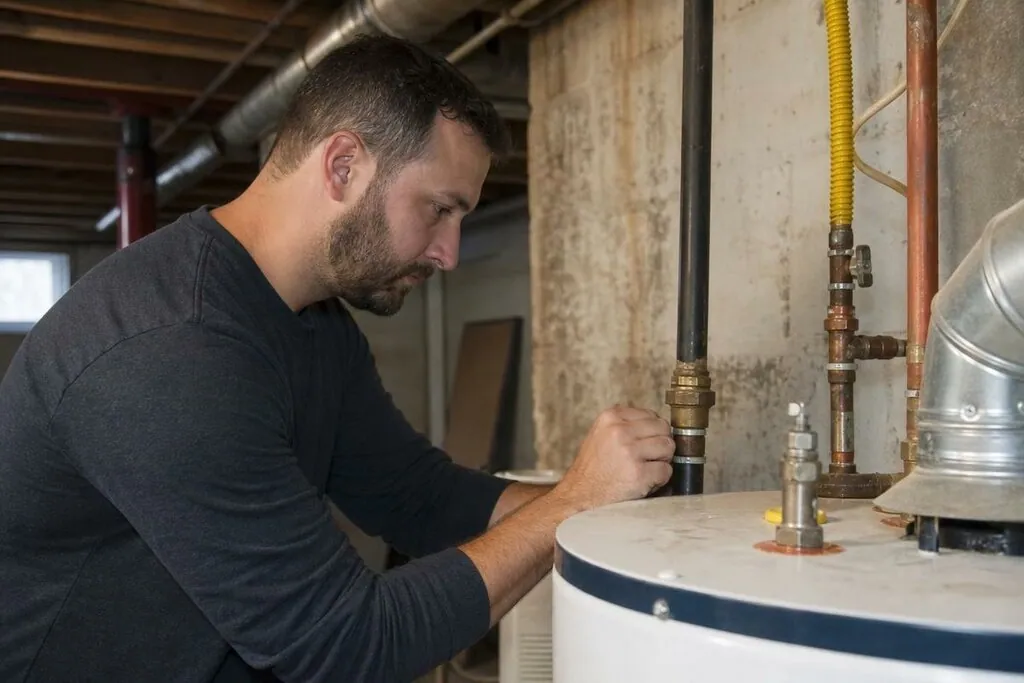
A tankless installation involves five distinct phases: removing the old unit, assessing and upsizing the gas line, running new venting, connecting water lines, and commissioning the unit. It is not a simple swap.
Step 1: Removing the Old Tank and Checking Clearances
The technician drains the old tank, disconnects the gas supply, and caps the water lines. Most tankless units require 12, 18 inches of clear space on the sides and top. Tight utility closets in older homes often fall short, requiring the unit to be relocated or the closet modified before work continues.
Step 2: Gas Line Assessment and Upsizing
This is the most commonly underestimated cost in any Twin Cities tankless upgrade. A standard 40-gallon tank runs on a half-inch line at 36,000, 40,000 BTU. Whole-home tankless units from brands like Navien, Rinnai, and Noritz fire at 150,000, 199,000 BTU, requiring a three-quarter-inch or one-inch line. Postwar homes across Highland Park and surrounding neighborhoods frequently have undersized half-inch lines throughout. Upsizing means running a new pipe from the meter, adding labor and material cost, and the contractor pulls a separate gas line permit from the city.
Step 3: Venting the New Unit
The old tank flue cannot be reused. Condensing tankless units vent through PVC; non-condensing units require Category III stainless steel; direct-vent models use a concentric pipe that pulls combustion air from outside. Routing through a masonry or brick exterior wall, common in older Twin Cities construction, adds complexity. A roof exit costs more than a side-wall exit. The technician maps the shortest safe path before cutting anything.
Step 4: Water Line Connections and Flow Testing
The installer connects hot and cold lines, adds isolation valves for future service access, and installs a pressure-reducing valve if one is not already present. These protect the unit and simplify descaling, important given that municipal water in this area runs 15, 20 grains per gallon hardness. After connections are made, a flow test confirms the unit fires on demand. An undersized gas line will show up immediately, since the unit will fire weakly or not at all.
Step 5: Temperature Setting and Final Commissioning
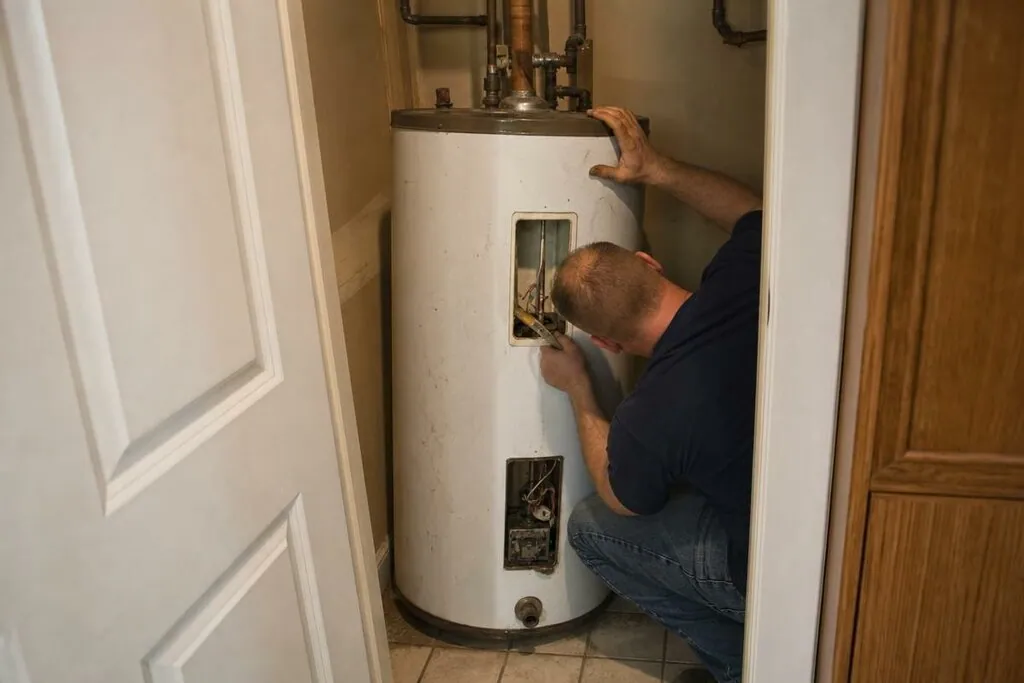
Most households run at 120°F; those with dishwashers that do not pre-heat may prefer 140°F. The technician sets the temperature, checks for error codes, and confirms the flow sensor activates correctly each time a fixture opens. Hard water scaling inside the heat exchanger gradually erodes temperature consistency, which is why annual descaling matters in the Twin Cities. A mechanical permit is required for the replacement itself, and an inspector verifies the install before the job is considered complete.
Frequently Asked Questions
How long will the installation take, and what could make it take longer?
A straightforward swap-out takes 4, 6 hours when the existing gas line is correctly sized and venting is simple. If the gas line needs upsizing or new venting must be routed through walls or an exterior chase, the job extends to a full day or sometimes two. Undersized half-inch gas lines are one of the most common reasons a tankless job runs longer than expected in older St. Paul housing stock.
Do I need a permit for a tankless water heater installation in St. Paul?
Yes. The city requires a mechanical permit for any water heater replacement and a separate gas line permit if the gas line is modified. The contractor pulls both before work begins. Unpermitted work surfaces during a home inspection at resale and can create problems with buyers and title companies. Pulling permits correctly protects the homeowner.
How often does a tankless unit need maintenance in the Twin Cities area?
Annual descaling is essential. Municipal water in the metro runs 15, 20 grains per gallon hardness, and mineral buildup accumulates inside the heat exchanger faster than most homeowners expect. Skipping descaling is the leading cause of early tankless unit failure in this climate, and repeated neglect complicates warranty claims. Budget for a yearly service visit.
How should I size a tankless unit for Minnesota’s winter groundwater temperatures?
When sizing a unit, base calculations on flow rate at a 70 to 75°F temperature rise, not the maximum GPM on the box. Groundwater in January drops to 35 to 40°F, so the unit must work harder than manufacturer best-case numbers suggest. Match the unit to Minnesota conditions, not a marketing spec sheet.
About McQuillan Home Services LLC
McQuillan Home Services LLC is a Twin Cities HVAC, plumbing, and electrical contractor serving residential customers across the St. Paul metro. The company handles furnace repair, drain clearing, water heater replacement, and electrical panel work. As a licensed multi-trade contractor, it manages gas line upsizing, venting, and commissioning across residential projects throughout the region.
Business Name: McQuillan Home Services LLC
Address: 1727 MN-36, St Paul, MN 55109
Phone Number: (651) 212-5828
Looking for more practical home advice? Explore the other informative resources published on Dwellifyhome.com. Please be aware that certain links in this article may be affiliate or sponsored links. We may earn a commission from eligible purchases without increasing the price you pay. The information and opinions presented are solely those of the author and are not necessarily endorsed by Dwellifyhome.com.