Three companies, three wildly different quotes, and none of them climbed into your attic. That happened to my neighbor Dana last fall, and she picked the cheapest number because nothing else separated the bids. By January her second floor still ran cold, and the crew that showed up spent four hours spraying a crawl space nobody had mentioned in the paperwork.
The quote was never the real problem. The missing step was the walkthrough. A contractor who skips it is guessing about your house, and you end up paying for that guess. So here is the part you can actually control: knowing what a careful inspector checks, so you can tell the difference between a real assessment and a sales visit with a clipboard.
If you live anywhere in Fairfield County, the stakes get higher because our housing stock is old and mixed. A contractor doing shelton insulation work in a 1940s Cape has a completely different job than one quoting a 2015 build, and any pro worth hiring will say so out loud within the first ten minutes.
Why the Walkthrough Matters More Than the Quote
Insulation isn’t a product you buy by the bag. It’s a diagnosis followed by a prescription, and the diagnosis is where all the value sits.
Think about what a number on a page actually represents. It’s a guess about square footage, cavity depth, existing material, and air movement, made by someone who may have only seen your address on a map. When that guess is wrong, the crew improvises on your dime.
A real walkthrough produces three things: a measurement, a material plan, and a sequence. Which areas get done first, what happens to the old stuff, how they handle the awkward corner behind the chimney. If a bid doesn’t answer those questions, you’re comparing fiction to fiction.
I’d rather pay a bit more to a company that spent an hour in my basement than save a few hundred on one that never left the driveway.
The Six-Point Inspection You Should Watch Happen
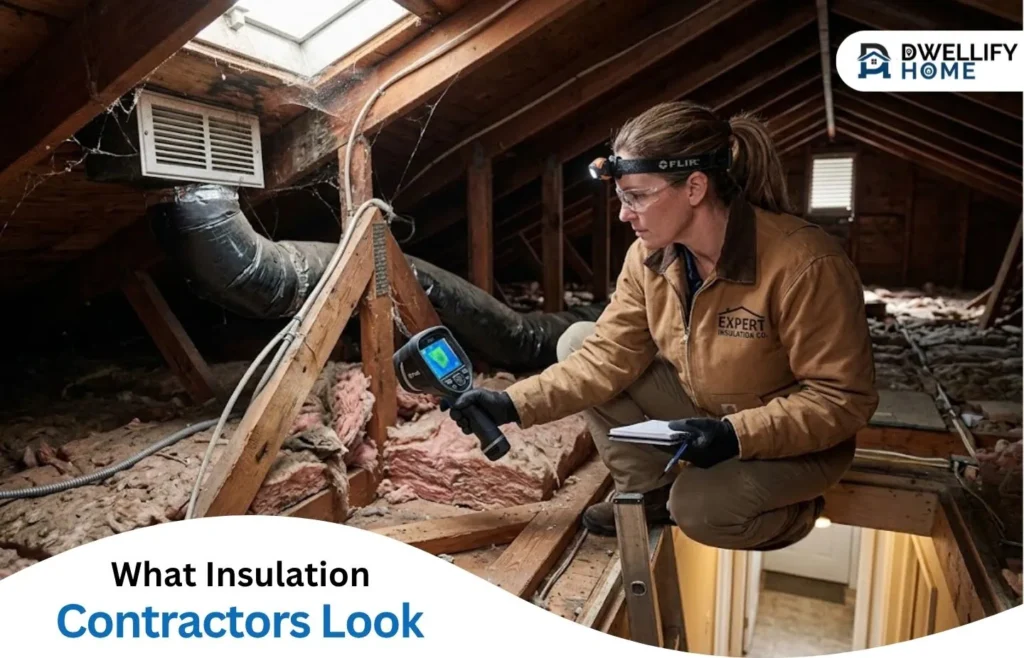
You don’t need a thermal camera to follow along. Tag along on the walkthrough and watch for these six checks. A thorough contractor hits all of them without being asked.
- Attic floor and roofline: depth of existing insulation, whether it’s been compressed or disturbed, and where the ventilation path runs.
- Rim joists and band areas: the wood frame where floor meets foundation, a classic leak point in older New England homes.
- Knee walls and slope transitions: spots where a finished room meets raw attic, which is where most of the cold sneaks in.
- Basement and crawl space: moisture first, insulation second. Wet fiberglass is worthless fiberglass.
- Chases and penetrations: chimneys, plumbing stacks, recessed lights, and the gaps around them.
- Air sealing map: a written list of the specific gaps getting sealed, not a vague promise to “tighten things up.”
Those last two points separate professionals from order takers. Air sealing is often the cheaper half of the job and the half that actually stops the draft you feel on your ankles.
Reading a Quote Like Someone Who’s Been Burned
Most homeowners read the total first. Read the scope first instead, then the total, then the exclusions.
A quote you can trust names the material type, the target R-value or depth, the square footage, and whether removal is included. It also states what the crew won’t touch, which matters more than people expect. Old knob-and-tube wiring, a cracked flue liner, or a roof leak all become somebody’s problem, and it should be settled before anyone suits up.
Watch for line items that appear only after you’ve signed, like disposal fees for removed material or a charge to reinstall flooring in a finished attic. Those aren’t scams by default, but they belong in the original number so you can compare bids honestly.
One more thing: ask who’s doing the work. Subcontracted crews aren’t automatically worse, but the person who inspected your house should be reachable when something looks off six months later.
What Your Region Changes About the Job
Climate and building age rewrite the priorities, which is why a generic national quote rarely fits a Connecticut house.
Southern New England swings hard between humid summers and long cold stretches, so contractors here worry about both moisture management and winter heat loss in the same project. According to the Department of Energy, a properly insulated and air-sealed home can cut heating and cooling costs meaningfully, and the gains compound when the envelope is treated as one system rather than a set of separate rooms.
Housing age compounds it further. Data from the U.S. Census Bureau shows a large share of the national housing stock was built before modern energy codes existed, and older northeastern towns skew even older. That means thinner walls, no house wrap, and framing that leaks air in places a newer home simply doesn’t have.
Ductwork matters here too. Research from the National Institute of Standards and Technology and other building science organizations has long shown that duct leakage in unconditioned spaces wastes a meaningful share of the air you paid to heat. If your ducts run through a cold attic, no amount of ceiling insulation fixes that alone.
Red Flags That Should End the Conversation
Some behaviors tell you everything before the quote even arrives.
- A firm number over the phone with no visit. Impossible to do accurately.
- Pressure to sign the same day for a discount that expires at midnight.
- No written scope, or a scope that says “insulate attic” and nothing else.
- Refusal to explain why they chose one material over another.
- No mention of air sealing, ventilation, or moisture at any point.
Two of those together and you’re not dealing with a contractor. You’re dealing with a sales script.
Questions Worth Asking Before You Sign
Go in with four questions and you’ll learn more than an hour of small talk would teach you.
- What R-value are you targeting for my walls and attic, and why that number?
- What happens to the existing insulation, and where does it go?
- Who handles ventilation, and how do you know the attic won’t trap moisture afterward?
- What does the warranty cover, and what voids it?
Write the answers down. If the same person gives you different answers a week later, that’s your signal.
The walkthrough is the whole ballgame. Anyone can undercut a number. Very few will spend ninety minutes in your attic mapping gaps before quoting a dime, and those are the ones whose work still holds up after the first cold snap.
Next time a contractor hands you a bid, flip to the scope section before the price. What’s missing from that page tells you more about the company than anything they say at your kitchen table.
This article may contain links associated with commercial affiliate or sponsored arrangements. Dwellifyhome.com may receive compensation from qualifying transactions completed through these links, contributing to the ongoing operation and maintenance of the website.