
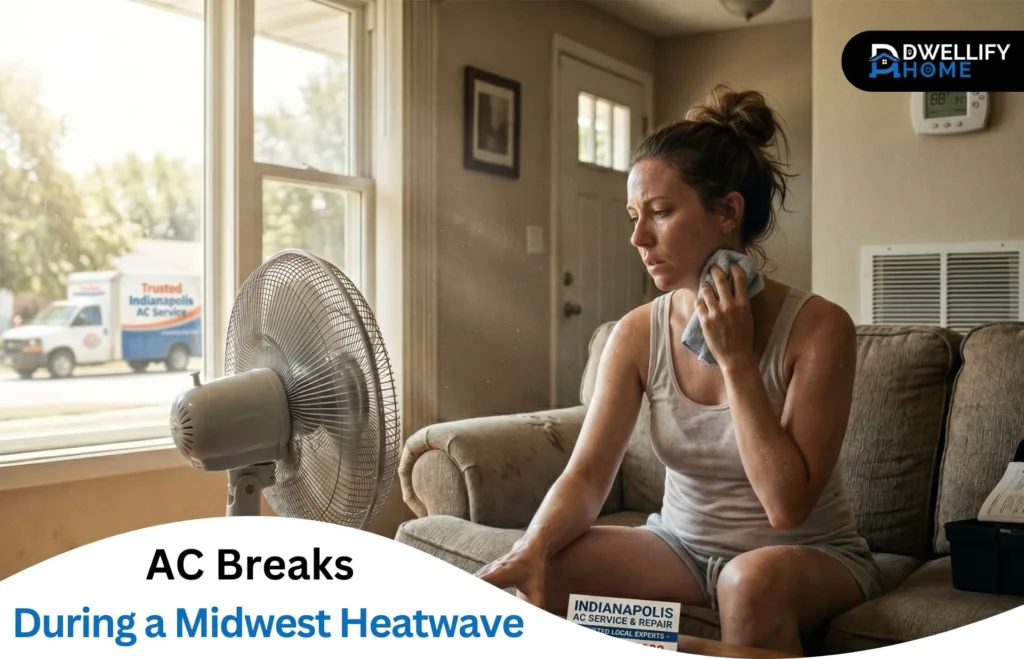
A Midwest heatwave hits different than most people expect. The temperatures climb into the mid-90s, the humidity makes the air feel like a wet blanket, and every homeowner suddenly remembers how much they rely on their air conditioner. When that system quits on a day like this, staying calm and moving through the right steps matters more than rushing to the phone. Knowing what to do when your AC breaks during a Midwest heatwave can keep your household safe and get cool air flowing again faster, especially with help from a trusted Indianapolis AC service.
Stay Cool and Safe First
Your first concern should be the people in the house, not the machine. Indoor temperatures rise quickly once the AC goes down, and children, older adults, and pets feel it first. Close every blind and curtain to block sunlight, get ceiling and box fans moving, and skip the oven, stovetop, and dryer until the system is back up.
If the house starts feeling unsafe, head somewhere cooler for a few hours. A library, a shopping center, or a family member’s home all work. Drink water steadily, even before you feel thirsty, and avoid heavy activity indoors.
Check for Simple Fixes
Before calling anyone, run through a few quick checks. Confirm the thermostat is set to cool and that the target temperature is below the current room reading. A dead battery or a wrong setting is more common than people think.
Next, look at your electrical panel. A tripped breaker can shut the whole system down, and flipping it fully off and back on sometimes solves the problem. Then pull out the air filter. If it looks gray or clogged, replace it. A dirty filter chokes airflow and often forces the system to shut itself off during heavy use.
Inspect the Outdoor Unit
If the system still isn’t cooling, walk outside to the condenser. Clear away leaves, grass clippings, and anything else piled against it. Airflow around that unit matters, and during a Midwest summer it collects debris fast.
If you spot ice on the lines or the unit itself, shut the system off and let it thaw naturally. Running a frozen AC only causes more damage. Leave refrigerant, wiring, and internal components alone, those require trained hands and the right tools.
Call a Trusted Professional
When the simple checks don’t bring cool air back, reach out for help. During a heatwave, HVAC companies get slammed with calls, so the sooner you pick up the phone, the sooner you’ll see a technician in your driveway.
A trusted Indianapolis AC service can diagnose the issue quickly and carries the parts most common failures require. Ask about emergency service availability, confirm any diagnostic fees upfront, and have your system’s age and model ready if possible.
Prevent Future Breakdowns
Most heatwave breakdowns trace back to skipped maintenance. An annual spring tune-up catches worn capacitors, low refrigerant, and dirty coils before they turn into a July emergency.
A few small habits help between visits. Change the filter every one to three months, keep the outdoor unit clear, seal obvious air leaks around the house, and use a programmable thermostat to ease the load on hot afternoons.
Final Thoughts
A broken AC during a Midwest heatwave is stressful, but working through it in the right order takes most of the panic out of the situation. Look after your family first, handle the simple checks yourself, and bring in a qualified professional when the problem goes deeper. With steady maintenance and a little preparation, your home can stay comfortable even when the weather outside refuses to cooperate.
Be sure to check out our other informative articles before you leave! Some of the links on this page may be affiliate or sponsored links, meaning we could earn a small commission on qualifying purchases. This helps us maintain and improve our site. The opinions shared in this article are the author’s own and do not necessarily represent the official views of Dwellifyhome.com.